







When it's time to replace a water meter: verification interval, breakdown and seal
A meter is a measuring device that requires attention: each model has its own verification interval, and a breakdown, leak or broken seal is a signal for immediate replacement, otherwise billing will be based on the norm.
How often water meters need to be replaced and what the verification interval is
The verification interval for a water meter in Tashkent is usually 4–6 years depending on the model, and once it expires the device must either be verified or replaced. For vane-type cold water (CW) models, manufacturers state 6 years, while for hot water (HW) devices it's 4 years, because the mechanism wears out faster at temperatures above 60 °C. The question "how often should water meters be replaced" comes down to one thing: look at the date on the verifier's seal and the device's passport, rather than relying on average figures from the internet. Verification of a water meter through Eco-Service is carried out on site or with removal — the result is recorded in a certificate that the water utility accepts. If after verification the device is deemed unfit, there's no point paying for a repeat procedure — it's cheaper to install a new meter right away and not waste time on a second visit. Clients often look for water meter replacement in advance, even before the term expires — and that's sensible: the technician comes once and immediately assesses whether the device will last until the next verification or is easier to replace.
Signs that the meter needs replacing: breakdown, leak and broken seal
- The impeller is stuck: with the tap open, the wheel doesn't rotate — the mechanism has jammed due to scale or sand from the pipes.
- Rotation without consumption: with the taps closed, the device keeps counting litres — the calibration is off or the membrane is ruptured.
- Leak along the body: drops at the joint between the glass and the body, salt traces under the device, dampness on the thread.
- Broken seal: the integrity of the verifier's lead seal is compromised — the readings are automatically invalid, and installing a new device is arranged through an inspector.
- Rusty water from the device: a brownish tint after the meter indicates corrosion of internal parts and imminent failure — in such a situation you can't delay.
Why you shouldn't delay replacement: the norm instead of readings
While the meter is faulty or overdue, the water utility calculates consumption according to the norm per person, and this is almost always more than actual consumption. The norm is tied to the number of registered residents, not those actually living there: for one person it assumes around 250–300 litres per day in total for CW and HW, whereas by readings a frugal family uses 120–150 litres. The difference shows up in the bill every month until the device is replaced or sealed after repair. Installing it yourself without calling a water utility representative will result in a recalculation — the seal on the new device must be applied by an inspector. If more people are registered in the apartment than live there, the overpayment for a month of downtime can be noticeable — check your account before submitting an application. Many residents put off the visit to the office and delay for months, and only search for "cold water meter replacement price" after a bill with an inflated amount arrives — then lost time is added to the costs.
Replacing water meters in an apartment and a private house: how the work differs
Installation conditions in an apartment and a private house differ: access to the pipes, the type of plumbing layout and the installation location determine how long the work will take and what fittings will be needed.
Installation in an apartment: access to the riser and typical difficulties
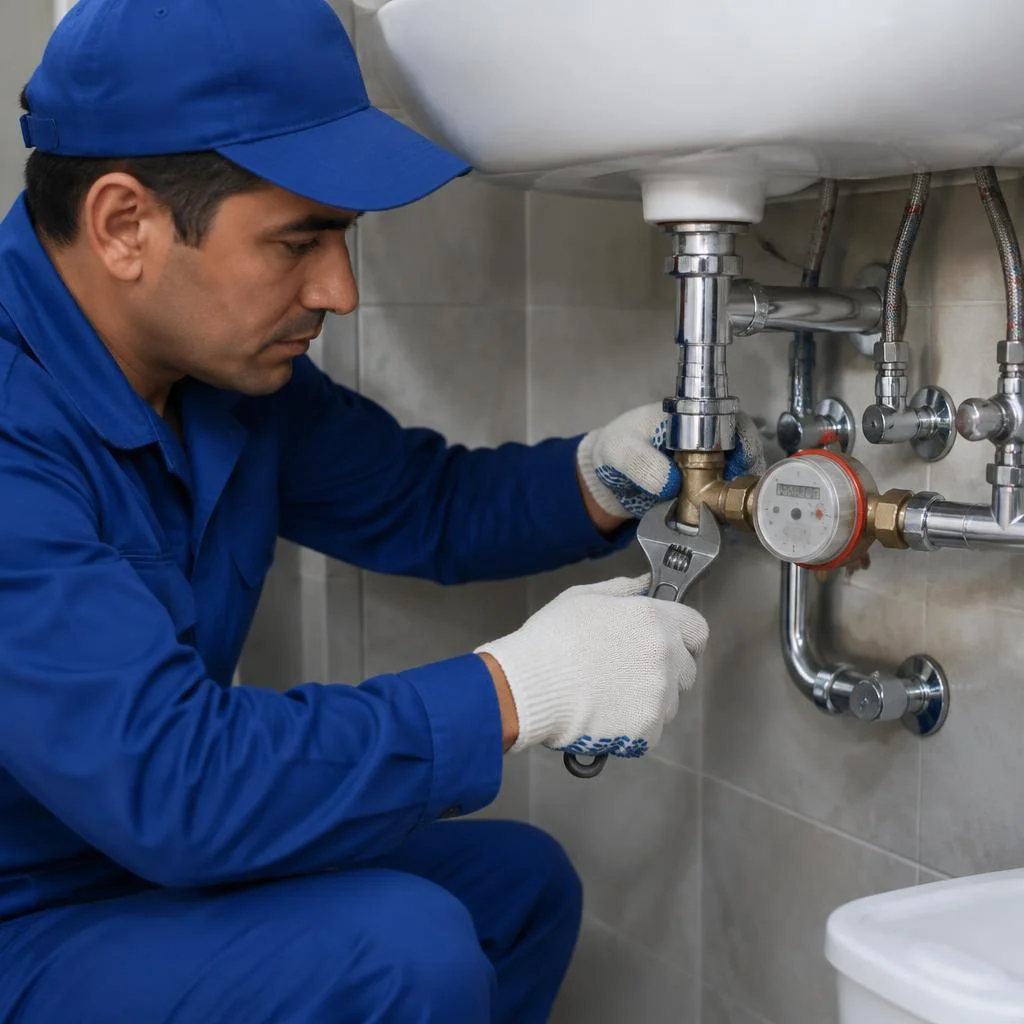
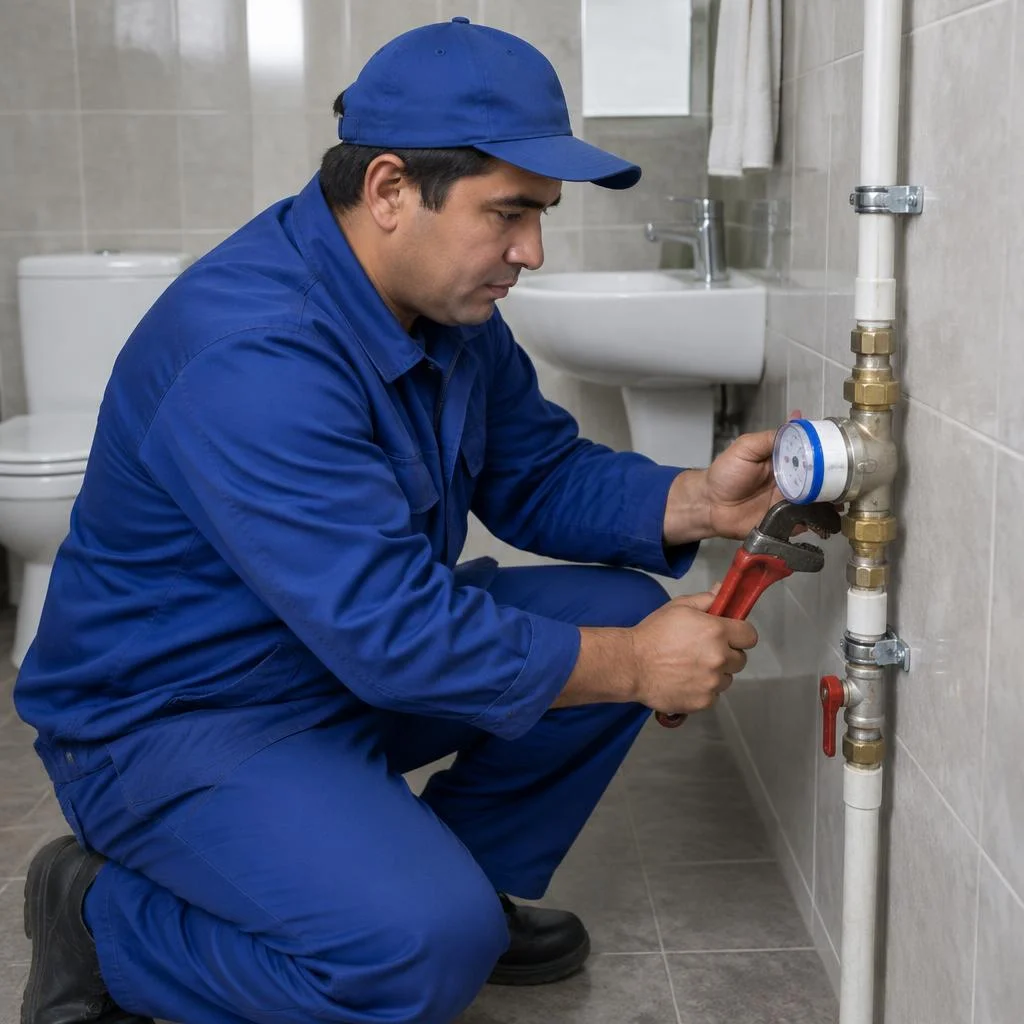
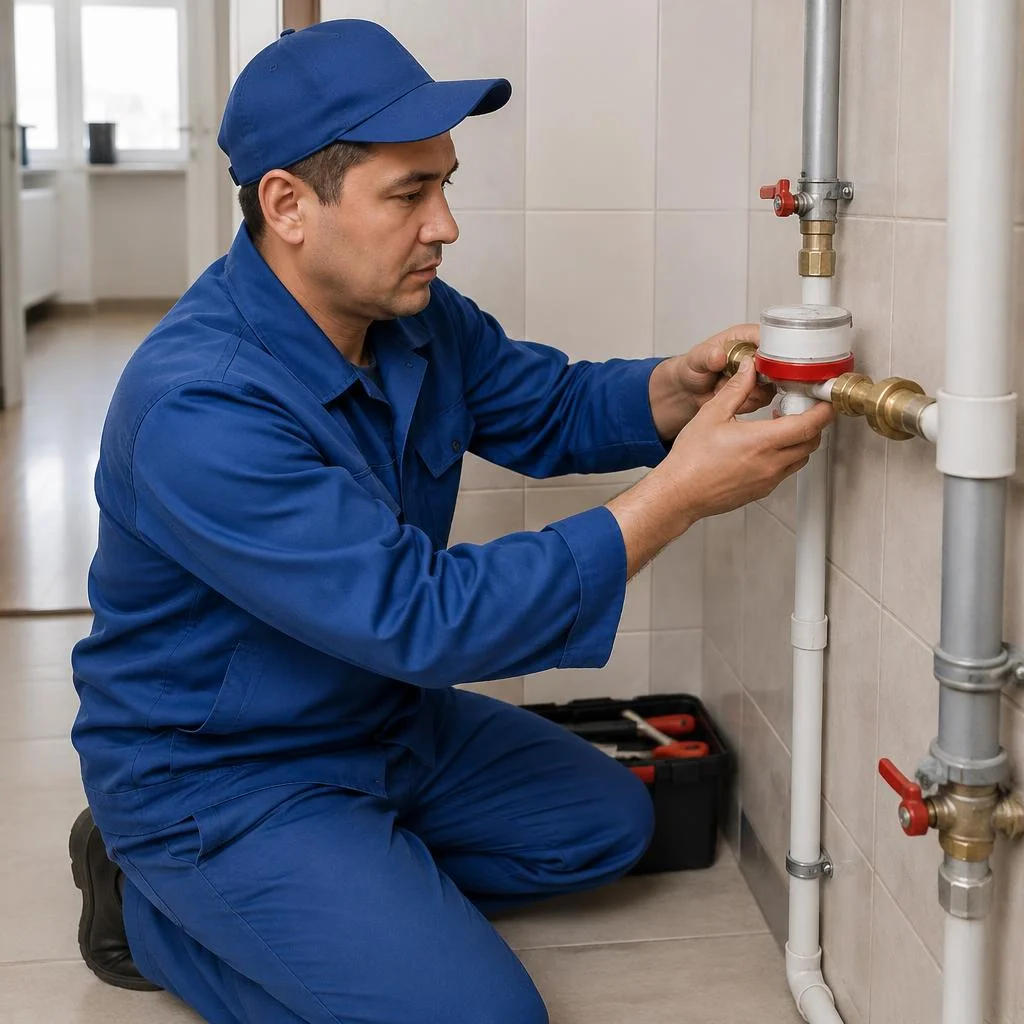
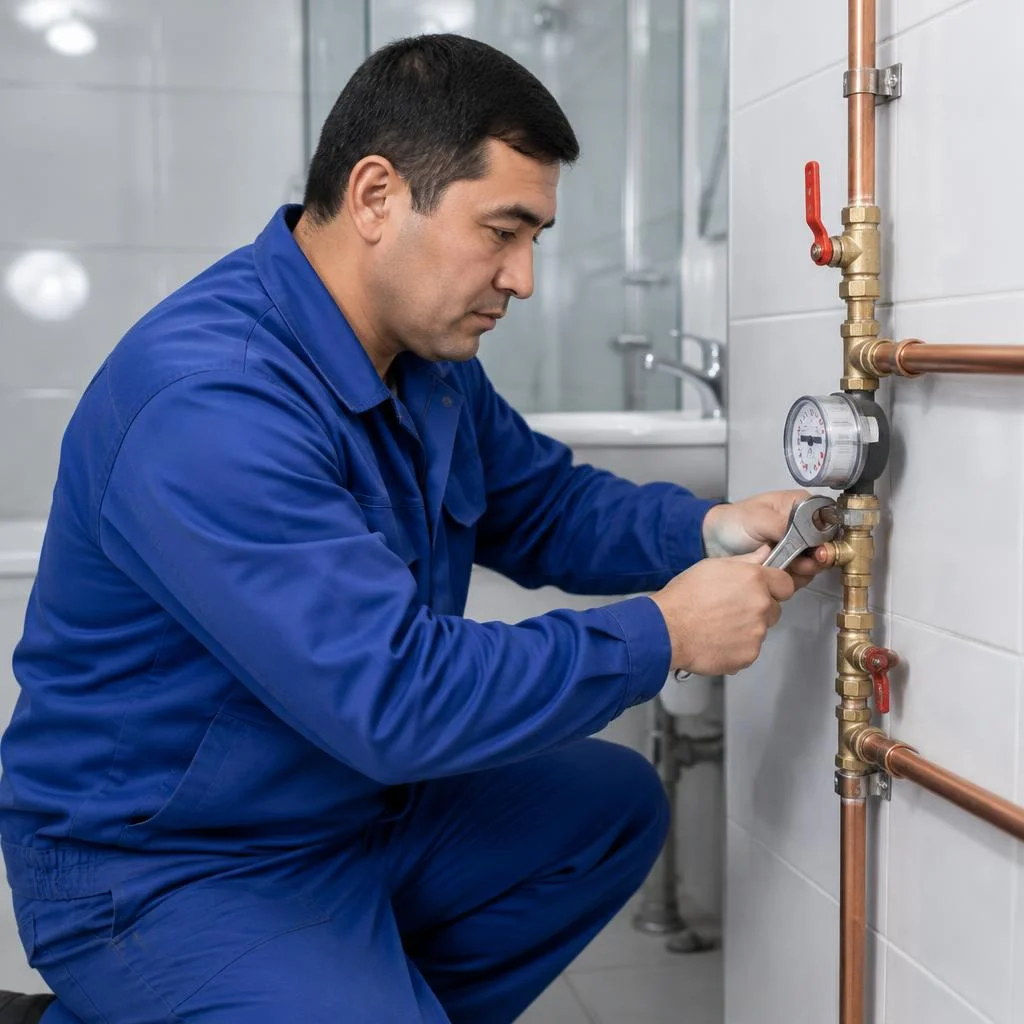
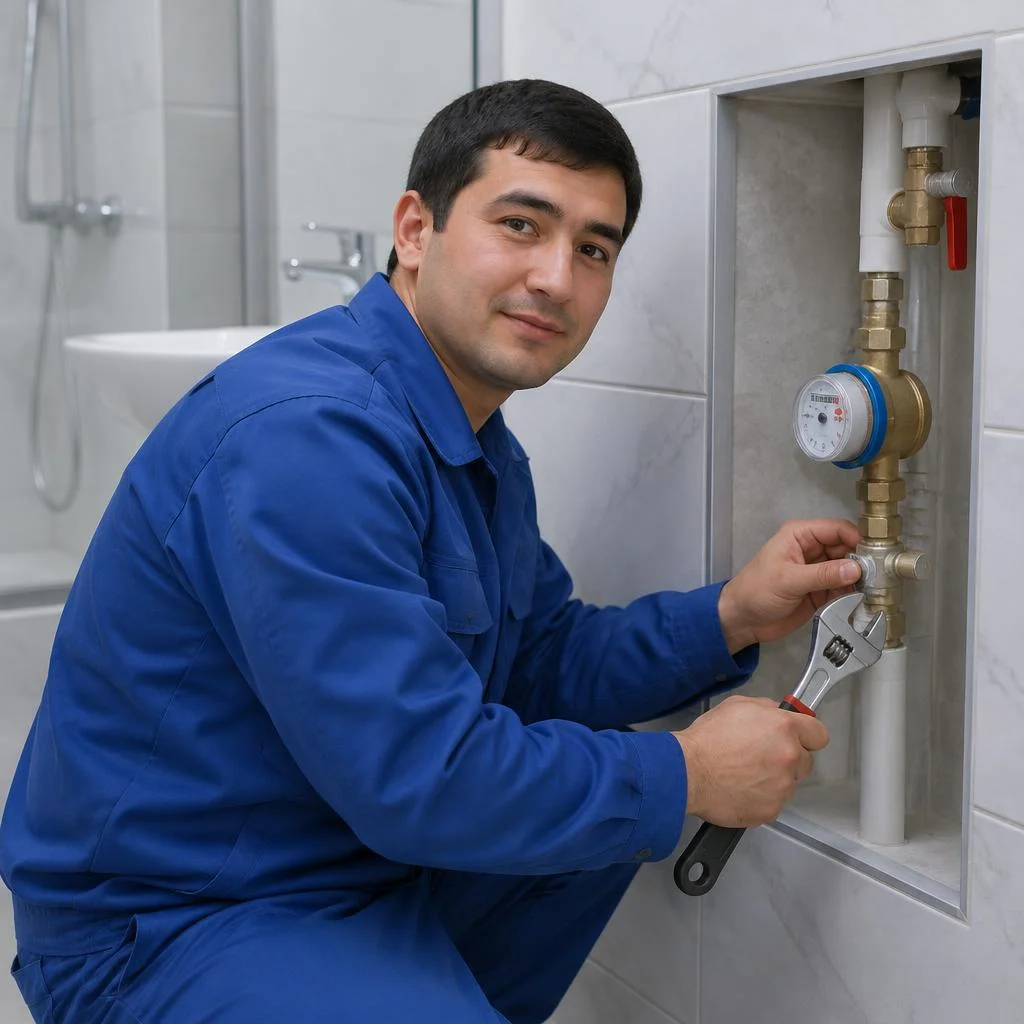
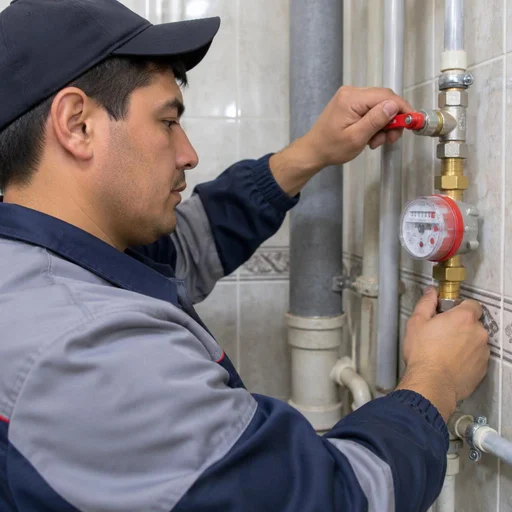
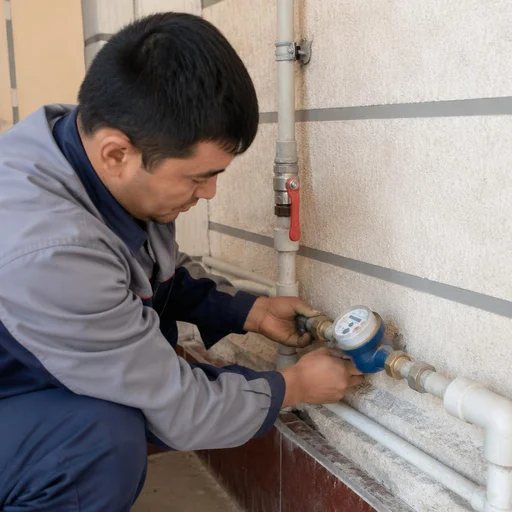
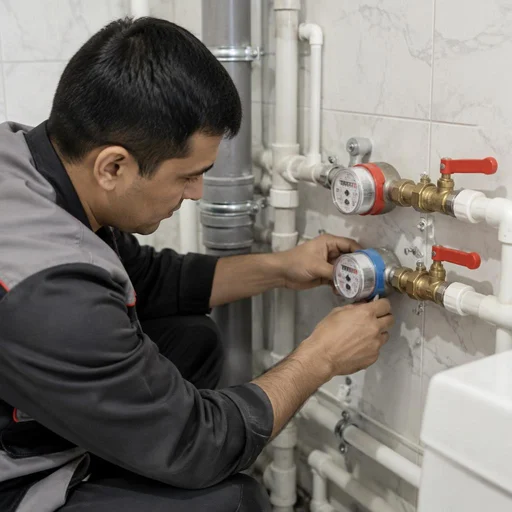
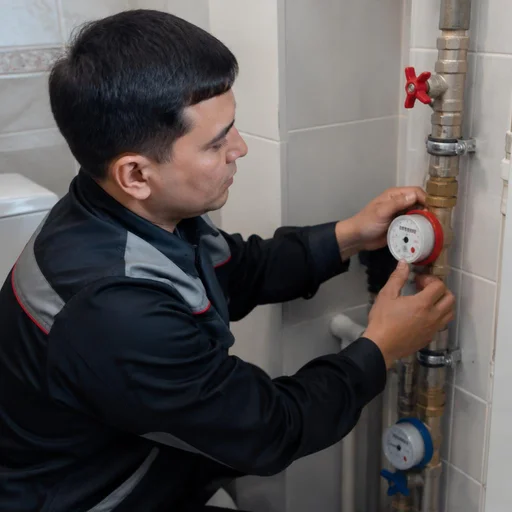
We replace the device at the inlet to the bathroom or in the kitchen, most often on plastic pipes, and the work takes a single visit without shutting off the riser. The typical layout in Tashkent high-rise buildings is polypropylene with a diameter of 20-25 mm with a flexible connection to the mixer and a ball valve before the device: with such fittings, installation proceeds without welding, and the technician removes the old body and installs the new one on the same threaded connections. If the riser is made of metal, cutting and welding are added — this lengthens the visit and requires shutting off the water for the whole building entrance. A separate difficulty is a niche behind the tiles: the body is walled in, and the threads are reached through a neat cutout. Clients often phrase the request as water meter replacement in Tashkent — and from such an inquiry the technician immediately understands that the property is in a high-rise building. In requests for water meter replacement this occurs most often: the homeowner describes a well or a basement, not an apartment.
Installation in a private house: well, basement and inlet
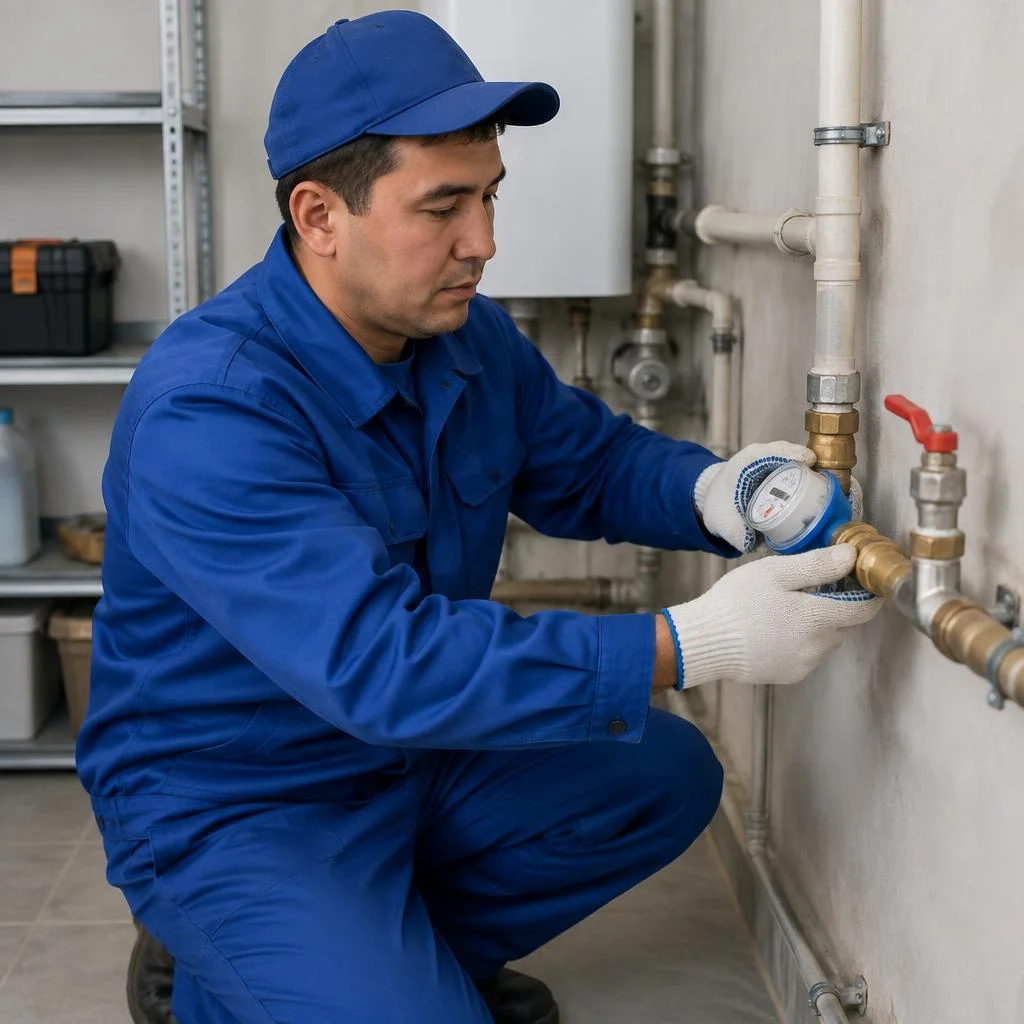
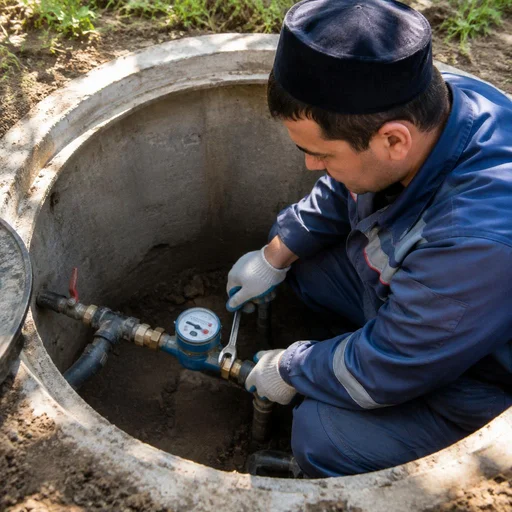
The installation of a water meter in a private house is done at the inlet, in a well or in the basement — here metal pipes are more common, and installation may require welding. At the inlet to the house, the device is usually installed right after the shut-off valve and the coarse filter; in a well, the body is lowered to the water intake depth, where a steel pipe from the main line connects to it. In the basement, the plumbing is often assembled from cast iron or galvanized steel with threaded fittings — installation with welding takes more time than on plastic and requires access to the shut-off valves at the inlet. In a well, the device suffers from groundwater and condensation, so during installation it is worth immediately installing a model with moisture protection and a check valve — otherwise the next visit will be needed sooner than expected. In search, people often type water meter replacement in an apartment — and from such a query it is clear that the client has already chosen a model and wants to understand how the calculation is done.
Comparison of installation conditions by installation location
| Installation location | Pipe type | Installation method | What is included |
|---|---|---|---|
| Apartment | plastic | without welding | flexible connection, ball valve |
| Apartment | metal | with welding | cutting, welding, fittings |
| Private house | plastic | without welding | filter, check valve |
| Private house | metal | with welding | welding, check valve |
| Well | metal | with welding | moisture protection, check valve |
| Basement | metal | with welding | fittings, ball valve |
The type of pipes matters more than the installation location: with metal, welding is almost always needed, while with plastic you can do without it and save visit time. In search, people often type water meter replacement price — and from such a query it is clear that the client has already chosen a model and wants to understand how the calculation is done. Practice at various properties in Tashkent confirms: in apartments with polypropylene we manage with threading, while in wells and basements welding is indispensable. Clients often write water meter replacement in an apartment — and from such an inquiry the technician immediately sees that the property is in a high-rise building with a typical layout.
Installation methods: without welding, with welding, and on different types of pipes
The installation method is determined by the type of pipes and access to them: in some cases a threaded connection is enough, while in others you can't do without welding. We break down how this affects timelines and the final result.
Installation without welding: when it's possible and what makes it convenient
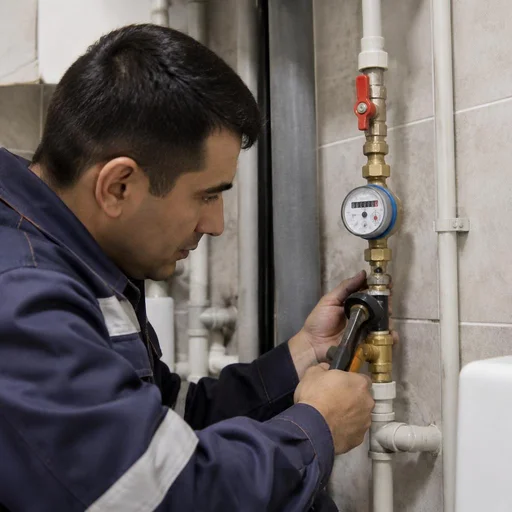
We install the device without welding on plastic pipes and on metal with ready-made threaded connections — the work takes less time and doesn't require an open flame. A flexible hose and a ball valve on a thread are installed in a single visit: the technician shuts off the riser, unscrews the old device, screws on the new one through adapters, and seals the connections with flax or anaerobic sealant. This type of installation is especially in demand in Tashkent apartments, where the risers are plastic or have already been converted to polypropylene, and access to the pipe is limited by a narrow bathroom. In our practice, it takes on average half the time of a welded one. But you can't do without welding if the pipe is seized up or the thread is stripped — in that case the technician switches to welded installation right on the visit, so as not to push the work to the next day. Clients often phrase the request as water meter replacement — and the technician immediately understands that the old device needs to be removed and a new one installed in the same place.
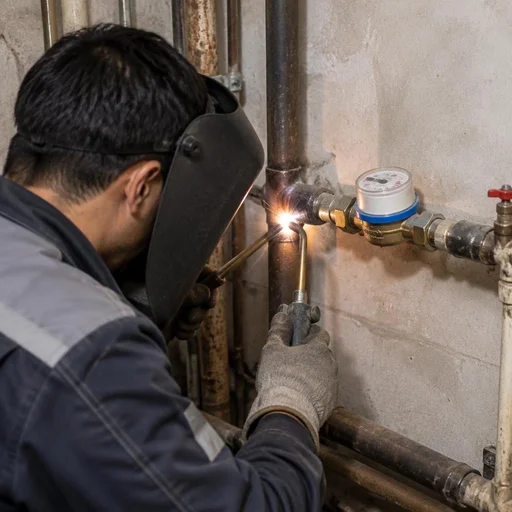
Installation with welding: where it's needed and how it goes
Welded installation is needed on metal pipes, in wells and basements, where a threaded connection is unreliable and eventually leaks. The technician cuts out a section of pipe, welds in a new branch for the device, if necessary replaces the valve at the inlet, and only then installs the meter on the thread — the welding itself is done not on the device body, but on the pipe around it. Installation of water meters in a well or basement almost always involves welding: there's dampness, condensation, and temperature swings, because of which the thread becomes overgrown and starts leaking within a season. A welded seam lasts longer than a thread in damp rooms, so in a well, even with an intact thread, we recommend welding — this reduces the risk of a repeat visit. Schedule such work for the first half of the day: if the inlet is seized up, additional time will be needed for heating and replacing the section. In requests this sounds brief — water meter replacement — and at the address the technician himself determines whether the thread is enough or a welding machine is needed. A separate story is water meter replacement in a private house: here the inlet often comes from the street, and you can't do without welding on metal.
Meter piping: filter, check valve, ball valve, flexible hose
- Filter: a mesh or magnetic-mechanical filter before the device traps sand, scale, and rust from the pipes.
- Check valve: prevents water from flowing back into the riser and protects the impeller from spinning in the reverse direction.
- Ball valve: shuts off the water on the meter section so the device can be removed without stopping the entire riser.
- Flexible hose: connects the device to the pipe where rigid piping doesn't fit the geometry, and dampens vibration.
- Eco-Service kit: the technician brings parts matched to the pipe diameter and type of piping, so the assembly comes together without "twisted-on" adapters.
- Assembly order: the filter, valve, and ball valve are installed before the device along the water flow, and only then comes the meter itself.
- Effect of the filter: without it, sand and scale quickly clog the impeller, and the device starts undercounting — the verification interval is shortened.
Comparison of methods by pipes and installation location
| Pipe type or location | Installation method | What changes in the work |
|---|---|---|
| Polypropylene, plastic | Without welding | Threaded adapters, 1 visit |
| Metal with intact threads | Without welding | Screwing on the meter, sealing with flax |
| Metal with a seized inlet | With welding | Cutting out a section, welding in a branch |
| Well, basement | With welding | Protecting the seam from dampness and condensation |
| Private house, street inlet | With welding | Replacing the valve at the inlet |
The key to the choice is the condition of the threads at the inlet, not just the pipe material: if the threads crumble when removing the old meter, welding costs less than a repeat visit. Water meter installation on metal in Tashkent more often involves welding due to the age of the risers.
How hot and cold water meters differ: the difference between the devices
Hot and cold water meters differ in the material of the body and seals, so a single device cannot be installed on both circuits. We explain how cold water supply (CWS) and hot water supply (HWS) models differ and what to consider when selecting one.
Cold water meter: features of the device and installation
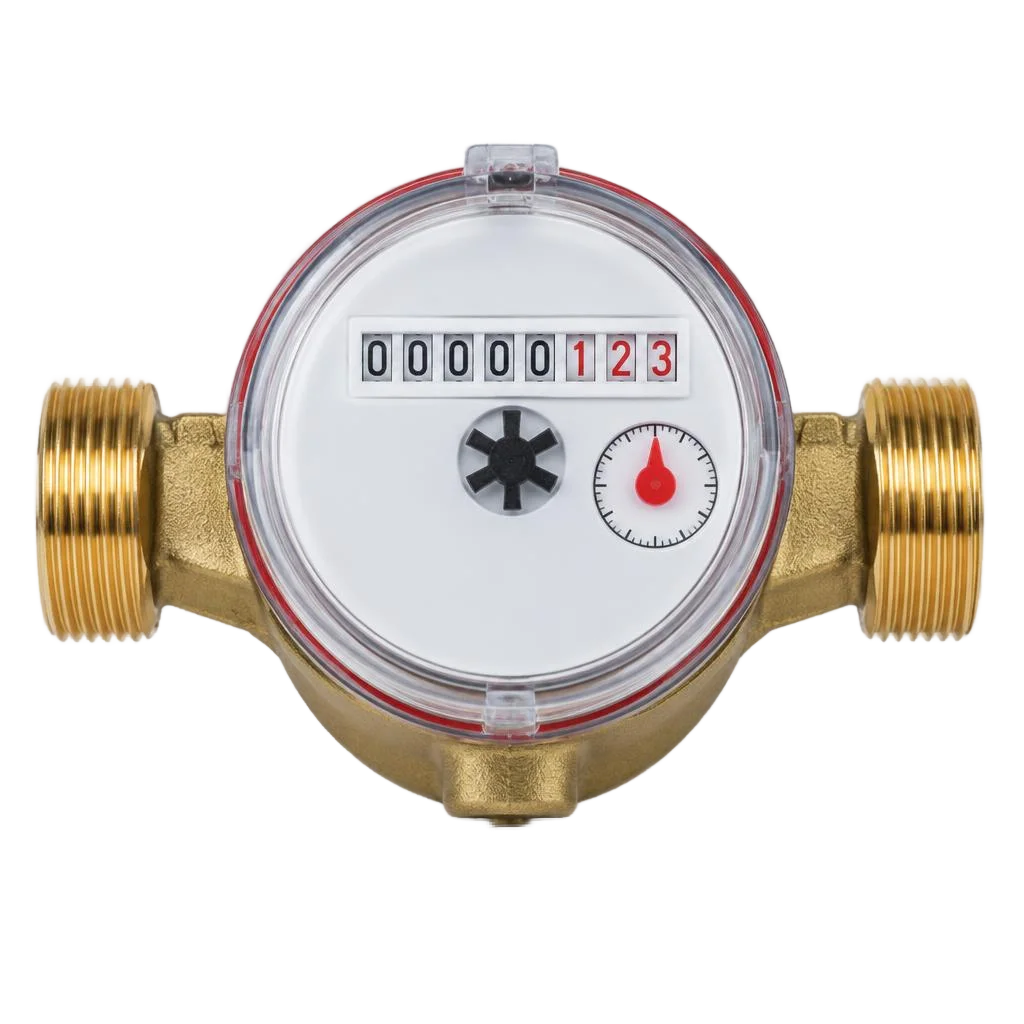
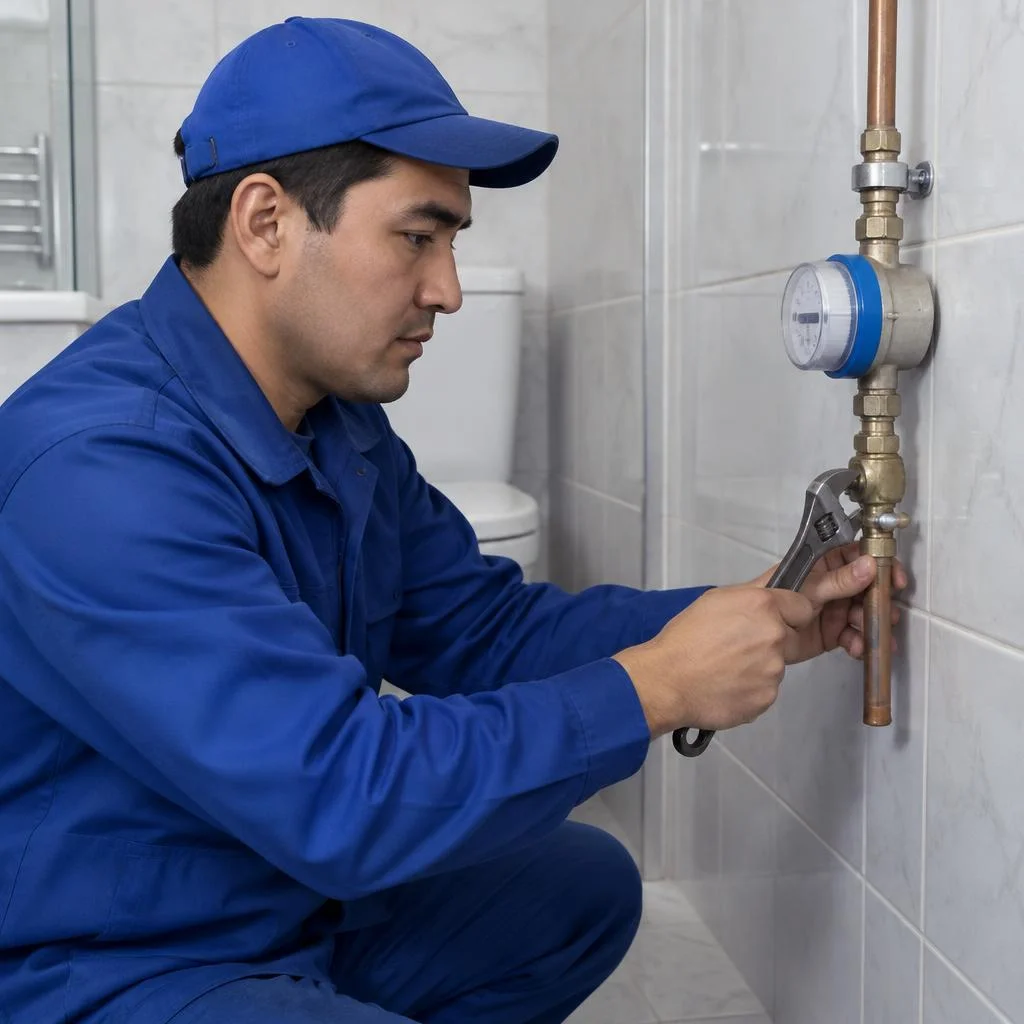
We install a cold-circuit device with a body rated for temperatures up to 30 °C — such a device cannot be installed on a hot circuit, it will quickly fail. CWS models are marked with a blue ring or the letter C on the dial, their body is usually brass with a polymer coating, and the impeller is rated for a flow of 0.6–1.5 m³/h at an operating pressure of up to 10 bar. At the apartment inlet, such a device is installed after the shut-off valve and before the distribution to the mixers, most often on plastic pipes via adapters. Clients often search for "cold water meter replacement" — and land on this page, although the final cost is calculated after an inspection, not over the phone. Condensation forms more often on CWS, so when installing in a niche, a gap should be left for ventilation — otherwise moisture accelerates corrosion of the body.
Hot water meter: what to consider when choosing
A hot-circuit device is rated for temperatures up to 90 °C and has heat-resistant seals — during installation we check that the device matches the HWS circuit. HWS models are marked with a red ring or the letter H, the body and impeller are made of materials resistant to thermal expansion, and the sealing gaskets are made of paronite or silicone instead of standard rubber. The verification interval for HWS devices is shorter than for CWS — usually 4 years versus 6 years, because the hot medium wears out the mechanism faster. Replacing hot water meters at sites with old piping requires checking the condition of the threaded connections: scale at the inlet often leads to thread stripping during removal. In search, clients enter "hot water meter replacement price" — and from this phrase we understand that the person needs a quote for a specific model, not a general consultation. Scale forms faster on the hot circuit than on the cold one, so a filter before the HWS meter pays for itself more noticeably — it traps deposits before the impeller.
Comparison of CWS and HWS devices
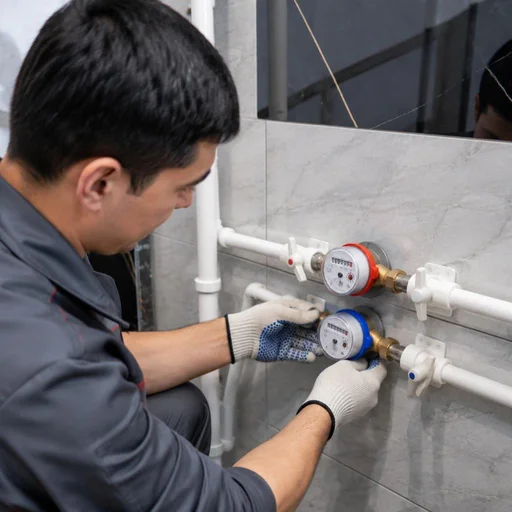
Universal devices exist, but they cost more and last less than specialized ones — on two circuits it is more cost-effective to install different models. In requests, the wording "water meter replacement and installation" appears most often, and it usually means dismantling the old device, installing a new one, and preparing documents for the management company. The second most frequent query is: water meter replacement how much does it cost — with it, the client wants to understand the calculation procedure, not hear a figure over the phone. A separate category of inquiries is water meter replacement and verification: some clients come with an already expired verification interval and want to resolve both issues with a single visit from a technician. We travel to the site with a set of adapters for metal and plastic, check the condition of the threads, and only after that provide an estimate. On two circuits at once, the work takes less time than two separate visits — the technician replaces both devices in one visit and seals them.
Replacement and verification, replacement and sealing: which services are combined
Some procedures are logical to combine: verification and sealing are carried out in one visit together with replacement, so as not to call the technician again. We explain which combinations produce a result in a single visit.
Replacement and verification of water meters: when they are combined
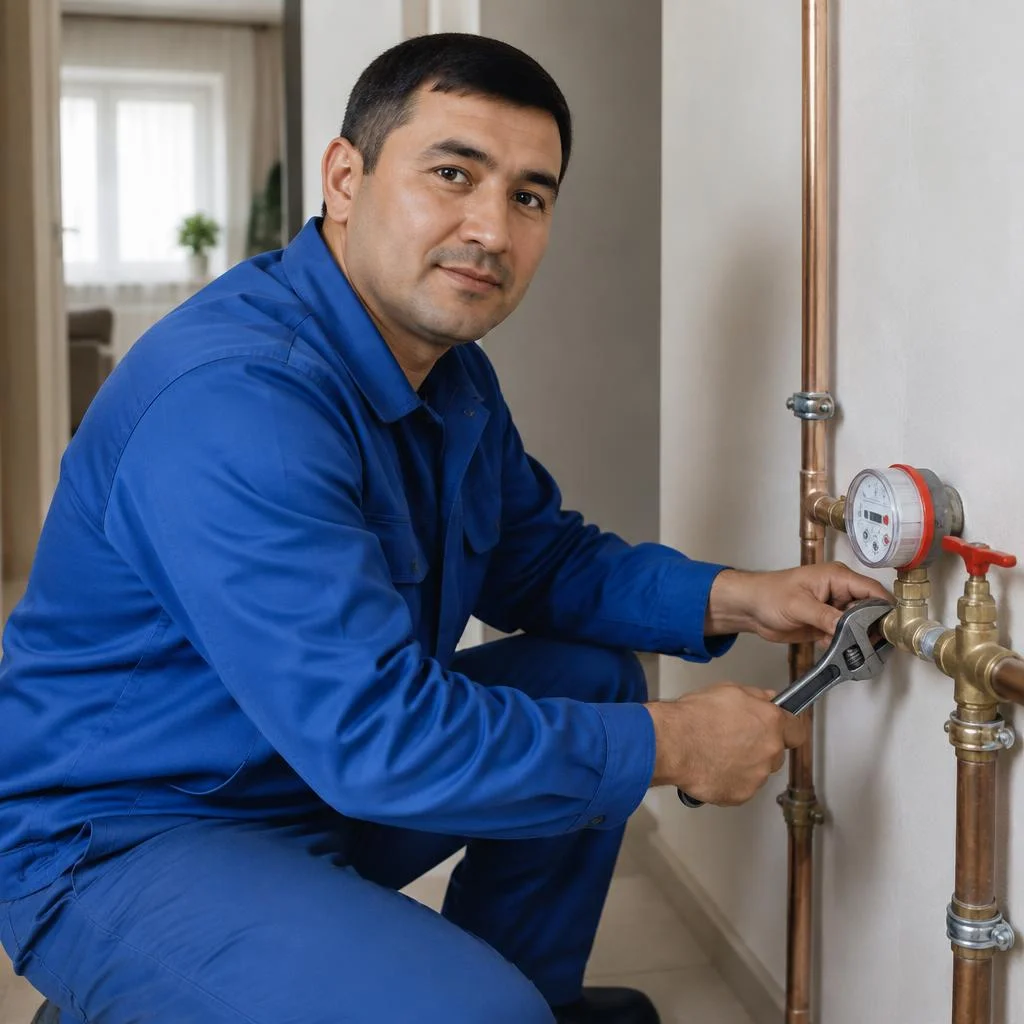
Eco-Service performs replacement and verification of water meters in one visit: a serviceable device is verified on site, one that has exhausted its resource is replaced with a new one with the paperwork handled. Verification of a water meter is appropriate when the verification interval has come to an end but the body, impeller and counting mechanism show no signs of wear: the technician removes the device, checks it on a flow-through test rig and reinstalls it with a new seal. If the impeller is worn down or there is condensation on the glass, verification will not pass — then a meter replacement is arranged, with verification of the new device in a single report. In Tashkent apartments with hard water, the impeller's resource is exhausted before the verification deadline, so diagnostics are done before submitting the application. Verification makes sense only if the device has not exhausted its resource — otherwise you will still have to replace the meter afterwards, and you will pay twice for one result.
Replacement and sealing of water meters: why the seal is needed
Eco-Service seals the meter after replacement — without a seal, the water utility will not accept the readings, and charges will be calculated according to the norm. Replacement and sealing of water meters is one continuous process: the technician installs the device, runs water through it, records the initial readings, and only then are lead seals with an impression placed on the body and the union nuts. At the same time, a commissioning report is drawn up — the document by which the Tashkent water utility registers the device and opens an account based on the new readings. If the seal has been torn off or is missing, an inspector during a check has the right to recalculate consumption according to the norm for the entire period since the last inspection. The seal is placed only after the commissioning report is drawn up, so ordering sealing separately from replacement is pointless — it is one process.
Replacement and installation of water meters: how primary installation differs
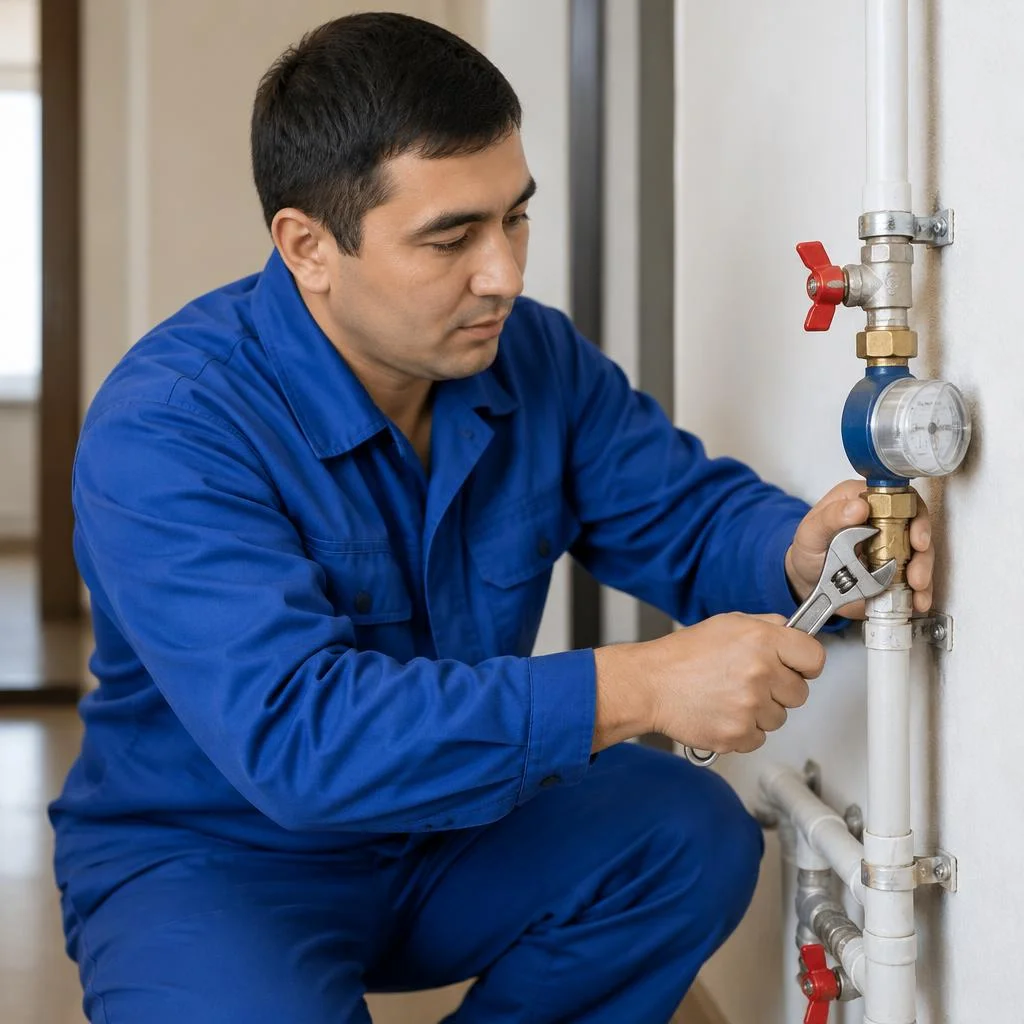
Eco-Service performs replacement and installation of water meters: installation is the primary mounting of a device where there was none before, replacement is the dismantling of the old one and mounting of a new one in a prepared location. When deciding what to choose — replacement or verification of water meters — look at the age of the device: before the first verification deadline it is cheaper to verify, after the second or third it is usually more advantageous to install a new one right away. Installation in an apartment without a metering unit requires tapping into the riser, installing a filter, a check valve and a ball valve, and sometimes relocating the water meter to a more accessible place — for example, because of tight piping under the sink. In requests, clients often write briefly: water meter replacement — and the technician immediately understands that the old device needs to be dismantled and a new one mounted in the prepared location. Another frequent search query is water meter replacement price: this is how those who want to understand the order of expenses in advance search, so we calculate the final estimate after inspecting the metering unit. Primary installation in a private house adds an inlet into the manhole or basement and protection of the device from groundwater. For primary installation in an apartment without meters, the water utility usually requires a project for the metering unit inlet — clarify this before the technician's visit so as not to process the documents twice.
Documents, registration with the water utility, and a 2-year warranty
After installation, the device must be put into operation: draw up a certificate, register the metering unit with the water utility, and obtain a seal. Without these steps, the readings of the new meter are invalid, and charges will be calculated according to the norm.
What documents Eco-Service prepares after installation
- Commissioning certificate: records the installation date, the device's serial number, and the initial readings — the main document for the water utility.
- Device passport: the factory booklet with the number, date of manufacture, and the initial verification mark remains with the owner.
- Registration application: water meter replacement with registration is completed by transmitting the data to the Tashkent water utility without the client having to visit.
- Seal: after the metering unit is accepted, the inspector applies the seal, and only then is the device approved for billing.
Registering the meter with the water utility: how it works
We register the new meter with the water utility: the owner is responsible for replacing the device, while the water utility accepts the metering unit and applies the seal. The water utility processes the water meter replacement based on the commissioning certificate, the device passport, and the owner's application; the inspector verifies the number, the initial readings, and the integrity of the connections, after which they attach the seal to the body and the shut-off valves. After registration, water tariffs are calculated based on readings, not on the per-person norm. Before registration, the readings of the new device are not taken into account — if you delay the paperwork, charges for that period will be calculated according to the norm, even if the meter is already installed and working. In search, clients often type "hot water meter replacement" — and land on this page, although the topic is the registration of the metering unit, not the installation itself.
2-year warranty and payment: what Eco-Service's obligations include
Eco-Service provides a 2-year warranty on the work and performs installation with its own technicians, not subcontractors — payment can be made via Click, Payme, Uzcard, or Humo. Our own service center in Tashkent accepts requests in person: the technician arrives with tools and a supply of fittings, and a warranty case is processed with a certificate and receipt without shipping the device to another city. The warranty covers installation and fittings, but not the device itself if it was purchased separately — clarify this before work begins to avoid any discrepancies when making a claim. In their requests, clients write "water meter replacement price" and "water meter replacement cost" — we handle these wordings individually, because the final result is affected by the floor, the type of piping, and the condition of the shut-off valves. We would like to clarify separately: the meter replacement cost is calculated after an inspection, not over the phone. Another frequent query is "water meter replacement price": we only quote a figure after diagnosing the unit, because the fittings and shut-off valves are different for each riser.
Why choose a service center rather than a private technician
We operate as our own service center in Tashkent: we provide a 2-year warranty, prepare documents, and accept payment officially, unlike private listings. On OLX.uz and in Telegram channels, technicians' meter replacement price is lower at the start, but such a contractor will not prepare the commissioning certificate or the seal — the request will still have to be completed through the water utility, and if there is a leak, you will have to track down the person through messages. A private technician is cheaper at the start, but without the certificate and seal, the work will have to be redone through the water utility — the final cost will end up higher. In search, clients often type "water meter replacement price" — and land on this page, although what should be compared is not just the starting figure but the full package: installation, fittings, certificate, and seal. That is precisely why the queries "water meter replacement cost" and "water meter replacement with registration" are more logically handled where installation and paperwork come as a single package.
Conclusion
Replacing water meters is a procedure with clear checkpoints: the verification deadline, the condition of the seal, the type of pipes, and the installation location. Below is a short summary that helps you make a decision without unnecessary visits and repeat requests.
Key takeaways
- Deadline and condition: replace the device when the verification interval expires, it breaks down, or the seal is damaged — otherwise charges will be calculated according to the standard rather than by readings.
- Installation for the pipes: on plastic piping you can get by without welding, while on metal and in a pit a welded joint is more reliable and withstands the pressure in the riser.
- Device for the medium: models for hot and cold water are not interchangeable — they differ in the heat resistance of the body, the material of the seals, and the accuracy class.
- One visit: verification and sealing are combined with installation so as not to call the technician again and not leave the unit without a seal for several days.
- Documents: after the work, you need a commissioning certificate and registration with the water utility — without them, the submitted readings are not accepted for calculation.