








What sewer video diagnostics shows and how it differs from CCTV pipe inspection
Inspecting the inner surface of a pipe with an illuminated camera — we explain what the method shows without excavation or opening up, how it differs from CCTV pipe inspection and which diameters it covers.
What camera inspection of a sewer involves and which defects it detects
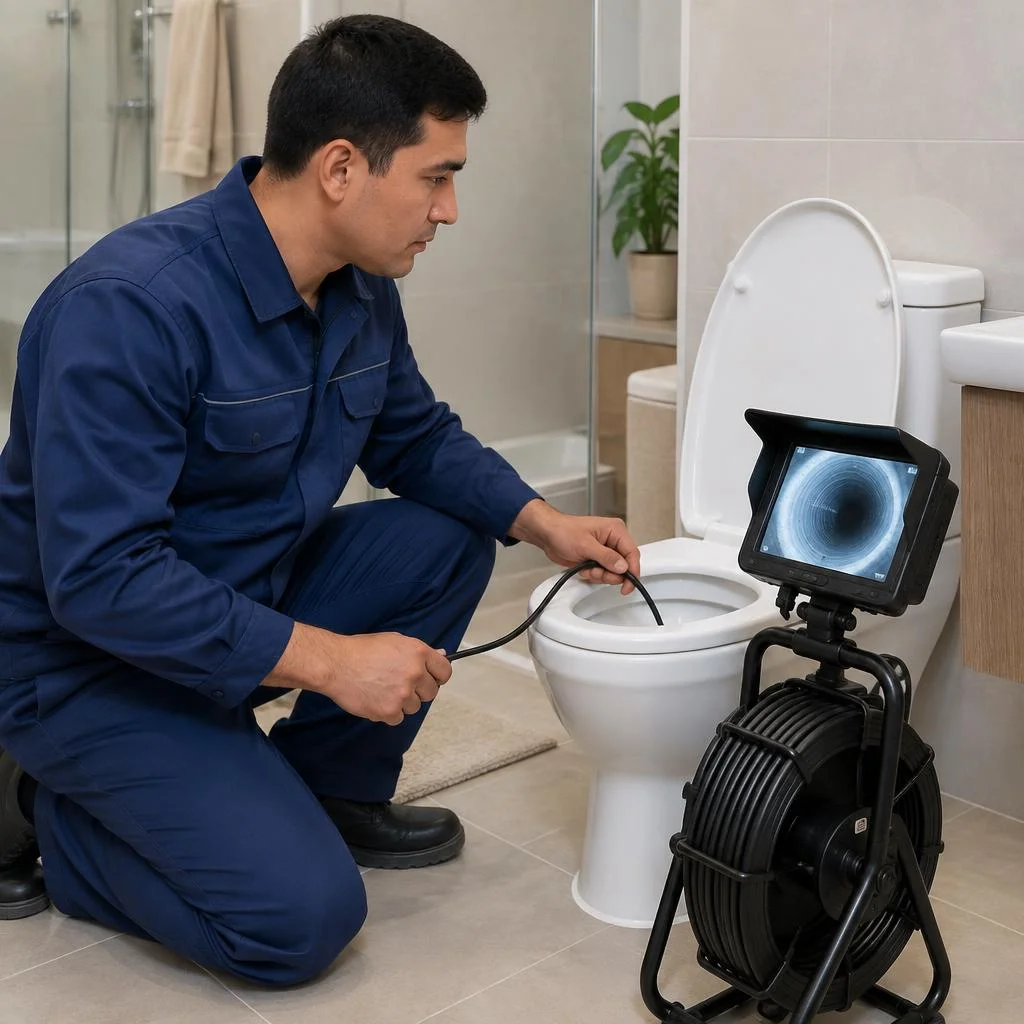
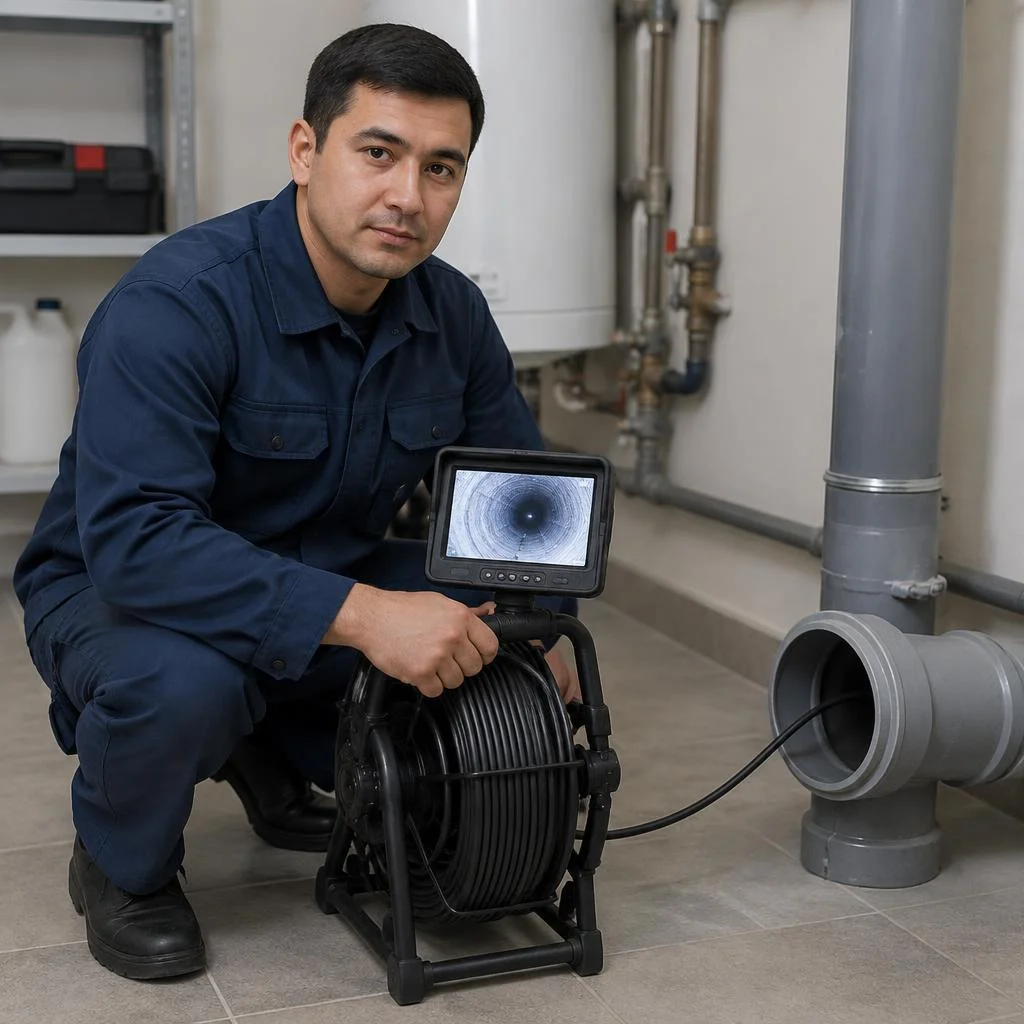
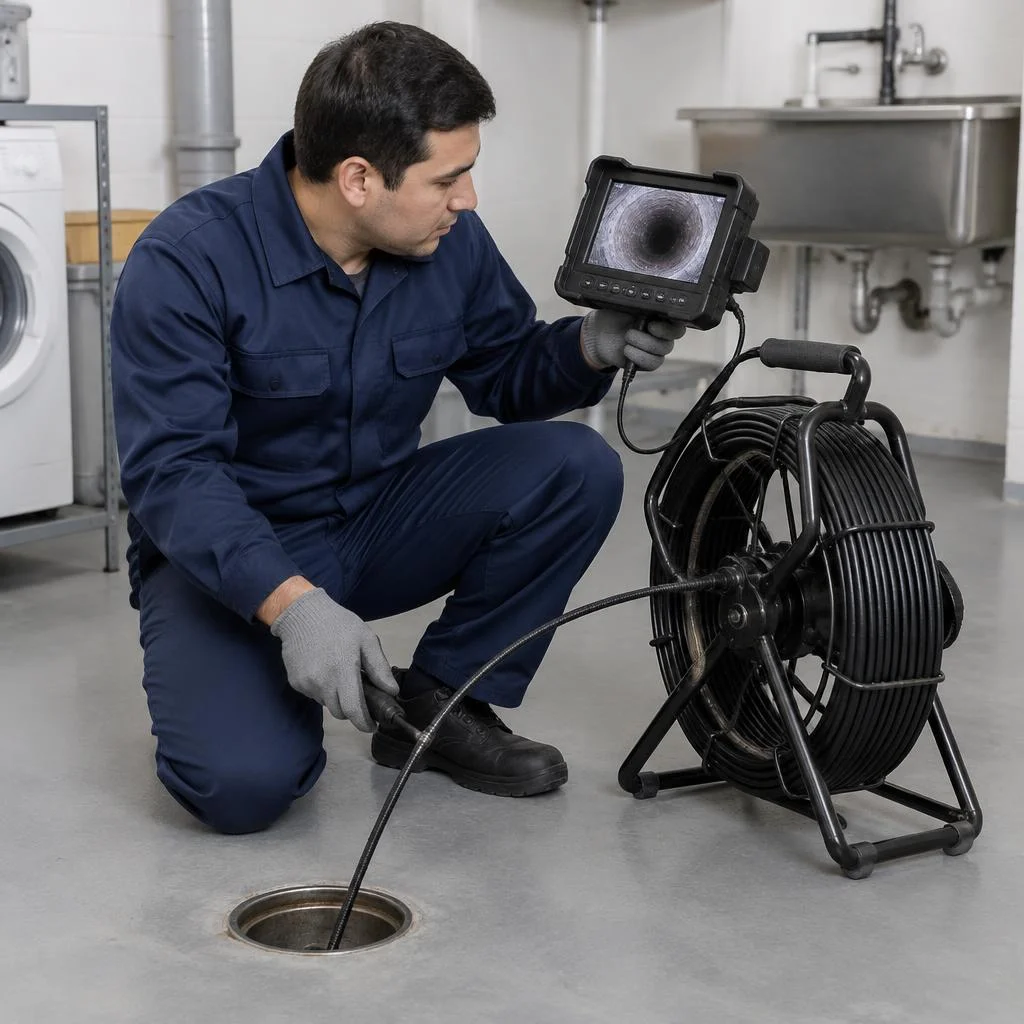
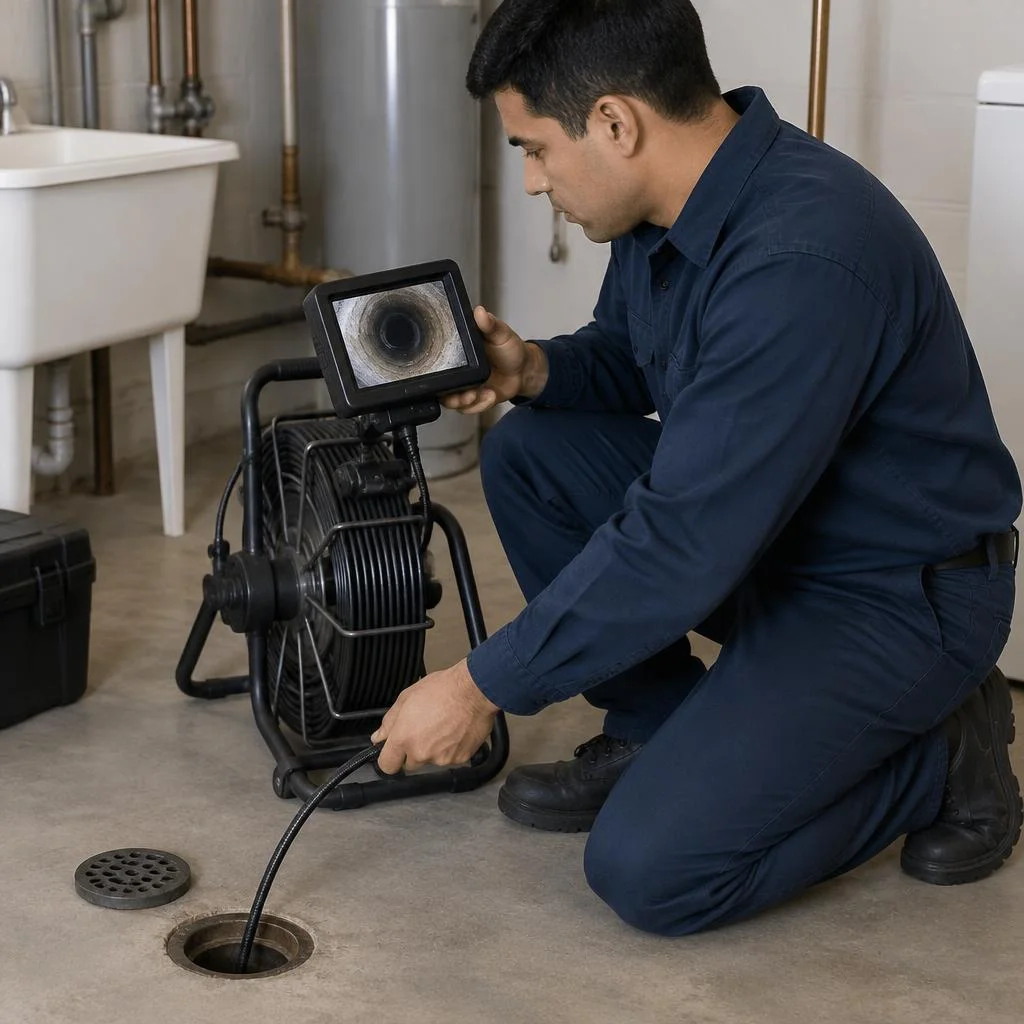
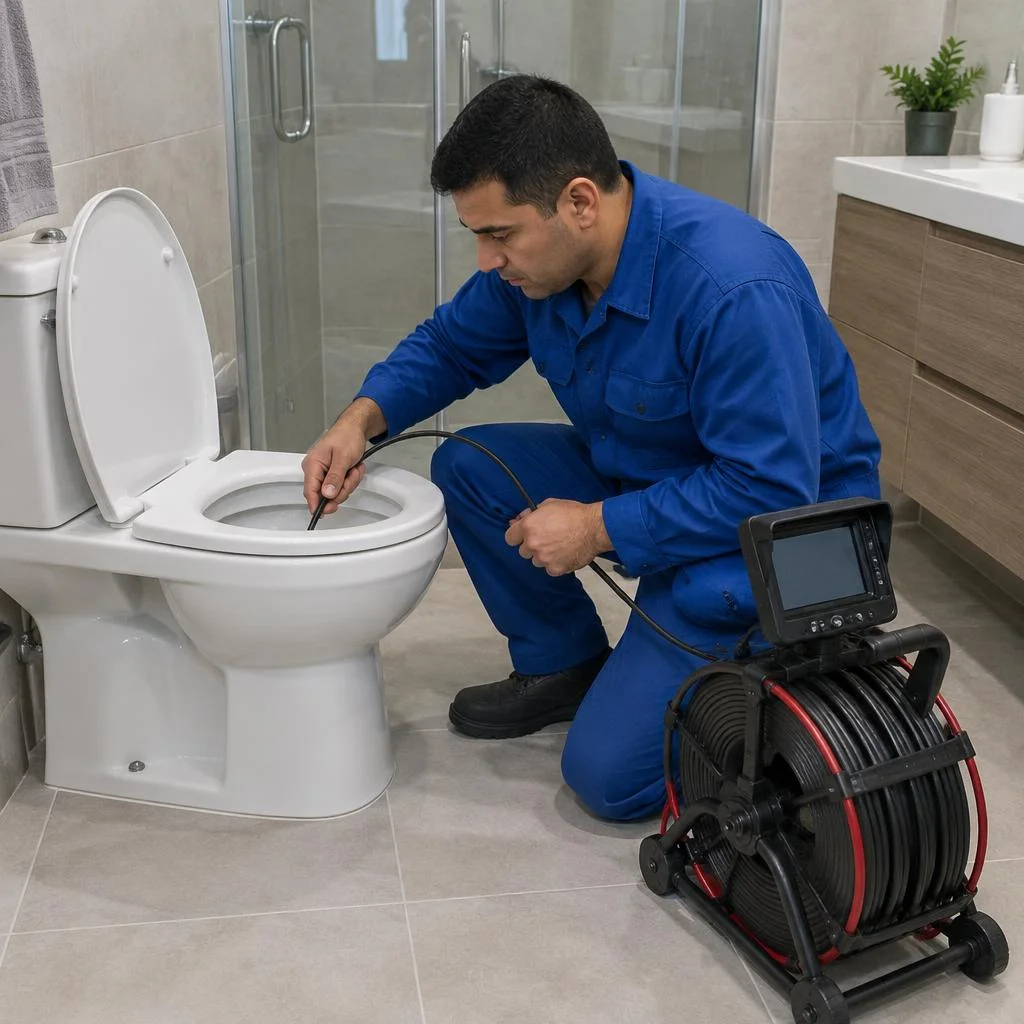
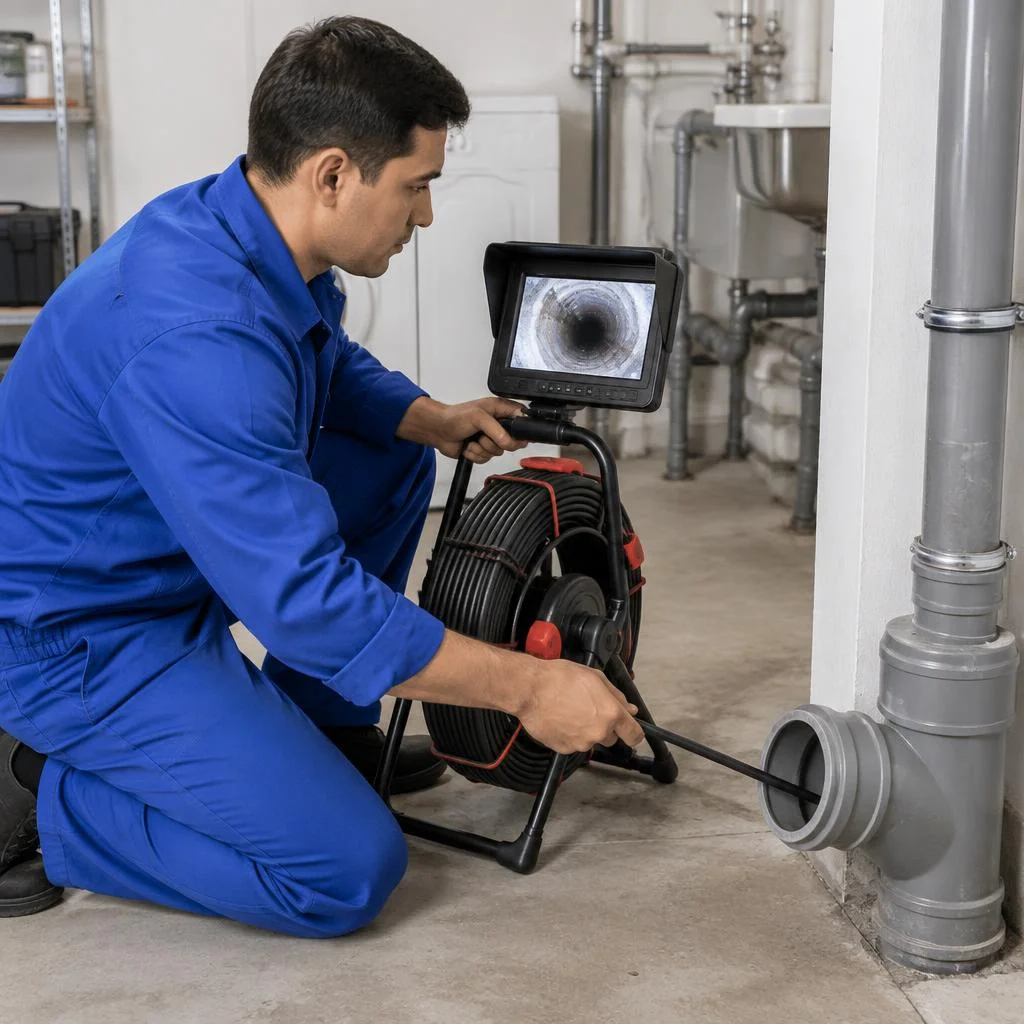
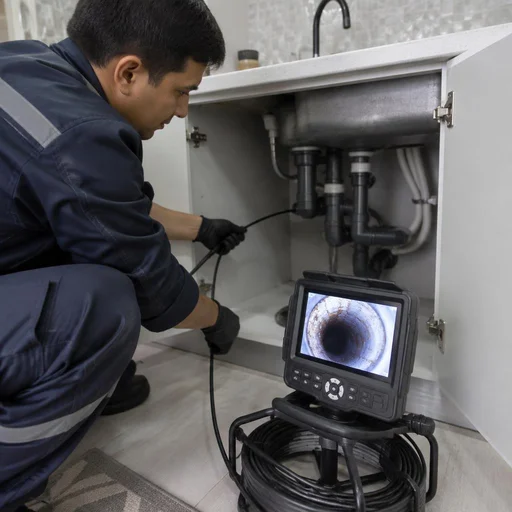
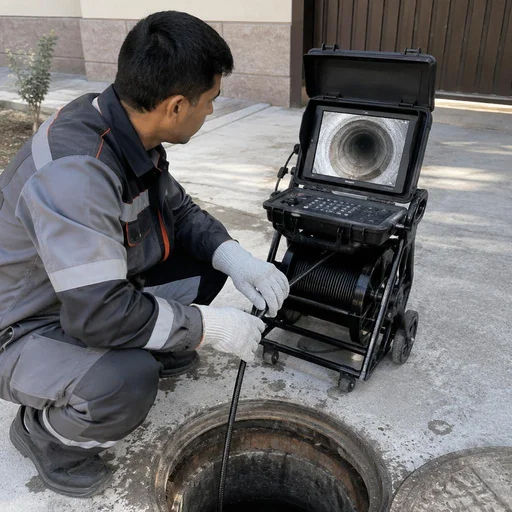
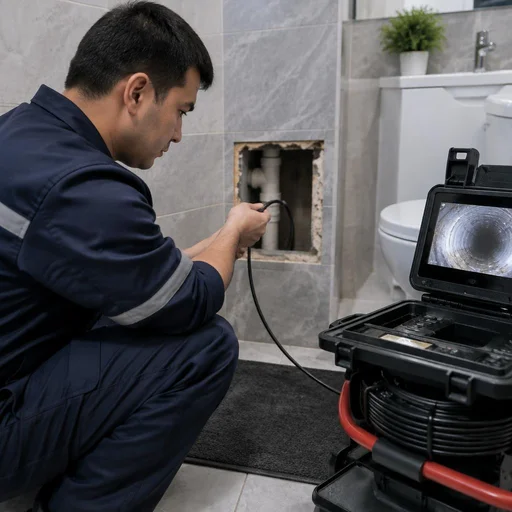
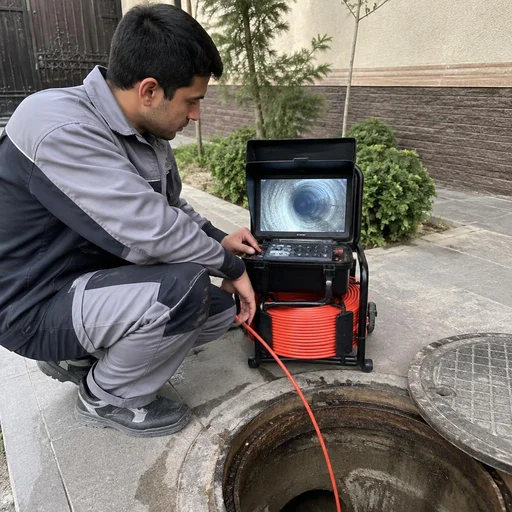
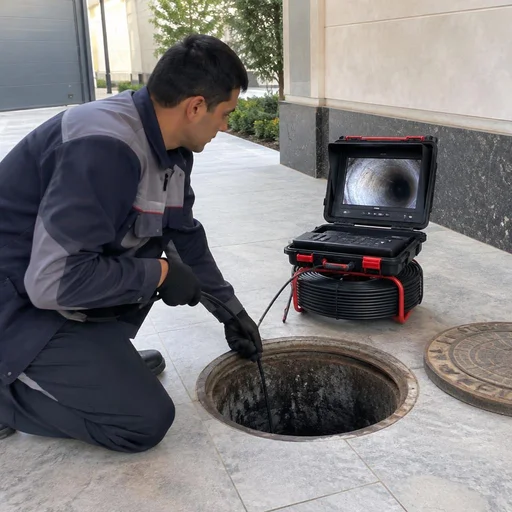
Inspecting a pipe from the inside with an illuminated camera — the technician sees a blockage, crack, displacement, build-up and hidden leak on the monitor in real time. The push camera travels along a riser or horizontal run, advancing 30–60 metres from the entry point, and the screen captures four groups of defects: mechanical damage (cracks, chips, ruptures), geometric deviations (displaced joints, loss of slope), biological and mineral deposits (grease build-up, limescale, root intrusion) and traces of leaks through joints. Each defect is tied to a distance from the access point, so the defect report states not "there is a problem" but "displacement at the 12th metre from the access point, 15 mm". There is no point running the camera into a pipe that has just been cleaned with a cable — the washed-away deposits mask cracks and displacements, so the inspection is carried out before mechanical cleaning.
How CCTV pipe inspection differs from camera inspection
CCTV pipe inspection is the same camera, but with recording to a medium and referencing to the pipe's distance, so its result is drawn up as an official document for a management company, homeowners' association or contractor. Formally, both methods use the same tool, but they differ in protocol: with CCTV inspection the technician keeps a continuous video recording with a timecode, synchronises it with the readings of the cable's odometer and, based on the results, draws up an inspection report with a frame-by-frame breakdown of the defects. For a private client the difference is practical: the first format answers "where is the blockage", the second — "at which metre and which defect", and that is exactly what is needed if there is to be a court case with a developer or approval of repairs with a management company. If a dispute with neighbours on the riser or with the management company is already under way, a recording without distance data will not be accepted in court — order CCTV inspection straight away.
Which pipe diameters the inspection covers
| Pipe diameter | Tool | Typical entry point |
|---|---|---|
| 50–110 mm | Endoscope | Access point, plumbing hatch |
| 110–200 mm | Push camera | Riser, horizontal run, access point |
| 200–300 mm and above | Rotary camera | Manhole, external sewer |
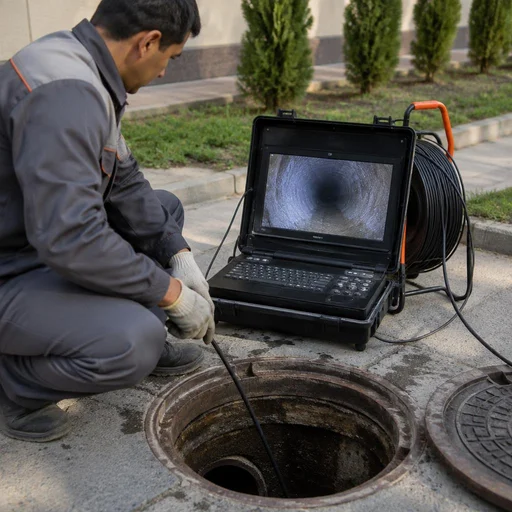
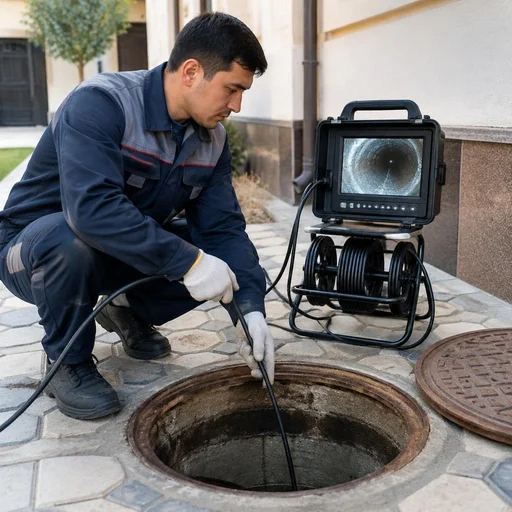
We inspect pipes from 50 to 300 mm and above: for small diameters we use an endoscope, for risers and horizontal runs — a push camera, for external collectors — a rotary camera. The diameter determines not only the camera but also the entry point: into a 50 mm pipe the camera is fed through an access point or plumbing hatch, while into a 300 mm collector the technician descends through a manhole. Through Eco-Service you can order inspection of any of these diameters — from an apartment riser to an external collector.
What equipment Eco-Service uses: from push camera to thermal imager
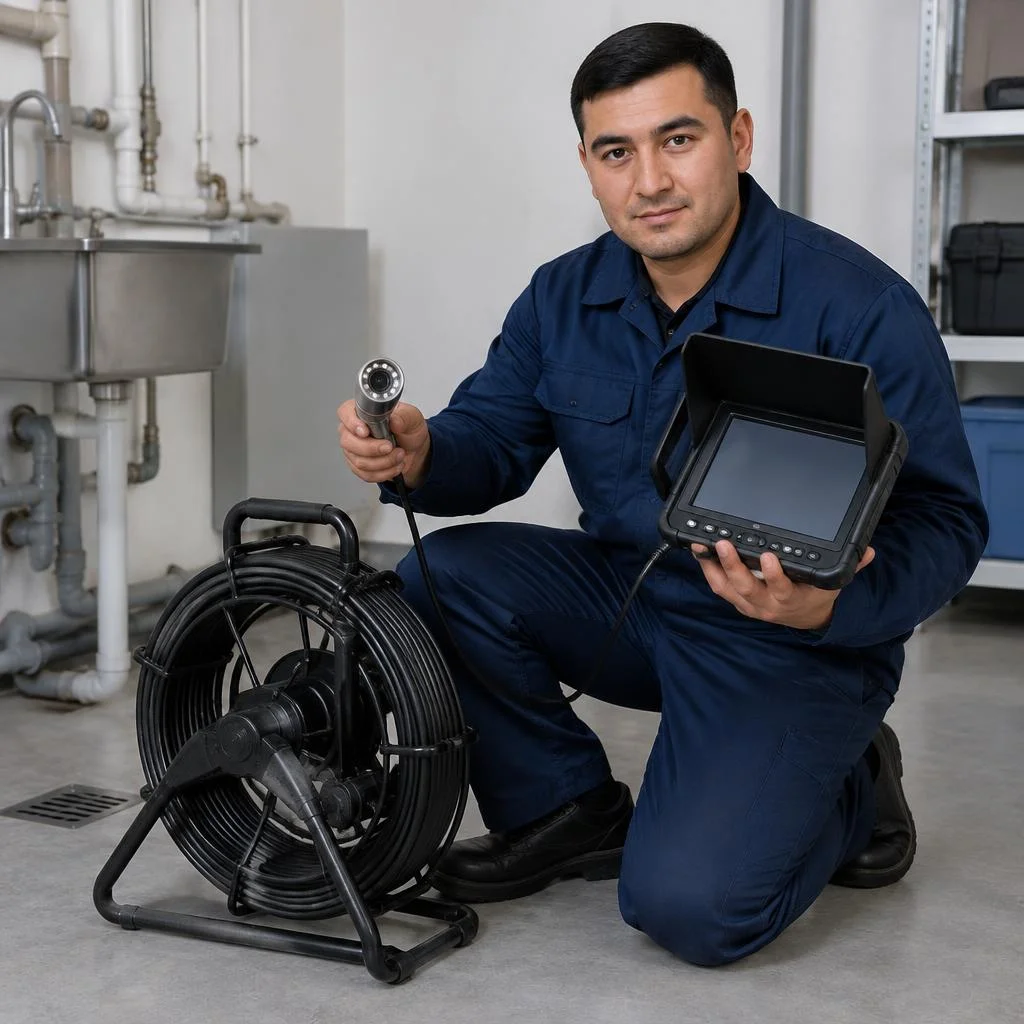
We have our own fleet of diagnostic equipment — from a compact endoscope to a rotary camera and thermal imager. We select the tool for each scenario: pipe diameter, burial depth and type of defect.
Push camera and rotary camera: where each one works
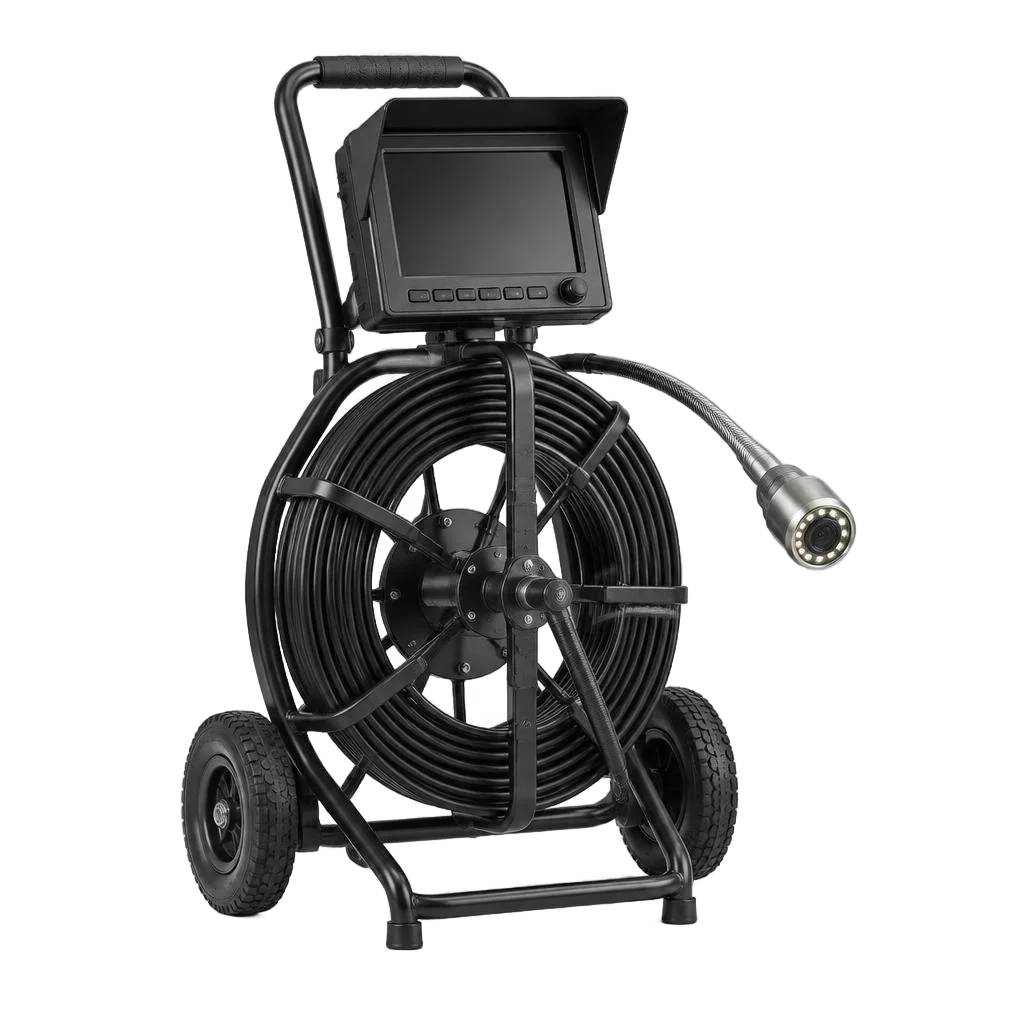
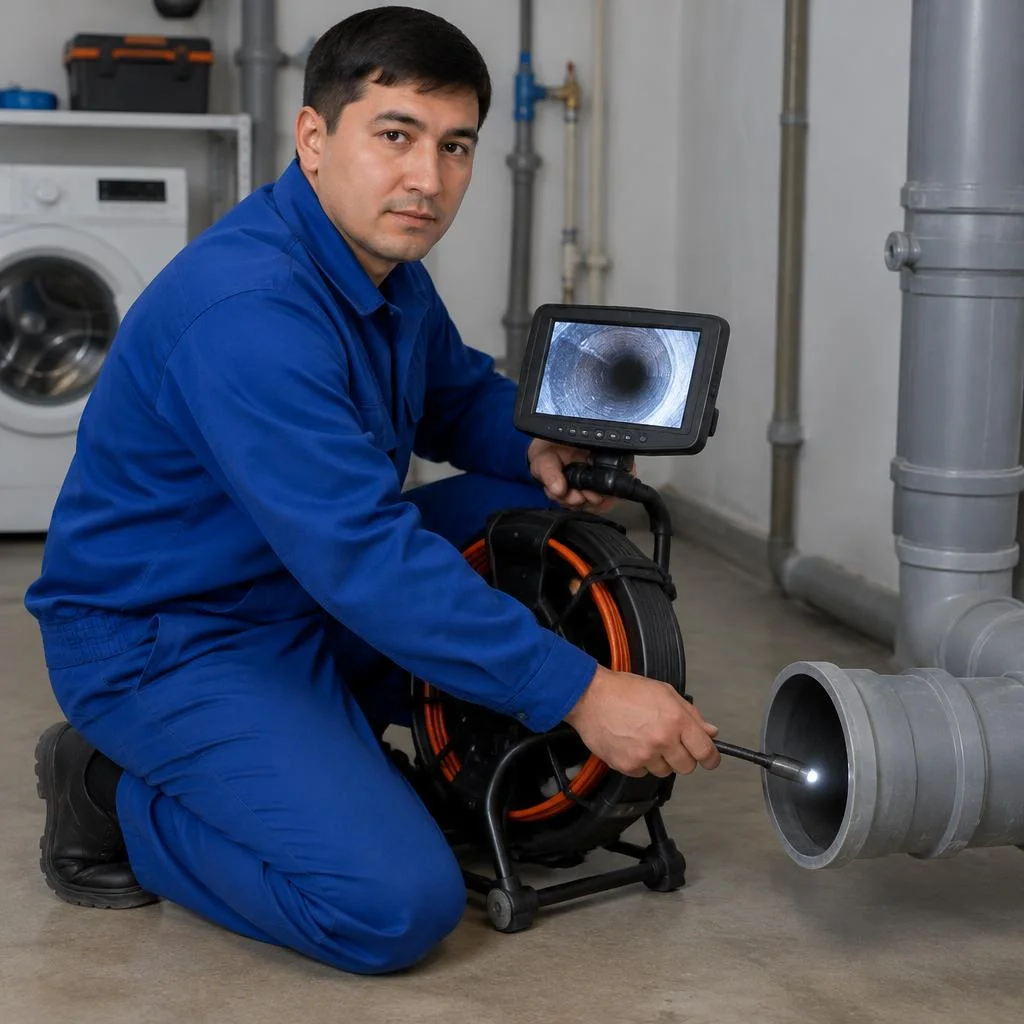
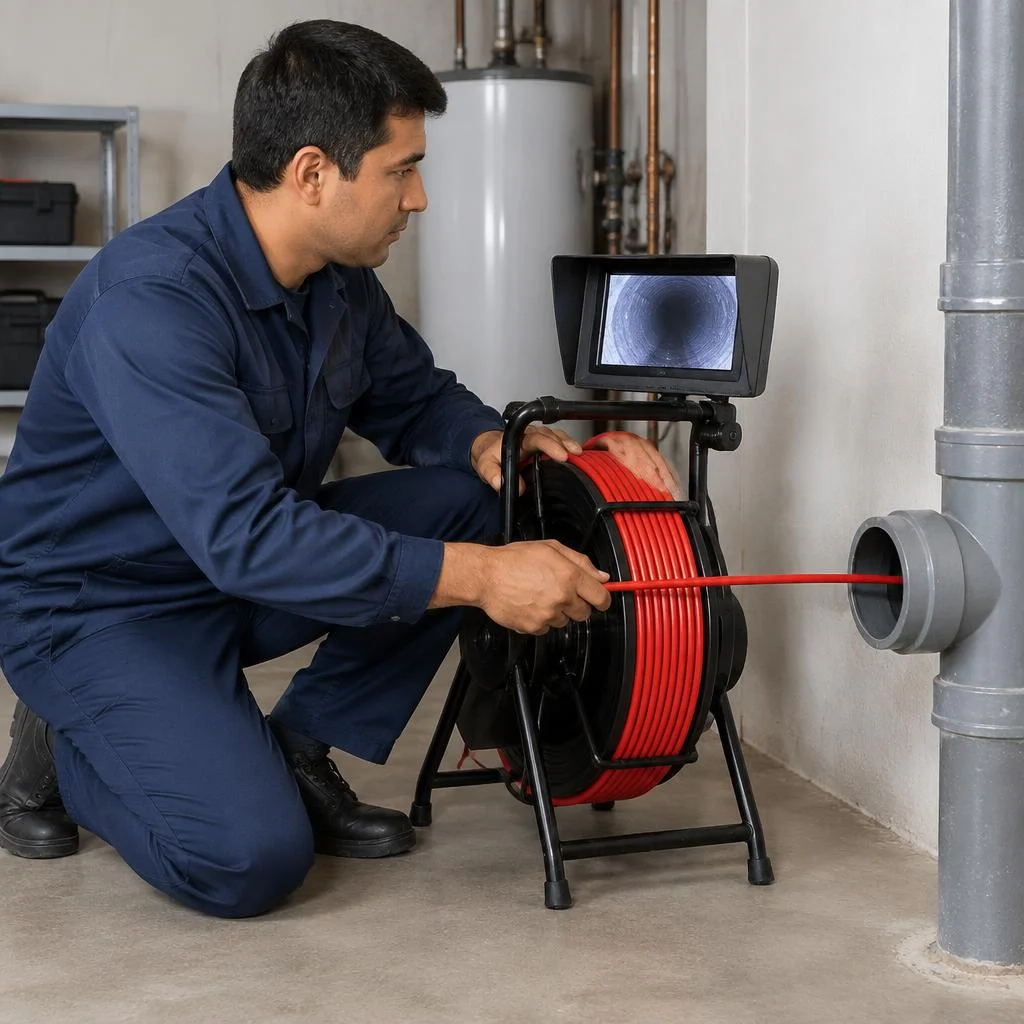
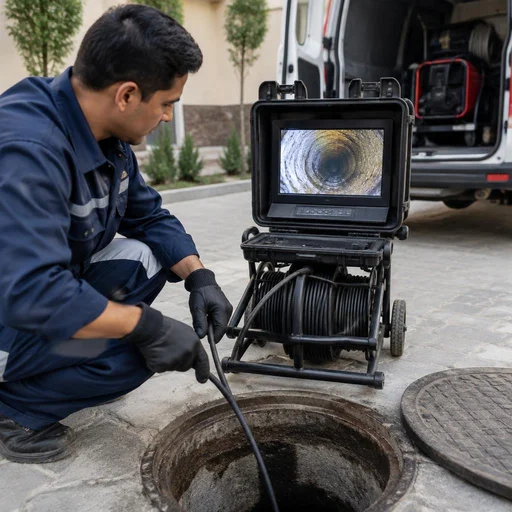
We feed the push camera into the pipe on a flexible cable for risers and horizontal runs, while we use the rotary camera for outdoor collectors and sections with deposits, where a rotating view is needed. The push camera's cable passes through straight sections of a riser and horizontal run to a depth of up to 30 meters, the head captures an image and illuminates the wall from inside — this is enough to see a crack, a displaced socket or a root growth. The rotary camera is mounted on a rotating swivel: the operator turns the head in a collector with a diameter of 200 mm or more and inspects the walls all around, including the upper part of the pipe. The rotary camera is more expensive to operate not because of the optics themselves, but because of time: a full sweep of the rotating view through a collector takes 2-3 times longer than a straight pass with a push camera.
Plumber with an endoscope: small diameters and hard-to-reach sections
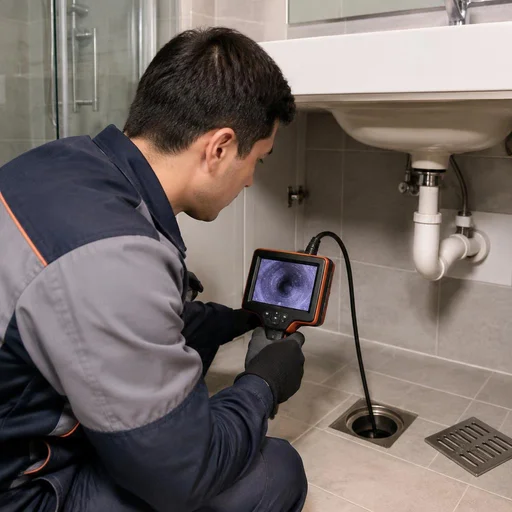
A technician with an endoscope comes to sites where a standard-diameter camera cannot pass: the flexible probe enters a 50 mm pipe, goes around bends and shows the condition of the branch under a sink or bathtub. A probe with a diameter of 5-8 mm passes through an inspection port and a 90-degree bend without dismantling — this is enough for apartment branches, siphons and sections after a tee, where a push camera with a rigid head cannot be fed. The endoscope does not provide footage — it shows the condition, but not the distance to the defect; if footage reference is needed, after the endoscope we run a push camera with a cable.
Plumber with a thermal imager and detection of hidden leaks
A technician with a thermal imager finds a hidden leak by the temperature difference on the surface of a wall or floor: a thermal imaging survey does not require opening up and takes less than an hour per apartment. The device detects a temperature contrast of 0.05-0.1 °C, so a wet spot under tiles or screed reads as a cold or warm zone even before water appears on the surface; in a private house we likewise check the service line and the section of pipe under the yard. The thermal imager shows a zone, not a point: after it we still feed a camera into the pipe to understand whether it is a pinhole leak in the wall or a blockage that produces a wet spot through the floor structure.
Pipe tracing: how we find a pipe underground
Pipe teleinspection with a tracing transmitter allows us to run a camera through the pipe and at the same time mark its axis on the surface — this is how we find utilities under a yard or lawn without excavation. The transmitter is attached to the camera head and emits a signal that the receiver on the surface picks up with an accuracy of 20-30 cm horizontally and up to 1.5-2 m in depth; the operator walks along the route and marks manholes, turns and tie-ins. Tracing is especially needed before earthworks: if a contractor is digging a trench for a cable, without a marker he will with high probability hit a sewer pipe.
When sewer diagnostics are needed: blockages, leaks, routine inspection
Diagnostics are not only called for in an emergency — most often it's a recurring blockage, a smell from the riser, and a routine check before the rainy season.
Recurring blockage: why cleaning without diagnostics doesn't help
A camera inspection is needed when a blockage returns in the same section: the camera shows that the cause is not deposits but displaced pipes or a failed slope, and cleaning with a cable only gives a temporary effect. In older buildings of Tashkent, we most often find two things — socket displacement on cast-iron horizontal runs and a reverse slope in the section from the riser to the outlet, where water physically cannot reach by gravity. Grease and soap buildup in such geometry accumulates faster: the narrowed passage clogs in 3–4 weeks instead of the usual 4–6 months. Moreover, the cable goes in a straight line and knocks out the plug, but does not change the shape of the pipe. If the same riser backs up twice in a season, it's cheaper to order an inspection right away than to call an emergency crew three times — the camera in a single pass separates "clogged" from "broken." In requests, clients often write briefly: Video diagnostics of the sewer — and the technician already understands that a camera pass is needed along the entire section from the riser to the outlet.
Smell from the riser and suspicion of a leak
A smell from the riser and a wet spot on the ceiling are two signals at which we first check tightness with pressure testing, and then run the camera to find the location of the depressurization. A wet spot with no visible source in the apartment almost always means that the leak is not yours: the depressurization is in the neighbors' section above or in the inter-floor slab, and the camera finds a crack in the socket or a fallen-out joint. The smell often comes not from your own apartment, but from the neighbors above through a loose inspection fitting — that's why the inspection starts from the top point of the riser, not from the place where it smells. For us, such calls are closed in a single visit: first pressure testing, then the camera.
Routine sewer inspection in apartment buildings and private houses
- Management companies and homeowners' associations: annual check of risers and horizontal runs before the heating season, when the load on the network is at its maximum.
- Private houses: autumn inspection of the stormwater and drainage system before the rains, while the pipes are not clogged with leaves and sand.
- Cafes and restaurants: inspection of the grease outlet once a quarter — grease on the walls narrows the passage and leads to emergency shutdowns.
- Industrial facilities: inspection of collectors after repair or an accident to confirm that the joints are assembled hermetically.
- Private sector with a septic tank: check of the outlet and drainage wells once a year to avoid overflow and ground subsidence around them.
How pipe inspection works: stages, access to the network, defect report
An inspection takes from 40 minutes to several hours — it all depends on the length of the network and the number of turns. The client sees the picture on the monitor together with the technician and immediately understands exactly where the problem is.
Stages of video pipe diagnostics: from the access point to the recording
- Finding access: an inspection port, a plumbing hatch, a manhole or opening up a section of pipe — the technician looks for the entry point into the network.
- Launching the camera: the cable is fed into the pipe, and the real-time picture is displayed on a monitor next to the client.
- Traversing the section: the operator advances the head to the next manhole or to the location of the blockage, keeping the cable centered.
- Recording: the inspection is carried out with recording, and each defect is noted with a reference to the distance from the entry point.
- Defect report: a list of what was identified with the defect type, distance and a recommendation for remediation.
What the defect report and inspection act include
| What we record | Format | Who needs the document |
|---|---|---|
| Defect type | Entry in the report | Owner, management company |
| Section distance | Mark on the video | Contractor, insurance company |
| Recommendation | Text in the report | Owner |
| Signatures of the parties | Inspection act | Management company, homeowners' association, court |
The report only makes sense together with the video recording: if the contractor disputes the conclusions, the recording with the distance markers settles the dispute faster than a repeat visit. The report is prepared by the Eco-Service company — the document is accepted by management companies and insurance companies, and the client receives both the recording and the signed act.
How long an inspection takes and what it depends on
An inspection of an apartment takes 40-60 minutes, of a private house — up to two hours, and of an external network several hundred meters long — up to half a day. The time does not grow linearly: every turn of the pipe and every inspection port adds a pass, so a network of ten short sections takes longer to inspect than a single straight collector of the same length. Video diagnostics of the sewer system in a house with two risers and a basement takes about an hour, while on a main line under Amir Temur Avenue with four manholes it takes 3-4 hours. If the network is old and the inspection ports are walled in, add another 30-40 minutes for opening up. Video diagnostics of pipes at sites with complex geometry — with branches, tees and diameter transitions — requires more time than a straight section: the operator passes through each junction separately and records the distance. Schedule the inspection for the first half of the day — that way there is time left for cleaning based on the results, if the defect is confirmed.
What to do after diagnostics: cleaning, flushing, repair based on the inspection results
Diagnostics is not an end in itself, but the basis for a decision. Based on its results, we immediately state what to do with the pipe and by which method: clean, flush, restore a section, or pressure-test.
Clog cleaning and hydrodynamic flushing based on the inspection results
If the camera showed a clog without a pipe defect, we perform clog cleaning or hydrodynamic flushing: water under pressure washes away deposits from the walls without damaging the pipe. Grease and mineral salt buildup on the riser and the horizontal run is removed with a high-pressure jet, and on the outdoor sewer line the flushing also carries sand and silt out of the channel. A dense plug is broken up with a mechanical cable with an attachment, after which water is supplied — this sequence keeps the passage open longer than flushing alone. In a private house with a septic tank, we carry out flushing with volume control so as not to overfill the receiving chamber. Hydrodynamic flushing does not replace cleaning when the plug is dense: first the cable breaks up the core of the clog, and only then does the water wash away the remnants — in the reverse order the water bypasses the plug. With us, a flushing request is processed according to an inspection report that specifies the section and the method.
When pipe repair is needed based on the diagnostic results
Pipe repair based on the diagnostic results is needed in cases of displacement, a crack, or a loss of slope: the local section is replaced and restored with a sleeve, without relaying the entire network. Displacement at a bell-and-spigot joint of a cast-iron horizontal run is fixed by replacing one span, a crack in plastic is sealed with a repair coupling, and a sagged section is relaid with the slope restored toward the manhole. On an outdoor sewer line up to two meters deep, opening the trench takes several hours, and the work is carried out without shutting off the house's water supply. The decision on repair depends on the footage of the defect: displacement at one joint is treated locally, while a series of displacements along the entire length of the horizontal run means the pipe has sagged as a whole and spot replacement will not help. In such cases, we advise planning the relaying of the section right away — reopening it a season later will cost more.
Pressure diagnostics and leak testing
Pressure diagnostics of pipes shows whether the system holds the load: the section is pressure-tested, and a pressure drop indicates a loss of sealing that the camera may not see. For pressure sewer lines and internal piping in a private house, we raise the pressure to the working level and hold it for a control time, recording the drop with a pressure gauge. A hidden leak in a wall or under a screed shows up precisely here: a thin stream through a pinhole leaves no traces on the camera, but drops the pressure within minutes. On an outdoor sewer line, pressure testing is combined with a visual inspection of the manholes in order to separate a pipe defect from a clog. Pressure testing is done before pouring the screed or backfilling the trench: once the pipe is covered, a pinhole can only be found by opening it up, not by testing. With us, leak testing is scheduled before the final finishing — this way the defect is eliminated without dismantling tiles and flooring.
Warranty, documents and Eco-Service service in Tashkent
Sewer video inspection work is performed by our own service center — without subcontracting and without intermediaries between the client and the technician. Below we break down the warranty terms, documents, payment and exactly who will arrive on site.
2-year warranty on work and what it covers
Eco-Service provides a 2-year warranty on its work: if a blockage returns in the section we cleaned, we perform a repeat visit free of charge. The warranty covers clearing blockages in apartments, private houses, kitchen and plumbing stacks, horizontal runs and outdoor sewers — for each section, the initial condition of the pipe is recorded in a defect report tied to the linear footage and diameter. On a repeat call, the technician compares the new condition with the record and determines whether the blockage is related to an oversight or to a new cause. The warranty does not cover cases where the camera initially showed a displacement or crack and the client refused repairs — the cause of the recurring blockage here is known in advance and recorded in the report.
Documents, payment and intake at the service center
- Documents: an inspection report signed by the technician, a defect report and a video recording of the camera's passage through the pipe.
- Payment: via Click, Payme, Uzcard, Humo or cash — after signing the report.
- Intake: in person, at our own service center, by appointment.
- Reviews: Google Reviews, Yandex.Maps and a Telegram channel with examples of work.
- Storage: a copy of the report and the video remain with the client and in the service archive.
Why our own technician arrives, not a subcontractor
An in-house Eco-Service technician with their own equipment arrives on site: we do not pass the request to a subcontractor, so a single contractor is responsible for the result of the diagnostics and cleaning. We organize arrival in Tashkent within 30 minutes, and we accept emergency requests around the clock — this is critical when a stack in a multi-story building floods the lower floors and waiting for an outside crew is not an option. The in-house technician works with a push camera, a rotary camera and a hydrodynamic unit, so the inspection and flushing are done in a single visit without handing the site over to third parties. Under an intermediary scheme, diagnostics are performed by one technician and cleaning by another, and responsibility for a recurring blockage is blurred between them; a single contractor closes that gap.
Conclusion
Sewer diagnostics reveal the cause of the problem before work begins. Below are five conclusions that help an apartment owner, homeowner or management company make decisions about pipes with full awareness.
Key conclusions
- A camera in the pipe separates a blockage from a defect: without an inspection, cleaning removes the symptom, while a crack or displaced joint remains untouched.
- Diameter determines the tool: an endoscope works in pipes from 50 mm, a push camera — in stacks, a rotary camera — in collectors and outdoor networks.
- A thermal imager and pressure testing complement the camera: the first is used to find a leak outside the pipe, the second to check tightness after repairs.
- A defect report and video recording protect the owner: with these documents, a dispute with a management company or contractor is resolved based on facts, not words.
- A scheduled inspection once a year is cheaper than an emergency call: it prevents basement flooding during the rainy season and a stack rupture in winter.