
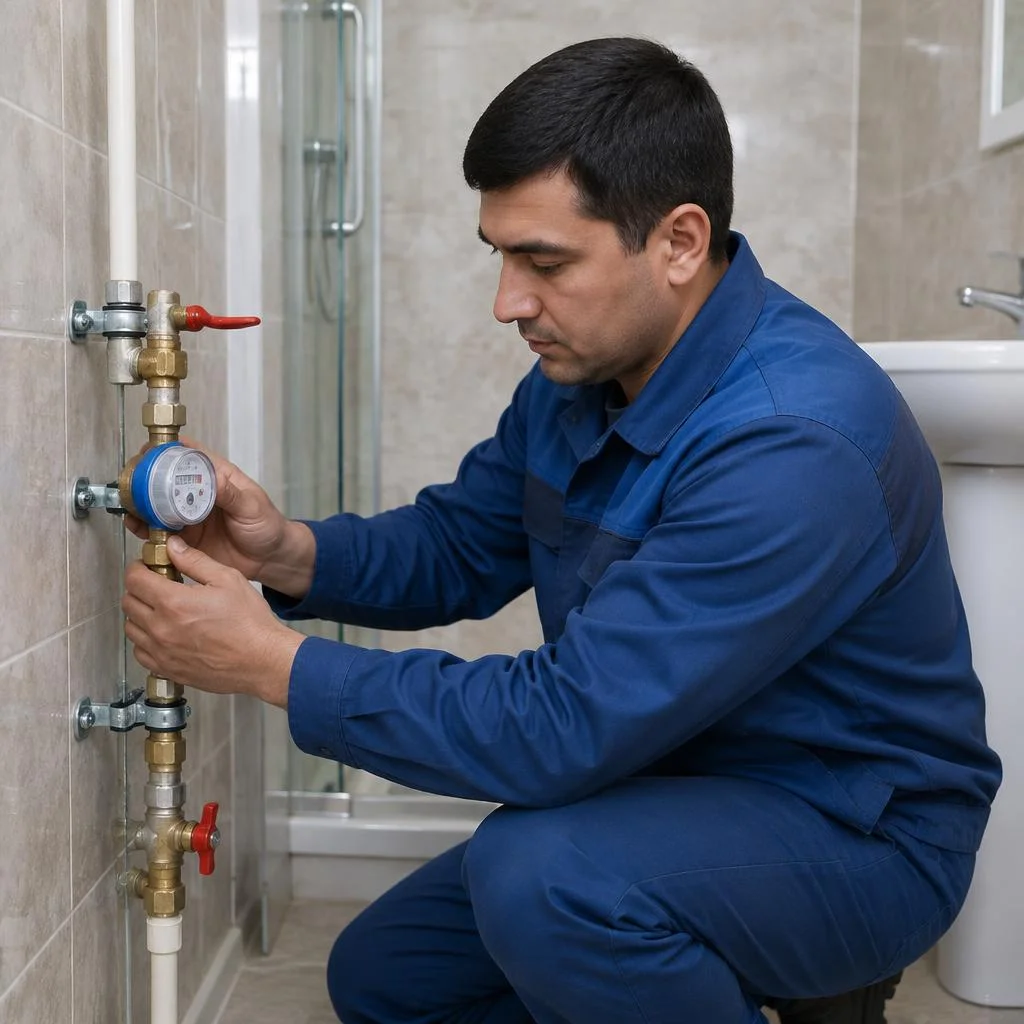
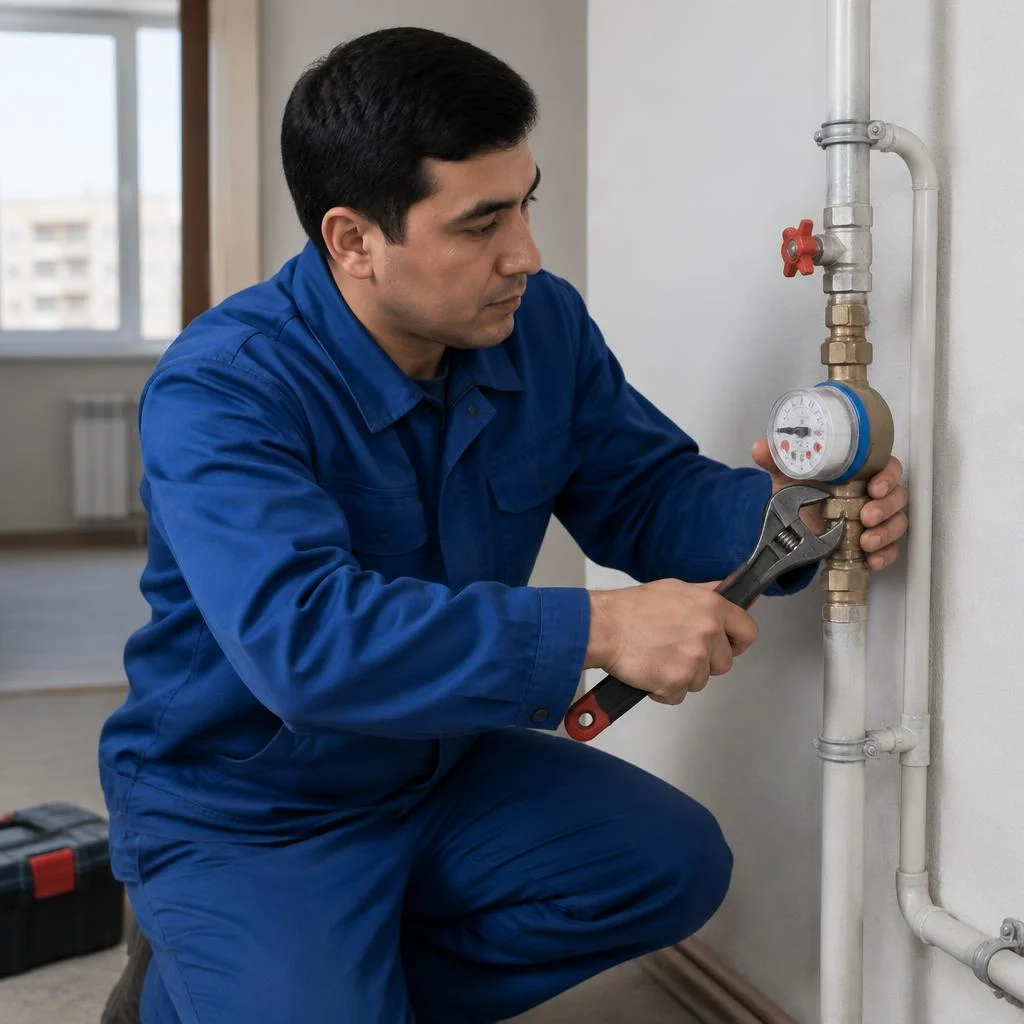
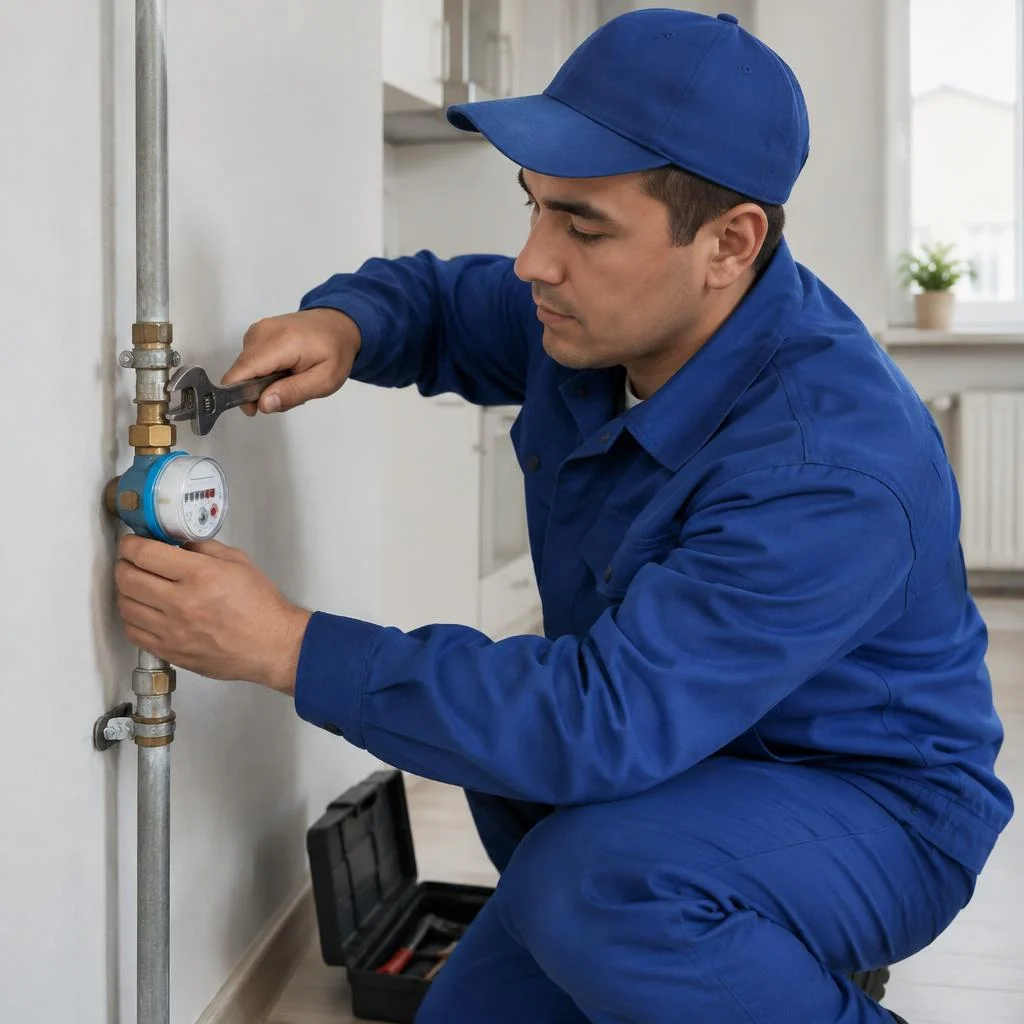
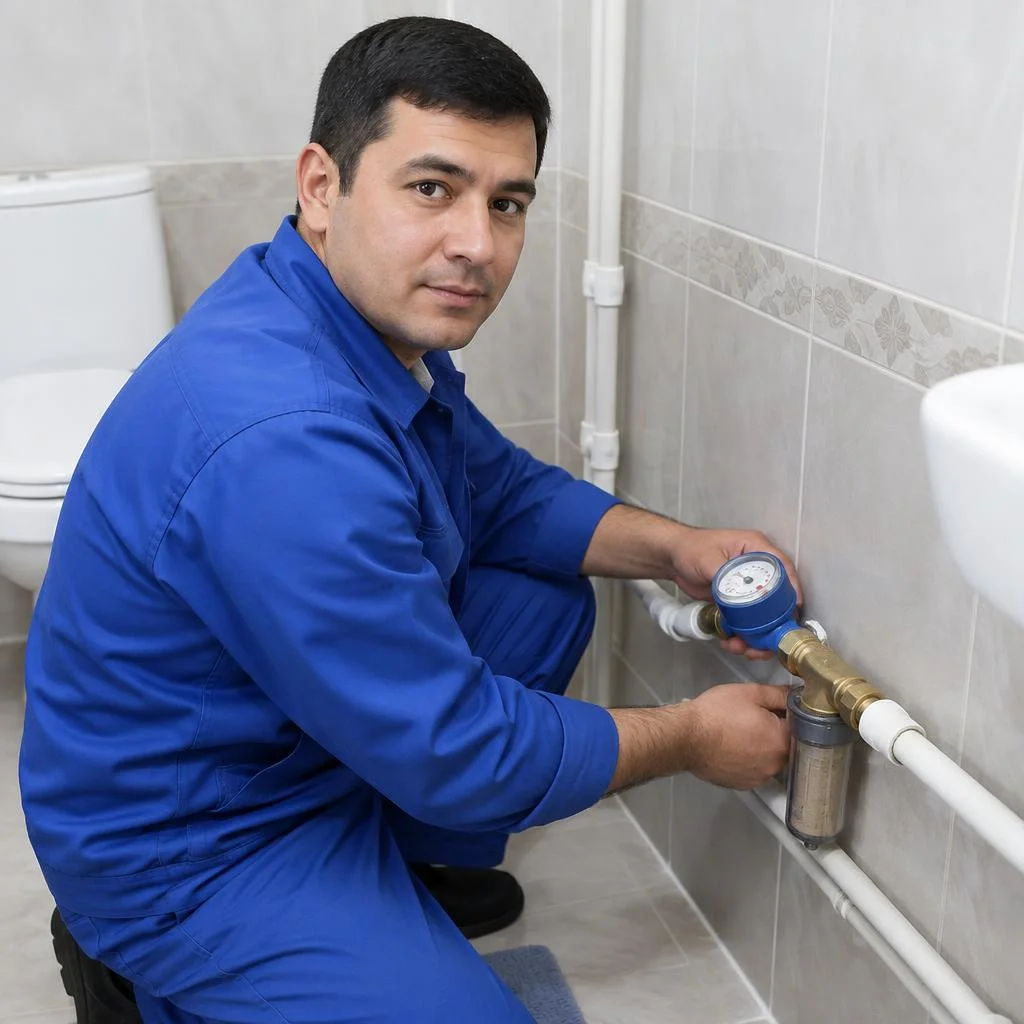








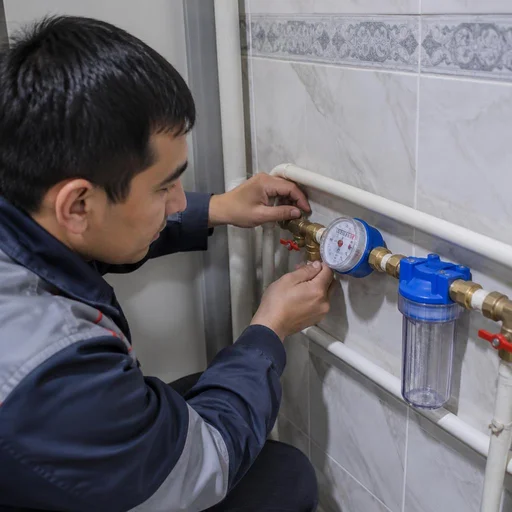
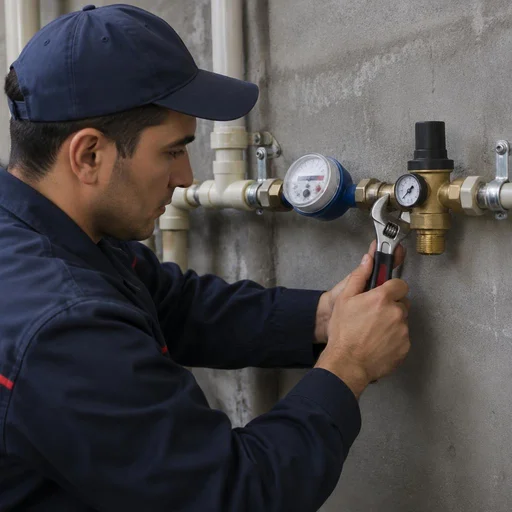
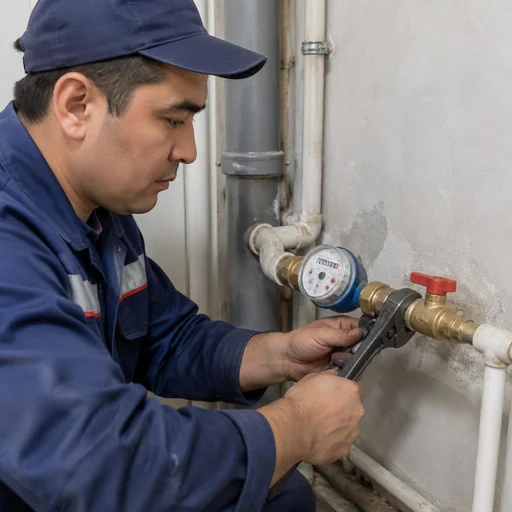
Why install a water meter and what it gives the owner
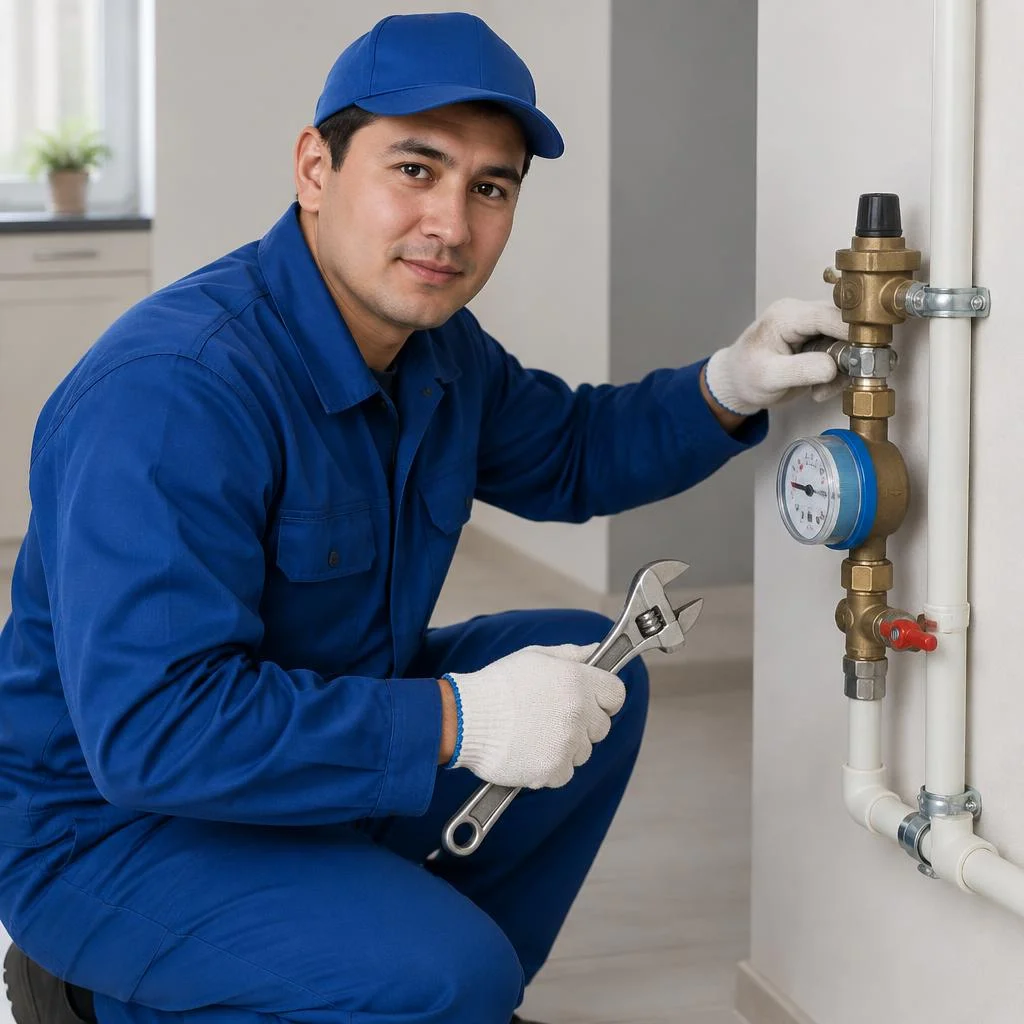
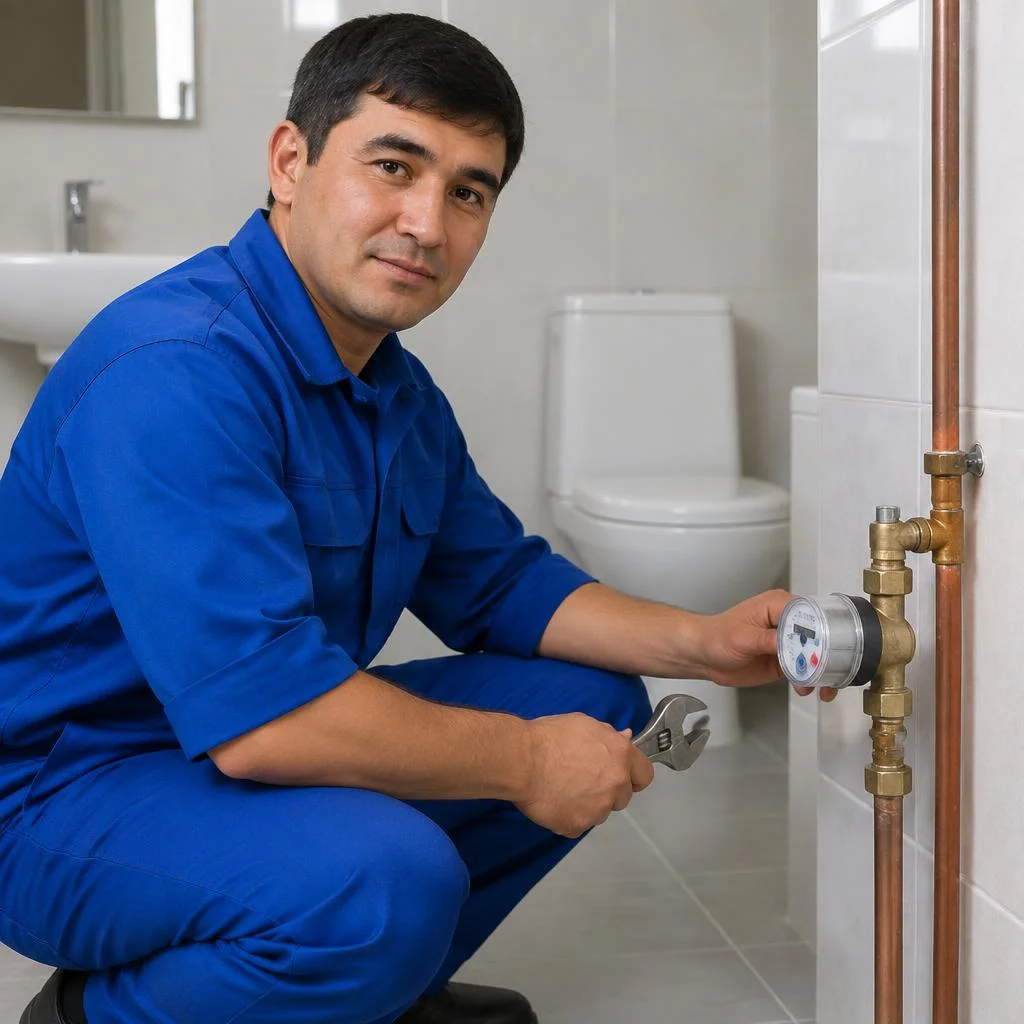
A water meter is not a formality for the sake of paperwork, but a tool for controlling consumption and legitimate savings. Let's look at what the device gives the owner, what requirements apply in Uzbekistan, and how cold water supply (CWS) and hot water supply (HWS) lines differ.
What a water meter gives the owner of an apartment or house
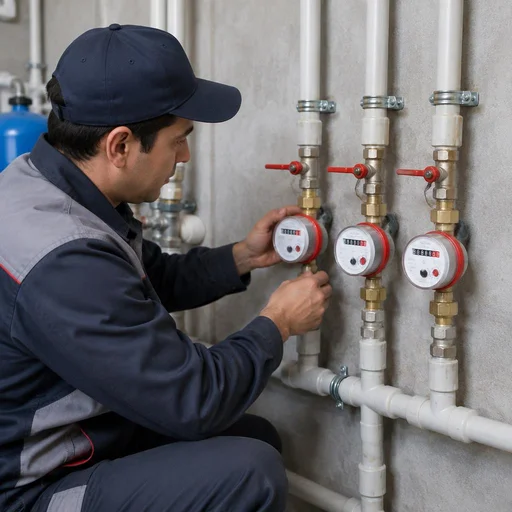
The device shifts payment from a norm to actual consumption — you pay exactly for what you consumed. For a family of three in a Tashkent apartment, the difference between the norm and real consumption is noticeable already in the first billing month, especially if the washing machine and dishwasher run on a schedule rather than around the clock. The device records every water draw-off point: the kitchen mixer, the shower, the toilet tank, the irrigation tap in the private sector. Consumption control changes qualitatively — you see the figure rather than assume it. Cold and hot line devices are counted separately, so overpayment on one branch is not masked by savings on the other. Clients often ask how to install a water meter correctly so the assembly doesn't have to be redone — and here what matters is not haste, but the precise sequence of operations. The main savings appear not in the first month, but after leaks are eliminated: the equipment makes a leak visible through a discrepancy in readings. This is exactly where the installation of water meters begins — not with buying the device, but with understanding where exactly the volume is going.
Is a permit required to install a water meter
A separate permit for installation is not required — the device is placed on your side of the inlet, and it is legalized through registration and sealing at the water utility. A permit as a separate document is not issued in Uzbekistan: the owner has the right to install a metering assembly in an apartment or private house without prior approval from the supplier. Then the procedure comes into play: an application to the district water utility, calling an inspector, inspection of the assembly, installation of a seal and signing of the commissioning certificate. The key document is not a permit, but specifically the commissioning certificate: without it, the readings will not be accepted for calculation, and charges will continue according to the norm. Registration with the water utility usually takes from three to ten working days from the moment the application is submitted. If you are planning installation of water meters in an apartment, check in advance with the water utility the list of documents for your district.
How the installation of cold and hot water meters differs
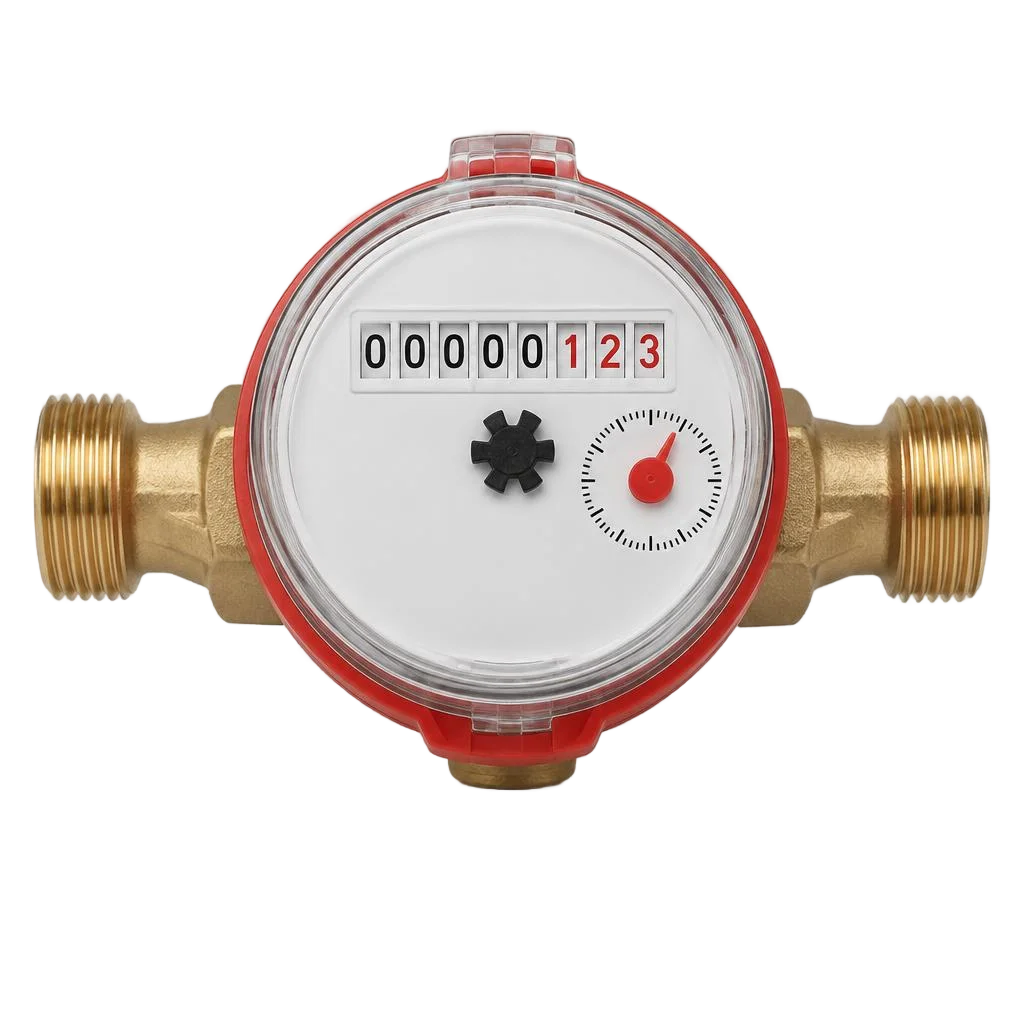
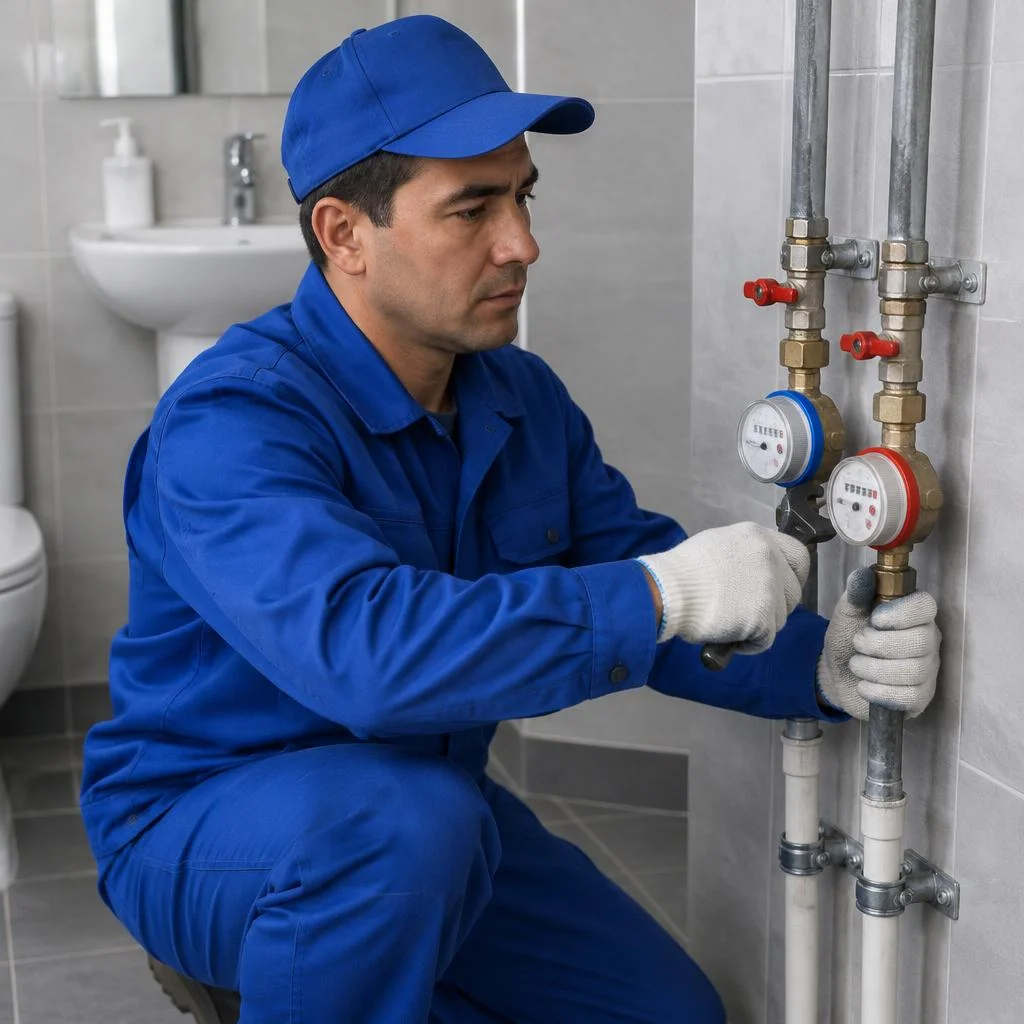
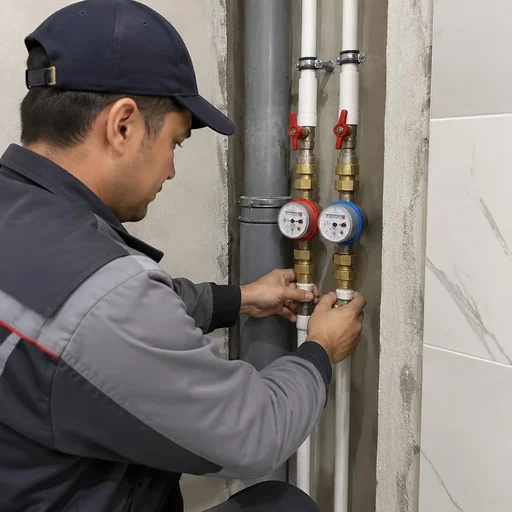
We install separate devices on the cold and hot lines: a HWS meter is designed for temperatures up to 90 °C and is often equipped with a temperature sensor. Installation on the cold and hot branch differs not only in the marking of the body: for the hot line, devices with a brass impeller and heat-resistant rubber seals are used; for the cold line, standard models with a plastic mechanism are suitable. A temperature sensor for hot water is needed where the water utility counts thermal energy separately from volume — without it, HWS readings are accepted only as cubic meters. When installing on a hot pipe, the technician places the device after the shut-off valve and before the mixer to prevent backflow. You cannot put a "cold" meter on a hot pipe — the impeller deforms, and the device will begin to understate readings long before verification. For a suburban plot, the installation of a water meter in a private house is counted separately: there, an inlet from a well or borehole and preparation of a pit are added to the assembly. A separate topic is the installation of a new water meter to replace a failed one: here it is important to preserve the seal on the adjacent assembly.
What is included in water meter installation and what the cost of work depends on
The cost of installation depends on the number of water draw-off points, the pipe material, and the configuration of the unit — a filter, pressure reducer, and check valve add separate operations. Installing a water meter in an apartment takes one visit by a technician, while in a private house or at a basement inlet, piping and preparation of a seat for the body are added. Clients often formulate the request as water meter installation price, and the technician immediately understands from such a request: a calculation is needed based on the number of points and the type of pipe. In the page's price list, water meter installation in a private house and water meter installation price, which is higher than for an apartment due to the volume of excavation and welding work, are listed as separate lines. Connecting a water meter to existing piping requires shutting off the riser, so the work is coordinated with neighbors and the management organization. Installation on a steel pipe is more expensive than on polypropylene: threaded preparation and adapters are needed. In search, people often type water meter installation in a private house — behind such a query is a plot with an inlet from a well, where a pit and preparation of the seat are added to the unit. Before calling the technician, clarify whether sealing is included in the work — otherwise you will have to pay for a repeat visit by the inspector. In everyday usage, such a service is simply called water meter installation, and clients most often come with this query.
How to install water meters in Tashkent: procedure
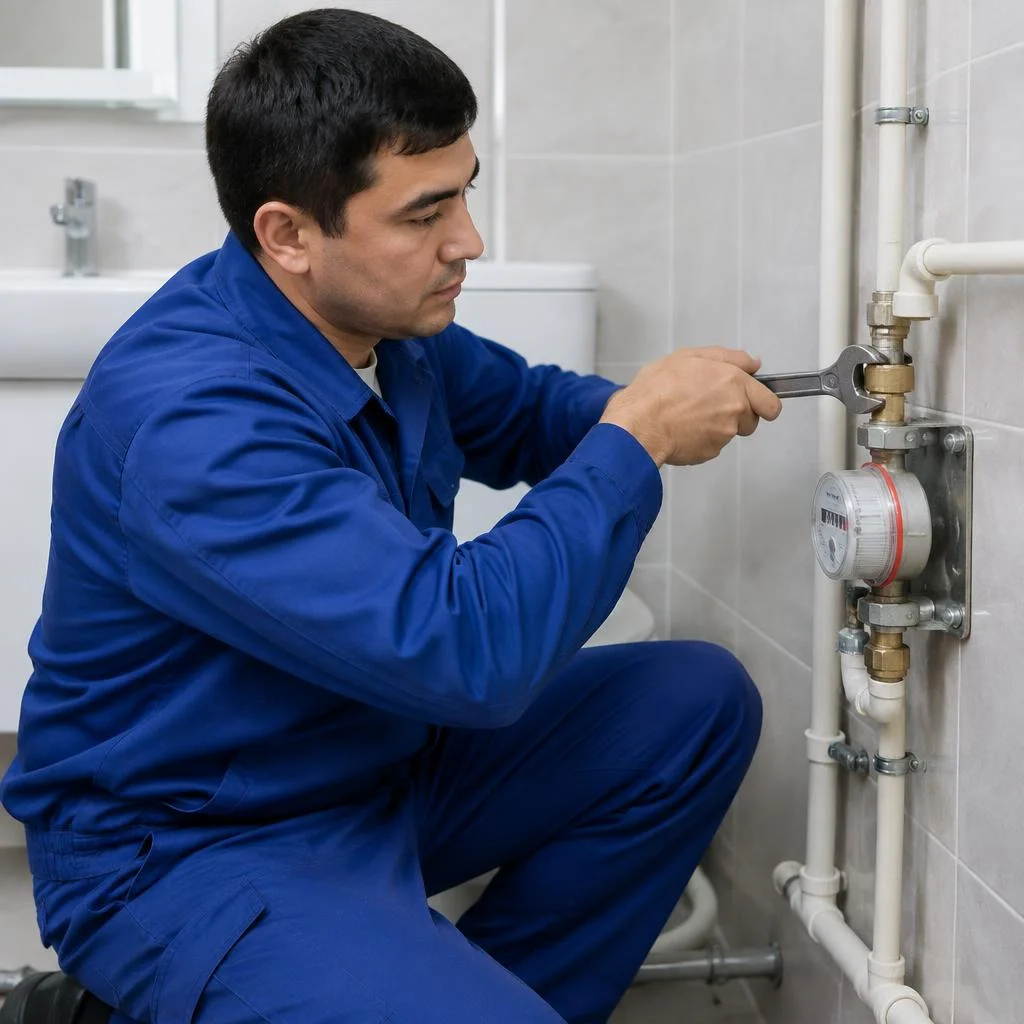
Water meter installation Tashkent begins with a request: the technician arrives, inspects the inlet, selects the size type, and agrees on the installation date. Water meters can be installed in one day if the pipe is already prepared and the riser is shut off according to schedule. Installation on two lines — cold and hot — is carried out sequentially so as not to leave the apartment without water for more than two to three hours. Installing water meters on metal-plastic is the easiest: the fittings do not require welding, and the body is secured with an adjustable wrench. After installation, the technician checks tightness under pressure, fills out the report, and hands over the documents for registration. A separate line in the price list is water meter installation price, which is calculated by the number of lines and the length of the supply piping. If you plan to install water meters in a new building before occupancy, include the metering unit in the piping design right away — this saves you from redoing tiles and chasing walls later. For a suburban property, the procedure is the same as for an apartment: water meter installation in a private house differs only in the preparation of the inlet and the place for the unit.
Which water meters we install and how to choose a model
The device is selected to match the pipe diameter, the medium temperature and the method of reading the meter. Let's look at the types of meters and the criteria by which we select a model for a specific site.
Turbine or pulse meter: which to choose
| Parameter | Turbine meter | Pulse meter |
|---|---|---|
| Accuracy at low flow rates | High | Medium |
| Reading the meter | Visual from the dial | Remote pulse output |
| Installation orientation | Horizontal and vertical | Horizontal |
| Sensitivity threshold | From 0.04 m³/h | From 0.02 m³/h |
| For a single apartment | Suitable | Excessive |
| For several points | Suitable | Justified |
For an apartment and a private house, we more often install a turbine meter — it is more accurate at low flow rates. A pulse meter is chosen when remote reading is required. The pulse output is justified in houses with several points and automated metering: for a single apartment, the extra cost for it does not pay off. Through Eco-Service you can select the type of device for a specific site.
How to select the diameter and accuracy class of the device
We select the diameter according to the pipe cross-section (usually DN15–DN20 for an apartment), and the accuracy class — no lower than A under current requirements. The meter's size type is rigidly tied to the internal bore of the pipe: at the inlet to a private house, DN25 and DN32 are found, while in an apartment riser — DN15 and DN20. The accuracy class determines the tolerance of error that the water utility accepts in calculations: a class A device registers flow from 0.04 m³/h, class B — from 0.02 m³/h. Clients often formulate the task as installing water meters — and it is precisely on this request that we explain why the size type matters more than the brand of the body. An undersized diameter causes a jump in flow velocity and accelerated wear of the impeller — the device "dies" before the verification interval. In my opinion, saving on the size type is deceptive: the extra cost for the correct body is many times less than the cost of re-installation a couple of years later.
Meter with filter, pressure reducer and check valve: when the complete set is needed
- Coarse filter: we install it before the device on old steel pipes, where the flow contains rust and scale that clog the impeller.
- Pressure reducer: needed in houses with unstable pressure and water hammer, so that the body and seals are not destroyed by surges.
- Check valve: mandatory where hot water can be drawn into the cold line — without it, the device registers the crossflow and the readings diverge.
- Shut-off valve: we install it on both sides of the metering unit, so that the device can be removed for verification without shutting off the riser.
Which sites we visit
- Apartment in a new building: installation on plastic and metal-plastic pipes, usually two points — cold and hot water.
- Private house: inlet DN25–DN32, often a filter and reducer are needed due to pressure surges in the external network.
- Premises with a vertical riser: vertical installation of water meters is possible on turbine models with axial flow.
- Site with several points: a manifold or distribution to 3-4 devices, where pulse reading is appropriate.
What affects the final estimate
The cost of installing a meter consists of the type of device, the number of points, the pipe material and the configuration of the assembly. Cold water work on a plastic pipe is simpler than on a steel one, where cutting and threading are required. The more points and protective elements, the higher the technician's labor costs. Clients often search for water meter installation price — and land on this page, because the total depends on the scope of work, not on a fixed rate. To understand the order of work and the price, we clarify the pipe material, diameter and whether a filter is present — these are the parameters we use to calculate the estimate. A separate line item is pipe replacement and meter installation: if a steel section is replaced with polypropylene, fittings and the time for tapping into the pipe are added to the estimate. We give the exact figure after an inspection.
What we clarify before the technician's visit
- Pipe material and diameter: this determines which fittings and adapters the technician brings to the site.
- Device type and configuration: turbine or pulse, with a filter, pressure reducer or check valve.
- Number of points: one, two or a manifold for several devices, including vertical installation.
- Metering method: visual reading from the dial or a pulse output for remote transmission.
- Access to the inlet assembly: whether the approach to the pipes is clear, and whether furniture or a box encloses the riser.
How we calculate the estimate by type of property
| Property | What is included in the calculation | What we clarify |
|---|---|---|
| Apartment | Number of points, pipe material, device type | Presence of a riser, access to the pipes |
| Private house | Inlet, configuration, laying depth | Pressure in the outdoor network |
| New build | Manifold, plastic or metal-plastic | Readiness of the inlet assembly |
| Premises with a manifold | Number of devices, pulse output | The manifold layout |
We do not quote a sum before the inspection: the price depends on the pipe material and configuration, and it changes when fittings are replaced. For properties where installation in a private house is required, the calculation is separate — there the inlet is DN25–DN32 and a filter is often required. Work in an apartment is calculated more simply: two points, plastic or metal-plastic. The price is formed from labor costs, not from a "per unit" price list.
What to do before the technician arrives
- Photograph the inlet assembly: a picture of the riser and inlet pipe helps the technician select the size in advance.
- Clarify the number of points: one, two or a manifold for several devices, including vertical installation.
- Check the pressure: if the pressure is unstable, let us know in advance — the technician will bring a pressure gauge and a reducer.
- Prepare access: clear the space around the pipes and move furniture so the technician can work without rearranging anything.
Preparation for installation in a private house
If a water meter installation in a private house is planned, check the condition of the outdoor inlet before the technician arrives — a rusty steel pipe will require cutting and threading. For cold water in a private house, we often recommend installing a coarse filter right away: it extends the service life of the impeller. Special attention is required for the installation of cold water meters at the inlet to the house, where the pressure is unstable and water hammer is possible. And to connect the devices without redoing the assembly, the technician brings seals, a certificate and a standard set of fittings. In our experience, preliminary preparation by photo saves the client a whole day of waiting and one repeat visit.
Water meter installation: what we do on site
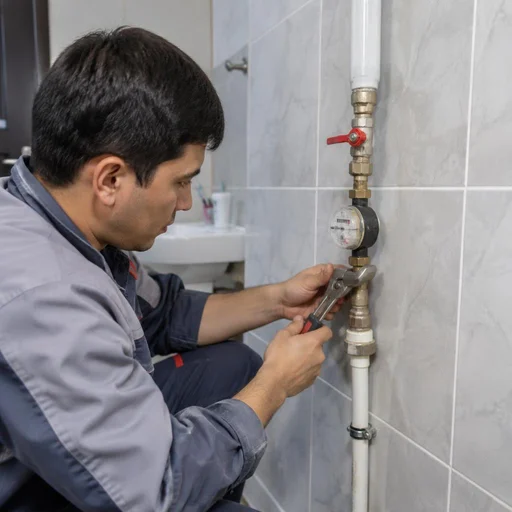
The work begins with marking the unit: the technician determines the length of the straight section before and after the meter so that the flow stabilizes and the impeller counts without fluctuations. Then comes the tapping, installation of fittings, the body, and a leak test under working pressure. If the pipe is steel, the section is replaced with polypropylene or metal-plastic — this way the unit lasts longer and does not leak at the threads. Clients describe the task like this: installation of water meters on metal pipes — and this is a separate scenario where cutting and thread cutting are required. Based on our experience, installation at one point takes about an hour, and on a distribution with a filter and pressure reducer — up to three. After testing, the technician seals the meter and hands over the certificate for registration with the water utility.
Installation of water meters on different types of pipes
The installation technology depends on the pipe material: in some cases a threaded connection is sufficient, in others soldering or an adapter is needed. Let's break down how installation proceeds on polymer, steel, and plastic mains.
Installation on polypropylene and metal-plastic
On polypropylene, the meter is installed via soldered adapters; on metal-plastic — via compression fittings, without welding or excess heating. Polypropylene pipe requires precise holding time during soldering: overheating narrows the passage and creates turbulence, which causes the meter to count with error. The compression fitting on metal-plastic is tightened with a torque wrench — under-tightening causes a leak at the threads, over-tightening cuts the ring. Eco-Service installs the meter on polypropylene with a joint heating of 260 °C and a holding time of 5–7 seconds, which preserves the internal diameter without narrowing. Clients often formulate the request as installation of water meters — and the technician immediately understands that installation on a polymer main is needed. The cost of installing a cold water meter on polypropylene depends on the number of points, but the quality of soldering is more important than speed: a poor joint produces a pinhole leak within a season.
Installation on steel and plastic pipe
On a steel main, the meter is installed via a threaded adapter with sealing; on plastic — via glued or threaded fittings according to the type of material. An old steel pipe often has narrowing from scale: before installation, the technician checks the passage and, in case of critical buildup, suggests re-welding the section, otherwise the new meter immediately operates in an abnormal mode. The threaded adapter for the meter is selected by diameter — ½ or ¾ inch, with flax winding and paste. Installation of new water meters on PPR or HDPE plastic requires a fitting with the same characteristics as the pipe itself. Clients search for installation of cold water meters or installation of cold and hot water meters — and from these queries the technician immediately sees how many circuits need to be plumbed. Installation of water meters on a steel main almost always requires re-welding the section — check the passage of the old pipe before installation; a 30% narrowing distorts readings more than the accuracy class of the meter.
Vertical installation of water meters: when it is possible
Vertical installation of water meters is permissible only for meters designed for any installation angle — otherwise the impeller operates under wear. With vertical installation, the flow direction from bottom to top is important: the meter does not count reverse movement, and the flow goes to waste. The datasheet of a vane meter usually specifies the permissible angle — horizontal or universal; turbine models are more sensitive to orientation. Before vertical installation, Eco-Service checks the body marking: the arrow on the front side shows the required direction. Clients search for company for water meter installation, water meter installation in apartment price, install water meter price, and install water meter — and from these formulations it is clear that the person needs a contractor who will come and do everything turnkey. If the main runs from top to bottom, the meter is turned around or replaced with a model with universal installation — otherwise metering is not carried out at all. For a water meter, the installation price on vertical sections is higher: the technician spends more time selecting the body orientation.
Installation of water meters in an apartment, private house and new building
The installation scenario depends on the property: in an apartment it is a riser and a compact unit, in a private house it is the inlet and distribution, in a new building it is clean distribution without scale, and on communal units it is devices with protection against contaminants.
Installation of water meters in an apartment
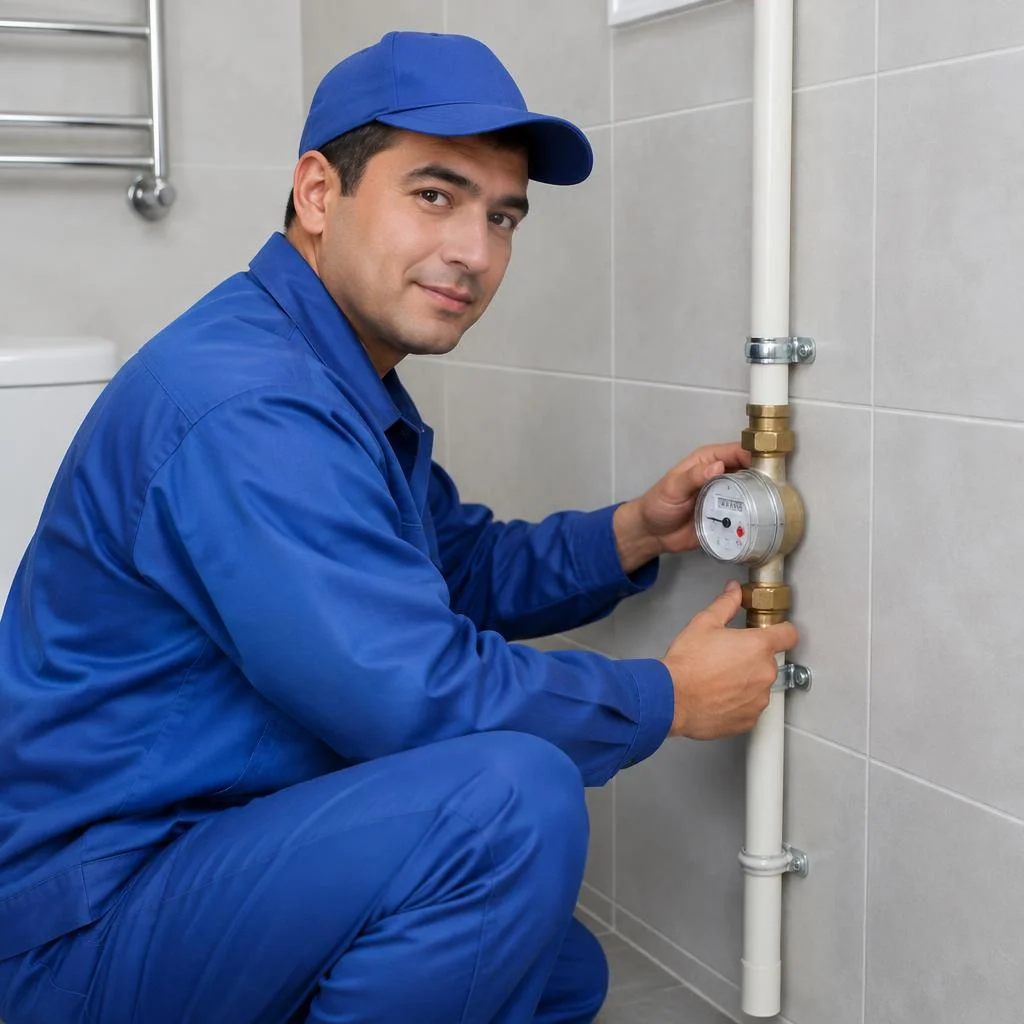
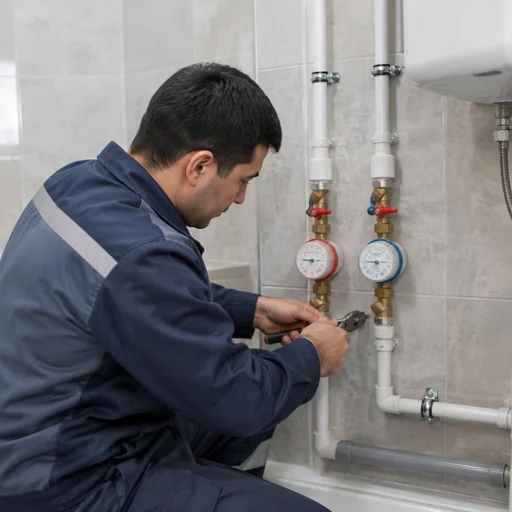
Installing a water meter in an apartment takes one visit, and we place the device at the inlet to the bathroom or on the riser, leaving the unit accessible for verification. On the riser in panel nine-story buildings of Chilanzar and Yunusabad there is little space for the unit, so we select a compact layout: valve, coarse filter, the device itself and a check valve. For the hot circuit we take a model with heat resistance up to 90 °C, for the cold one — a regular turbine body. The technician first checks the condition of the threads and shut-off valves: on an old valve with stripped threads you cannot assemble the unit without replacing the tap-in. Clients often find us by searching "cold water meter installation" — and land on this page. On the riser it is important to coordinate water shutoff with neighbors and the management company — we schedule work for the morning window, when the shutoff affects the minimum number of apartments. Many residents come with the phrase "water meter installation price" — and after inspecting the unit they receive an exact quote. Residents also search for water meter installation in an apartment — and the technician immediately understands that a unit is needed at the inlet to the bathroom.
Installation of a water meter in a private house
In a private house we install the meter at the inlet and, if necessary, at each draw-off point — taking into account irrigation, the boiler and the summer water supply. In the mahallas of Yunusabad and Mirzo-Ulugbek districts, water often comes with mechanical impurities from a well or storage tank, so before the device we install a 100-micron coarse filter and a mud trap with a drain valve. If the yard has a summer shower, pool or irrigation lines, the metering unit is split into two circuits: domestic-drinking and technical. At the house inlet with pressure above 4 bar we add a pressure reducer — otherwise the impulse device counts water hammer as consumption. For owners of suburban plots, cold water meter installation in a private house is relevant — with splitting into circuits and protection against impurities. For houses with irrigation, the metering unit is placed before the branch to the garden: otherwise the consumption for the vegetable plot is counted at the general tariff without splitting. Plot owners often look for companies for water meter installation — and come to us after recommendations from neighbors in the mahalla. Often the request sounds like water meter installation in a private house — and we immediately schedule a visit with a filter and reducer.
Installation of a water meter in a new building
In a new building we install the meter on clean distribution without scale — installation takes less time, and the unit is immediately equipped with a filter and shut-off valve. In buildings commissioned in recent years in Yashnabad and Sergeli districts, the distribution is made of polypropylene or metal-plastic, the threaded connections are even, and the pipes are not narrowed by rust — the technician spends about half the time assembling the unit compared to an old riser. Installing a new water meter during renovation is convenient because access to the pipes is open: there is no need to chase tiles and disassemble the box. In new buildings the pressure in the riser is often above normal — a reducer at the inlet protects both the device and household appliances from water hammer. If the renovation is already finished, we place the device in an inspection hatch with access for verification — there will be no need to open the cladding. New residents ask how to connect water meters right after receiving the keys — and we schedule a visit before the furniture is moved in. A separate topic is water meter installation in just-commissioned buildings where the developer left open inlets. New residents also often search for water meter installation — and we explain the unit layout right over the phone. Sometimes the request is phrased as water meter installation — and from it we immediately understand that the building has just been commissioned.
Installation in the basement, at the inlet and on the manifold
- Basement: we install the meter on the building's main inlet with flood protection; we use a cast-iron or brass body with IP65 protection class.
- Building inlet: we select the diameter to match the riser's throughput capacity; for multi-story buildings — from DN25 to DN50 with a flanged connection.
- Manifold: we install a separate meter on each circuit so you can see consumption by riser and detect leaks in time.
- Unit protection: we mount a filter and a check valve before the meter; in the basement we add drainage for draining during maintenance.
- Access for verification: we leave at least 30 cm of free space around the body, otherwise the water utility inspector will not accept the unit.
Installation of water meters at various sites
| Site | Installation point | Unit configuration | Specifics |
|---|---|---|---|
| Apartment | Inlet to the bathroom, riser | Filter, check valve | Compact layout, coordination of shutdown |
| Private house | Inlet, draw-off points | 100 µm filter, pressure reducer | Separation into domestic and technical circuits |
| New building | Clean piping | Filter, shut-off valve, pressure reducer | Access is open, installation is faster |
| Basement | Building main inlet | Filter, check valve, drainage | IP65 body, diameter from DN25 |
| Manifold | Each circuit | Separate meter per riser | Consumption diagnostics by circuit |
Installation of water meters in Tashkent at various sites differs in the coordination procedure: in an apartment, shutdown is planned with the management company; in a private house — with the district water utility; and in a new building, the unit is often installed before the first water supply. The final cost of water meter installation and the timelines depend on the number of circuits and the condition of the tie-in — the technician quotes them after inspection.
How water meter installation works: stages and timelines
From request to seal — a clear sequence without surprises. Let's break down the stages, timelines, and what needs to be prepared so the work is completed in a single visit.
Installation stages: from request to seal
- Request and coordination: at Eco-Service, clients reach out by phone or Telegram; the dispatcher confirms the address, number of points, and pipe type.
- Visit and measurement: the technician inspects the assembly, checks the condition of the shut-off valves, and selects the components to match the diameter.
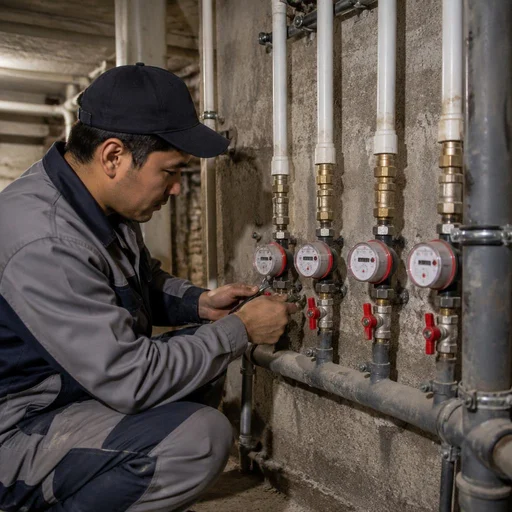
- Assembly installation: installation and replacement of water meters onto prepared threads with adapters, gaskets, and shut-off valves.
- Pressure testing: we supply water at operating pressure and check all connections for leaks.
- Sealing and documents: we apply the seal, draw up the report, and hand over the package for registration with the water utility.
How long installation takes and what the timeline depends on
We complete a standard assembly on one or two pipes in a single visit; the timeline grows if the distribution needs to be re-soldered or the shut-off valves need replacing. Installing a water meter in a private house with metal-plastic distribution goes faster — threaded connections are assembled without soldering, whereas with polypropylene the coupling curing time adds to the process. Work on hot water lengthens the process: the line is drained and the pipe is allowed to cool, otherwise the coupling deforms. If the riser is old and the valve doesn't hold, we replace the shut-off valves first — this is a separate operation that shifts the schedule. The main time goes not into the device itself but into preparing the pipe: the threads, adapters, and soldering curing time determine whether we finish in a day. In our practice, re-soldering two points in a new building takes about three hours, while a steel riser in an older building takes up to five. Clients often find us by searching for "water meter installation price" and are surprised that the final cost depends on the condition of the pipes, not the number of devices. Some specifically ask about "hot water meter installation" — at such points, extra time is added for draining the line and letting the pipe cool. Requests often say "water meter installation cost," even though it's a full scope of work with materials. Some search for "water meter installation companies" and expect an instant answer on timelines — but it's determined by the condition of the assembly, the type of distribution, and access to the riser. Owners of country houses specifically ask how "water meter installation in a private house" differs from an apartment: there's no shared riser here, but a supply line from a well or the main is added, along with more draw-off points.
What to prepare before the technician arrives
- Access to the assembly: clear the space around the pipes, move appliances and shelves so the technician can work with tools.
- Water shut-off: notify your neighbors and coordinate the riser shut-off time with the management company.
- Pipe condition: if the valve doesn't hold or rust is visible on the threads, let us know in advance — the technician will bring the right adapters.
- Documents: prepare your passport and the apartment's technical passport; they're needed for the report and subsequent registration with the water utility.
- Clear passage: remove rugs and fragile items along the path from the entrance to the bathroom so no time is wasted on rearranging.
- Space for tools: clear a section of floor near the assembly so the technician can lay out the equipment without searching for a level surface.
Sealing, documents and registration with the water utility
The installed meter must be legalized: the seal and the commissioning certificate are what you cannot do without — otherwise the readings will not be accepted for billing. Let's go over the sealing procedure, the package of documents and the verification deadlines.
Who seals the water meter after installation
The seal is applied by a water utility representative after installation and pressure testing — we prepare the assembly and accompany the procedure so that it passes on the first try. Before the inspector's visit, the assembly must be fully assembled: threaded connections tightened, the coarse filter installed, the shut-off valve at the inlet closing and opening without jamming. In Tashkent, the call-out is arranged through the district water utility, and in new buildings in the Shaykhantaur and Yunusabad districts the request is often submitted by the developer — in that case the inspector visits a group of apartments in a single trip. The seal secures not only the meter but also the position of the shut-off valves: turning the valve on your own after sealing is considered tampering. Clients often find us by searching for "water meter installation Tashkent" — and land on this page.
What documents are needed to register the meter
- Commissioning certificate: filled out in two copies, signed by the inspector and the owner, one copy stays with the owner.
- Meter passport: the factory booklet with the serial number, date of manufacture and the initial verification mark.
- Registration application: submitted to the district water utility or through the personal account, linked to the account number.
- Copy of the housing document: purchase agreement, extract or technical passport — confirms the right of ownership of the address.
- Payment receipt: confirms that the company's water meter installation service has been performed and paid for; through Eco-Service the package is submitted together with the completed certificate.
Verification and the verification interval: when the meter is taken off the register
The meter undergoes verification at the interval specified in the passport; if the interval is missed, the readings are not accepted for billing until the procedure is completed. For apartment turbine models, manufacturers usually set an interval of four to six years, for impulse models — from four years, but the exact term is always taken from the factory booklet of the specific meter, not from general recommendations. In Tashkent, verification is carried out by accredited laboratories, some of which work with on-site visits: the technician removes the meter, tests it on a bench and returns it to its place with a new seal. It is more convenient to combine verification with a scheduled replacement of the seals — the assembly is taken apart anyway, and a second visit will not be needed. If you decide to install meters in advance, before the scheduled replacement, the first verification deadline is counted from the date of manufacture of the meter, not from the day of installation.
What speeds up the paperwork: practical details
- Date of manufacture of the meter: choose a model manufactured recently — with a meter that has a "stale" passport, the verification interval is already partially used up.
- Pressure testing before the visit: check the assembly under pressure in advance, otherwise the inspector will draw up a certificate with a remark and schedule a repeat visit.
- Keeping the receipt: keep the receipt and the work completion certificate together with the passport — they are the first things requested for a warranty claim.
- Account number: check the account number in the application against the receipt, an error in one digit delays registration by a week.
- Submission deadlines: submit the registration application within a month after sealing, so that the recalculation at the standard rate does not drag on.
When the paperwork drags on and what to do about it
Delays most often arise due to data discrepancies: the meter number in the report does not match the passport, or the application states the old account number after redevelopment. The second common case is lack of access to the unit: if the meter is installed in a closed box without an inspection hatch, the inspector will not be able to check the seal and shut-off valves. The third is an expired initial verification: a device that has been sitting in a warehouse longer than the period specified in the passport is not accepted for registration. Clarify in advance with the water utility the list of requirements for the unit — this saves one or two inspector visits and removes the risk of refusal of registration on the first attempt. A separate reason is that the application was submitted to the wrong district water utility: the installation of a water meter in an apartment is processed according to the address of residence, and an application from another district is returned without consideration. This is often exactly how people write to the service: water meter installation — and the technician immediately understands what is meant.
What to do after registration
After being placed on the register, the owner receives an updated account linked to the device, and charges begin to be based on readings rather than on the standard rate. Readings are submitted monthly during the period established by the water utility — usually from the 20th to the 25th; missing a submission leads to calculation based on the average for three months. The seal must not be broken off on your own even to clean the filter: any intervention in the unit is processed through an application, otherwise the next report will be drawn up with a note of violation. Keep a separate folder for the passport, report and receipts — during verification or when selling an apartment this package is requested in full, and restoring documents takes more time than storing them. This is often exactly how people write to the service: water meter installation price — and the technician immediately understands what is meant.
Replacement, relocation and installation of new water meters
A meter is not eternal: it is replaced when its service life expires, relocated during redevelopment, and installed anew after a malfunction. Let's look at each scenario separately — with signs of wear, the procedure of works and what is important not to miss.
When water meter replacement is needed
We replace the device when its service life expires, after the impeller jams, or when the readings diverge from a control measurement. In turbine models on cold water, the service life is usually longer than on hot water: constant heating accelerates the wear of plastic gears and seals, so on DHW the device fails earlier. A sign of wear is that the device stops responding to low flow: the tap is open, but the impeller is still, and such a malfunction is only visible during a check. If the meter has worked for more than 12 years without verification, repair is usually unprofitable — it is cheaper to install a new one. Clients often search for hot water meter installation — and land on this page. The cost of installation depends on the number of points and the type of pipe, and a worn-out unit can be replaced through Eco-Service during the same visit as the diagnostics. A separate topic is the installation of new water meters after a riser overhaul: there the entire unit is replaced at once, not just the device.
Water meter relocation: when and why
Relocation is needed during redevelopment, when moving the unit out of a box, or when combining metering points — we keep the device and move the unit to a new location. Most often, meters hidden in a niche behind furniture or in a solid box are relocated: to take readings, you have to dismantle the cladding. When combining two points into one, the unit is placed closer to the inlet, and the excess section of the piping is plugged with a cap. After relocation, the seal is removed and installed anew: without re-sealing, the device readings are considered invalid, and the charge is calculated according to the standard rate. Plan the relocation in advance — calling a water utility inspector takes several days, and water meter installation with re-sealing on the same day is only possible with a pre-agreed schedule. If the unit is in a niche, relocation is often combined with replacing the pipes in that section.
Installation of a new water meter in place of a dismantled one
We install a new device in place of the dismantled one, check the pipe passage and, if necessary, replace the section of piping under the device. If the old one was removed because of scale, a new one without a filter will last less — we clean the unit and install a coarse filter during the same visit. On steel pipes with internal deposits, the thread is first cleaned and the nipple is replaced, otherwise the new body sits crookedly and leaks at the joint. Cold water meter installation and hot water meter installation on a hot riser differ in their components: for DHW, a device with a heat-resistant mechanism and paronite gaskets is used. Clients often search for water meter installation price — and land on this page. Check the check valve after installation — in case of back pressure from the riser, it protects the impeller from reverse flow. The work is carried out by a water meter installation technician certified for sealable units, so the certificate and warranty are issued on site.
What to clarify before ordering the work
- The cost of water meter installation is calculated by the number of points: one pipe, two, or a manifold — this determines both the scope of work and the kit.
- The water meter installation price is formed by the type of pipe: polypropylene, metal-plastic and steel require different fasteners and adapters.
- The water meter installation price on a hot riser is higher due to heat-resistant gaskets and DHW-class devices.
- The water meter installation price in a new building is lower: there are no deposits in the pipes and no thread cleaning is needed.
- Water meter installation in a private house is calculated separately — the inlet is added and, if necessary, the basement.
Connection and checking of the unit
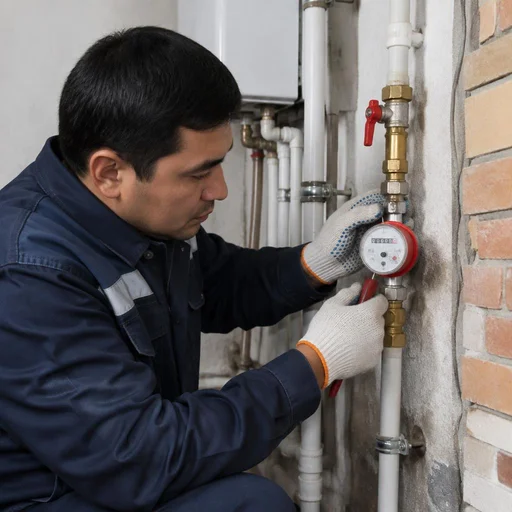
Installing a water meter takes about an hour per point: the technician wraps the seal, tightens the nuts, and checks the connections under pressure. Cold water meter installation and mounting on hot water supply differ only in the configuration of the device and the gaskets — the procedure is the same. Water meter installation is completed with pressure testing: the valve is opened to full pressure, the joints are inspected, and if there is a leak, the connection is tightened. After that, the unit is ready for sealing, and only then can the device be registered with the water utility. If, after pressure testing, the connection leaks again, replace the gasket rather than tightening the nut harder: over-tightening strips the threads on the brass body. The client sees the final price for water meter installation before work begins, after inspecting the unit.
Warranty, service, and why people choose Eco-Service
Installation is not just work, but also responsibility after it. We'll tell you about the warranty, our own service center, and how we handle customer requests after a visit.
2-year warranty on water meter installation
Eco-Service provides a 2-year warranty on water meter installation: if a joint starts leaking or a unit fails through our fault, we'll come and fix it. The coverage applies to threaded joints, polypropylene soldering, metal-plastic fitting, installation of a pressure reducer and check valve — that is, everything the technician assembled with their own hands. A warranty case is processed based on the commissioning certificate and receipt: the document records the installation date, device model, pipe type, and serial number. Clients often find us with the query "water meter installation" — and land on this page, where the terms are described. The device itself is covered by the manufacturer's warranty, so it's worth keeping the passport with the production date together with the certificate. The cost of work on the cold line and the installation of a water meter on the hot line are calculated using the same scheme: the technician's work, consumables, and preparing the unit for sealing. If you need water meter installation cost — it is calculated after inspecting the unit, not over the phone.
Our own service center in Tashkent
Eco-Service has its own service center in Tashkent: you can come in person, and a technician visits the site upon request. In-person reception is convenient when you need to show the device or discuss a unit using a photo of the piping layout — this way a decision is made faster than over the phone. In search, people often type "water meter installation" — that's how residents of new buildings and homeowners find us. To arrange a visit, it's enough to describe the problem in a request: a leak at a joint, noise from the turbine, a jammed reducer, or an error in the readings. The technician brings replacement gaskets, fittings for polypropylene and metal-plastic, sealant, and soldering tools — typical faults are resolved in a single visit, without a second trip for a part. If the photo shows that the unit needs to be relocated or a section of pipe replaced, the scope of work is agreed upon before the visit. Requests for the cold and hot lines are separate, but the technician handles both in one visit if the units are located next to each other. A separate service is the installation of a hot water meter with a temperature sensor: such a device records the temperature and protects against overcharging when the hot water supply delivers barely warm water. Clients often phrase the request as water meter installation price — with such a request, the manager immediately understands that a calculation is needed for a specific unit.
How we handle customer reviews and requests
We collect customer reviews after every visit and process warranty requests on a priority basis. A review with a photo of the unit is more useful than a rating: it shows how the connections are laid and whether there is access for verification — this is a hint for future installations. We divide requests into three groups: warranty case, scheduled replacement, and consultation on readings. For warranty cases, the visit is prioritized, because meter downtime means charges based on the norm rather than actual consumption. If a client reports a leak, the technician first checks whether the seal has been broken: if the seal's integrity is compromised, the issue is resolved with the water utility, and this is honestly stated before the visit. Work in an apartment and in a private house differs in terms of access to the unit, so in a review we ask you to indicate the type of property — this speeds up diagnostics. We also separately track how often people ask about cold water meter installation price — such requests are forwarded to the manager for calculation. Some requests come with the wording install a hot water meter — from that it's immediately clear that the property has hot water supply and a heat-resistant body is needed.
Frequently asked questions before ordering
- Can you install a water meter yourself: the law does not prohibit it, but sealing and registration are still carried out by the water utility, and an error in assembling the unit leads to rejection during acceptance.
- Installing water meters in winter in a private house: it is possible if the inlet is insulated and the temperature at the installation site is above zero — otherwise the seals lose their elasticity.
- Water meter installation in a new building: it is done before the first water supply, while the risers are not filled — this makes it easier to check the thread for leaks.
- Installation of a water meter on metal-plastic: requires press fittings and a calibrated tube, so the technician arrives with press tongs.
- Installation of a cold water and hot water meter: for hot water supply, a device with a heat-resistant body is installed; an ordinary meter on a hot line quickly fails.
Conclusion
The five conclusions below most often determine the outcome of work on a metering unit. They will help you plan the installation and avoid paying for unnecessary visits.
Main conclusions
- Payment by actual use: a meter switches billing to actual consumption, but the savings appear after leaks are eliminated, not in the first month.
- Device selection: the model is chosen by pipe diameter and temperature — a separate heat-resistant device is installed on a hot riser, and when deciding to install a water meter, these parameters are checked first.
- Pipe material: polypropylene, metal-plastic and steel require different adapters — installation on metal pipes is more difficult than others due to the welded transition.
- Legalization: sealing and a commissioning certificate are mandatory — without them, the readings will not be accepted for billing, so installing the device without subsequent sealing makes no sense.
- Verification: it is convenient to combine it with scheduled replacement of seals — installation with this caveat saves one technician visit.