







Why the toilet leaks, won't flush, and smells: types of breakdowns and their causes
Most service calls begin with one of five symptoms: water runs constantly, the flush has weakened, the tank is silent or noisy, a smell has appeared. Let's break down exactly what fails inside and why.
Tank leak: why water runs constantly
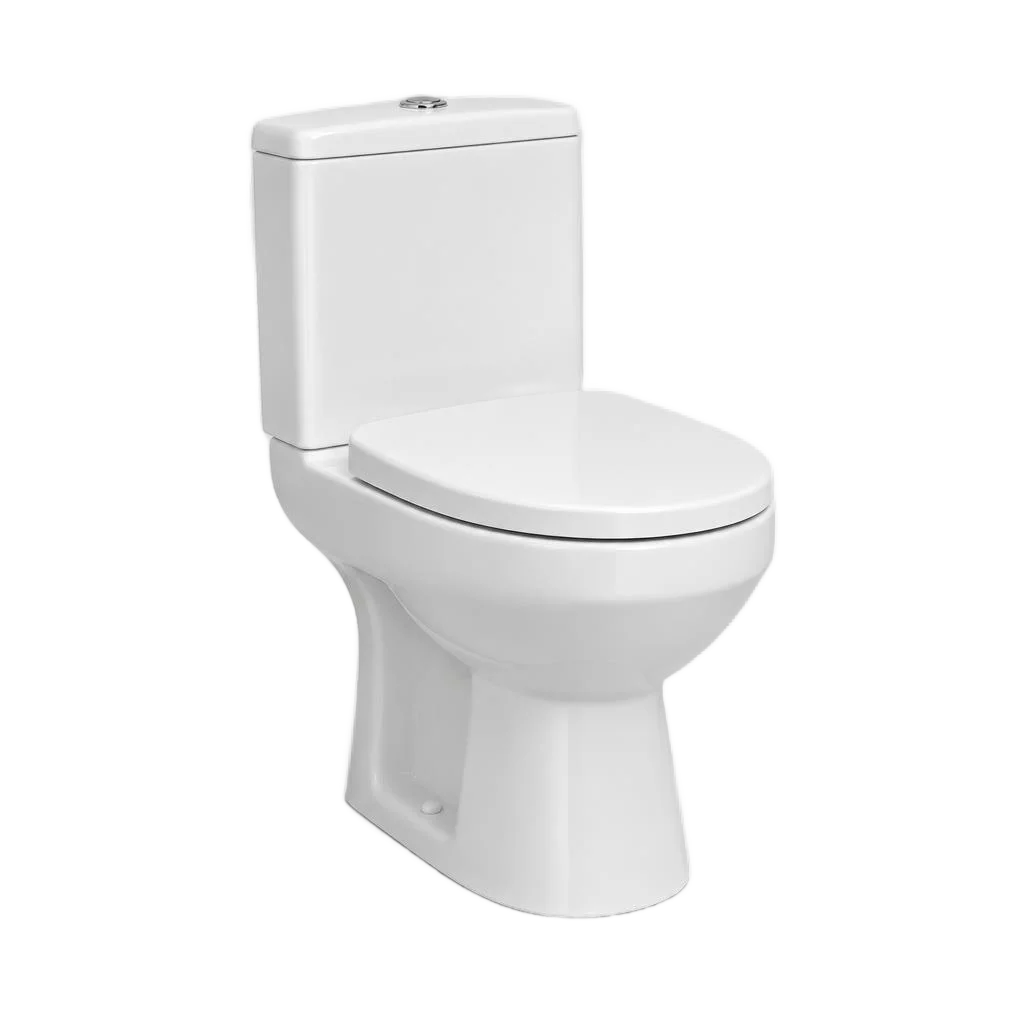
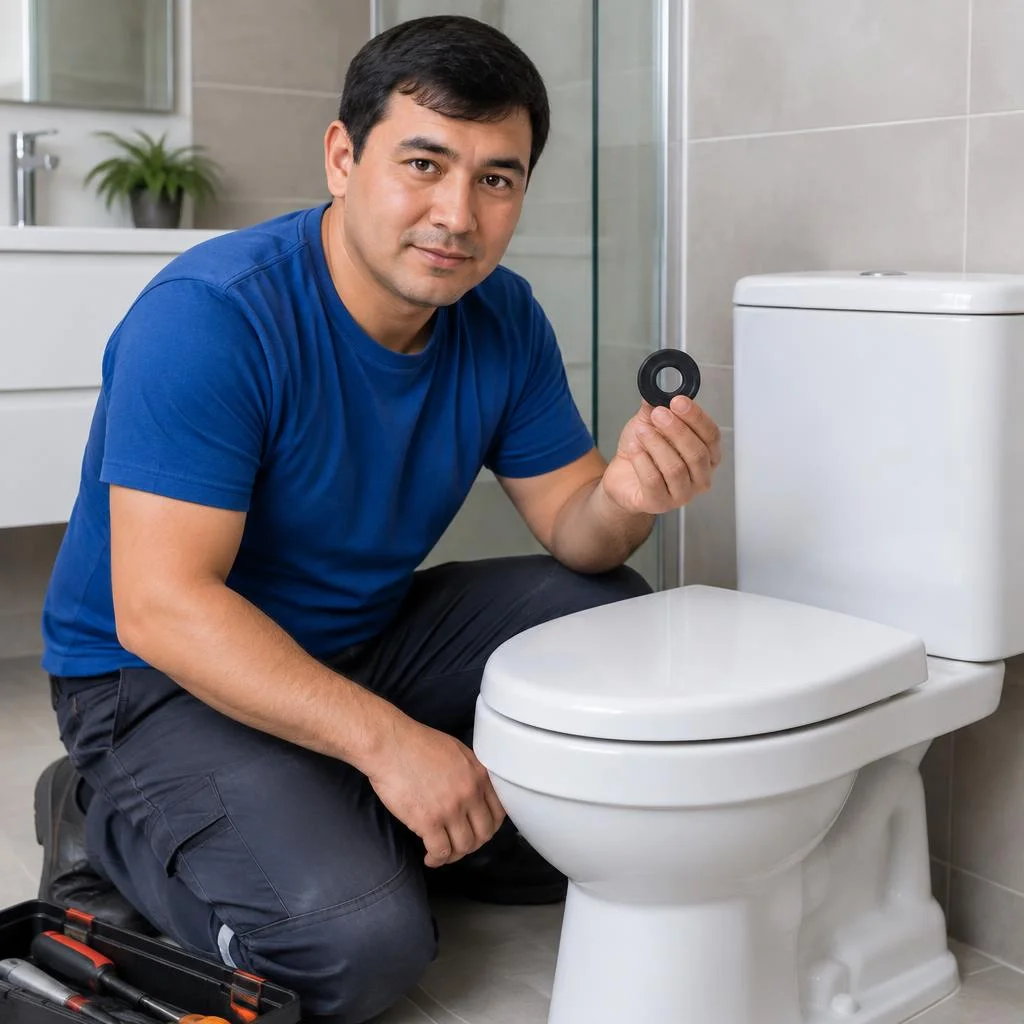
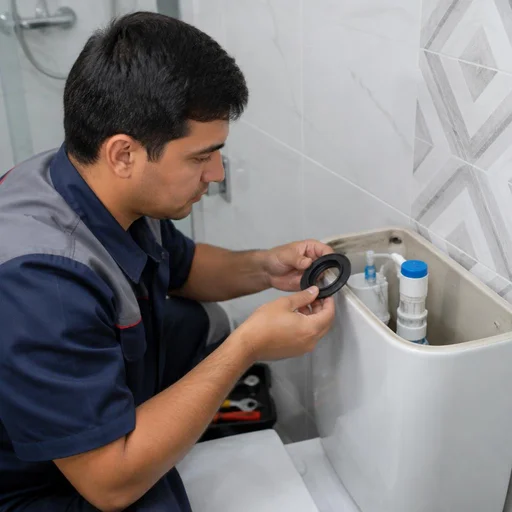
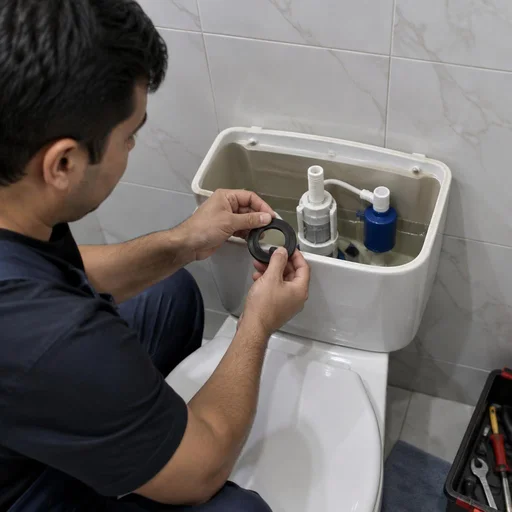
Most often, a tank leak is caused by wear of the gasket or the flush valve seal — we confirm this during diagnostics in 10–15 minutes. Rubber loses its elasticity due to hard water with calcium salts: the gasket stops fitting snugly against the seat, and water trickles into the bowl. The second most common cause is deformation of the flush valve seal in models with bottom inlet, where the valve operates under constant pressure. The third is a microcrack in the flush column seat, which is only visible with the lid removed. Repairing a toilet tank in such a situation does not require replacing all the fittings: it is enough to replace one part, and we close the job in a single visit. If water runs down the back wall of the bowl, the problem is almost always the seal, not the float — replacing one part solves the issue without disassembling the entire tank. Clients often phrase their request briefly — and from that phrase the technician immediately understands what to look for inside.
The toilet won't flush or flushes weakly
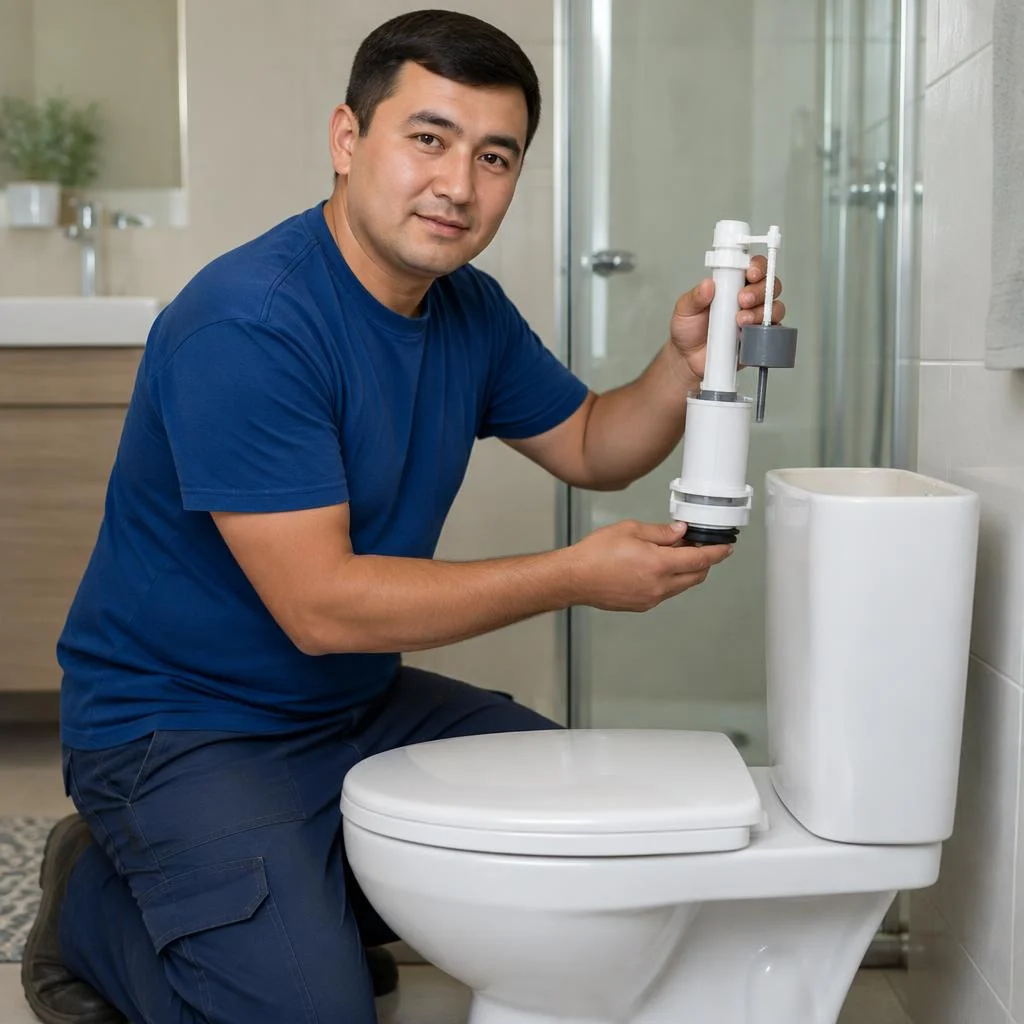
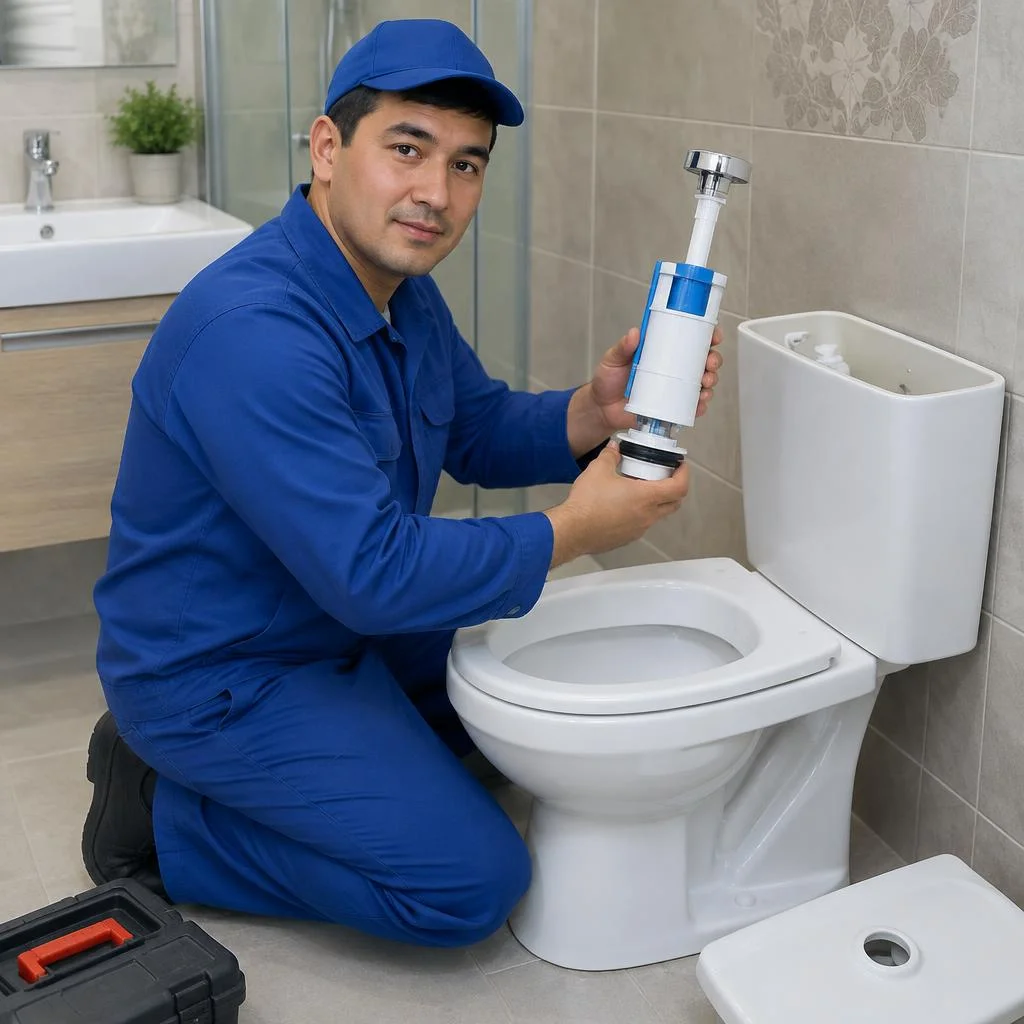
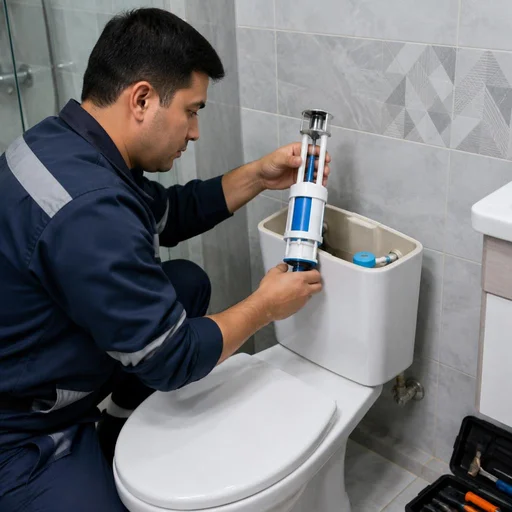
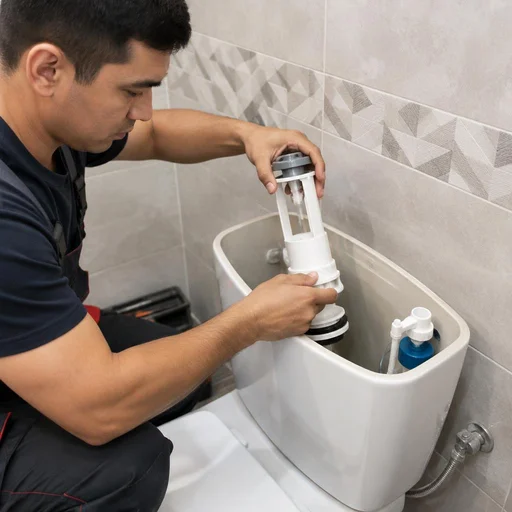
A weak flush in 8 out of 10 cases is fixed by adjusting the flush mechanism or replacing the flush column — the technician determines the cause on site. Over time, the flush column becomes coated with mineral deposits, its movement becomes stiff, and the valve opens only halfway. The second cause is a stretched linkage between the button and the valve: the button is pressed, but the valve does not rise to full height. The third is a clog in the bowl's outlet channel, which narrows the passage and dampens the flow. Tank repair here begins with checking the water level: it should be at the factory mark, usually 2–3 cm below the edge of the overflow tube. Before replacing the fittings, it is worth checking the water level in the tank: if it is below the factory mark, no new column will provide a full flush.
The tank won't fill with water and is noisy
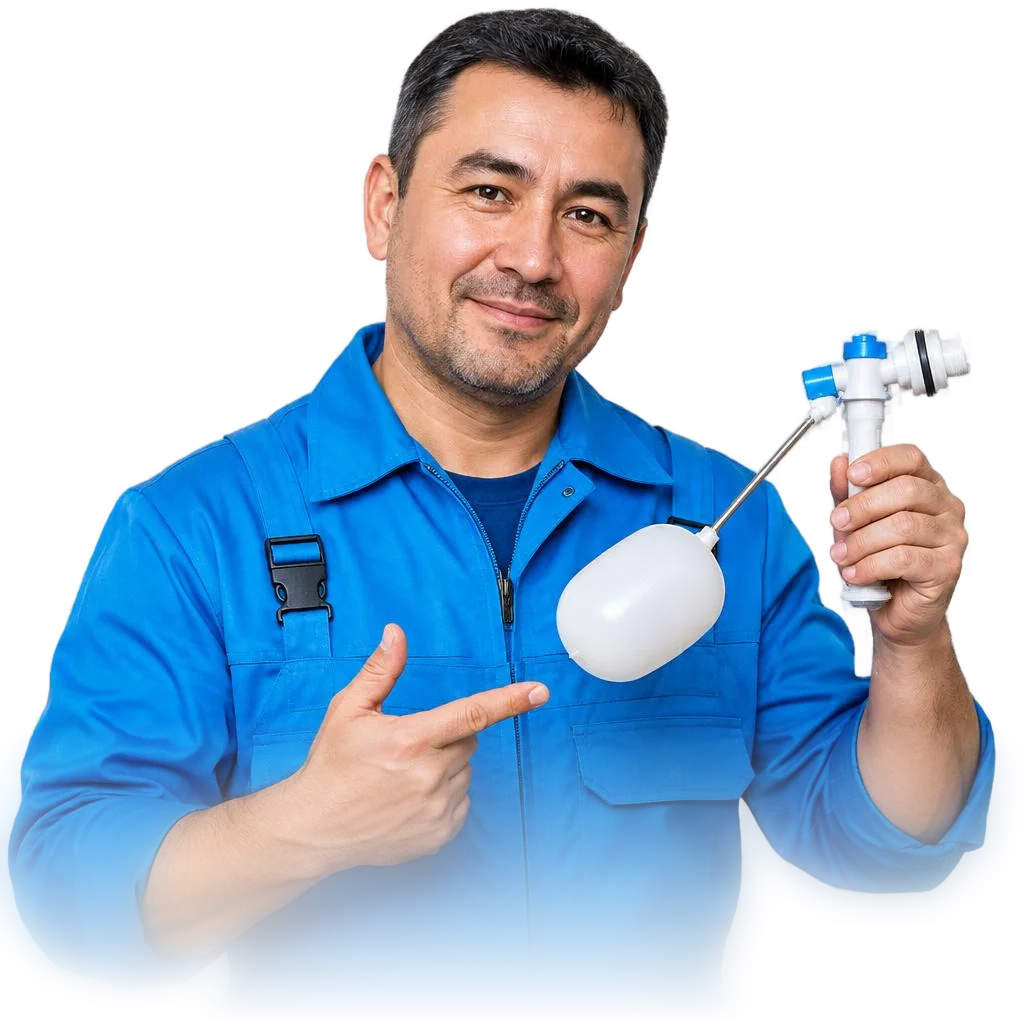
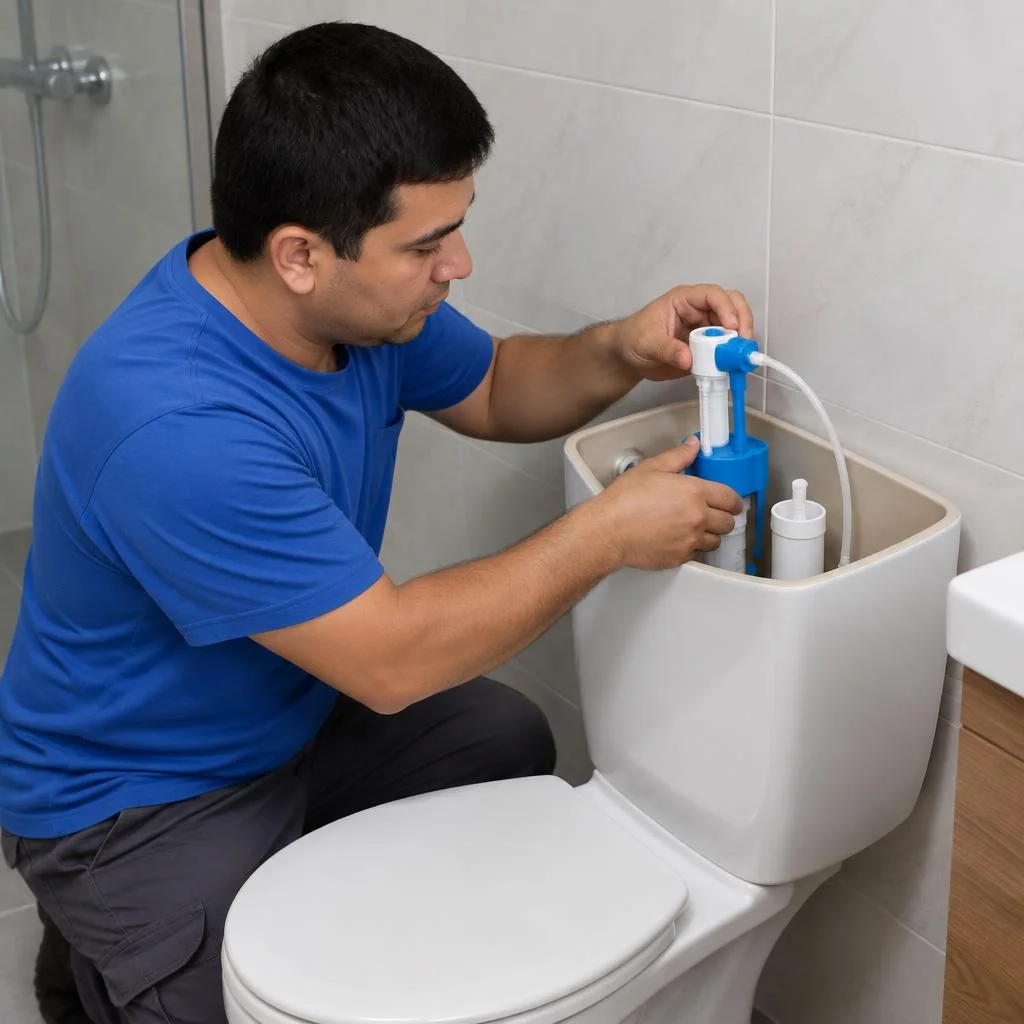
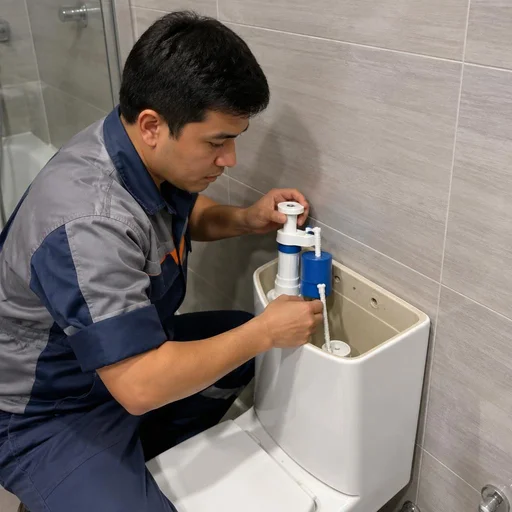
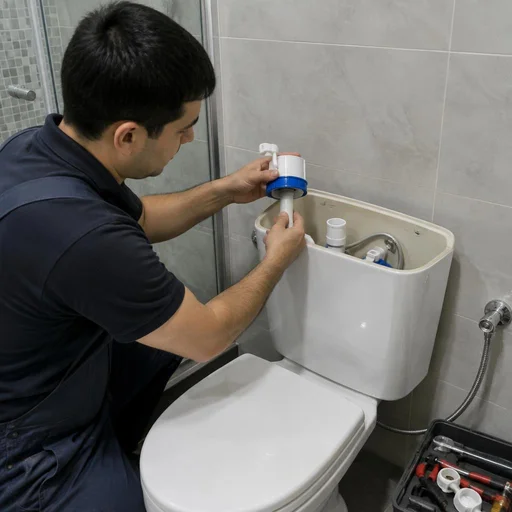
If the tank won't fill with water, the cause is the float mechanism or the inlet valve — we replace the assembly entirely so we don't have to come back to the problem a month later. Over time, the float takes on water inside its body and stops floating, or its arm jams on the axle. The inlet valve with the diaphragm gets clogged with sand and rust from the riser — the flow weakens or stops completely. A constant hum during filling reveals a worn diaphragm: it vibrates under water pressure. A tank breakdown at an early stage is fixed by replacing a single diaphragm, but if you delay, the overflow floods the floor. Constant noise of water filling is an early signal of inlet valve wear; replacing it at this stage is cheaper than dealing with the consequences of an overflow.
Smell from the bowl and a leak at the connection point
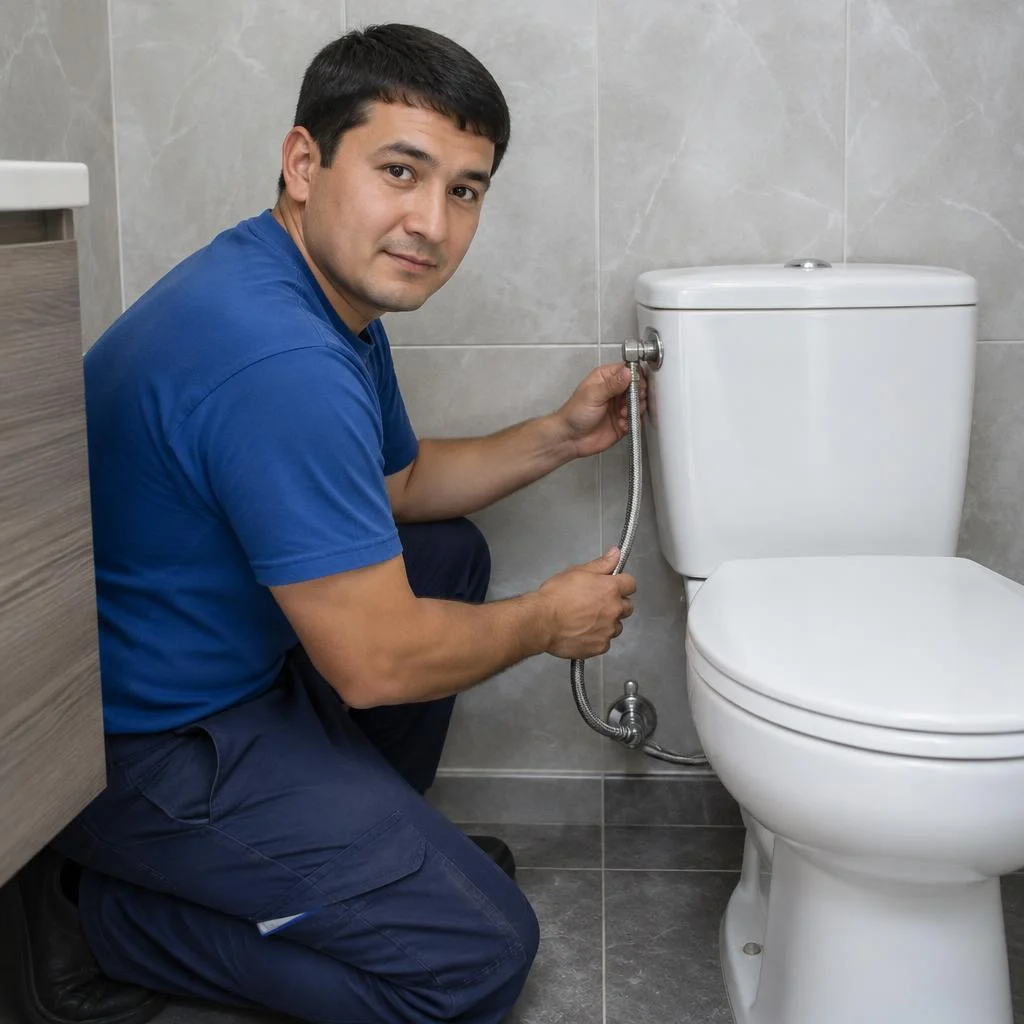
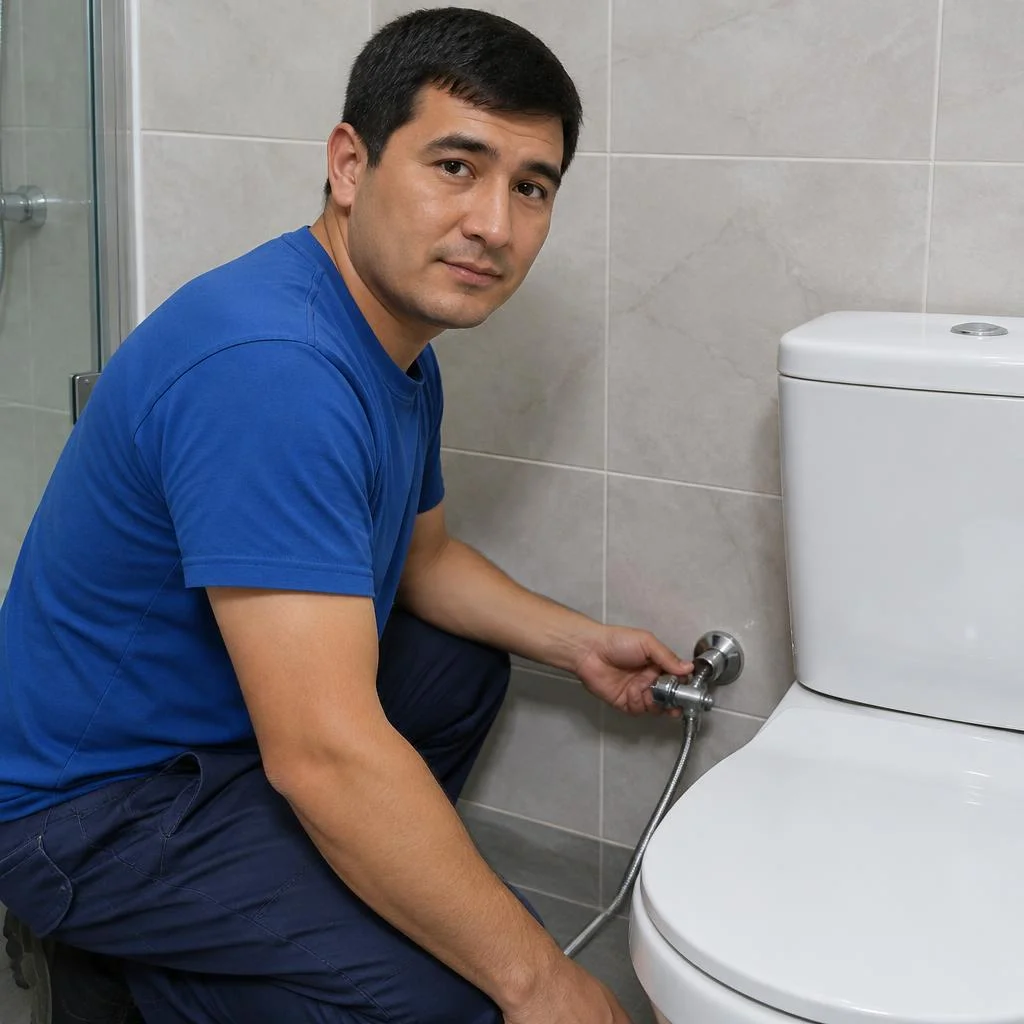
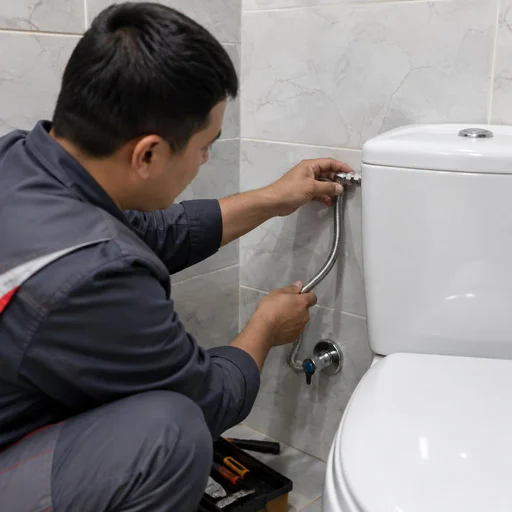
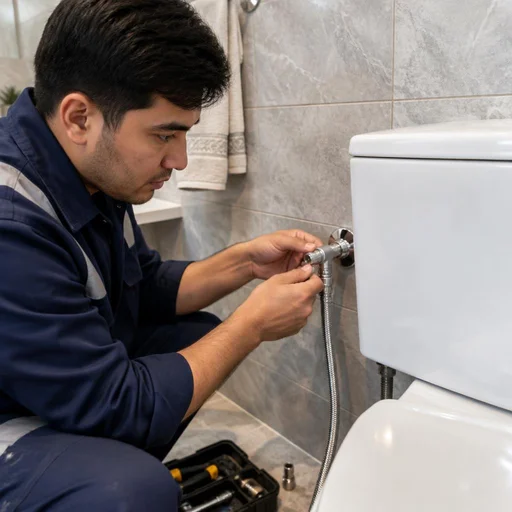
A smell from the bowl and a leak at the connection point are two different faults: the first is related to the sealing of the tank joint, the second to the flexible supply line or the fitting. The smell appears when the seal between the tank and the bowl is broken or the water in the trap's water seal has dried out. A leak at the connection point is most often a loosened flexible supply line: its rubber gasket hardens and stops holding pressure. If water continues to seep after tightening, you need to replace the supply line fitting, not the flexible line itself — the thread deforms over time. Fixing the leak in this case can be done in a single visit: the technician removes the old supply line, checks the fitting thread, and installs a new gasket. This type of work requires checking both assemblies at once — the joint seal and the connection point to the water supply. In our practice, toilet repair in Tashkent most often begins with exactly these two points — they are the first to suffer from pressure surges in the main line.
Toilet repair: what the technician's work includes and how a visit proceeds
This is not just replacement of parts, but also the correct sequence: diagnostics, selection of the spare part, installation, verification. We break down how a visit is structured and which operations are included in the standard work cycle.
How a toilet repair technician's visit proceeds
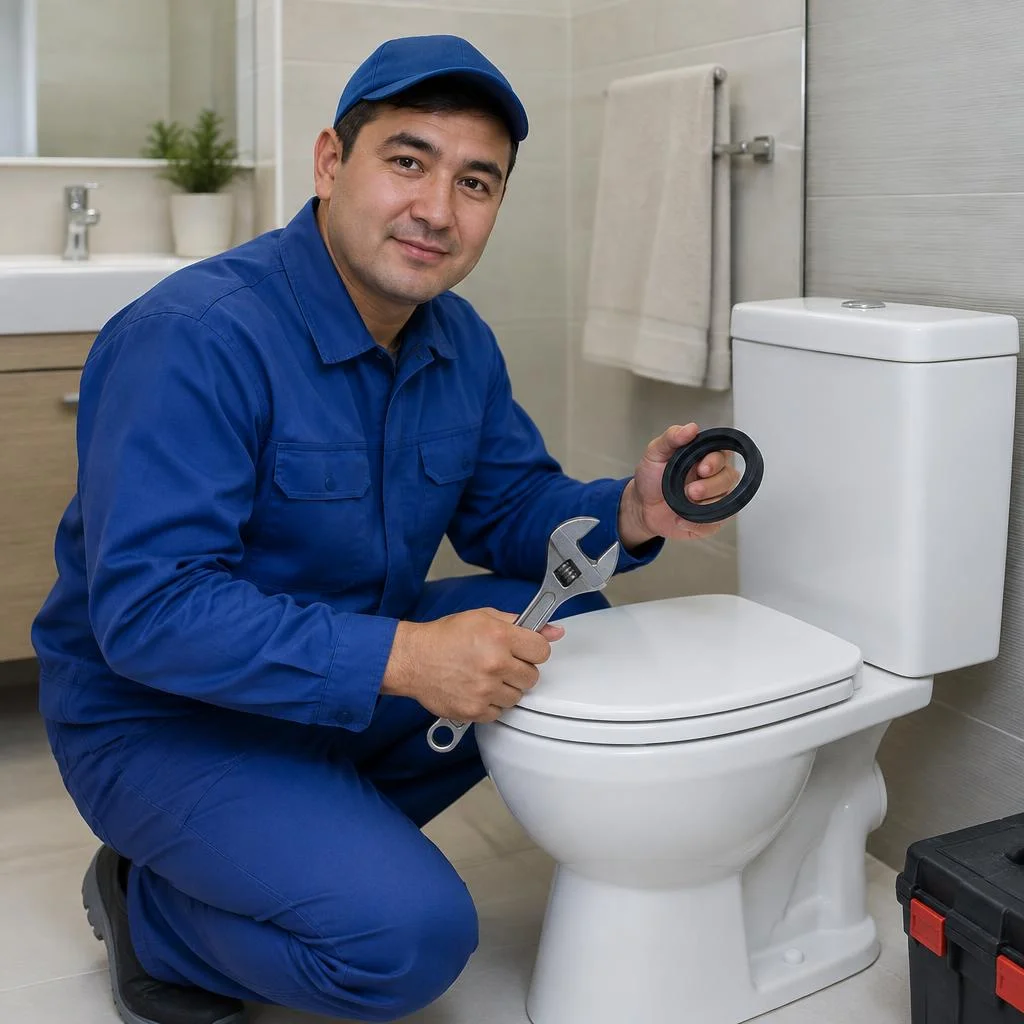
An Eco-Service technician arrives on the day of the request, diagnoses the fault on site and in 9 out of 10 cases fixes it in a single visit. A home visit includes inspection of the tank, the bowl and the connection point to the sewer: we check the water level, the movement of the float, the condition of the flexible supply line and how tightly the gasket fits. On-site diagnostics take 10-15 minutes and do not require disassembly, unless we are dealing with a hidden crack in the bowl. The plumbing technician brings a standard set of fittings — gaskets, seals, float mechanisms for typical models from Santek, Roca and Cersanit. Before the technician arrives, it is worth clearing access to the tank and shutting off the valve — this saves 10-15 minutes and allows work to begin immediately.
What work the plumber performs during toilet repair
- Replacement of the inlet and outlet valve: restoring water supply and drainage when the tank does not fill or does not hold the level.
- Replacement of the tank gasket and flush valve seal: eliminating a constant leak and air suction in the flush system.
- Replacement of the flush column and float mechanism: restoring normal flushing and automatic water shut-off.
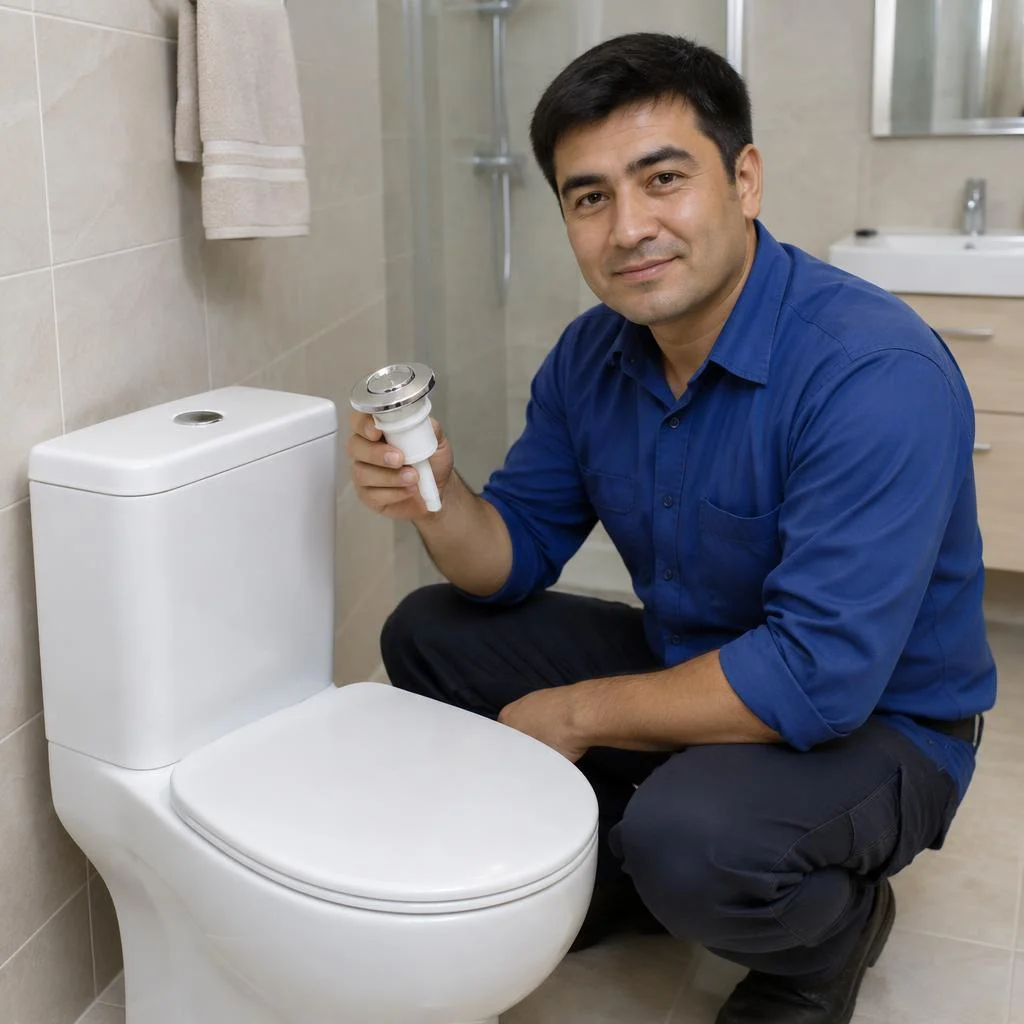
- Replacement of the flush button and lever: repair of the control mechanism when flushing does not work or jams.
- Replacement of the flexible supply line and fitting: eliminating a leak at the connection point to the water supply.
- Sealing the joint between the tank and replacing the flush hose: final leak test after assembly.
Toilet flush system repair and sealing
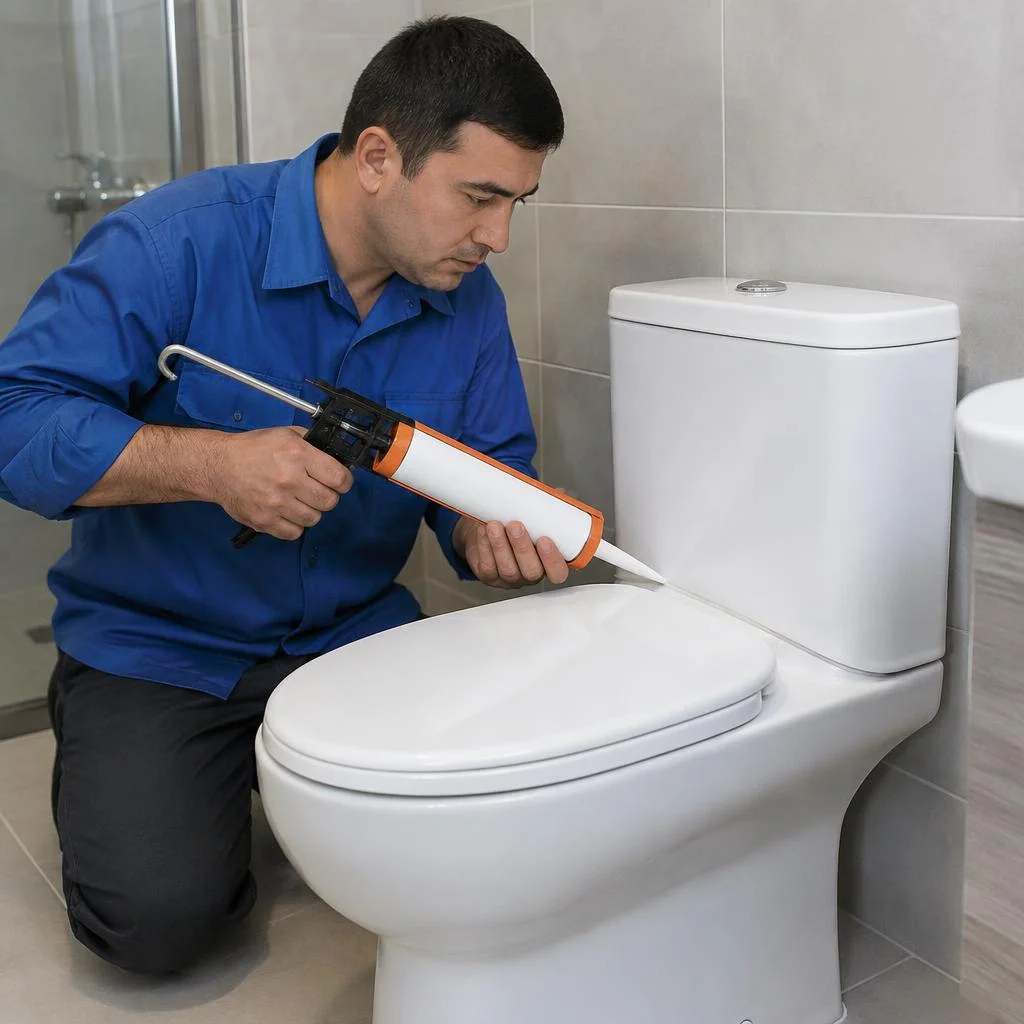
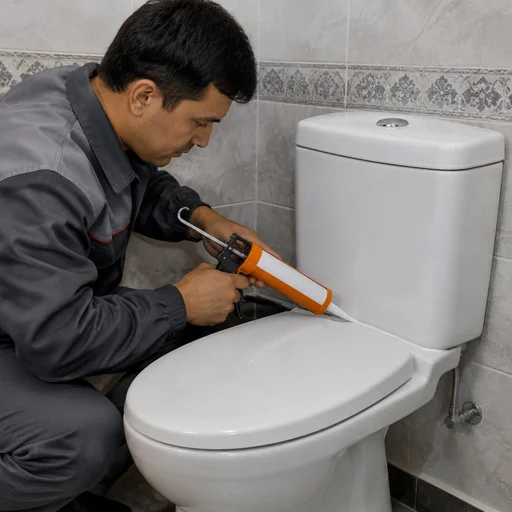
Restoring the flush system includes replacing the flush hose, the seal and sealing the tank joint — we check tightness after every installation. A separate operation is eliminating a clog or weak pressure: we remove the column, clean the channel of deposits and assess the wear of the seals. Clients often state the task briefly — and from that phrase the dispatcher already understands that a technician with a set of seals and flush columns is needed. We use original toilet spare parts matched to the specific model, not universal "rubber plugs". Sealant at the tank joint is a temporary solution; reliable sealing is achieved only by replacing the tank gasket, otherwise the leak will return within the season.
What the technician's work includes: the set of operations by type of fault
| Symptom | Assembly | Type of operation | What we check afterwards |
|---|---|---|---|
| Water drains from the tank | Tank gasket / seal | Replacement | Tightness of the joint |
| Weak flush | Flush column | Replacement / adjustment | Completeness of the flush |
| Tank does not fill with water | Inlet valve / float | Replacement | Water level |
| Button does not work | Flush button / lever | Replacement | Movement of the mechanism |
| Leak at the connection | Flexible supply line / fitting | Replacement | No drips |
| Smell from the bowl | Tank joint | Sealing | No smell |
A plumber performs toilet repair in Tashkent according to this scheme: first he records the symptom, then localizes the assembly and only then selects the operation. Accurate on-site diagnostics make it possible to replace one part instead of the entire assembly — this saves the client's time and preserves the life of the working components.
How to request a visit and what to clarify with the dispatcher
To place a request, the master only needs the address, the bowl model, and a description of the symptom — that is enough for the technician to bring the right fittings. You should tell the dispatcher whether you have a compact toilet or a wall-hung model with a concealed cistern: this determines the set of tools and the duration of the visit. If the toilet is connected via a flexible supply line with a separate valve, mention its condition — a corroded valve will have to be replaced along with the supply line. We schedule visits across Tashkent for the morning or evening to avoid the peak hours of water supply in the riser.
Repair of wall-hung toilets and work with concealed cisterns
Wall-hung models and concealed cisterns are designed differently: access to the fittings is through the wall, not through the tank. Let's look at when the bowl does not need to be removed and how installation is carried out.
Can a wall-hung toilet be repaired without removal
Yes, in most cases the work is done through the service opening of the concealed cistern — without removing the bowl and without damaging the tiles. In our practice, this covers about 80% of requests: a leak at the connection point, weak flushing, noise when filling with water, and a sticking button are all resolved by replacing the fittings directly in the frame. Such a service with a concealed cistern takes us from 40 minutes to an hour and a half — removing the bowl and then re-leveling it is longer and riskier. Eco-Service performs such work on wall-hung models of any brand, and the fittings are selected for the specific frame. If the service opening is tiled over, the technician carefully opens the seam; after the work, the opening is closed with a standard plug, and the appearance of the wall is not affected.
Built-in toilet: repairing fittings through the concealed cistern
A built-in toilet is serviced through the same concealed cistern: we replace the inlet and outlet valves, the float mechanism, and the flush button without removing the bowl. Clients often search for this work as built-in toilet repair — and end up here, because access to the internals is through the service opening of the frame, not through the tank. Such work requires the fittings to match the frame exactly — in Tashkent apartments, the most common concealed cisterns are Geberit, TOTO, Roca, and Grohe, each with its own mounting geometry and rod travel. The inlet valve fails first: scale and hard water clog the membrane, and the tank starts to hum or does not fill with water to the required level. The outlet valve and float mechanism are replaced in a single visit. Fittings for built-in models are selected by the concealed cistern model, not by the bowl brand — universal kits do not always fit. Clients often describe this as a toilet breakdown, although in fact only the internals of the frame fail.
Installation of a wall-hung toilet and concealed cistern
Installation of a wall-hung toilet and concealed cistern at Eco-Service is carried out with a check of the wall's load-bearing capacity and precise marking for the fasteners. Installation and servicing share the same logic: the bowl is held by the frame, and the frame is held by a load-bearing wall or reinforced partition. Before installing the concealed cistern, the technician checks the sewage and water supply outlets, levels the frame, anchors it to the wall, and only then hangs the bowl. For drywall partitions, a reinforced frame-concealed cistern is required — saving on it leads to the bowl sagging within a year of use. That is why we begin toilet repairs with an inspection of the frame, not the bowl: displacement of the fasteners is immediately visible and is corrected before cracks appear in the ceramic.
Toilet Replacement and Installation: When Repairs No Longer Help
Sometimes restoration is not economically feasible: cracks, wear of several components at once, or an outdated design make replacement more sensible. Let's look at when it's more advantageous to install a new fixture and how the installation is carried out.
When restoration gives way to replacement
Toilet replacement is justified if the bowl is cracked, the ceramic is damaged, or wear of the fittings affects more than three components at once. Ceramics cannot be welded or glued — a crack in the bowl can only be sealed with sealant temporarily, and under water pressure the fracture spreads further. If the toilet fittings are worn along the entire circuit — inlet and outlet valves, gasket, float — replacing each part one by one stretches over several visits, and the final estimate exceeds the cost of a new fixture. Most often this is where a toilet tank breakdown leads, when parts were replaced one at a time and the seal was never restored. Eco-Service performs a complete toilet replacement in a single visit: the technician dismantles the old fixture and installs a new one with connection to the sewer. If the bowl is cracked, any work gives only a temporary result — the ceramic continues to split under water pressure, so postponing replacement is risky.
Toilet removal and installation: stages
- Toilet removal: we shut off the water, disconnect the flexible supply line, drain the remaining water from the tank, and remove the fixture from its mounting.
- Base preparation: we remove the old gasket and sealant, check the evenness of the floor and the condition of the sewer outlet.
- Toilet installation: the new fixture is seated on the gasket, leveled, and secured to the floor with dowel screws.
- Connection: we install the flexible supply line, adjust the float mechanism, and test the flush under pressure.
- Leak check: we run several fill and flush cycles, inspect the tank joint and the connection point.
Compact toilet installation and model selection
Installing a compact toilet takes one visit; we select the model to match the bathroom dimensions and the outlet type — horizontal or vertical. The compact is the most common format for typical apartments in Tashkent: the tank attaches directly to the bowl's shelf and takes up less space than a separate design. Three parameters are considered when choosing: bowl depth, outlet direction, and the distance from the wall to the sewer socket. If the bathroom is narrow, a compact with an angled outlet saves up to 15 cm of depth — this is noticeable when arranging plumbing fixtures. Installing a toilet with a vertical outlet requires the sewer socket to exit strictly beneath the bowl. When comparing restoration and full replacement, the difference in the number of technician visits becomes the decisive argument, and the cost question takes a back seat. That is why in such cases we immediately offer fixture replacement rather than a series of visits.
2-year warranty, original spare parts and a service center in Tashkent
How the work of a service workshop differs from calling a private handyman — let's break down the warranty, the origin of spare parts and the infrastructure behind a single visit.
What a 2-year warranty on completed work gives you
Eco-Service provides a 2-year warranty on all types of work — including replacement of the inlet and outlet valves, the flush column, the float mechanism and sealing of the tank joint. A warranty card is issued for every visit; it records the operations performed, the parts installed and the serial numbers of the components. If within two years a unit fails due to installation or a part, the repeat visit and replacement are carried out free of charge — with no diagnostics at the client's expense and no disputable wording like "this is not a warranty case." In our practice, the most common warranty visit is a leak at the flush valve gasket after incompatible fittings have been installed: the repeat visit takes about 40 minutes. Keep the receipt and the work order — with them, processing takes one phone call, rather than messaging a handyman who no longer answers messages.
Why we use original spare parts
We install original toilet fittings — Santek, Roca, Cersanit and other components compatible with the client's model, rather than universal equivalents "for any tank." For each product line we keep inlet and outlet valves, gaskets, float mechanisms and seals in stock for the specific mounting size. An original part replicates the geometry of the seat and the travel of the stem, so flushing works at the stated volume, not "roughly the same." Universal equivalents are cheaper on the first purchase, but last on average 2–3 times less: the rubber loses its elasticity within a season, the valve starts letting water through, and on repeat visits the client loses more than they save on the first replacement. When ordering fittings, verify the part number against the marking inside the tank — it is stamped on the inner wall next to the mounting seat.
Our own service center and service area
Eco-Service has its own service center in Tashkent — technicians travel to Chilanzar, Yunusabad, Mirzo-Ulugbek, Yashnabad and Shaykhantaur districts. The warehouse of consumables and fittings is located there as well, so requests within the city are closed in a single visit: the technician brings three or four standard kits for different mounting sizes. Clients often search for "toilet repair Tashkent" and "toilet repair with installation" — behind these queries is the same task: to match a part to a specific model and not wait a week for delivery. Having our own center means that spare parts are not ordered from intermediaries, and for a non-standard model the part is selected from the manufacturer's catalog on the day of the request. The service area is limited to the city limits: beyond them, the timeframe stretches to a second visit due to logistics. When booking, specify the district and the toilet brand — this allows the technician to take the right kit straight away and not have to come back.
How to Choose a Toilet Repair Technician and Avoid Overpaying for Redoing the Work
In the Tashkent market, plumbing work is done by both private technicians and service companies — the outcome depends on how you vet the contractor before the visit. Let's break down what to look for.
Signs of a Reliable Technician
- Diagnostics before work: the plumbing technician names the cause of the breakdown and shows the worn component before quoting the scope of work.
- Warranty document: after the work, a report or receipt remains listing the replaced parts and a 2-year warranty period.
- Justification for replacement: the specialist explains why they are replacing specifically the flush valve gasket or tank seal rather than the entire mechanism.
- Post-assembly check: the technician flushes 2-3 times and checks the joints for leaks in your presence, not just "by eye."
- Transparent pricing: the final amount matches what was quoted before work began, and surcharges for consumables are discussed in advance.
Common Mistakes When Repairing a Toilet Yourself
- Over-tightened flexible supply line: when tightening the nut without a backup wrench, the threads on the plastic fitting crack and leak within a few days.
- Flax with sealant on plastic: oakum with anaerobic compound expands when tightened and ruptures the plastic supply fitting.
- Stripped fitting threads: attempting to tighten the connection "all the way" strips the threads, after which the part must be replaced entirely.
- Incorrect seating of the flush valve gasket: the gasket sits crooked, the tank leaks, and water runs continuously even when the valve is closed.
- Working without shutting off the water: the valve isn't closed, and the first time the supply line is disconnected, the floor gets flooded.
How to Vet a Service Before Calling
Before calling a technician, check reviews on Yandex.Maps and Google Maps, the presence of a physical service center, and openly stated warranty terms. Look not at the overall rating but at recent reviews from the past few months: they show how the company responds to repeat calls and disputed cases. Separately, clarify whether a drop-off point address and staff of technicians are listed — this data makes it clear whether the contractor works alone or has an organization behind them with a stock of spare parts. Some private plumbers take orders only through Telegram channels with no address or contract, and if a leak recurs, there's no way to file a claim against such a contractor. Clients often search for toilet repair — this query shows that the person already understands their type of plumbing and is looking for a technician with experience specifically in that kind of installation. Others phrase the request differently: wall-hung toilet repair — and from this search it's immediately clear that it's about a model with in-wall installation, where access to the concealed tank through a revision hatch is needed. A service with a physical address is accountable for the result differently than a solo contractor: if a breakdown recurs, there's someone to turn to, and the warranty period is confirmed by a document, not a verbal promise.
Conclusion
We've gathered the key things to keep in mind when a toilet leaks, makes noise, or flushes poorly. Below are brief takeaways on diagnostics, restoration, and choosing a technician.
Key Takeaways
- One visit: a tank leak, weak flush, and noise when filling with water are resolved in a single technician visit if the necessary fittings are in the vehicle.
- Accurate diagnostics: an on-site inspection shows which part to replace — valve, seal, or gasket — instead of replacing the entire assembly.
- Wall-hung models: built-in and wall-hung toilets are serviced through the installation's service opening, without removing the bowl from the wall.
- When to replace: toilet replacement is justified when the bowl is cracked, the outlet is chipped, or the fittings are completely worn out, when restoration no longer yields results.
- Choosing a technician: check for an open warranty, original spare parts, and the presence of a physical service center, not just reviews in messengers.