







Faucet design: how a tap is built and why it breaks
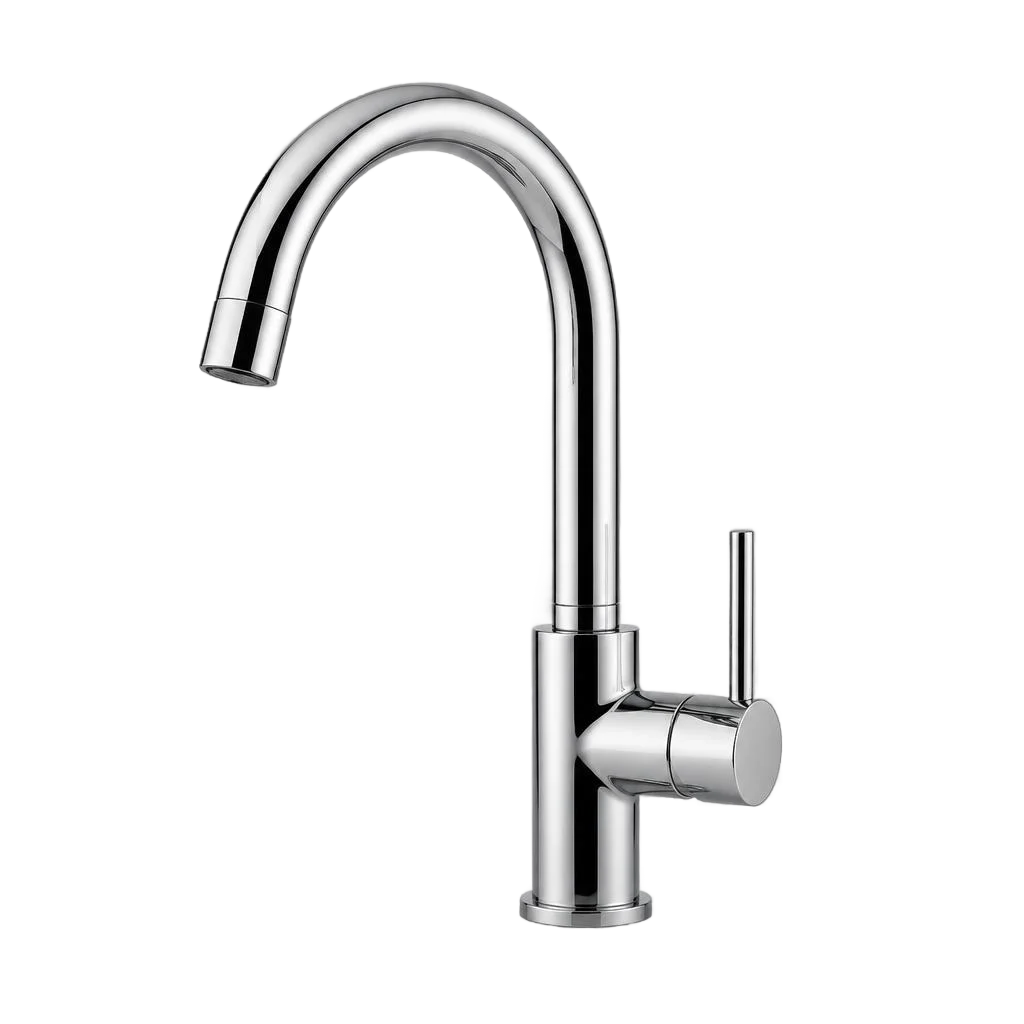
A faucet is an assembly consisting of a body, a cartridge or valve heads, an aerator and a supply line. Understanding the design determines what exactly can be repaired and what is replaced entirely.
Single-lever faucet: the cartridge as the main assembly
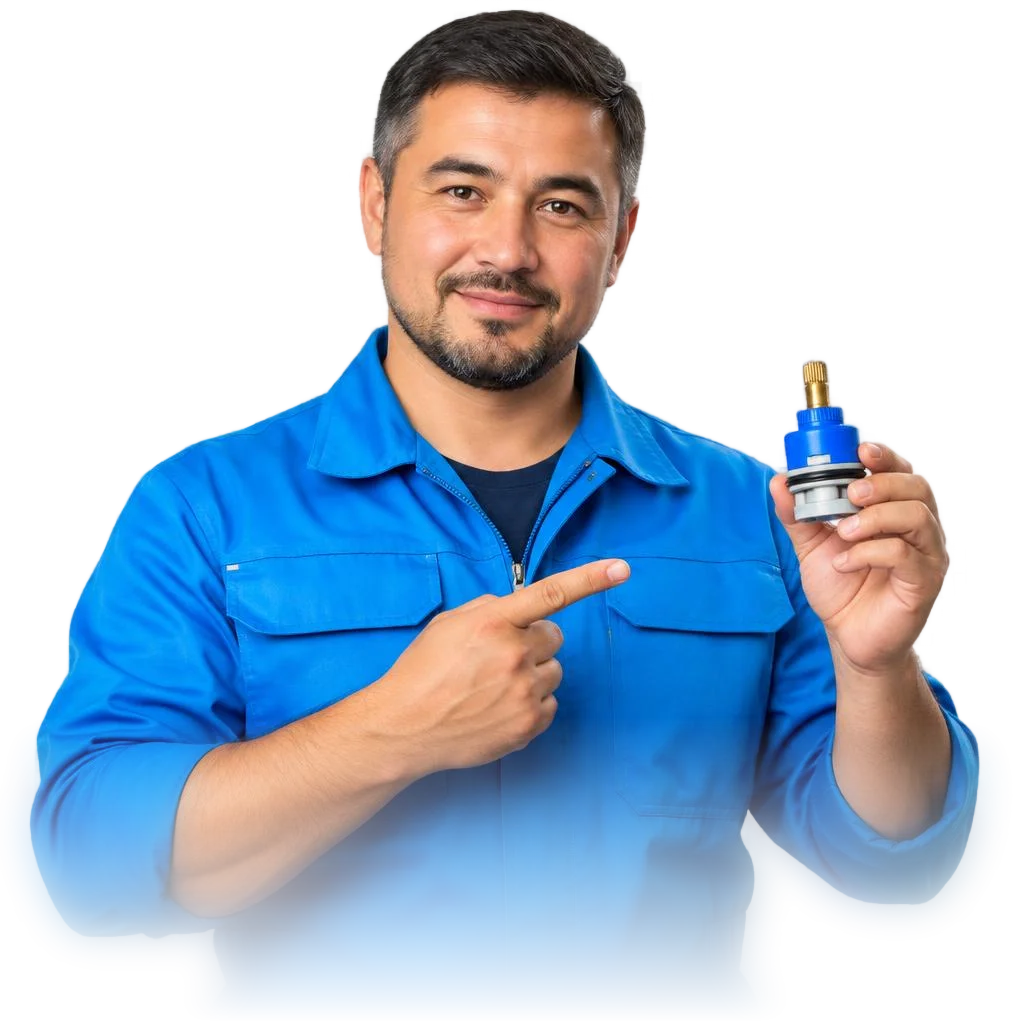
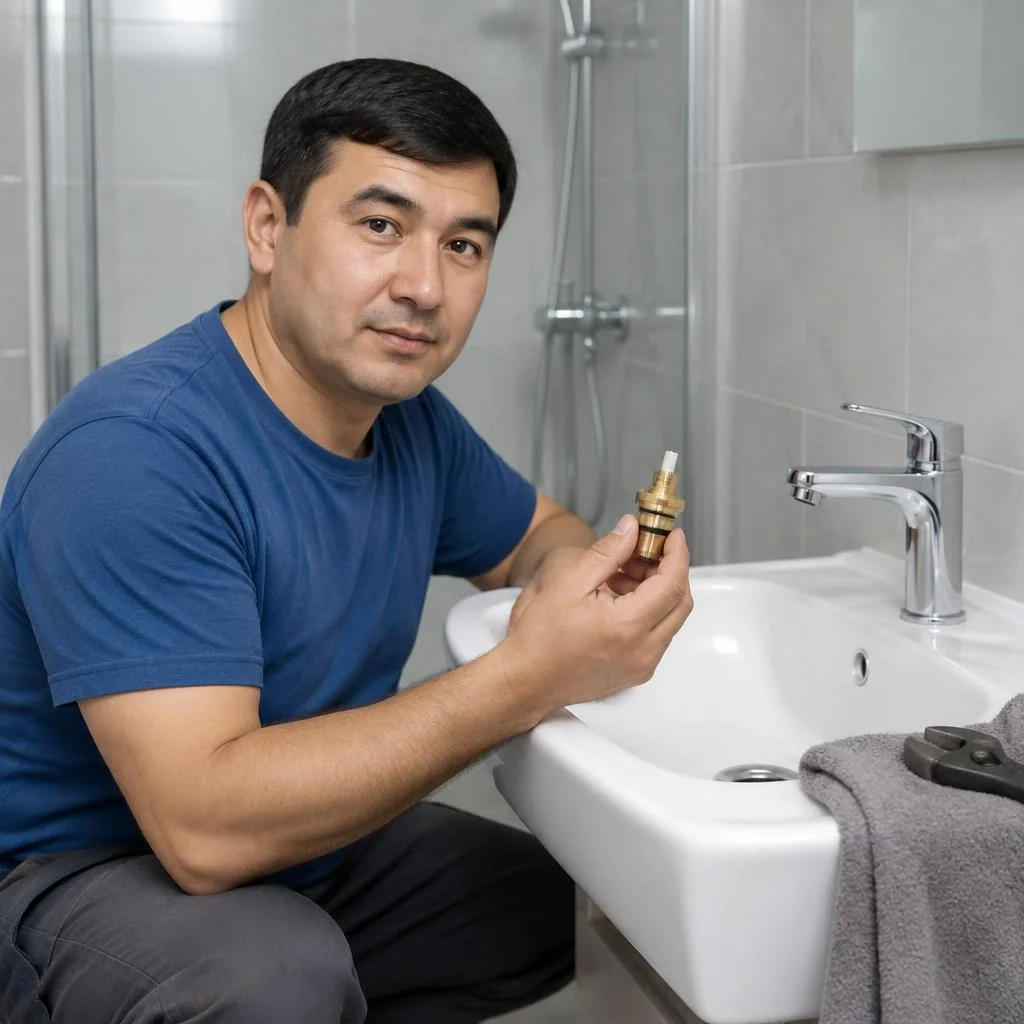
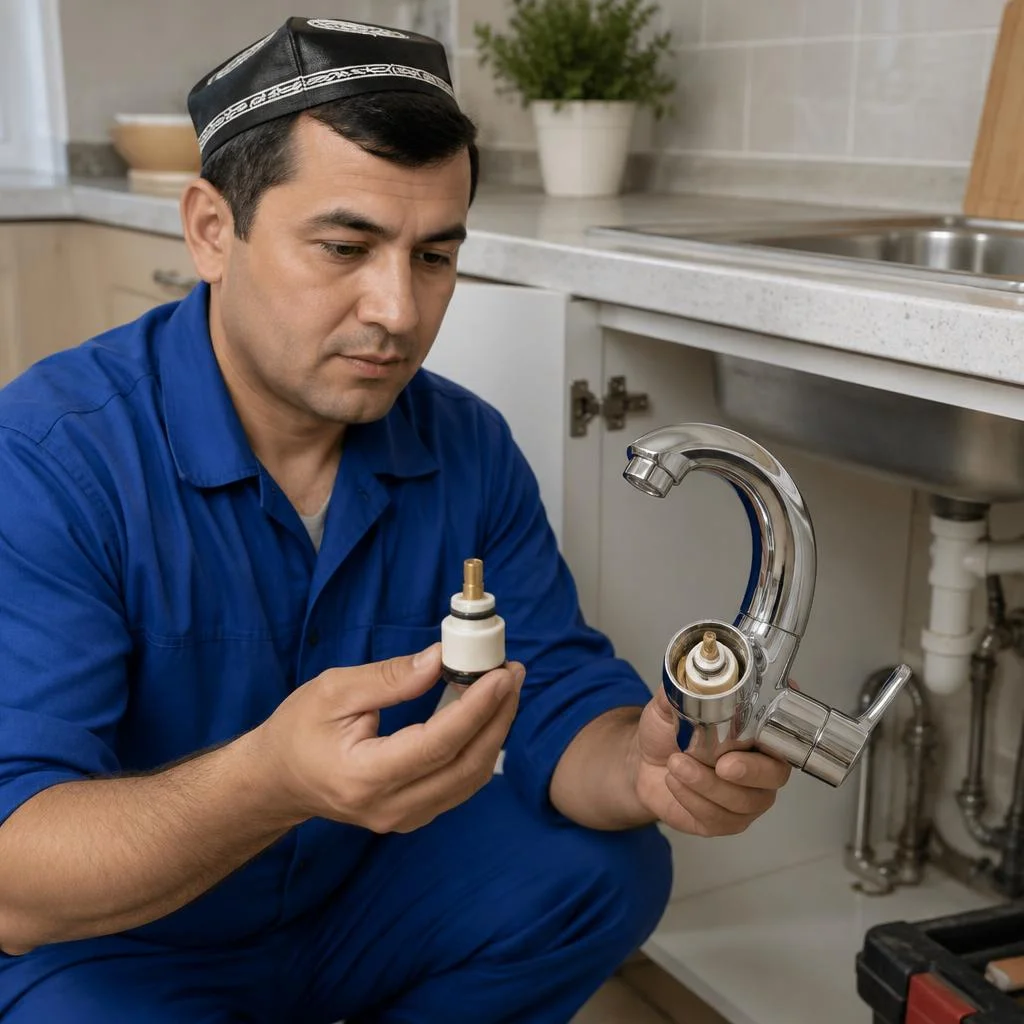
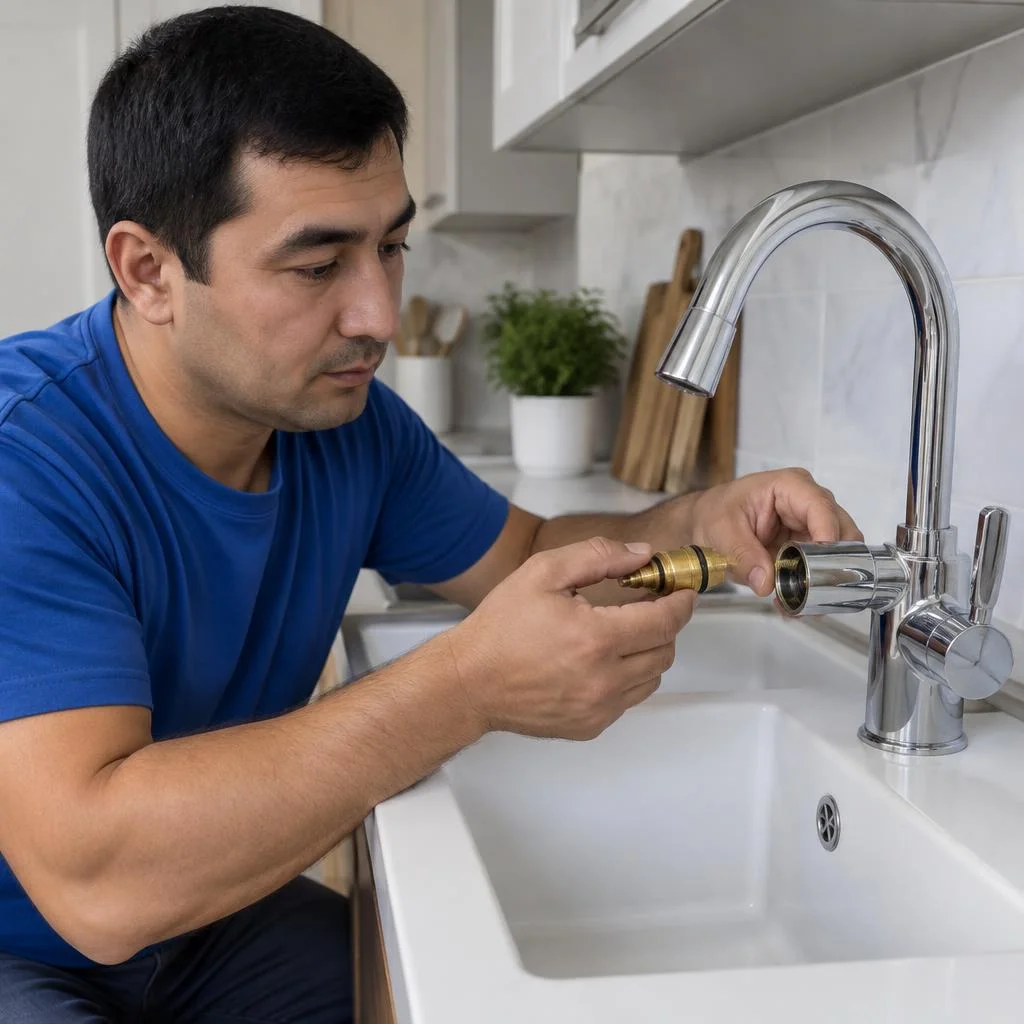
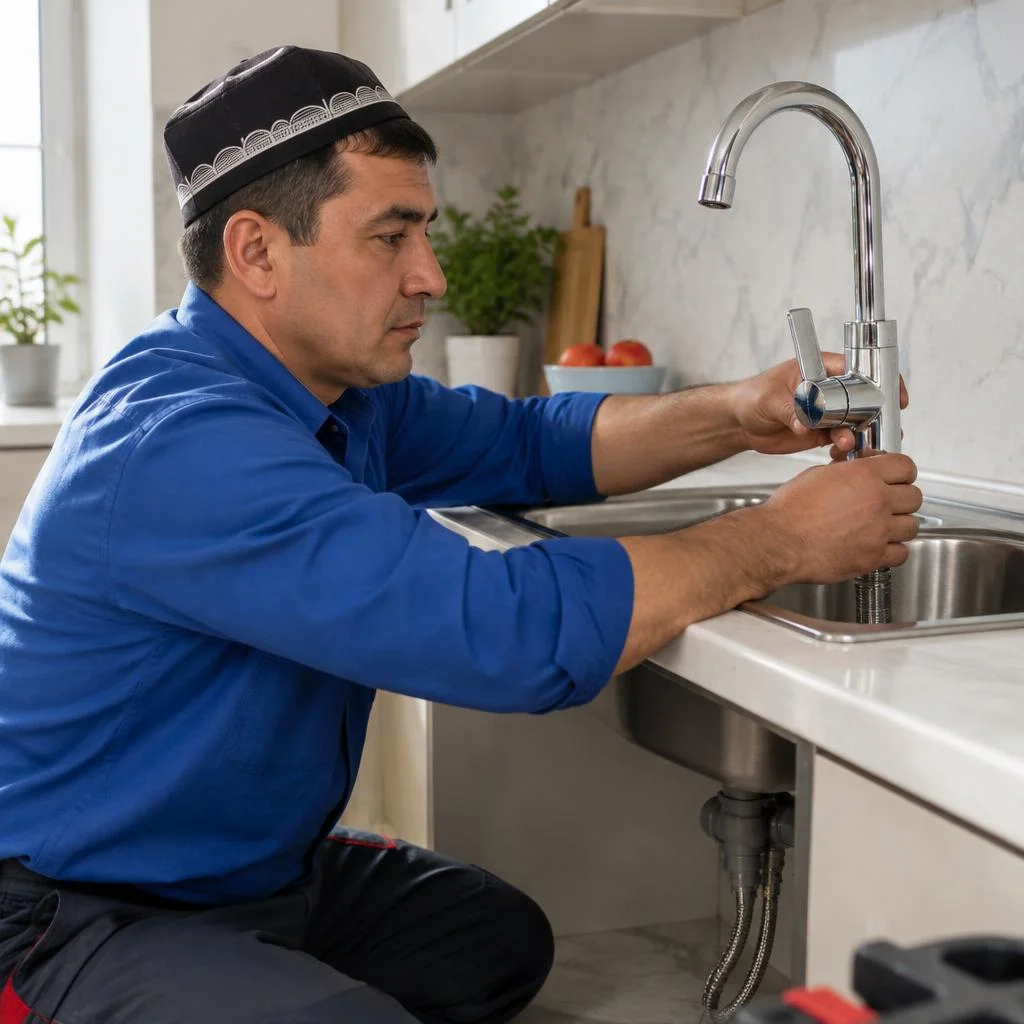
In a single-lever faucet, water mixing is handled by a 35 or 40 mm ceramic cartridge — it is the first thing to wear out with hard water. Inside the part are two ground plates with ports: the lever shifts them relative to each other, changing the proportion of hot and cold flow. The diameter is selected to match the body — a 35 mm cartridge is fitted in compact sink models, a 40 mm one in kitchen and bathroom models with a wide body, and when replacing, the part must match in spindle height, otherwise the lever will press against the ring. In our practice, kitchen repairs in eight out of ten cases come down to replacing the cartridge: a leak from the spout, stiff lever movement or temperature fluctuations are cured with a single part. If after replacing the cartridge the lever moves stiffly, the cause is more often limescale on the body seat rather than the new part — the seat must be cleaned before installation. In service requests, this is most often repair of a single-lever faucet with a swivel spout, because it is the swivel assembly that suffers from scale first.
Two-handle faucet: valve heads and ceramic shut-off valves
In a two-handle faucet, the flow is regulated by two valve heads — with a rubber gasket or a ceramic shut-off valve; ceramic lasts longer but is sensitive to sand in the water. A head with a rubber valve is found in budget models and requires gasket replacement about once a year, while a ceramic shut-off valve runs on ground plates and withstands three times as many open-close cycles. The handle is attached to the spindle with a screw under a decorative cap — when disassembling, the cap is removed with a thin knife, not a screwdriver, so as not to scratch the chrome. Eco-Service technicians begin repairing a faucet of this type by checking both valve heads: if only one is leaking, the other is still inspected for spindle play. If there is a leak from under the handle, it is not always necessary to replace the entire valve head — often it is enough to replace the gasket or ceramic shut-off valve, which is cheaper and faster. Clients often describe the task briefly — repair of a flag-style faucet, although the flag here is merely a part of the handle, and the cause is the same: a worn valve head or a compressed gasket.
Thermostatic faucet: thermoelement and scald protection
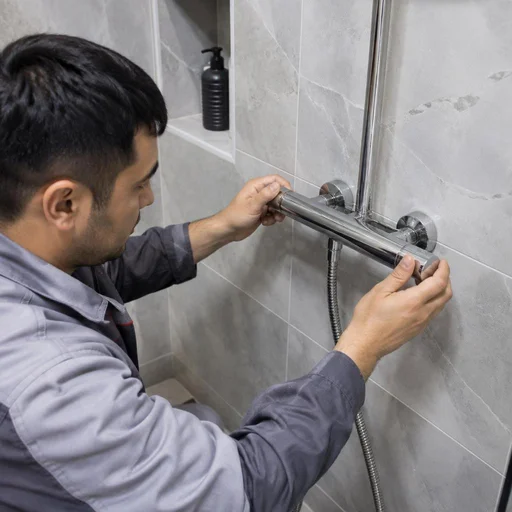
In a thermostatic faucet, the temperature is maintained by a thermoelement with a wax or bimetallic filler, which loses calibration over time. The filler expands when heated and shuts off the hot water channel — the mechanism is designed for tens of thousands of cycles, but hardness salts gradually change the rod travel. Clients often phrase the task as repair of a thermostatic faucet — and the technician immediately understands that access to the thermoelement is needed, and on some models, removal of the protective ring and stop. Inside the body are two check valves — they prevent hot water from flowing into the cold riser when pressure drops, and a clogged valve produces the same symptom as a knocked-out calibration. If the thermostat "jumps" in temperature, first check the filters at the hot water inlet — a clogged mesh produces the same symptoms as a worn thermoelement. In shower columns, the same request is filed as repair of a shower faucet, and the technician brings a thermoelement for the specific body series. In searches, people often type briefly — thermostatic faucet repair, and based on this phrase the dispatcher immediately puts a thermoelement and a set of sealing rings for the body series into the work order.
Concealed installation and sensor models: design features
A concealed installation mixer hides the body in the wall, so access to the cartridge and diverter requires an inspection hatch or removal of the tiles. The built-in unit consists of a brass body with two inlets, a cartridge and a diverter — all of this is walled in, and only the faceplate with the lever and spout remains outside. Servicing sensor mixers does not begin with the mechanics: the infrared sensor is powered by batteries or a mains adapter, and the first thing a technician checks is the charge of the element and the cleanliness of the sensor window. Requests are often described briefly: sensor mixer repair — and a technician with a set of sensors and adapters for various series travels to the address. Sensor models more often suffer not from wear of the mechanics, but from dead batteries and contaminated infrared sensors — this is the first thing a technician checks. In combined models with a flexible hose, the same work is booked as shower mixer repair, because the diverter and mode switch wear out along with the sensor. In shower cabins with a built-in panel, clients write shower cabin mixer repair — and the technician takes along a cartridge for the concealed unit and seals for the panel.
Hard water in Tashkent: why mixers wear out faster
The water in Tashkent is saturated with calcium and magnesium salts, so scale deposits on cartridges, aerators and ceramic valves 2-3 times faster than in soft water. The hardness of tap water in the capital stays at 6-8 mg-eq/l against a drinking water norm of up to 7, and in certain districts — Sergeli, Yashnabad, Bektemir — the figure rises higher due to the mixing of artesian and surface water. Lime scale crystallizes on the ground plates of the cartridge, scratches them when the lever is turned and accelerates the wear of the sealing rings — a part designed for 200-300 thousand actuations fails twice as early. In requests this sounds like kitchen mixer repair, although in fact the fix boils down to cleaning the aerator: the mesh becomes clogged with salts in 4-6 months, the pressure drops, and the homeowner calls a technician, although the part can be washed with citric acid. Installing a mainline or point-of-use filter before the mixer extends the service life of the cartridge more noticeably than any maintenance after installation. For kitchen models with a separate sprayer, clients write kitchen mixer with shower repair — and this is the same case, only the mesh also becomes clogged in the sprayer hose. In the search bar such enquiries often look like kitchen mixer tap repair, and the technician immediately brings a new aerator and gaskets for the kitchen body.
Ball and push-button mixer repair: how the mechanics differ
A ball mixer regulates the flow with a single ball with openings, not a cartridge, so replacing the part will not help here — the ball is either washed of scale or replaced as a whole assembly. Servicing a ball mixer in the bathroom begins with checking the springs and seat: spring-loaded seals press the ball against the body, and when they wear out, a leak appears along the stem. In the price list such work is listed as ball mixer repair — the technician brings along a repair kit of springs and seat gaskets for common series. A push-button mixer is found on shower columns and in models with a thermostat: the button switches modes through the diverter, and its mechanism breaks when pressed sharply with wet hands. Restoring a push-button mixer in our practice is most often associated with the pusher sticking due to scale, and not with a breakdown of the diverter itself — washing the assembly restores switching without replacing parts. In the bathroom the same mechanics are encountered in models with a sprayer, and the request is booked as bathroom mixer repair, although it is specifically the push-button switching assembly that has to be disassembled. In shower columns with a manual switch, clients type shower mixer repair — and the technician prepares a repair kit for the push-button diverter and seals for the specific series.
What determines whether a unit is repaired or replaced entirely
Repairing a kitchen faucet with a flexible spout requires taking into account that the spout hose is a consumable: it chafes at the point where it exits the body and leaks down the stem. The flexible supply line, cartridge, aerator, gaskets and valve heads are replaceable parts, while a cracked body, stripped threads or a seized built-in unit are assemblies that are not worth restoring. Servicing a bathroom faucet with a thermostat and diverter costs more than a two-handle one because of the number of parts, but it is still cheaper than replacing the whole assembly if the body is intact. We plan the work based on the diagnostic results: the technician disassembles the assembly, shows the worn part and states what will be replaced. In our practice, faucet repair and faucet fixing are almost always cheaper than a new installation — but only as long as the brass body holds the threads and has no casting cracks. If the body is intact and the wear has affected only the internal parts, the request is closed as kitchen faucet repair or faucet valve repair — depending on which assembly has failed.
Typical faults: from a leak from the spout to a stripped thread
Most requests for faucet repair involve four symptoms — a leak, dripping, poor shower switching, and a drop in water pressure. Each symptom points to a specific assembly, and from it the technician determines the scope of work even before disassembly.
Leaking from the spout: cartridge, gasket, or seat
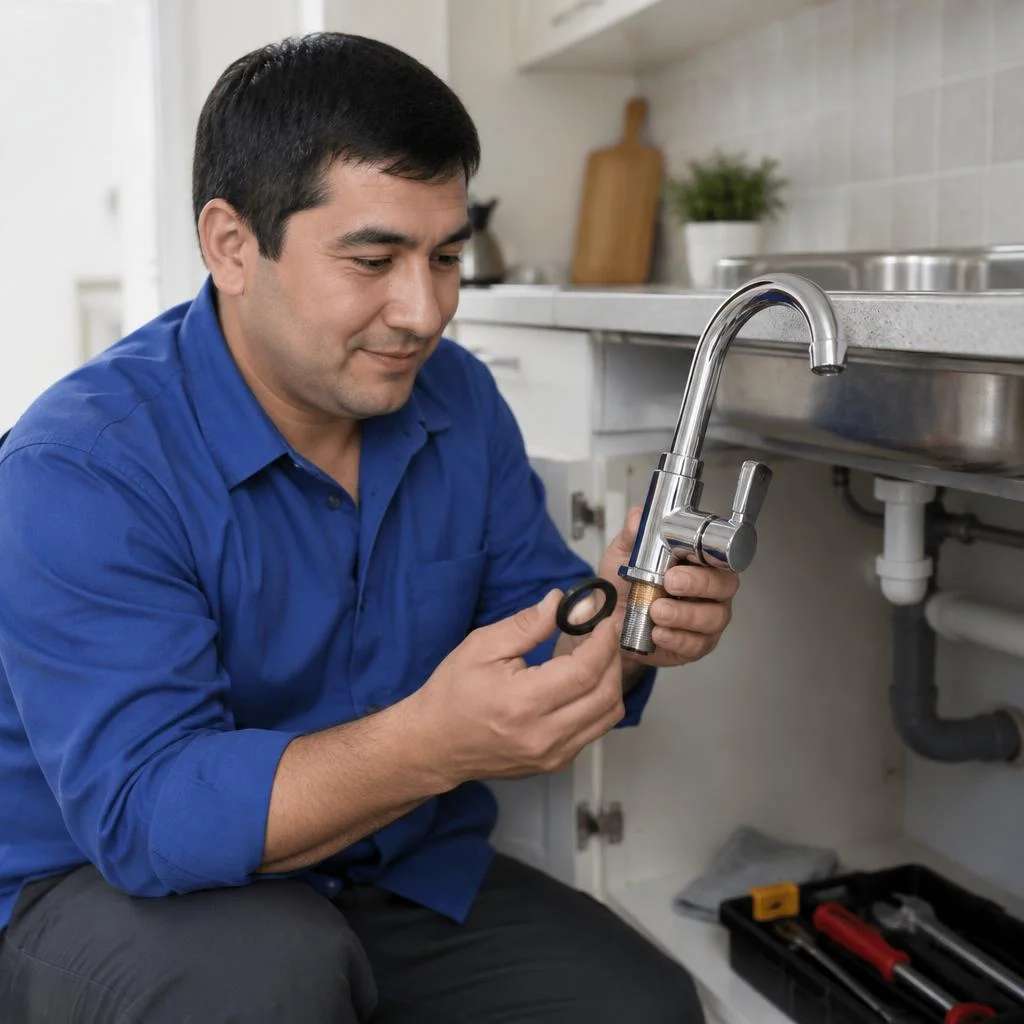
If water drips from the spout when the valve is closed, in 80% of cases the culprit is a worn cartridge or valve-head gasket, and less often a damaged seat in the body. On single-lever models, the ceramic plates of the cartridge wear along the edge; on two-handle models, the gasket under the valve head leaks — in that case, restoring a two-handle bathroom faucet comes down to replacing one part in 20-30 minutes. Chrome-plated and brass bodies behave the same way: the metal holds its shape, while the seal is what suffers. Most often clients search for "single-lever faucet repair" — and land on this page, even though the symptom is the same for everyone: drops from the spout when the valve is closed. Before replacing the cartridge, the technician checks the seat: a microcrack or pit in it will cause a leak even with a new part. A separate story is when people search for kitchen faucet with shower repair, even though water is dripping from an ordinary spout with no shower at all.
Leaking under the body or from under the handle
A leak under the body or from under the handle indicates worn sealing gaskets, a loosened gland, or a crack in the body after water hammer. On joystick models, water seeps along the stem with every turn of the handle — joystick faucet repair here begins with disassembling the upper assembly and checking the gland ring. If the body has warped after a pressure surge in the riser, the crack runs along the threaded connection and tightening does not help. The query "single-lever bathroom faucet repair" describes exactly this case: water runs along the stem, not from the spout, and tightening the gland gives only a temporary effect. If the leak returns a week after tightening the gland, the cause is wear on the stem — tightening endlessly is useless, the assembly needs replacing. In service requests this symptom is often described as kitchen faucet repair, even though the assembly is the same as in the bathroom.
Shower-spout won't switch: diverter and switch
If the shower-spout switch doesn't engage or water flows into both outlets at once, the problem is in the diverter — a ceramic or ball mechanism inside the body. On faucets with a shower, the diverter wears out faster than the cartridge because it operates under constant pressure — during servicing it is checked first. Wear on the ball mechanism shows up as the handle not locking in the upper position, while a ceramic diverter begins letting water through to both outlets. Clients describe it like this: ball faucet repair — and the technician immediately understands that the handle won't hold the upper position. Kitchen faucet with shower servicing requires care: the pull-out hose often seizes in its seat, and the technician removes it without jerking so as not to strip the thread. On faucets with a shower, the diverter is replaced as a separate assembly without dismantling the body. Understanding how the assembly is put together is helped by bathroom faucet with shower repair — essentially it's the same procedure. A separate category of requests is bathroom faucet with shower repair, when the switch has seized and the handle won't move at all.
Pressure dropped, noisy or whistling: aerator and supply line
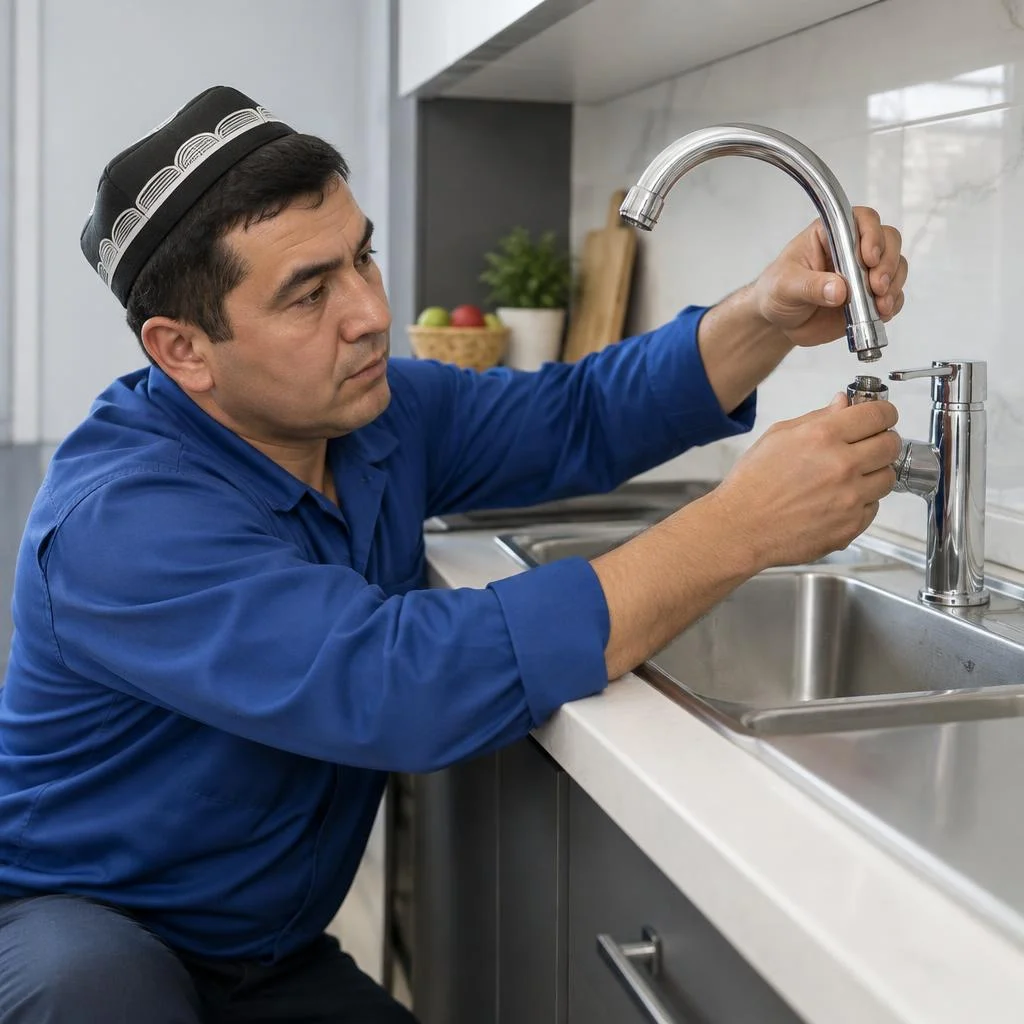
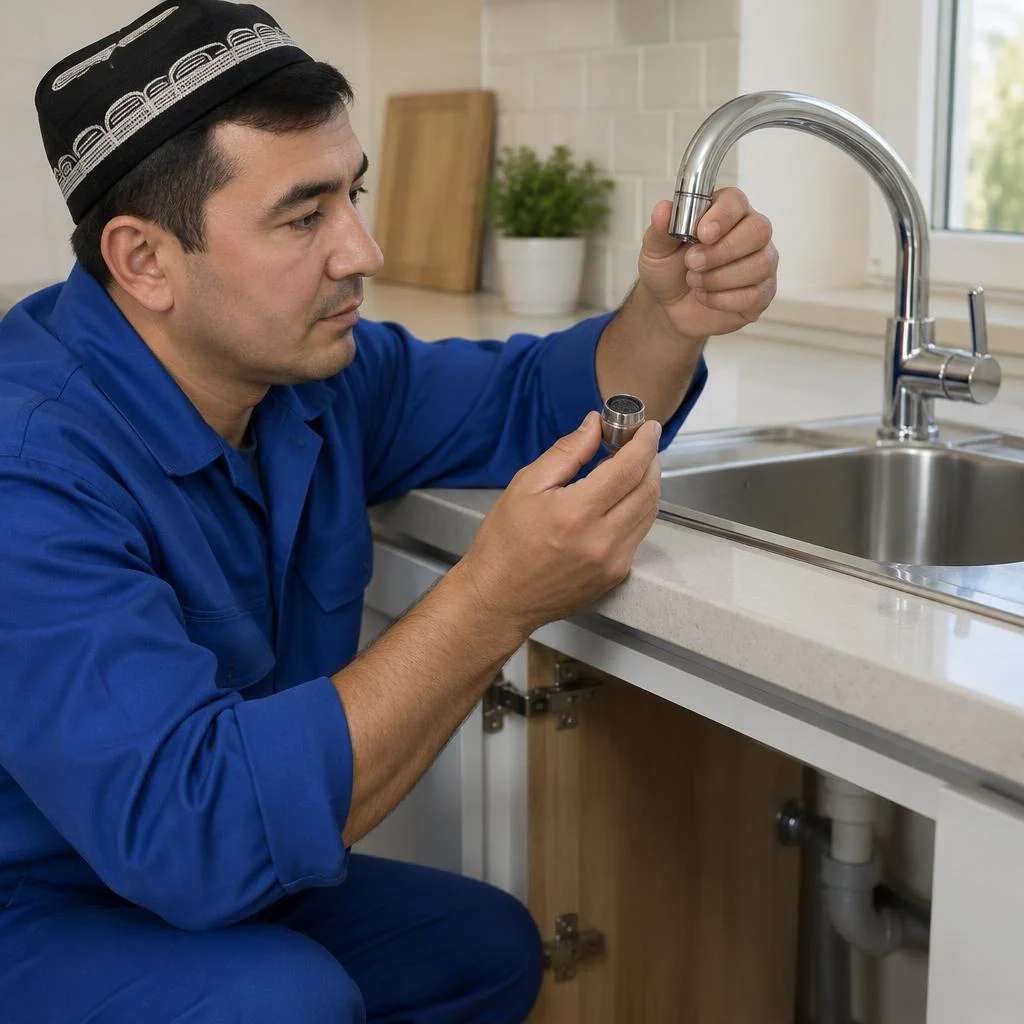
Weak pressure and whistling are most often caused by a clogged aerator or a flexible supply line overgrown on the inside — both parts are replaced in a single technician visit. The aerator clogs with scale in 6-8 months with hard water, while the flexible supply line becomes overgrown with salts from the inside in 2-3 years and starts whistling under pressure. Sink faucet servicing in that case begins with checking the aerator screen and blowing out the supply line: if the pressure hasn't recovered after cleaning, the hose is replaced entirely. An aerator with scale doesn't always need replacing: it can be soaked in citric acid, but if the screen is deformed, restoration won't give any result. From experience, hard water in Tashkent homes accelerates screen overgrowth by roughly a third compared to soft water.
Stripped thread and body cracks: when repair is impossible
A stripped thread on the supply line, a crack in the body, or a damaged cartridge seat — these are cases where restoring the faucet is technically impossible and replacement is required. The brass body cracks along the threaded inlet after a water hammer, and the cartridge seat gets damaged during careless disassembly — the geometry cannot be restored without replacing the body. Reconditioning the faucet won't help here: welding and cutting new threads give a temporary result and leak at the first pressure surge. The technician informs the client about this before starting work: the client pays only for diagnostics, not for disassembly that will lead nowhere. This especially often applies to models where concealed installation faucet repair is required: reaching the unit through the mounting opening is more difficult, and the cost of a mistake is higher.
Table: symptom → probable cause → unit
| Symptom | Probable cause | What we replace |
|---|---|---|
| Dripping from the spout when the valve is closed | Worn cartridge or valve head gasket | Cartridge, gasket, seat |
| Leak under the body | Loose gland seal, worn stem | Gland seal, stem, gaskets |
| Water flows from both outlets at once | Worn diverter | Diverter, switch |
| Weak pressure, whistling | Clogged aerator, clogged supply line | Aerator, flexible hose |
| Leak not fixed by tightening | Crack in the body, stripped thread | The entire faucet |
Accurate on-site diagnostics take 5-10 minutes and determine whether a part replacement or unit repair is needed. For bathroom faucet maintenance on concealed models, the technician begins by checking the accessibility of the units through the mounting opening — sometimes the diverter and cartridge can be replaced without removing the body from the wall.
Repair by faucet types: kitchen, bathroom, shower, bidet
The installation location sets the load pattern: the kitchen unit is turned on dozens of times a day, the bathroom one works under the pressure of the hot riser, and the bidet requires separate precision in adjusting the flow.
Kitchen faucet: pull-out spout, sprayer and swivel mechanism
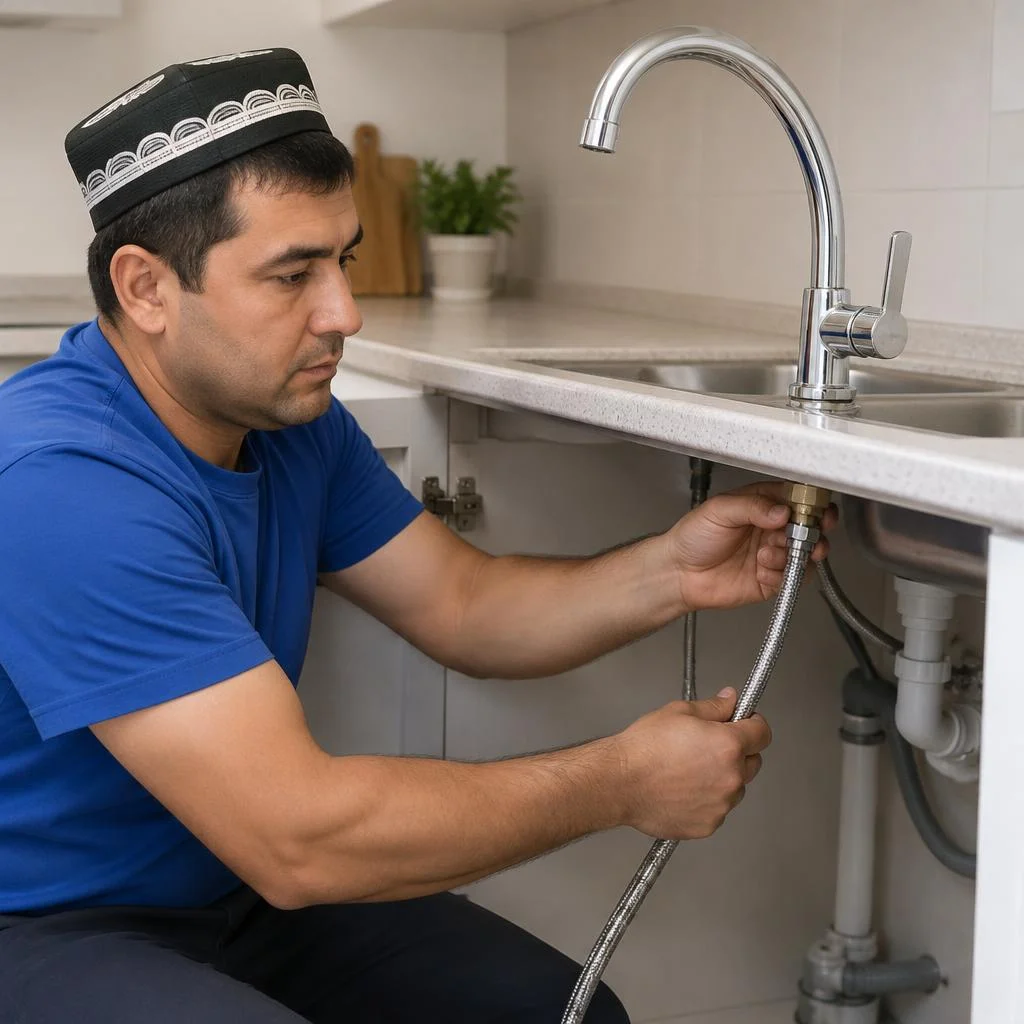
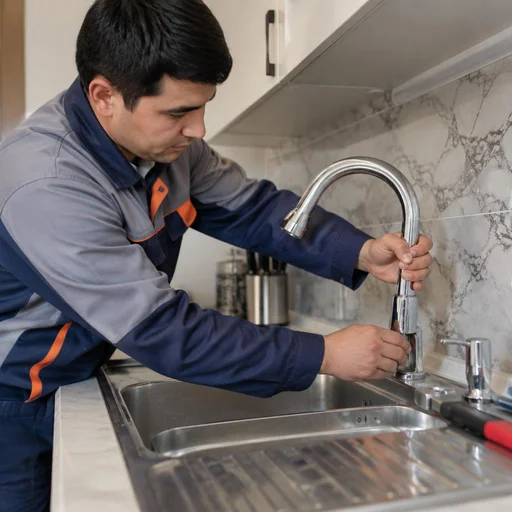
A kitchen faucet with a pull-out spout and sprayer wears out along the hose and the seal of the pull-out mechanism faster than along the cartridge. In our practice, 6 out of 10 service calls begin specifically with the pull-out assembly: the guide bushing wears down, the return spring weakens, and the spout stops locking into its seat. Clients often phrase the request as kitchen faucet with pull-out spout repair — and the technician immediately understands what is meant. Inside the body runs a reinforced hose with two O-ring seals, and if it breaks it is replaced together with the tip, not separately. The cartridge in the kitchen lasts longer than in the bathroom: hot water is poured here less often, so the ceramic plates wear more slowly. The pull-out spout must not be pulled by the hose when extending it — this is the main cause of the supply line breaking inside the body. If the spout starts to jam, lubricating the guide with silicone postpones replacement for several months. Some of the requests for kitchen faucet repair are related specifically to the pull-out assembly, not the cartridge. In work orders this reads as kitchen faucet repair — and the technician brings along a hose, bushing and return spring.
Bathroom faucet: shower diverter and riser
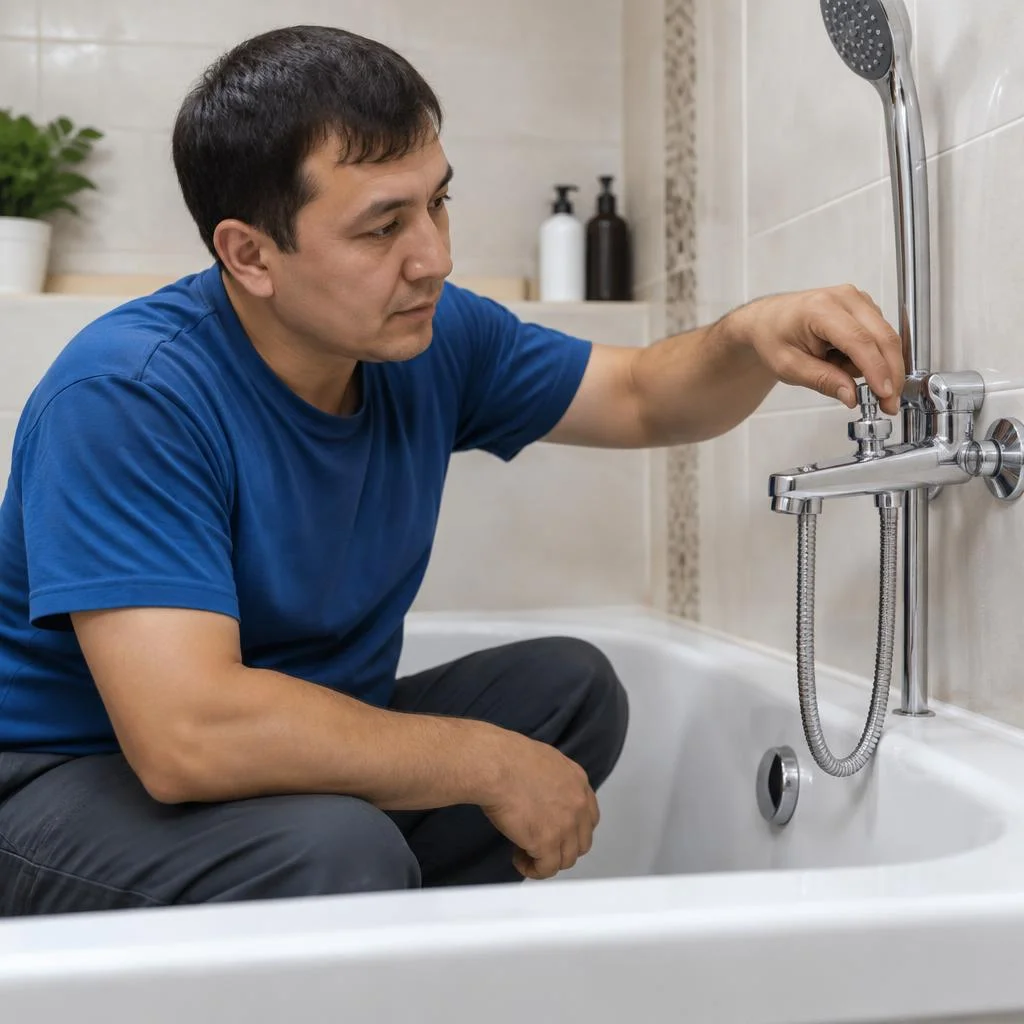
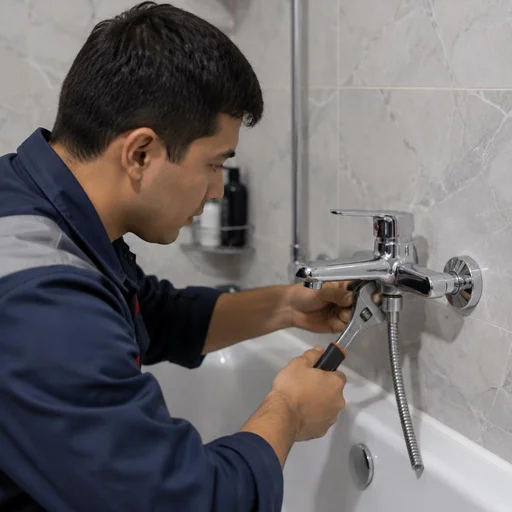
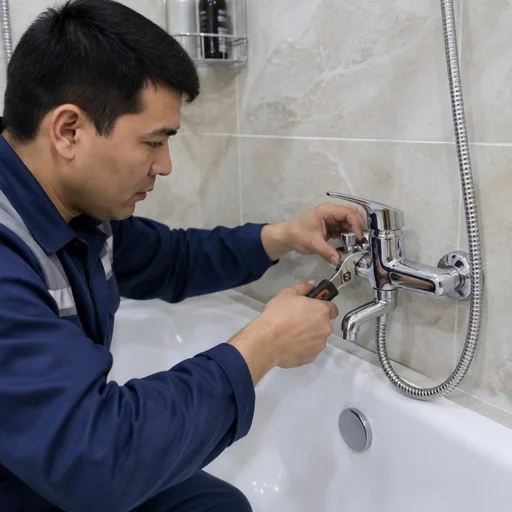
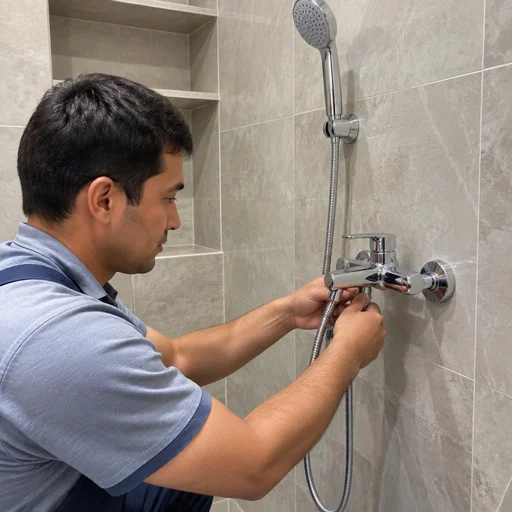
In the bathroom, the main wear assembly is the shower-spout diverter and the seals of the shower riser, because they operate under constant hot water pressure. Most often the work involves the diverter: the ceramic valve of the switch loses its seal after 2-3 years of daily use, and water starts flowing into both the spout and the shower at the same time. A bathroom faucet with a brass body is handled by replacing the diverter cartridge; on plastic ones, by replacing the entire diverter assembly. The riser adds its own specifics: the telescopic rod holds the hose under tension, and the connection at the base loosens first. Work on a bathroom faucet with a shower begins by checking this joint. If the assembly leaks at the riser, first check the hose connection, not the diverter — this is a common diagnostic mistake. The gasket between the rod and the body costs pennies, but its wear creates a false picture of "the diverter is leaking." Clients search for "bathroom faucets design and repair" — and land on this page. Technicians separately single out the repair of a two-handle bathroom faucet: two handles provide separate supply, and wear here occurs on both valve stems at once. In search this is phrased as bathroom faucet diverter repair — and the technician immediately brings a diverter cartridge.
Sink and washbasin faucet: compact models
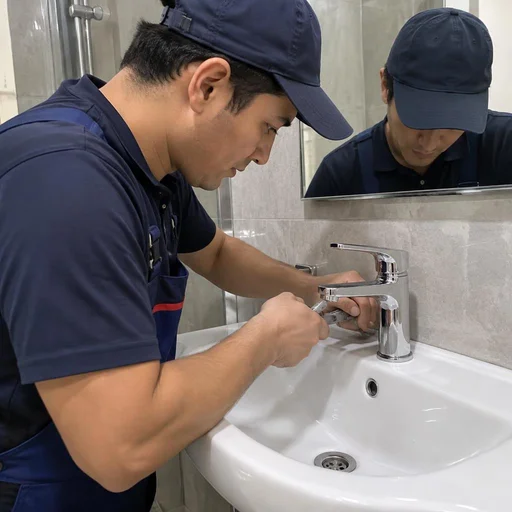
A sink and washbasin faucet rarely breaks at the body — typical faults here are related to the cartridge and aerator due to frequent use. In 8 out of 10 cases it all comes down to two operations: replacing the ceramic cartridge and cleaning or replacing the mesh aerator. A washbasin in the bathroom has a short lever and a small handle travel — on such models the cartridge experiences lateral load and wears faster than on kitchen levers. The aerator clogs with limescale: Tashkent water is hard, and the mesh loses its flow capacity within 4-6 months. A ball faucet is different in that instead of the cartridge, the ball itself and the sealing rings are replaced — the assembly is dismountable, but requires selecting the part by diameter. On compact models, the cartridge can be replaced without removing the faucet from the sink if there is access from below — this saves time and preserves the tightness of the seat. In work orders this most often reads as sink faucet repair or washbasin faucet repair — the essence is the same, but the part is selected by the body model. When the lever is single-handle and its travel is short, the list of work includes single-lever faucet repair — and the technician brings a cartridge designed for lateral load. Clients search for "sink faucet repair" — and the technician immediately understands that a cartridge and aerator mesh are needed.
Shower and shower cabin faucet: thermostat and riser
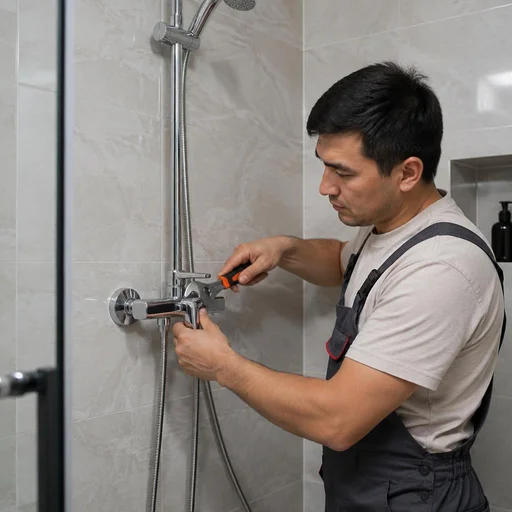
A shower and shower enclosure mixer most often requires work on the thermostat or replacement of the seals on the riser rail if water bypasses the diverter. A thermostatic cartridge with a wax element reacts to pressure fluctuations in the riser: during peak hours, when neighbours draw water, the temperature starts to "float" by 3-5 degrees, and the client perceives this as a breakdown. On models with two handles, it all comes down to replacing the thermoelement and calibrating the scale; on single-lever models, to a complete cartridge replacement. In a shower enclosure, the mixer works in tandem with a hygienic shower — during servicing, both outlets are checked, otherwise the leak will return within a week. The seals on the shower enclosure riser rail are replaced in pairs: if the upper collar has started leaking, the lower one is no less worn, and a repeat visit will cost more than a single preventive service. In search, this is phrased briefly — shower mixer repair, and the technician immediately brings a thermoelement and collars. A separate line of requests is the repair of mixers with a thermostat: here, checking the check valves is added to the thermoelement, otherwise the scale drifts again. Another frequent request is repair of a mixer with a thermostat: in this case, the technician additionally checks the wax element on the test bench and calibrates the scale to the pressure in the riser.
Bidet mixer: precision of adjustment and protection against leaks
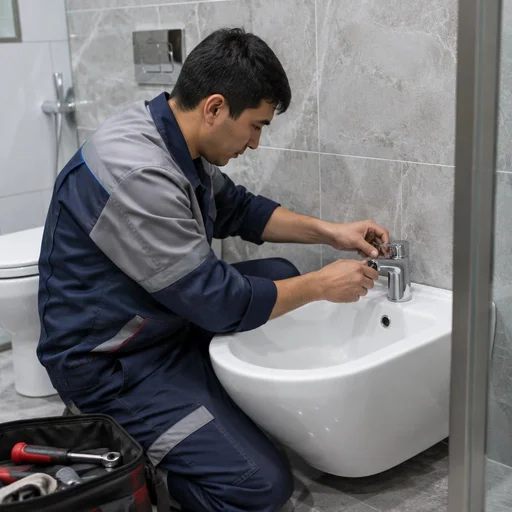
A bidet mixer requires precise adjustment of pressure and temperature, so special attention is paid to the cartridge and the fine-mesh aerator. A mixer with a flexible spout on a bidet is a separate story: here the spout is short and often swivel-mounted, and the hose inside the body is thinner than on kitchen models. The cartridge on a bidet operates in a mode of frequent short activations, so the ceramic wears along the edge of the plates, and a dripping leak appears in the closed position. A fine-mesh aerator on a bidet produces a soft angled stream — it is cleaned with citric acid or replaced with an original one. On a bidet, you cannot install an aerator from a washbasin — due to the different stream angle, it causes splashing, and the client perceives this as a repair defect. The technician selects the nozzle based on the tilt angle of the body, not the thread. In requests for repair of bidet mixer taps, the type of cartridge is specified separately, because the part is selected based on the edge of the plates.
Table: mixer type → typical faults → what we replace
| Mixer type | Common fault | What we replace |
|---|---|---|
| Kitchen with flexible spout | Hose rupture, guide jamming | Hose with tip, sleeve |
| Kitchen with shower | Weak spout fixation | Return spring, seals |
| Bathroom with shower | Leak through the diverter | Diverter cartridge |
| For sink and washbasin | Cartridge wear, clogged aerator | Cartridge, aerator mesh |
| For shower and enclosure | Temperature fluctuates | Thermoelement, riser rail collars |
| For bidet | Dripping leak in closed position | Cartridge, angled aerator |
Understanding the typical fault by mixer type helps the technician take the right spare parts even before the visit.
Repair or replace: when a faucet can still be restored
The "repair or replace" decision depends on three factors: the condition of the body, the availability of spare parts, and the total cost of ownership over the coming years. Let's examine each case separately.
When restoring a faucet is justified
Restoring a faucet is justified if the body is intact, the threads are not stripped, and the fault is localized in a replaceable assembly — the cartridge, valve head, gasket, or aerator. In our practice, roughly 7 out of 10 service calls are resolved exactly this way: the technician replaces a consumable part in a single visit without touching the seating surfaces. Clients often search for "push-button faucet repair" — and land on this page, even though that query covers a dozen different breakdowns. Work on a single-lever model comes down to replacing the ceramic cartridge — the part is universal and is in stock with most suppliers in Tashkent. On two-handle models, the valve heads are replaced; on thermostatic models, the thermoelement and check valves. If the assembly is less than 5-7 years old and from the mid-price segment, restoration is almost always more cost-effective than replacement: parts are available, and the body has not yet exhausted its service life. Before calling a technician, check the age of the model and the availability of spare parts — for discontinued lines, parts may not be available, and that changes the decision.
When replacement is needed: cracks, stripped threads, an outdated model
Replacement is needed if the body has cracked, the threads are stripped, the cartridge seat is destroyed, or the model has been discontinued and there are no spare parts. A crack in a brass body after water hammer or freezing cannot be fixed — soldering gives a temporary effect and it leaks again after 2-3 months. Stripped threads on the mounting stud or in the supply connection mean the assembly cannot be sealed even with a new gasket. A kitchen faucet with a sprayer won't be saved by restoration if the pull-out mechanism is worn and the hose doesn't retract into the body — replacement is cheaper than the hassle of refurbishment. On Soviet-era models, the work is often impossible not because of a breakdown, but because of the lack of compatible parts — this is a separate case where replacement is inevitable. Check the body for cracks under magnification in bright light: a fine hairline crack at the base of the spout only shows up under pressure.
Faucet refurbishment: what can actually be restored
Faucet refurbishment is the restoration of the appearance and functionality of the assembly: descaling, replacing seals, polishing the body, and replacing worn parts. Restoring a shower faucet through refurbishment addresses 4 typical problems: limescale on the aerator, a seized diverter, a seal that has lost its elasticity, and a tarnished chrome finish. The technician disassembles the assembly, soaks the parts in an acid solution, replaces the gaskets, and reassembles it. Refurbishment does not restore the geometry of the seat and seating surfaces — if they are worn, cosmetics won't eliminate the leak. Refurbishment is ordered for premium-segment models and for faucets of non-standard shapes that are difficult to replace without reworking the supply lines. For budget models, there is no economic sense in deep refurbishment — it's easier to install a new assembly.
Cost of ownership: repair versus buying new
The cost of ownership is made up of the price of parts, the frequency of repeat service calls, and the service life after restoration — not just the one-time price of the service. Work on a kitchen faucet with a single service call over 2 years costs less than a new faucet that will last the same 2 years and break. Clients often search for "kitchen faucet repair" — and land on this page, even though that query covers a dozen different breakdowns. A faucet with a thermostat requires servicing less often than a budget two-handle model: the thermoelement maintains a stable temperature and protects the body from pressure surges. A kitchen model with a cartridge replacement once every 3-4 years is a normal cycle for a mid-range model. A cheap faucet with frequent service calls over 3 years costs more than a quality model with a single technician visit — this is worth considering when making a decision. Count not the one-time price, but the total of service calls over 5 years: that is the real cost of ownership. This is exactly why repairing a ball faucet in the bathroom often beats buying a new assembly — a replacement cartridge costs pennies compared to a full body replacement.
Technician's checklist before making a decision
- Model age: up to 5-7 years — repair is justified, over 10 years — calculate the economics of replacement.
- Parts availability: check whether a cartridge or ceramic valve head is still produced for your model.
- Body condition: cracks, chips in the chrome, signs of corrosion at the base — a signal to replace.
- Type of fault: replaceable assembly (cartridge, gasket) — repair, body (crack, thread) — replacement.
- Frequency of service calls: more than 2 calls in 3 years — the model has exhausted its resource, a new one is more cost-effective.
Table: repair or replace based on faucet condition
| Condition | What we do | Service life after |
|---|---|---|
| Leak from the spout, body intact | Cartridge replacement | 3-5 years |
| Dripping under the handle | Valve head replacement | 3-4 years |
| Whistling, pressure dropped | Aerator cleaning | 1-2 years |
| Shower-spout diverter seized up | Switch replacement | 2-3 years |
| Crack in the body | Faucet replacement | New assembly |
| Stripped supply thread | Faucet replacement | New assembly |
| Soviet-era model with no parts | Faucet replacement | New assembly |
Checking shower and thermostatic faucets before replacement
Servicing thermostatic faucets follows its own logic: the thermoelement is replaced as a serviceable assembly, while the body lasts longer thanks to protection from temperature fluctuations. The design of a bathroom faucet with a shower involves checking both circuits — the spout and the shower riser. A shower faucet with replacement of the seals and diverter extends service life by 2-3 years, provided the water is soft. Working with such an assembly requires checking the flexible hose: even with a working cartridge, an old supply line will leak under pressure. A kitchen mixer faucet with a pull-out spout is more complex — the spring return mechanism can only be restored by replacing the entire assembly. If you're unsure which is more cost-effective, order a diagnostic: bathroom faucet repair with disassembly and fault inspection will show whether the body is intact and whether parts are available for it.
How we work: diagnostics, technician visit, timelines
The process consists of four stages: request, on-site diagnostics, work with original spare parts, and pressure testing. Below is how each stage proceeds and how long it takes.
On-site diagnostics: how the technician identifies the fault
Diagnostics take 5-10 minutes: the technician checks the cartridge, valve heads, diverter, aerator, and supply lines, then names the cause and scope of work. Clients often phrase their request as kitchen faucet repair — and just from the description the technician understands what to bring. On single-lever models, the decorative cap and retaining screw are removed first — underneath, the cartridge stem is visible, and its play reveals the wear. On two-handle models, the handle travel and the condition of the ceramic valve are checked: a chip or stiff movement immediately indicates a valve head replacement. The shower-spout switch is tested under pressure — a weak stream in one of the modes indicates a seized diverter, and in that case the request includes bathroom faucet repair shower switch. Diagnostics are performed before disassembly: if the client declines the work, the faucet remains in its original condition, without damage.
Technician visit across Tashkent: zones and time
The technician travels to all districts of Tashkent; arrival time depends on workload and is usually 1 to 3 hours after the request is confirmed. In the morning (before 11:00) the queue is shorter — during the evening hours of 18:00-21:00 there are more requests, and the wait stretches closer to the upper limit. The team is based in the center, so to Yunusabad, Mirzo-Ulugbek, and Yashnabad districts the drive takes about 20-30 minutes, to remote areas — longer. If the faucet is concealed-mount, the technician clarifies at the time of the request whether there is access to the body — this affects the tool set and work time: without a revision hatch, disassembly takes twice as long. In the dispatch office, such requests are marked as faucet repair so that the right specialist is assigned to the visit right away.
Work timelines: what gets done in one visit
Most faults — cartridge, valve head, gasket, aerator, diverter replacement — are resolved in a single technician visit. Work on a lever faucet with a worn cartridge takes 20-30 minutes, a two-handle model with replacement of both valve heads — up to 40 minutes, and a faucet with a thermostat also requires calibration of the thermoelement, so the visit stretches to an hour. Servicing a kitchen faucet with a flexible spout or pull-out shower sometimes includes cleaning the hose — that's plus 15 minutes. If a rare part is needed for a specific model, the timeline increases by the delivery time — the technician reports this immediately after diagnostics so the client can decide whether to wait or install a compatible analog. A separate line in the price list is kitchen faucets design and repair: this covers work with a pull-out spray head and hose. In requests this is often phrased as kitchen faucet with flexible spout repair — and the technician takes a replacement hose and sealing rings of the right diameter in the vehicle in advance.
Original spare parts and the technician's tools
The technician arrives with a set of original spare parts — 35 and 40 mm cartridges, valve heads, gaskets, aerators, flexible supply lines — and professional tools. For single-lever models, a hex key for the retaining screw and a circlip remover are needed; for concealed mounting, a torque wrench so as not to strip the threads on the brass body. Kitchen, shower, and bath units with a switch are covered by the same set: 80% of requests are a cartridge, valve head, or gasket, and all three items are always in the vehicle. Using a non-original cartridge leads to leaks within a few months — saving on the part results in a repeat call, so Eco-Service installs only proven components for the specific model. In requests, clients write it in different ways: single-lever kitchen faucet repair, Soviet bathroom faucet repair, kitchen faucet with swivel spout repair — and from these phrasings the technician selects the cartridge and valve heads in advance. When a message says faucet with flexible spout repair, the dispatcher immediately clarifies the hose length and thread type — this determines which supply line goes on the visit.
What to clarify when placing a request
- Faucet type: single-lever models in the bathroom and with a shower follow different procedures — in the second case, the diverter is also checked.
- Model and diameter: 35 mm and 40 mm cartridges are interchangeable only with an adapter, so the diameter is confirmed in advance.
- Installation type: a concealed unit in a shower cabin requires access to the body — without a revision hatch, the work becomes more complicated.
- Symptom: a leak, weak pressure, stiff handle movement or noise — based on the description, the technician takes the necessary spare parts in the vehicle.
- Address and time: service requests are accepted with reference to the district and a convenient time slot; faucet servicing in Tashkent is the main specialization of the mobile team.
2-year warranty, payment and service center in Tashkent
2-year warranty on all work, payment via Click, Payme, Uzcard and Humo, our own service center in Tashkent — the terms that define how the restoration of a single-lever mixer with a swivel spout and other models proceeds from request to handover.
2-year warranty: what it covers and what it doesn't
Eco-Service provides a 2-year warranty on the work and the installed spare part — if the cartridge, valve head or gasket fails through our fault, repeat servicing of the valve mixer is performed free of charge. Warranty cases include: a leak that returns at the same assembly, premature wear of the ceramic valve, stripped threads on parts we replaced, and failure of the shower-spout diverter switching after a new diverter is installed. The technician records the replaced assembly in the report — with this document, no need to pay for diagnostics again on a repeat request. Not covered: damage from water hammer in the riser, disassembling the body yourself, using the mixer for purposes other than intended, and mechanical chips on the chrome finish. Clients searching often type "valve mixer repair" and "shower mixer repair" — we accept warranty service requests under these queries. One practical point: before replacing a gasket, ask the technician to show you the old part — its condition shows whether the pressure reducer at the apartment inlet needs adjustment.
Our own service center in Tashkent
Eco-Service has its own service center in Tashkent — you can bring a mixer here for diagnostics and servicing if a home visit by a technician is inconvenient. The center accepts models that are difficult to restore on site: working with concealed installation requires disassembling the body on a workbench, and the thermostatic variant requires testing the thermoelement on a bench with hot and cold water supplied under pressure. This is exactly how we perform thermostatic mixer repair and flexible kitchen mixer repair — both areas require bench testing, not just a visit. Having our own center means rare spare parts don't have to be ordered from third-party suppliers — cartridges, valve heads and ceramic valves for common series are kept in stock, and the turnaround time for complex models is shortened. We also handle a Soviet-era brass-bodied bathtub mixer at the center: we select adapters for old mounting seats. If a ball-type mixer requires replacement of the ball mechanism, bring the entire body — that way the technician can more accurately match the part by diameter. In search, clients phrase it differently: water mixer repair, sensor mixer repair, single-lever bathtub mixer with shower repair — and for each wording the technician already understands the type of assembly before the visit. A separate line of requests is bathtub mixer repair: we accept such requests both at home and at the center.
Payment: Click, Payme, Uzcard, Humo
You can pay for the work via Click, Payme, Uzcard and Humo cards, as well as in cash to the technician after the work is completed. For legal entities we arrange bank transfer with closing documents — this is convenient for management companies and hotels, where servicing a kitchen faucet or kitchen mixer is done regularly across several rooms. Payment is made after checking the result: the client first makes sure the leak is fixed and the pressure is restored, and only then pays. For online payment, the receipt arrives in the bank app; for cash payment, the technician issues a receipt with the request number. One point: if a single-lever kitchen mixer was serviced under warranty, no repeat payment is taken at all — neither for the visit nor for the part. Requests also come in this wording: single-lever kitchen mixer repair — with it, the technician immediately prepares a cartridge of the required size. We separately accept two-valve kitchen mixer repair: on such models we most often replace valve heads and lap the seats. The price list has a separate line for washbasin mixer repair — for this request the technician brings a cartridge and aerator for the standard mounting size.
Customer reviews and repeat requests
Customer reviews of Eco-Service can be viewed on Google Maps and Yandex.Maps — most repeat requests are related to servicing faucets in other apartments or for relatives. Most often, those who return are the ones for whom we did work on a sink faucet or a two-handle kitchen faucet: the client sees that the unit works without leaks and brings neighbors from their building entrance. A repeat request is the main indicator of quality: if a person comes back a year later with different plumbing fixtures, it means the first visit was performed correctly. In the reviews we record specifics: which model, which unit was replaced, how long the work took — using these records, new clients assess whether this approach suits them. A practical tip: before ordering, open Yandex.Maps and filter reviews by the word "faucet" — you will see real cases for your model, not general ratings of the service. In the comments to requests, there are also formulations such as: repair of a faucet mixer in the bathroom, repair of a bathroom faucet, repair of a sink faucet, repair of a flexible kitchen faucet — for each of them we already have an established work procedure.
Conclusion
We have gathered the main things that determine the outcome of working with a faucet: the type of mechanism, the availability of spare parts, and the condition of the body. Below are the conclusions that will help you make a decision before calling a technician.
Main conclusions
- The type of mechanism determines the wear unit: in single-lever models the cartridge wears out, in two-handle models the valve stems wear out, and in thermostatic models the thermoelement wears out, so a single-lever faucet and a joystick model require different parts during servicing.
- Most breakdowns are solved by replacing the replaceable unit: a leak, weak pressure, and poor shower switching are resolved in one visit — a shower faucet and a bathroom faucet are examples of this.
- Servicing is justified when the body is intact: cracks and stripped threads turn the issue into a replacement, while bathroom devices that require disassembling the body need separate diagnostics.
- Hard water accelerates wear: a filter and timely replacement of the aerator extend service life, while sensor models and a washbasin faucet without descaling from limescale cause repeated leakage.
- A 2-year warranty covers work and parts — both a sink faucet and a single-lever kitchen model, a kitchen faucet with a swivel spout, as well as kitchen devices.