








Sewer diagnostics: how we find the cause before work begins
Without diagnostics, any work on pipes is done blind: we break open tiles or flooring where the pipe is intact, while the defect lies two meters above. I will show what CCTV inspection and leak detection deliver before the first strike of the hammer drill.
Television pipe inspection: what the camera shows
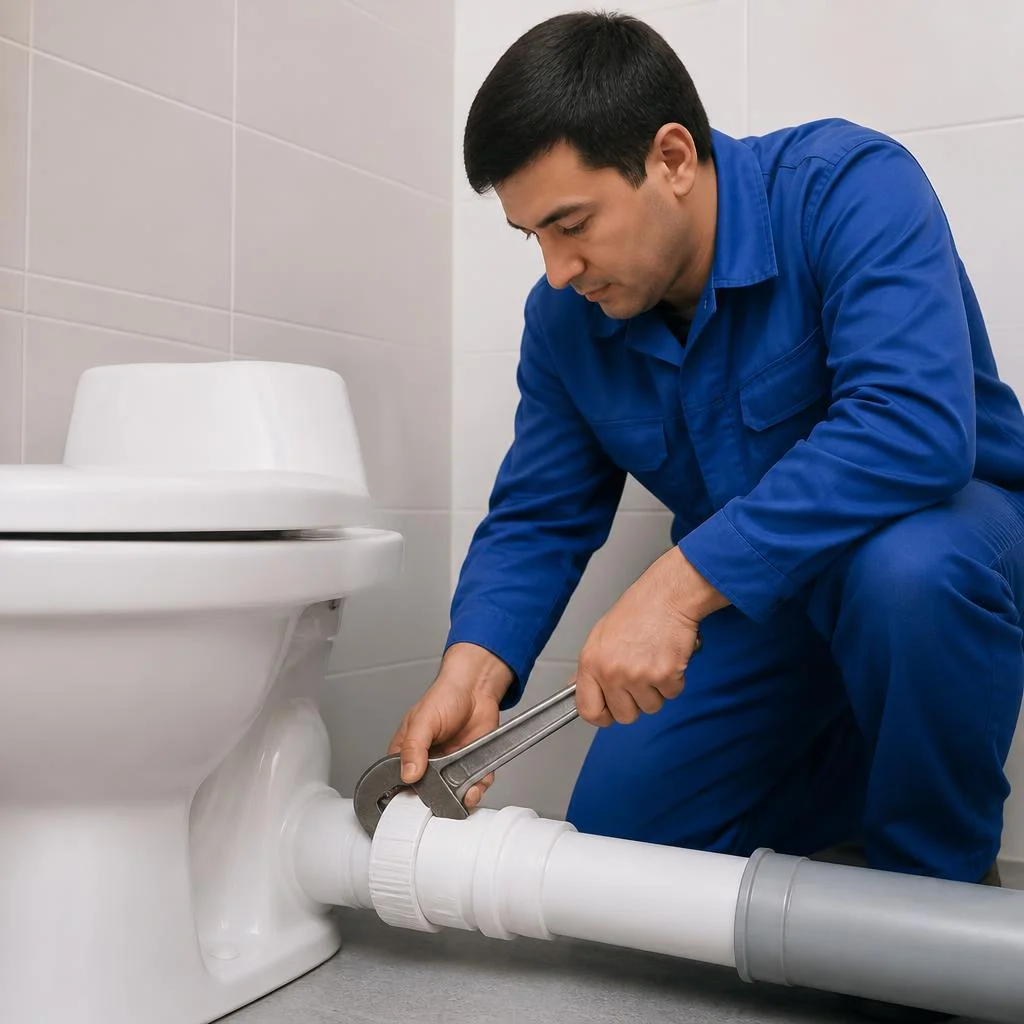
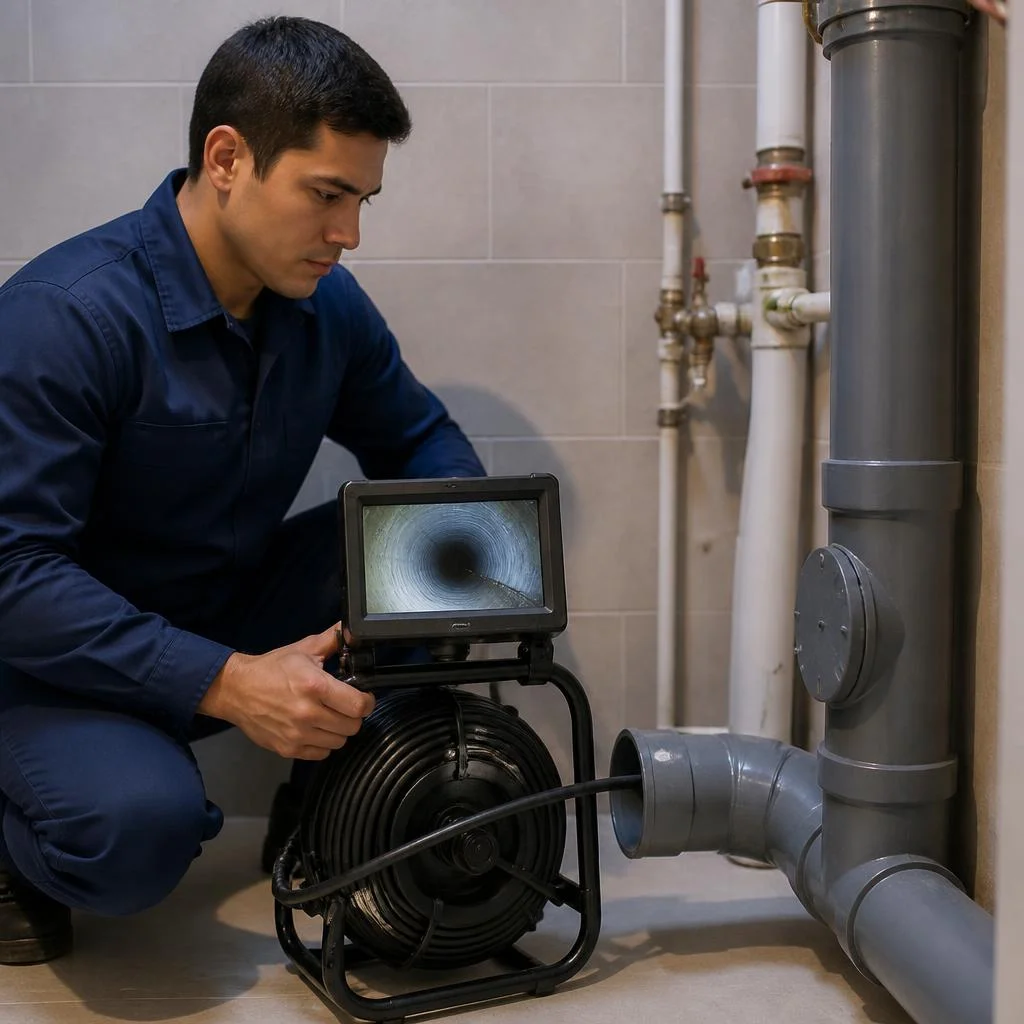
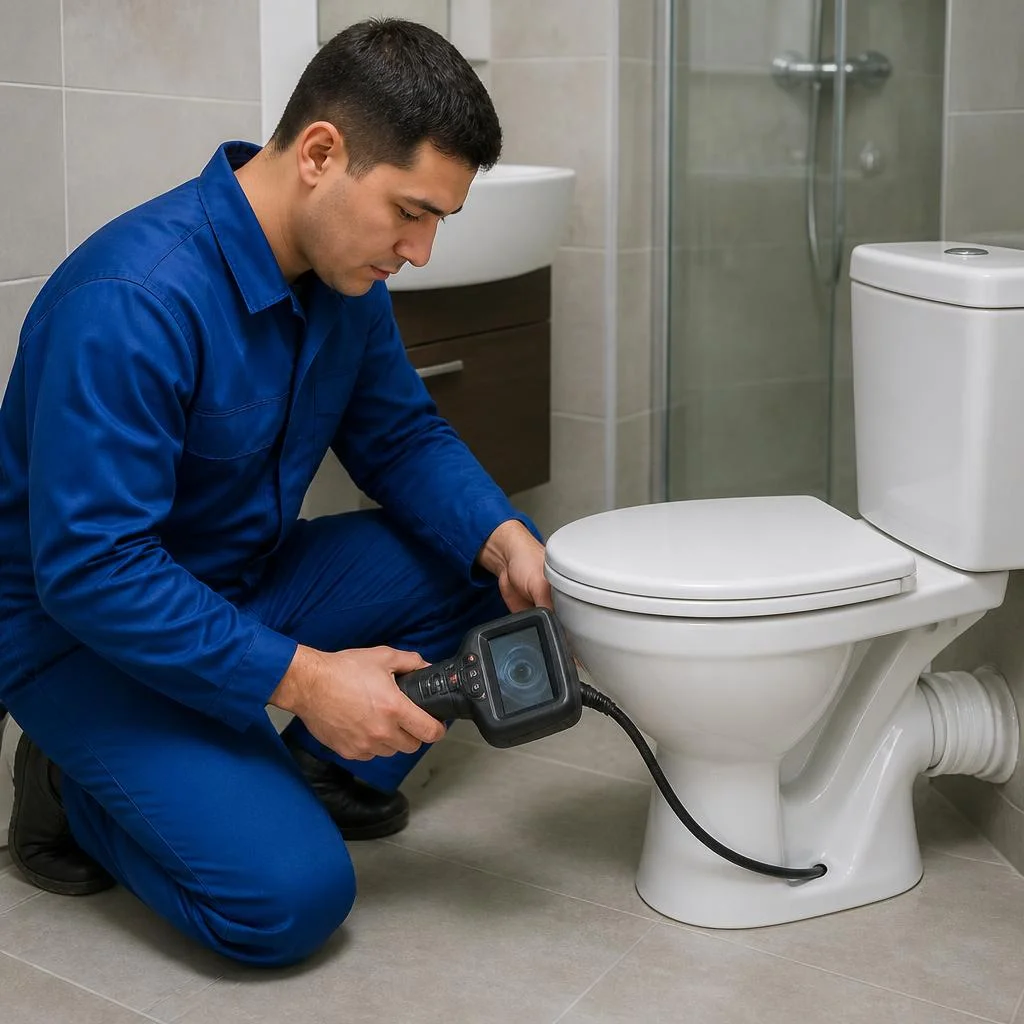
We perform television pipe inspection before any work — the camera shows cracks, deposits and displaced joints from the inside. Diagnostics are carried out through an inspection port or with the toilet removed: a probe with lighting passes through the riser, horizontal run and branches, the operator sees the walls on the monitor and records the distance to the defect. On cast-iron risers in older buildings, the camera most often finds circumferential cracks at the sockets and 60-70% buildup narrowing the bore — this is the reason water drains slowly. On plastic horizontal runs, sags and reverse slope are visible, causing wastewater to stand in the pipe. If the camera shows smooth walls without buildup, expensive replacement is not needed — flushing is enough; this saves the budget and preserves the pipe. Clients often describe their task with the words sewer pipe repair in an apartment — and from this wording the technician immediately understands that a camera is needed, not cleaning.
Finding a hidden leak: how we locate the leak without breaking open
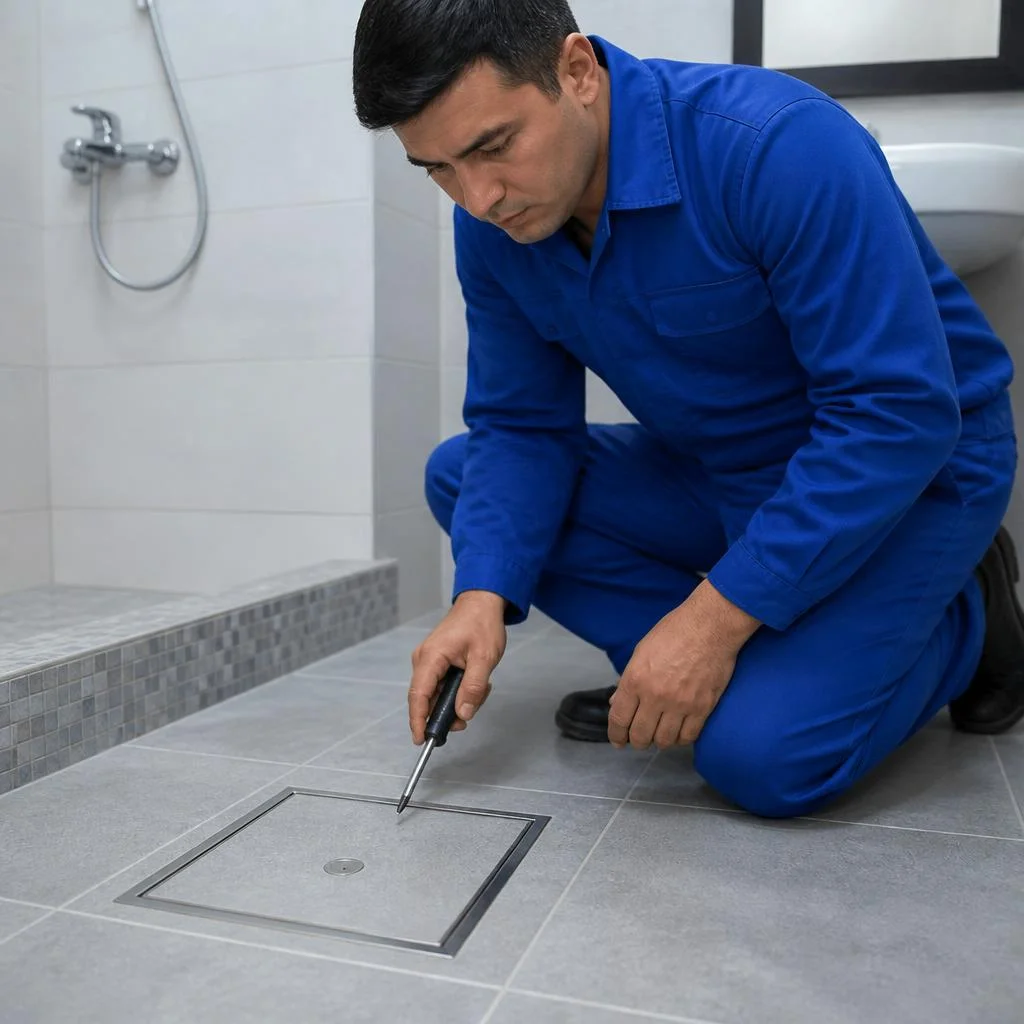
We find a hidden sewer leak without breaking open floors and walls — using acoustics and pipe tracing. An acoustic sensor picks up the noise of escaping water through the floor slab, while a line locator traces the pipe route along the riser and horizontal run with an accuracy of 20-30 centimeters. This approach is precisely restoration without breaking open: first we find the point, then we carefully open one section, not half the bathroom. In the panel buildings of Tashkent, the leak often runs along the riser in the slab between floors — dampness appears at the neighbor below, while the defect itself is higher. Dampness on the wall or a smell in the basement is often not the leak location but the point where water emerges; you need to search 1-2 meters higher along the riser. Clients write in their request sewer repair without breaking open — and from this wording the technician immediately understands that acoustic detection is needed, not tile demolition.
When diagnostics are mandatory, and when cleaning is enough
- One-time blockage: water drained after cleaning and did not return for a month — television inspection is not needed, the cause is household discharge.
- Recurring blockage: the same fixture backs up for the third time in a month — this is pipe geometry or slope, not deposits.
- Smell from the inspection port: a persistent smell with a working trap — a sign of a crack or a depressurized joint, a camera is needed.
- Dampness or subsidence: a wet spot, floor subsidence, mold in the basement — a signal of a hidden leak, we search without breaking open.
Sewer repair in apartments and private houses: scenarios and solutions
Work in an apartment and in a private house differs in the set of tasks: in a multi-story building it is the riser, the horizontal run and the branches with approvals, while in the private sector it is the internal piping and the external outlet. Below is what we do in each case.
Restoration in an apartment: riser, horizontal run, branches
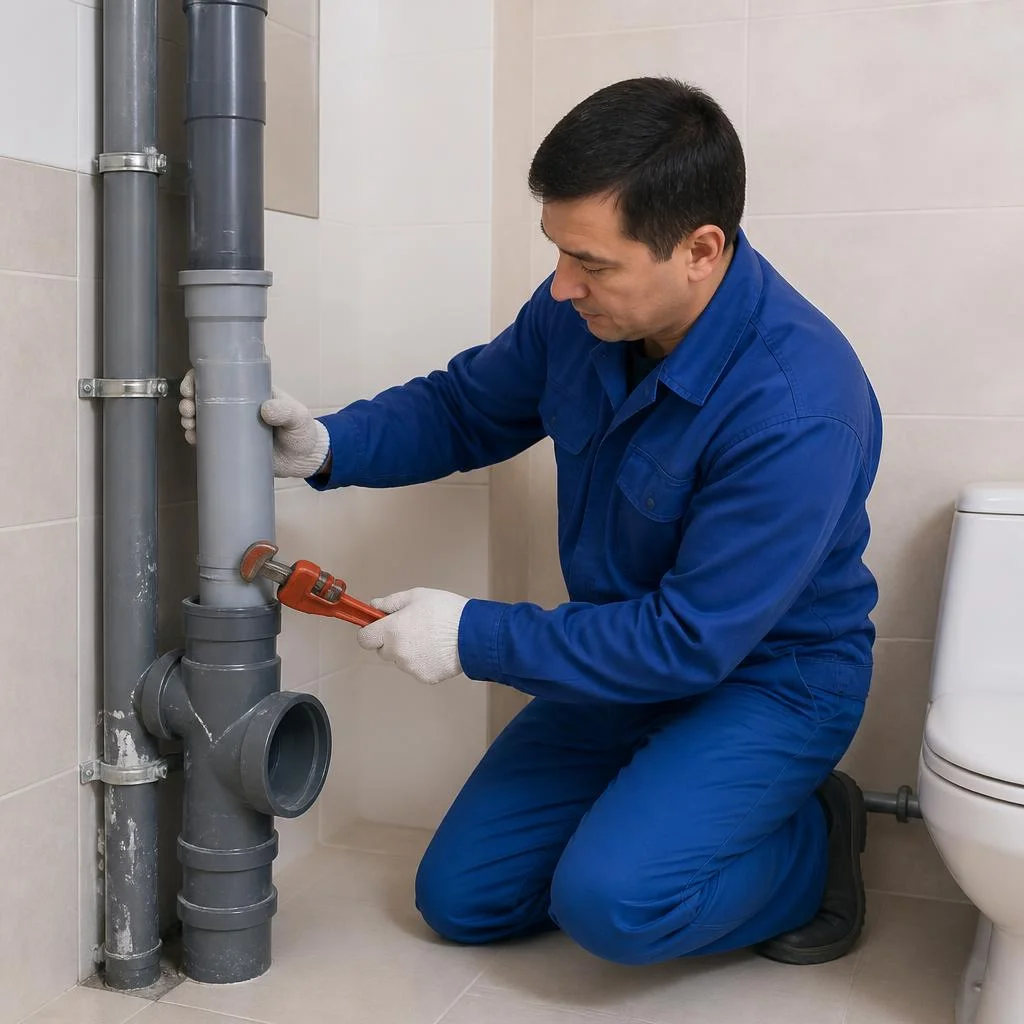
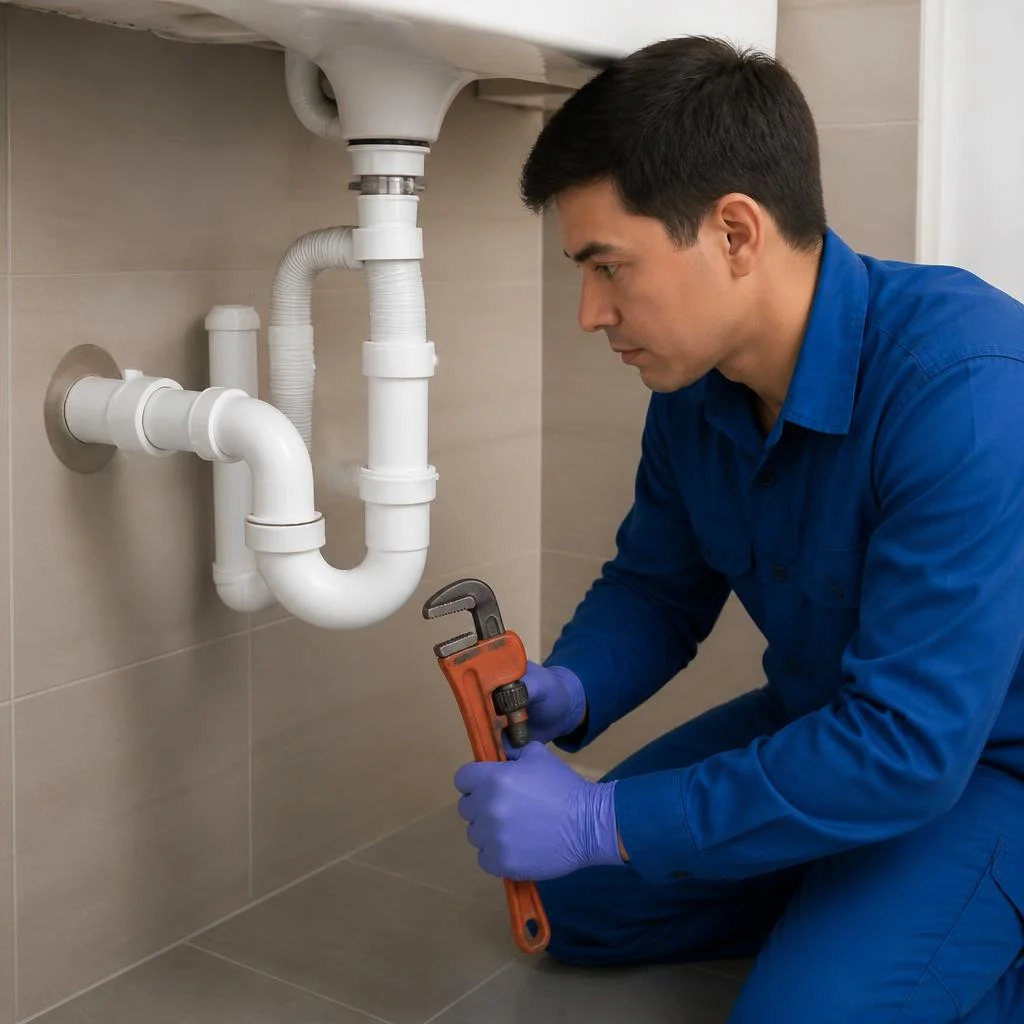
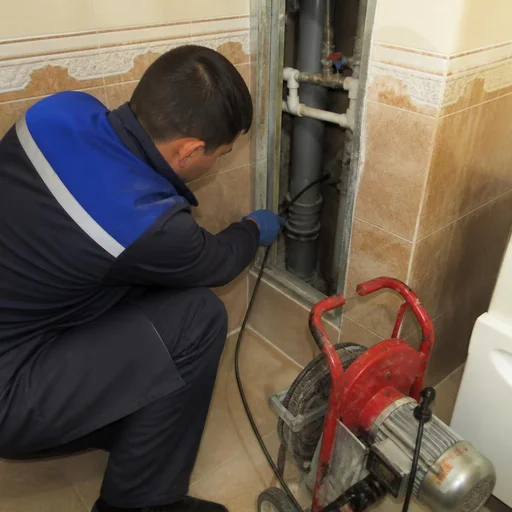
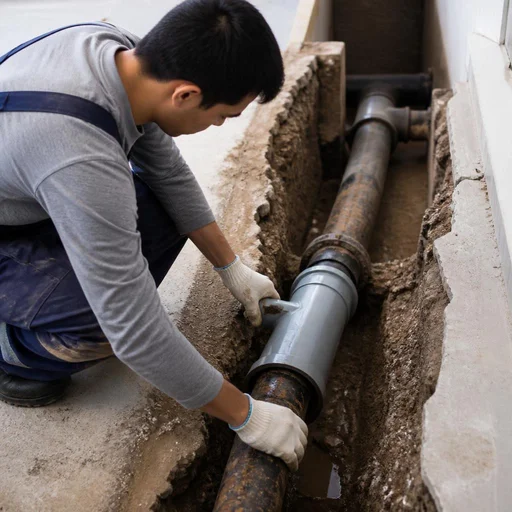
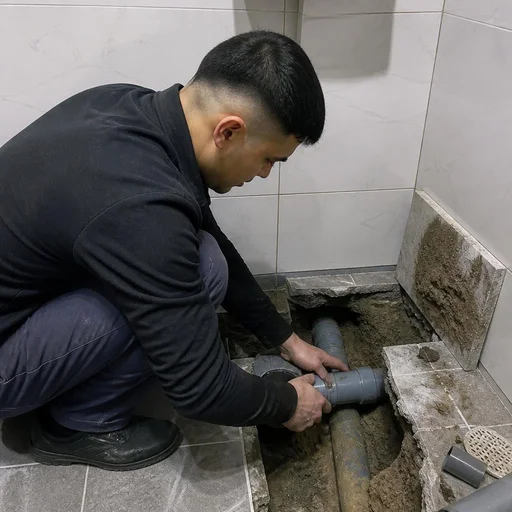
In an apartment, Eco-Service replaces the sewer riser, the horizontal run, the branches and the cleanouts — with the work coordinated with the neighbors and the management company. Restoring sewer pipes in an apartment almost always affects the shared circuit: the riser passes through all floors, the horizontal run lies in the floor slab or under the bathroom floor, and the branches run from the toilet, bathtub and sink to the shared stack. A cast-iron riser in older buildings of Tashkent (Chilanzar, Yunusabad, Sergeli) over 40-50 years becomes overgrown inside and cracks at the sockets — PVC or polypropylene plastic lasts longer and does not become overgrown. Clients often phrase the request as sewer pipe repair, although in fact a complete riser replacement is needed. Replacing the riser alone is impossible: the pipe is shared, so we coordinate access to the neighbors above and below in advance so as not to derail the work on the day of the visit.
Restoration in a private house: external and internal sections
In a private house we repair both the internal piping and the external outlet to the septic tank or the central network. Restoring the sewer system in a private house begins with an inspection: we look at where the pipe exits through the foundation, how the outlet lies in the ground, whether there is a manhole and where the wastewater is discharged. In the private sector of Tashkent, requests come with the same wording — sewer repair in a private house — and behind it there is almost always a sagging outlet, not a clog. Plastic pipes (PVC, polypropylene) withstand loads better than cast iron, but require a proper bed of sand and crushed stone. A common cause is soil subsidence under the pipe; without restoring the base, the new pipe will sag in the same way.
Table: what we replace in an apartment and in a private house
| Work | Apartment | Private house | MKD (riser/basement) |
|---|---|---|---|
| Replacement of a section of cast-iron pipe | yes | yes | yes |
| Replacement of a section of plastic pipe | yes | yes | yes |
| Replacement of the sewer riser | yes (with the MC) | no | yes |
| Replacement of the horizontal run | yes (with the MC) | no | yes |
| Repair of the external sewer system | no | yes | no |
| Repair of sewer manholes | no | yes | yes (yard) |
In an apartment, external sections must not be touched — they are in the management company's area; in a private house, the boundary of responsibility ends at the exit from the house. Replacement of the cleanout and the sewer branch is carried out in both types of properties — these are local elements that are replaced without affecting the shared circuit.
Sewer repair in an apartment building: risers, basement, management company
In a multi-story building, a clog or a leak almost always extends beyond a single apartment: water travels to the neighbors, and the riser serves several floors at once. Sewer repair here is rarely limited to one floor. Let's break down where the boundary of responsibility lies and who does what.
Who is responsible for what in an apartment building
In a multi-story building, the riser and the horizontal main belong to the common property and fall under the management company's responsibility, while the branches, cleanouts, and plumbing connections inside the apartment are the owner's responsibility. Replacing a sewer riser and replacing the horizontal main are coordinated with the management company, because they affect the building-wide network; the resident orders work inside the apartment themselves. Through Eco-Service you can cover both areas: the crew comes out both for the apartment section and for the building-wide section, on a request from the management company or the homeowners' association. In practice, the boundary is determined by the first branch off the riser — everything closer to the plumbing is serviced by the resident, everything that goes into the wall belongs to the building. If there is no water in the riser, but the downstairs neighbors have a wet ceiling, the problem is almost always in the building-wide section. A separate line of requests is water supply repair services: they are accepted in the same manner as sewer work, and the same crew handles them. If the management company delays approval, an emergency clog in the riser is still cleared immediately — otherwise water will flow to the downstairs neighbors, and you will have to deal with them rather than with the management company.
Sewer restoration in the basement of an apartment building
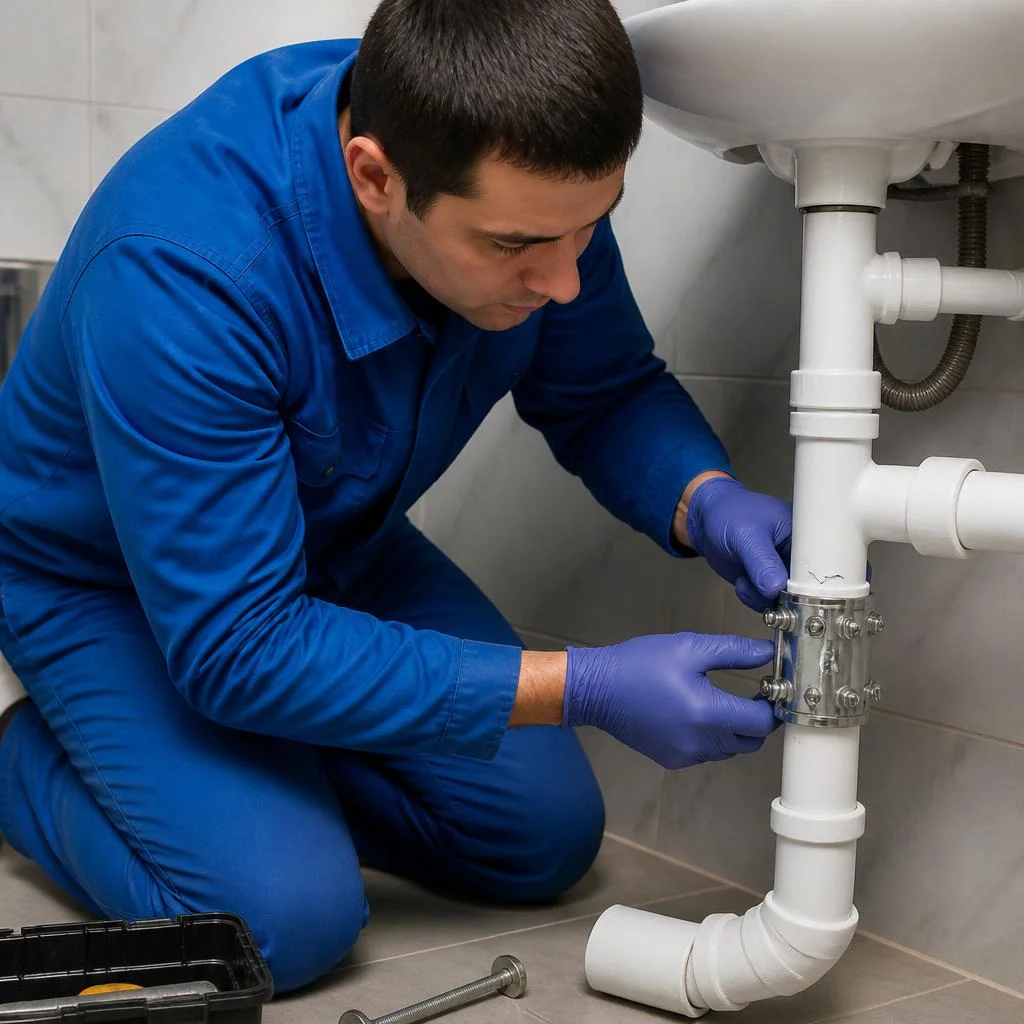
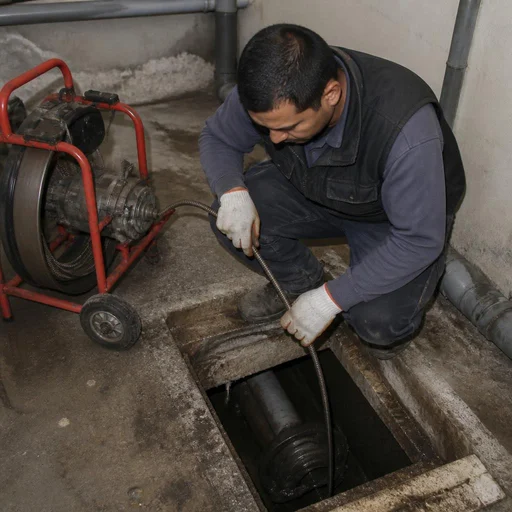
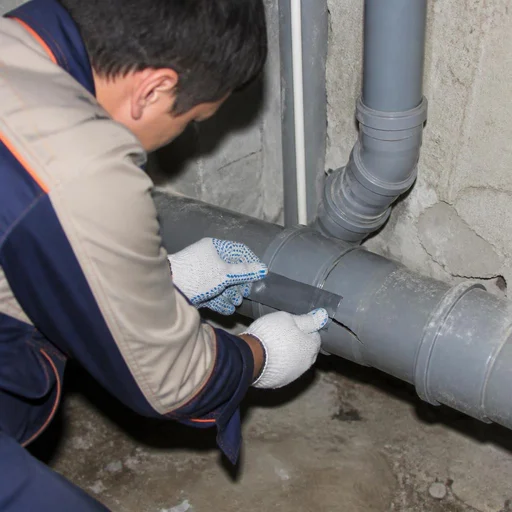
In the basement of an apartment building, we eliminate leaks in the horizontal mains, replace sections of cast-iron pipes, and restore cleanouts. The basement is the dampest place in the building: groundwater, condensation, and constant dampness accelerate cast-iron corrosion 2-3 times compared to the upper floors. Replacing a section of cast-iron pipe is required here more often than anywhere else in the riser, and replacing the cleanout is an almost mandatory step: the cleanout cover on a damp horizontal main seizes up and stops opening. Clients often phrase the request as sewer repair in the basement of an apartment building — and the crew immediately understands that they will be working with the horizontal main, not an apartment branch. Access to the horizontal main usually goes through basement rooms, so the work is planned together with the management company to avoid shutting off water to the entire entrance during peak hours. Before the visit, check the horizontal main layout with the management company — in older building series it does not match the design, and the crew wastes an extra hour searching for the cleanout. A section that "will still hold" on the fifth floor already requires replacement in the basement due to dampness.
Major sewer restoration in an apartment building: when it's time
Major sewer repair in an apartment building is needed when the pipe has reached the end of its service life: leaks, constant clogs, deteriorating joints. Signs that routine cleaning no longer helps:
- Leaks: drips and wet spots have appeared on the body of the cast-iron pipe that cannot be removed by tightening the joint.
- Constant clogs: the riser clogs more than once every 2-3 months even with careful use.
- Rust-colored streaks: traces of corrosion are visible at the joints — this is the beginning of leaks that turn into a flow within a season.
- Smell from the cleanout: sewage odor comes from the basement or apartment even with dry joints — a signal that the water seal has broken down.
- Pipe sagging: the horizontal main has sagged, the slope is disrupted, water drains slowly along the entire line rather than at one point.
External sewerage, storm drainage and manholes
External networks are structured differently from internal ones: here the loads, soil, seasonality and work methods are different. Repairing an outdoor sewer requires a separate approach. We break down what we do with the outlet, pipes and manholes, why we clean storm drainage separately, and when we can avoid excavation.
External sewer repair: outlet, pipes, manholes
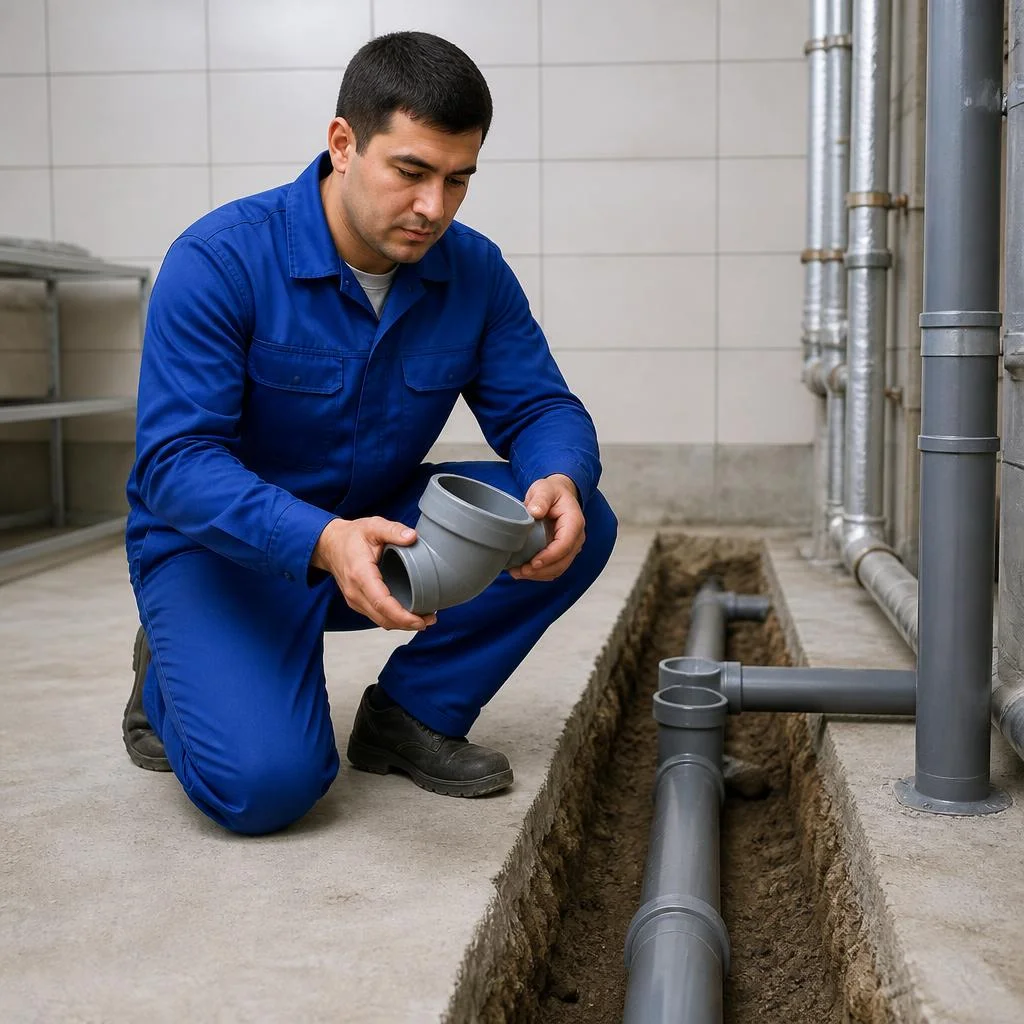
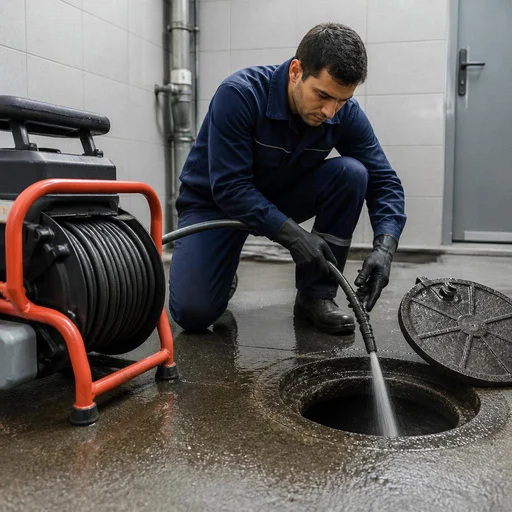
We carry out external sewer work from the outlet from the house to the inspection manhole: we replace pipe sections, restore joints, inspection openings and manhole necks. In our work we use orange SN4 pipe with diameters of 110, 160 and 200 mm for gravity lines, couplings with rubber seals and repair rings for manholes made of precast reinforced concrete. We begin work on underground pipes with CCTV inspection: the camera travels the section from the outlet to the manhole and shows exactly where the geometry has been lost — a crack, a displaced joint or subsidence of the base. Most often it is not the pipe itself that suffers, but the joint at the entry into the manhole: groundwater seeps in there, erodes the base, and the connection comes apart. We restore manholes by replacing the channel (invert) section and restoring waterproofing — without this, any work on the pipe does not last long, because water again escapes into the ground beneath the manhole. Clients often search for "underground sewer pipe repair" — and land on this page.
Storm sewer repair: why separate cleaning is needed
We handle storm drainage and its cleaning separately from domestic sewage: storm drainage accumulates sand, leaves, soil and fine gravel, rather than grease and organic matter. Hydrodynamic flushing works better here than mechanical cleaning — a pressurized jet washes out the sand plug from storm inlets, channels and discharge pipes with diameters of 110-300 mm, whereas a drain auger only compacts the sand. Storm drainage in Tashkent is clogged not by debris, but by sand after dust storms: over the dry season a layer of up to 10-15 cm accumulates in the channels, and the first heavy rain goes not into the collector, but into the yard or onto the roadway. Preventive cleaning once a year before the rainy season costs less than dealing with an emergency blockage with water pumping and opening up storm inlets after the first downpour.
Trenchless sewer repair and pipe repair without excavation
Trenchless sewer restoration passes through existing manholes and inspection openings, without opening a trench along the entire length of the section. We apply the method on gravity lines with diameters of 110-200 mm: through the manhole we insert a repair liner or sleeve, saturate it with an epoxy compound, press it against the walls and cure it — the result is a new inner layer while maintaining flow capacity. Restoring sewer pipes without excavation saves the yard: there is no need to take up tiles, dig up the lawn or re-lay the path above the route. But the method is not universal — it works if the pipe has retained its geometry. In case of complete destruction of the wall, collapse of the crown or subsidence of the base, excavation with replacement of the section is still necessary. We check this in advance with a television inspection of the pipe: if the camera shows a preserved circular cross-section, the trenchless option is suitable; if it sees a collapse — we honestly tell you about the need for excavation. This is exactly how those who search for "sewer pipe repair without excavation" phrase their request.
Cleaning methods: hydrojetting, drain snake, complex clogs
There are two main cleaning methods — mechanical and hydrojetting. Sewer repair begins with choosing the method for the specific clog. We break down how they differ, which clog each one handles, and why sometimes restoration work is needed rather than just flushing.
Hydrojetting of pipes: when it is more effective
Hydrojetting of pipes supplies water under pressure and washes away grease, silt, and soft deposits from the walls along the entire length of the section. A high-pressure machine delivers a jet of up to 200 bar with a back-and-forth motion: the nozzle travels through the riser and the horizontal run for 15-30 meters, breaking up deposits around the entire circumference, not just at the clog point. Hydrojetting a riser takes 40-90 minutes and does not require opening walls — that is precisely why the method is chosen for vertical sections in Tashkent high-rises, where a drain snake only reaches the first bend. Hydrojetting a horizontal run is more difficult due to the slope: the technician selects the pressure based on the pipe diameter so as not to dislodge old cast-iron bell joints. At Eco-Service, hydrojetting is used as the primary method for kitchen sinks and risers — grease is only washed away by a stream of water. If there is construction debris in the pipe, a drain snake is called in first.
Mechanical cleaning with a drain snake and clearing complex clogs
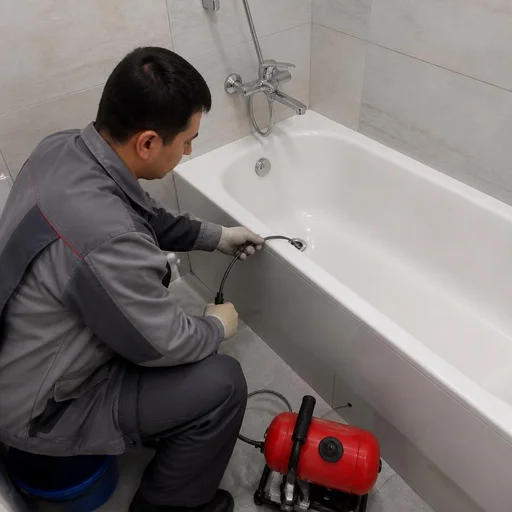
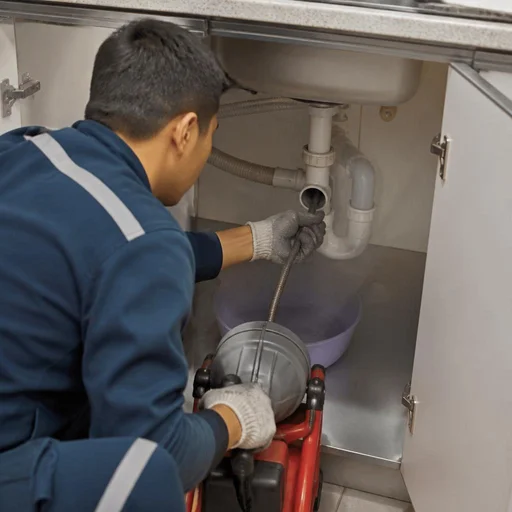
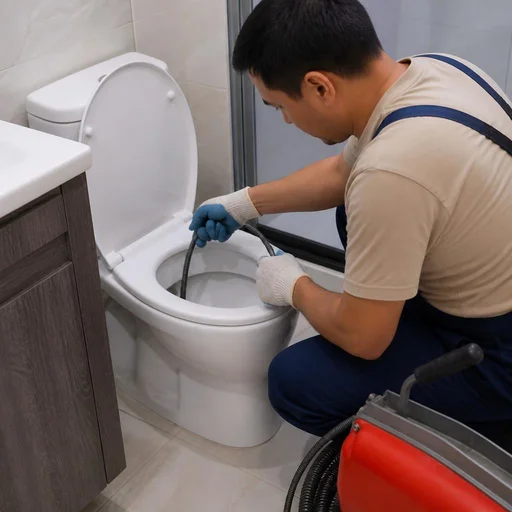
Mechanical cleaning with a drain snake breaks up dense plugs and pulls out solid objects that cannot be washed away with water. A flexible shaft with a snake attachment passes through the bends of the branch pipe, hooks a rag, food scraps, a child's toy, or a clump of hair, and pulls them out — water is powerless here because it flows around the obstruction rather than pushing it. Clearing a complex clog is almost always done in combination: first the snake removes the solid material, then hydrojetting washes the grease layer off the walls. Mechanically cleaning a kitchen sink without a final flush gives a temporary result — in a week or two the clog returns because the grease is still there. In Eco-Service practice, a complex clog often turns out to be a double one: a plug of rags, and behind it a grease layer. Clients often search for "sewer repair" — and end up here, although in fact what they need is not pipe replacement but removal of the plug. Both layers must be removed — otherwise a repeat visit is guaranteed.
Table: cleaning method by type of clog
| Type of clog | Method | Why |
|---|---|---|
| Toilet, sink, bathtub | drain snake or hydrojetting | soft plug |
| Kitchen sink | hydrojetting | grease layer |
| Riser | hydrojetting | deposits along the length |
| Horizontal run | drain snake + hydrojetting | dense plug |
| Complex clog | combined | solid + soft |
A kitchen sink almost always needs hydrojetting — grease is only washed away by water under pressure; a drain snake just smears it along the walls. The cleaning method is selected based on the diagnostic result: a CCTV inspection shows exactly what is blocking the pipe, and the technician chooses a drain snake, hydrojetting, or a combination of both. If the clog sits deep in the horizontal run, one flush is not enough — clearing a complex clog with disassembly of the section will be required.
Eco-Service Warranty, Timelines and Terms of Work
We break down the terms that clients most often ask about before work begins: what the warranty covers, how long to wait for a technician, and how payment is structured. Our sewer repair comes with fixed timeline commitments. Here we also explain why a direct service model affects timelines and accountability.
2-Year Warranty on Sewer Work
We provide a 2-year warranty on all work — from clearing a blockage to replacing a sewer riser. Each job gets a signed act listing the operations performed and the part numbers of installed components: cast-iron sockets, plastic bends, inspection fittings. If within two years the same cause reappears — a blockage in the same section, a leak at the same joint — the visit and fix are done at no additional charge. The warranty applies under one condition: no third-party technicians were brought in to the same section after us. This is a standard requirement that we state upfront, before signing the act. I recommend keeping the act and photo documentation from before the work began — they make it easier to prove that a defect relates to our stage and not to later interventions. In requests, clients often write briefly: sewer pipe repair in the toilet — and from that wording alone the technician immediately understands that a visit with hydro-jetting and inspection of joints under the plumbing fixtures is needed.
Timelines: How Fast We Arrive and How Long the Fix Takes
- Emergency blockage: same-day visit, the fix takes from 40 minutes to 2 hours depending on the depth of the clog and the pipe diameter.
- Scheduled cleaning: we agree on a convenient time slot, work on one section averages 1–1.5 hours, including hydro-jetting.
- Replacing a pipe section or bend: from several hours, the exact time depends on the condition of adjacent joints and the material.
- Replacing a sewer riser or horizontal run: from several hours to a full working day if access to neighbors along the riser is required.
Payment and Request Intake
- Payment methods: via Click, Payme, Uzcard or Humo — cash and card, receipt issued immediately after the work.
- Request intake: by phone and via Telegram; for visits to remote districts, the address can be arranged through Yandex Go if the technician is traveling along the route.
- Payment procedure: payment after the work is completed, not in advance — if the technician could not fix the cause, you don't pay for the visit.
- Related work: if along the way a need for water supply services at the same site arises, the scope and payment terms are agreed separately, before work begins.
- Visit schedule: water supply work in Tashkent and wastewater work are planned in the same time slots so the crew doesn't have to travel twice.
Conclusion
The breakdown of methods, areas of responsibility and limitations for sewer systems comes down to a few practical takeaways. Sewer repair is always a choice between cleaning and replacing a section. We've gathered them into a short list so you can check it against your own situation before calling a technician.
Key Takeaways
- Diagnostics before work: CCTV inspection shows whether a section needs replacement or hydro-jetting is enough — this is the difference between two different estimates.
- Areas of responsibility: in an apartment, the riser and horizontal run are common property, while bends and plumbing connections belong to the owner; in a private house, everything is on the owner.
- Outdoor networks: storm drains and street pipes get clogged by sand, soil and leaves, not grease — they are cleaned separately from indoor blockages.
- Trenchless method: applicable only when the pipe geometry is intact; after deformation or collapse of a section, excavation is required.
- Timelines and warranty: depend on access to neighbors and coordination with the management company — these two factors shift the work more than the complexity of the blockage itself.