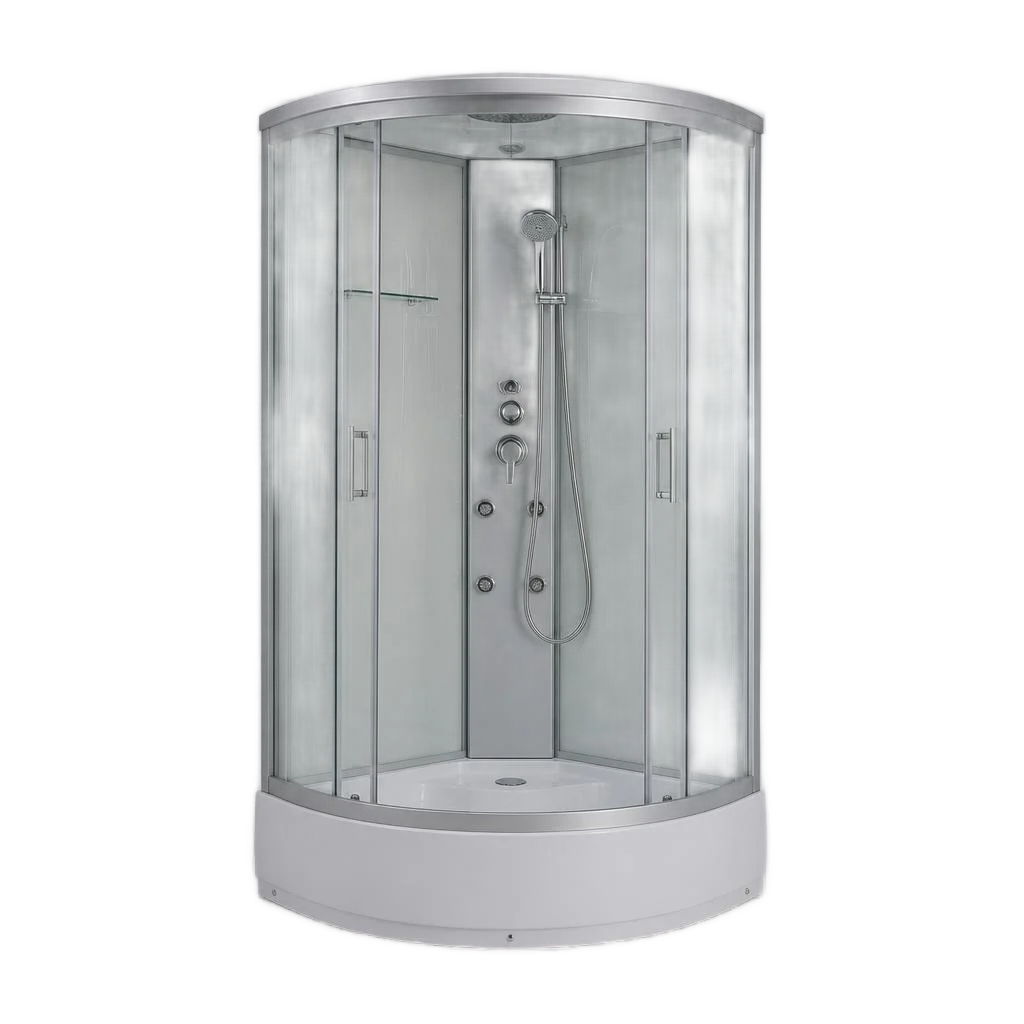
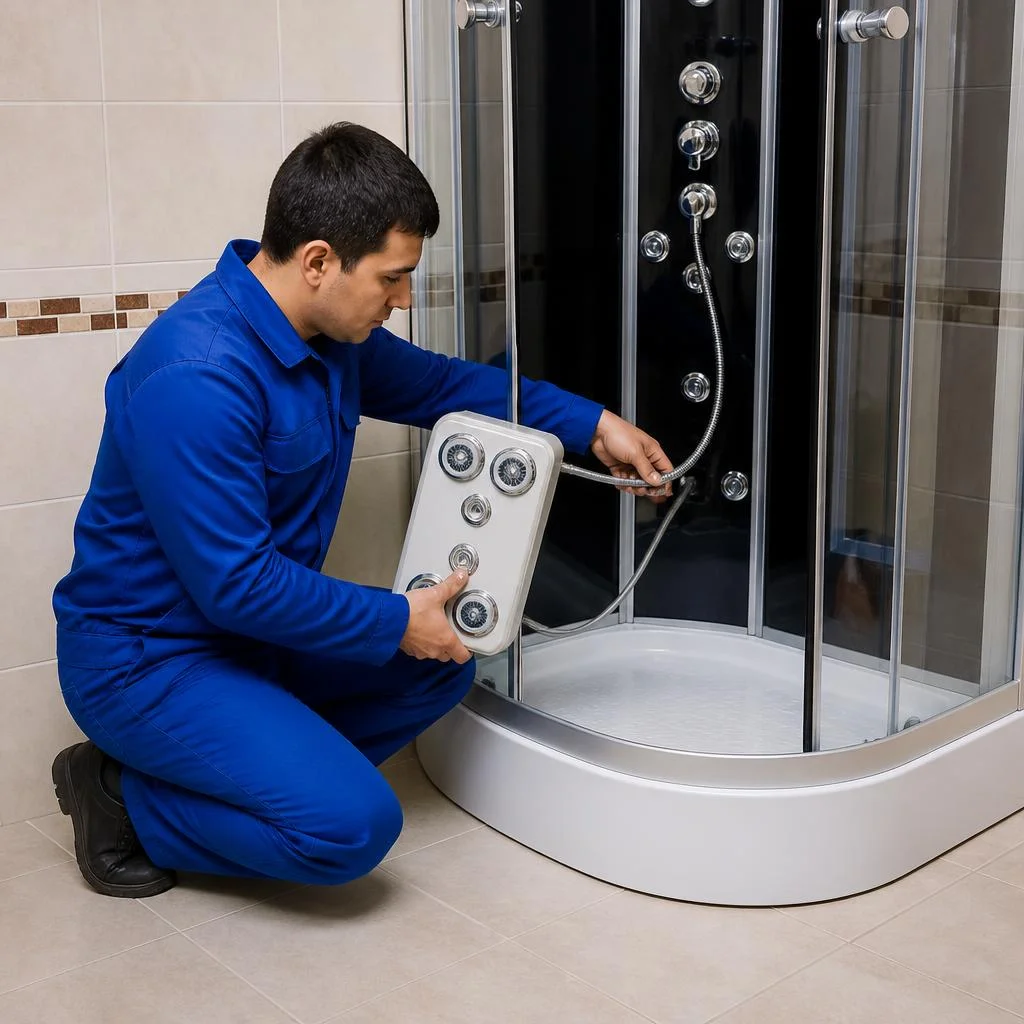
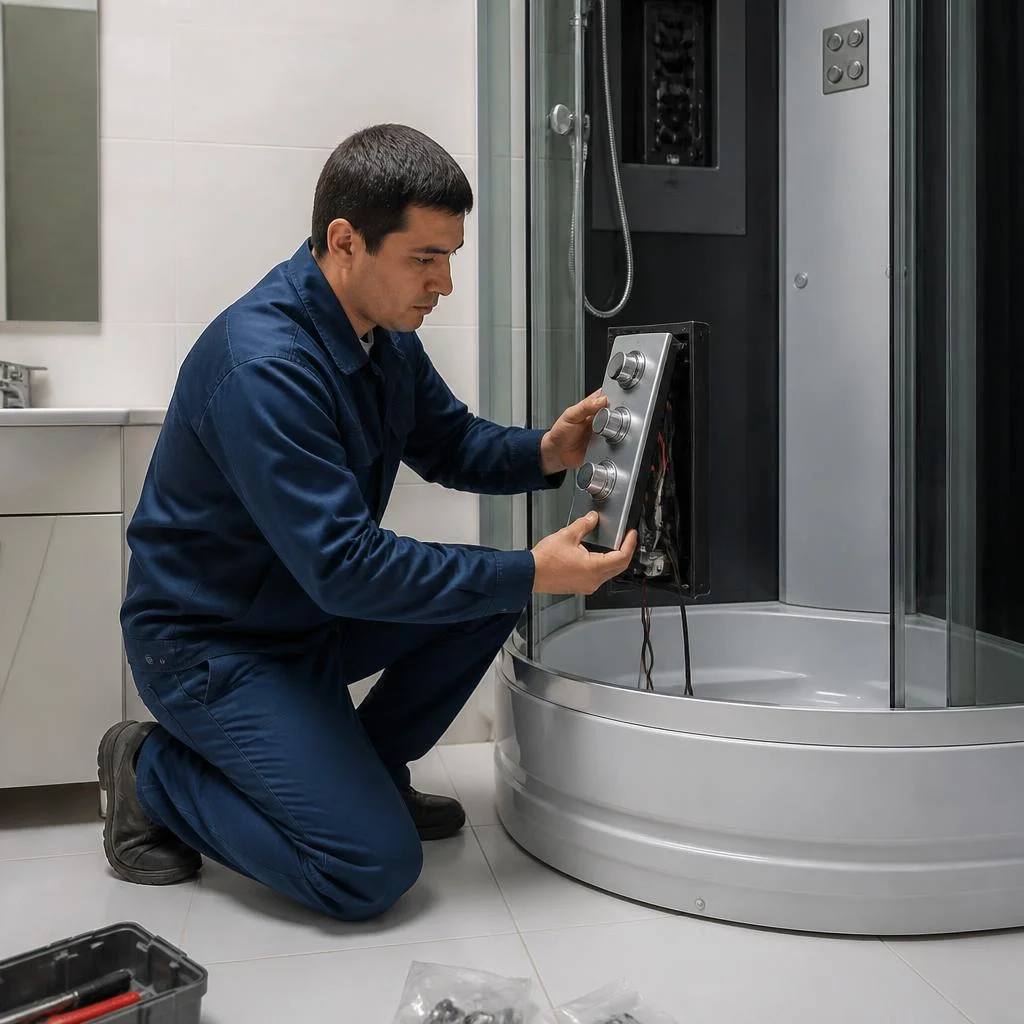








What malfunctions of shower cabins does Eco-Service fix
A shower cabin breaks down by components: electronics, water and temperature, steam, tightness. Let's break down exactly what we repair in each unit and why understanding these components helps you choose the right service.
Cabin electronics: control unit and panel, lighting, transformer
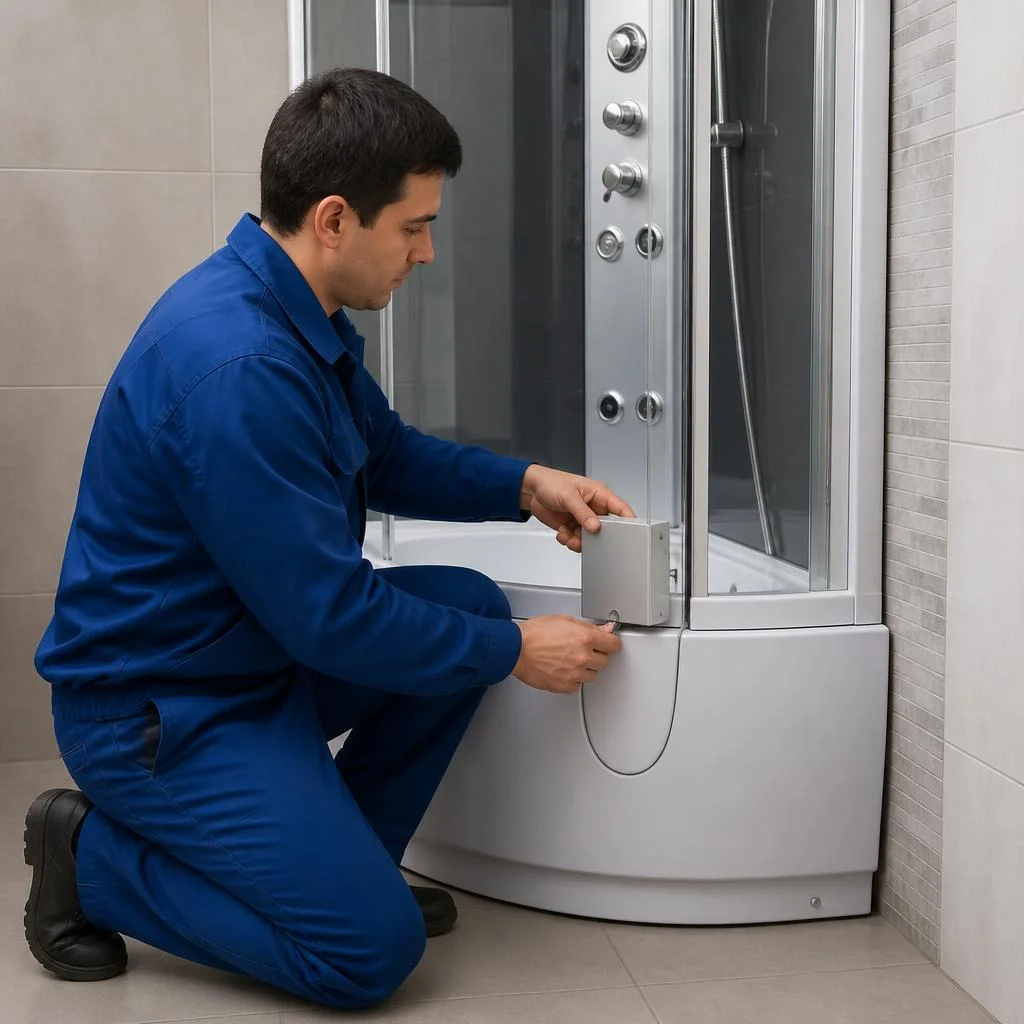
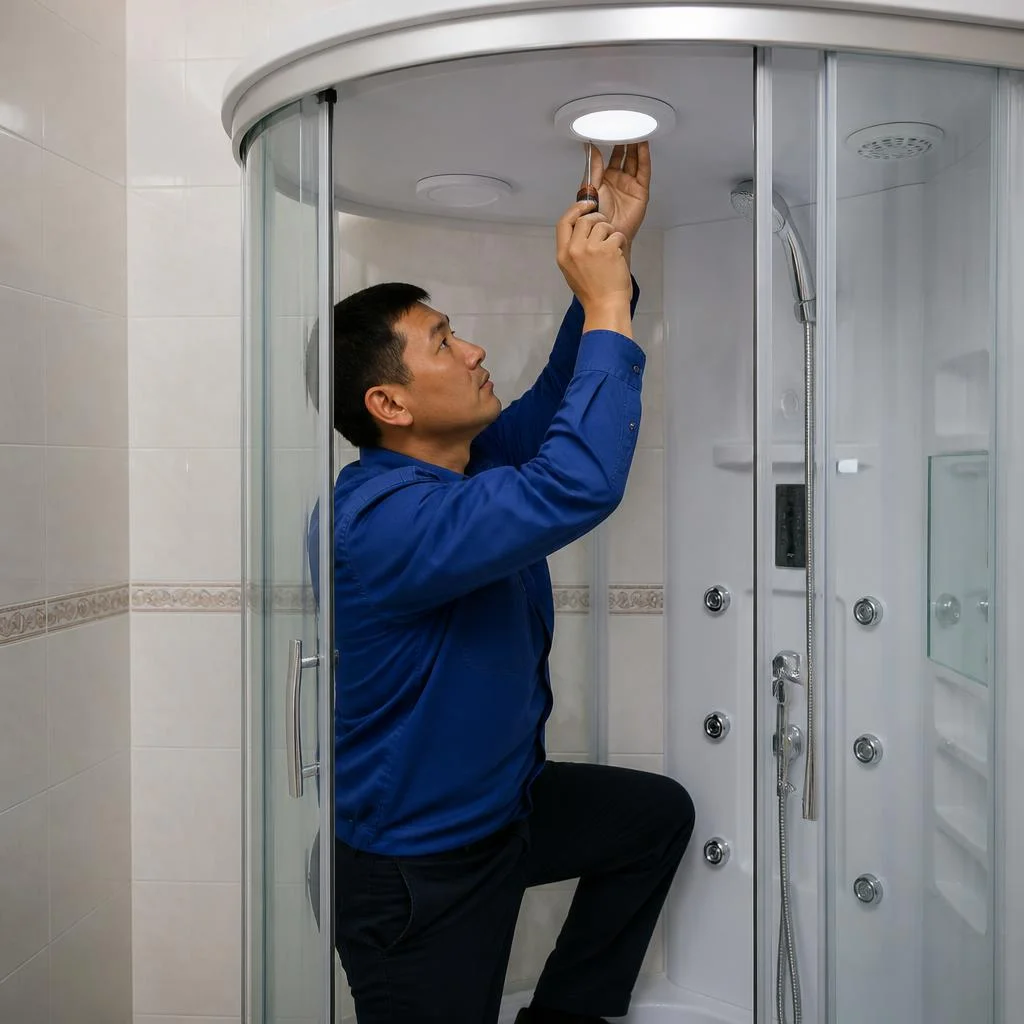
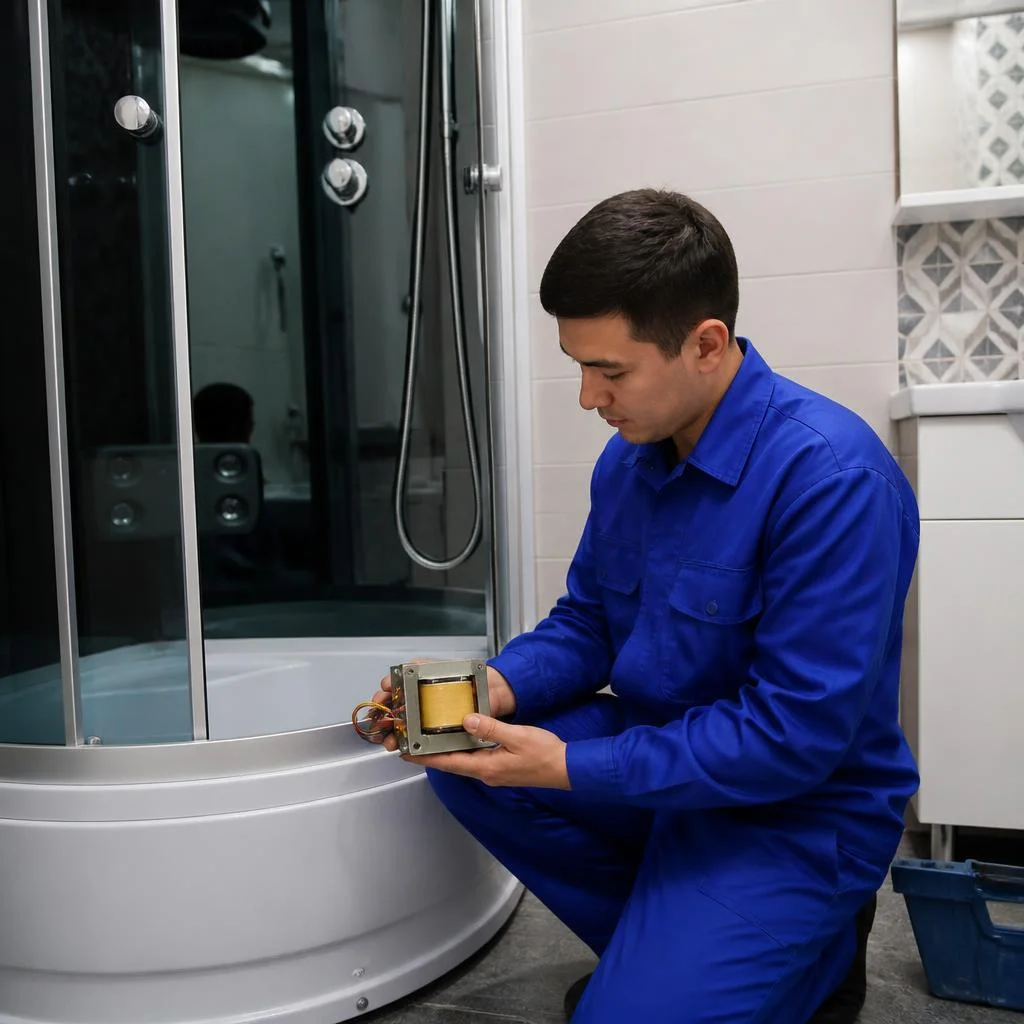
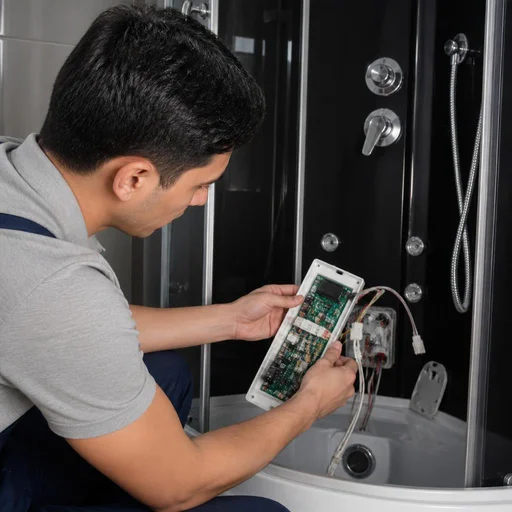
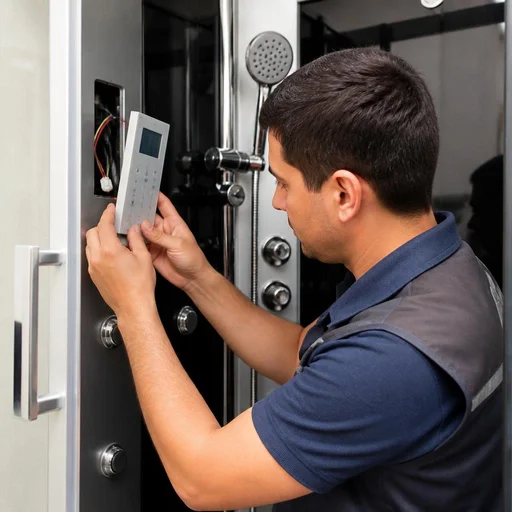
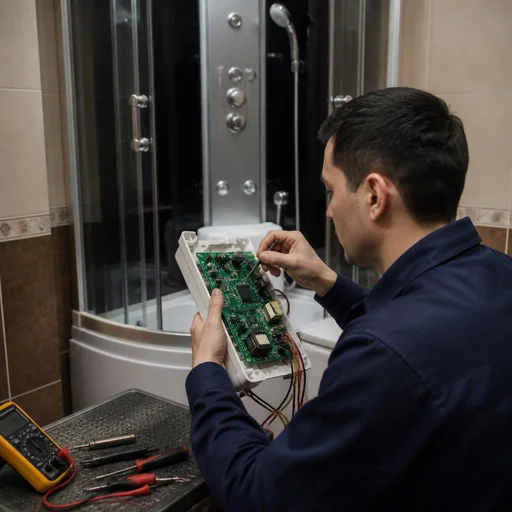
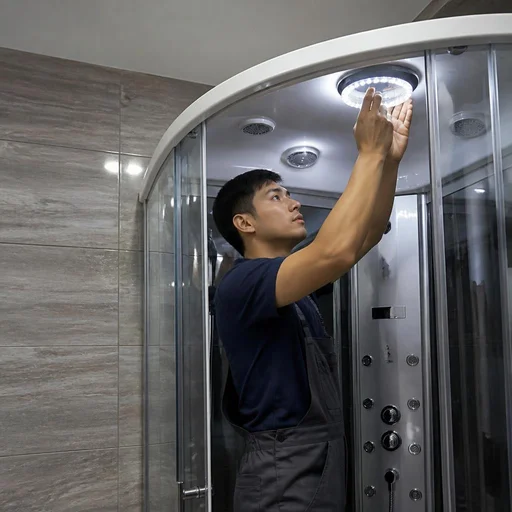
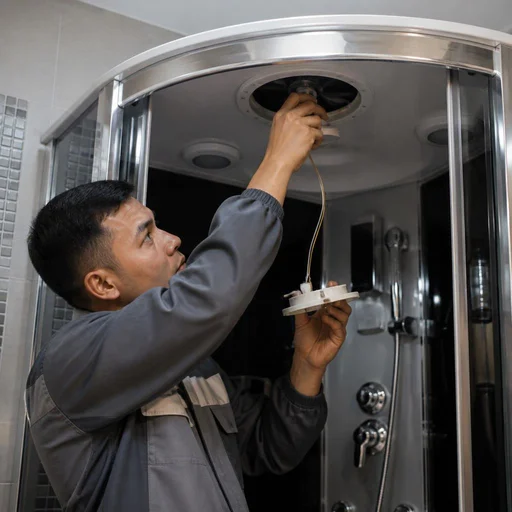
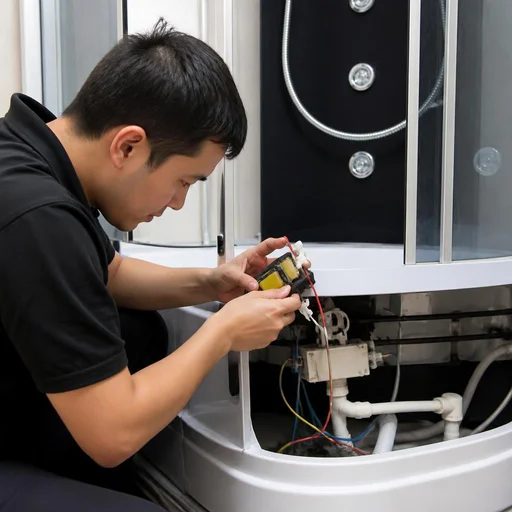
Shower cabin repair in Tashkent most often starts with electronics: we replace the control unit, panel, lighting and transformer — these are the most frequent requests for electronic components. Owners of Turkish and Chinese models (Belen, Erlit, Timo, Aquapulse) complain about lights that have gone out, non-working buttons, and the hydromassage and steam generator failing at the same time. A specialist in electronic units checks the power at the board input, the integrity of the traces and the condition of the connectors: oxidation of contacts after a leak takes out the entire panel. If the lighting goes out together with the panel — the problem is almost always in the transformer, not the lamps; we replace the unit entirely so you don't have to change the lamps twice.
Water and temperature: mixer, cartridge, thermostat, level sensor
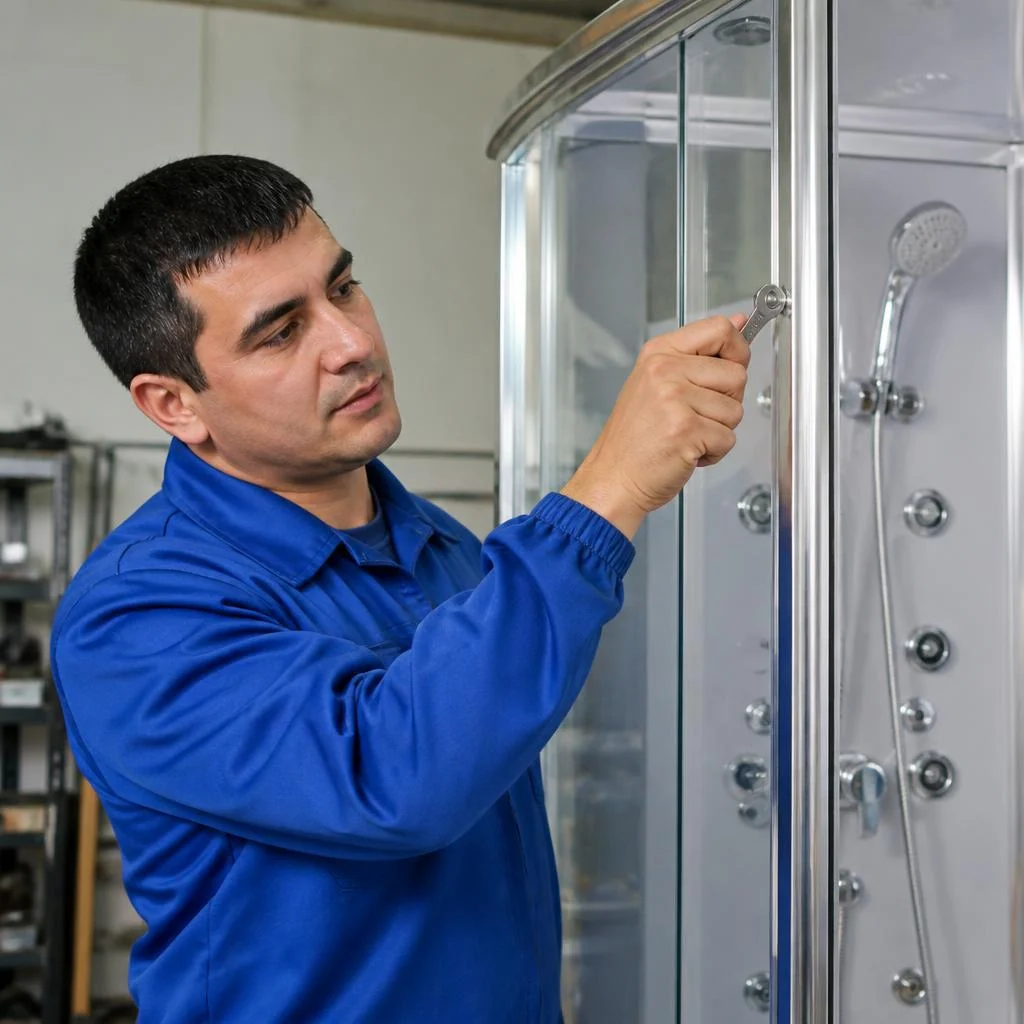
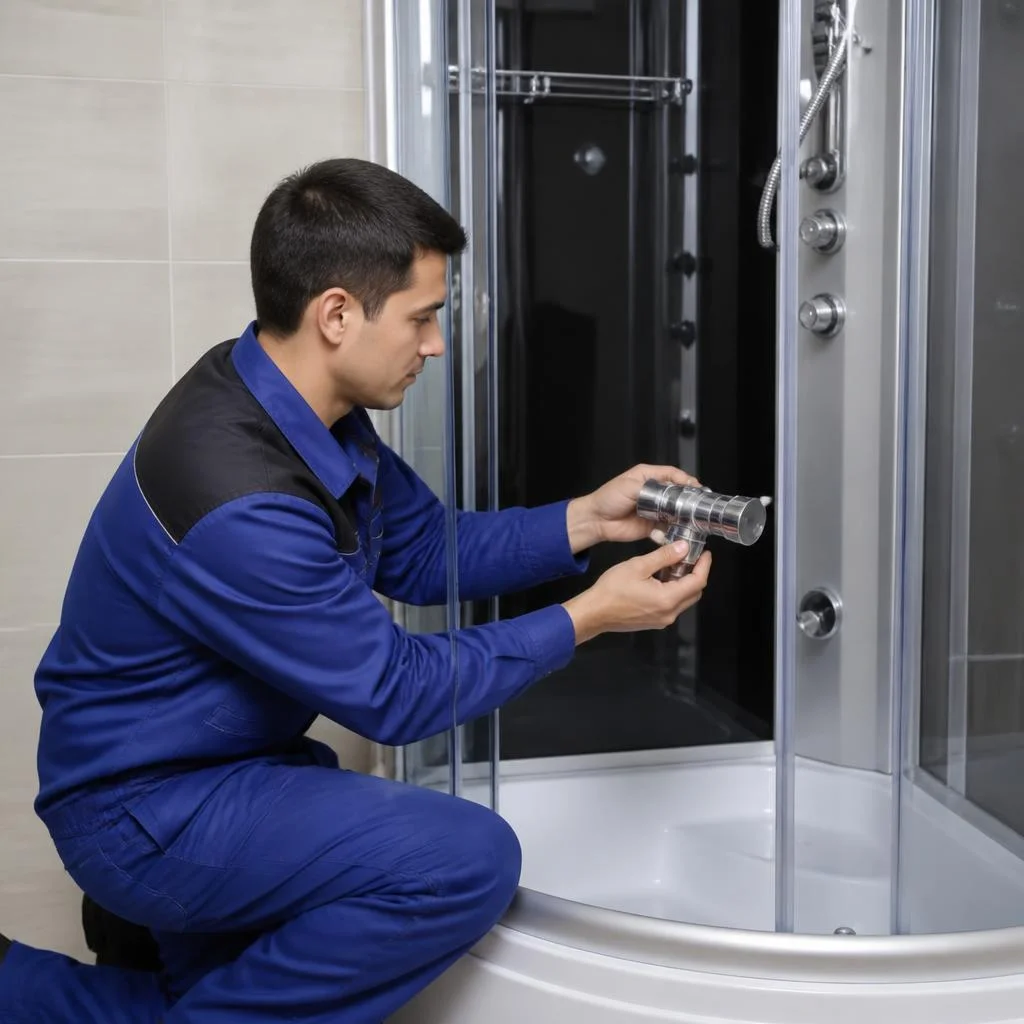
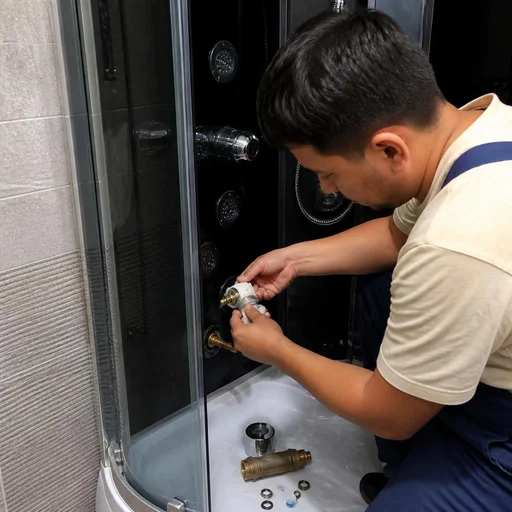
Replacing a shower cabin mixer includes the cartridge, thermostat and water level sensor — the components that most often leak or cause temperature fluctuations. This procedure is also required when the mode diverter is seized: the tropical shower stops working and water flows only through the shower head. The mixer cartridge gets clogged with scale within 1.5-2 years with hard water — in Tashkent, water from wells leaves sediment faster than in Samarkand or Bukhara. We check the thermostat with a multimeter: if the water still "jumps" after replacing the cartridge, the cause is the thermostat, and a repeat visit will cost more than a single diagnostic.
Steam and ventilation: steam generator, heating element, cabin fan
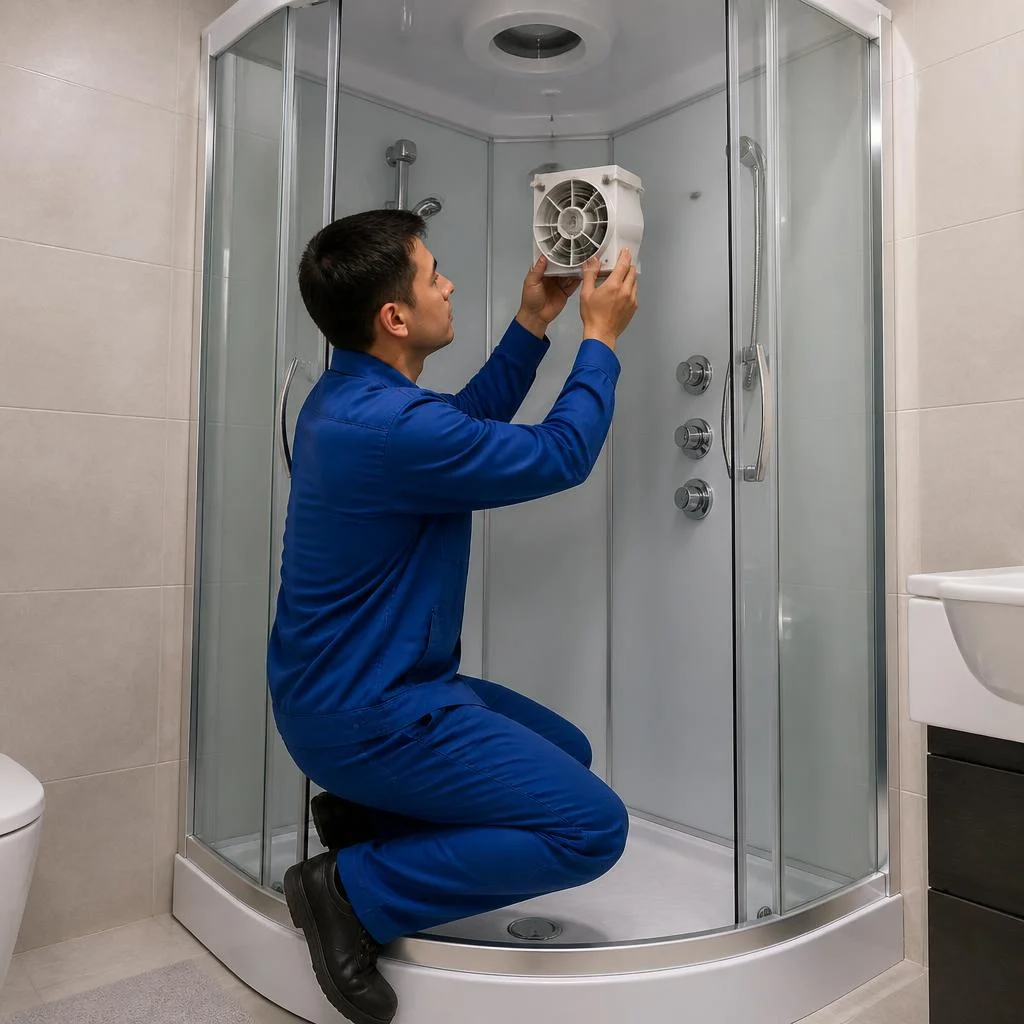
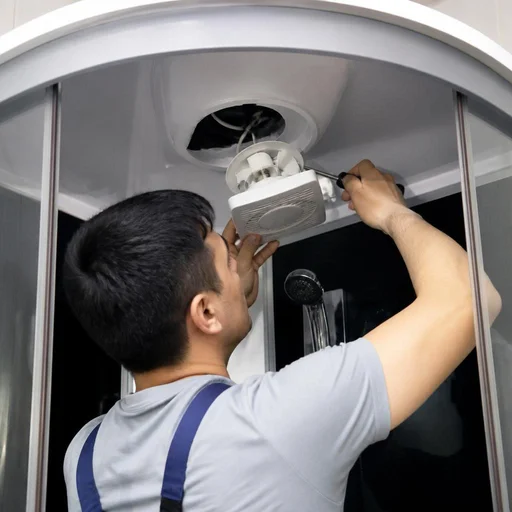
In Turkish and hydromassage cabins we repair the steam generator, replace the heating element and fan — the components without which steam doesn't build up or isn't vented. Clients often write briefly in their request: shower cabin repair — and from such a request the technician immediately understands that diagnostics of the steam unit are needed. Servicing a model with a steam generator begins with checking the heating element for scale: in Tashkent the water is hard, and the heating element becomes coated with deposits within 8-10 months of active use. The hydromassage system requires separate diagnostics of the jets — clogged nozzles reduce pressure and overload the pump. The cabin fan fails from moisture: the bearing seizes and steam remains inside. Scale on the heating element is the main cause of weak steam; when servicing the steam generator we always remove and inspect the heating element, otherwise within a month the cabin will stop producing steam again.
Leaks and tightness: where exactly the cabin leaks
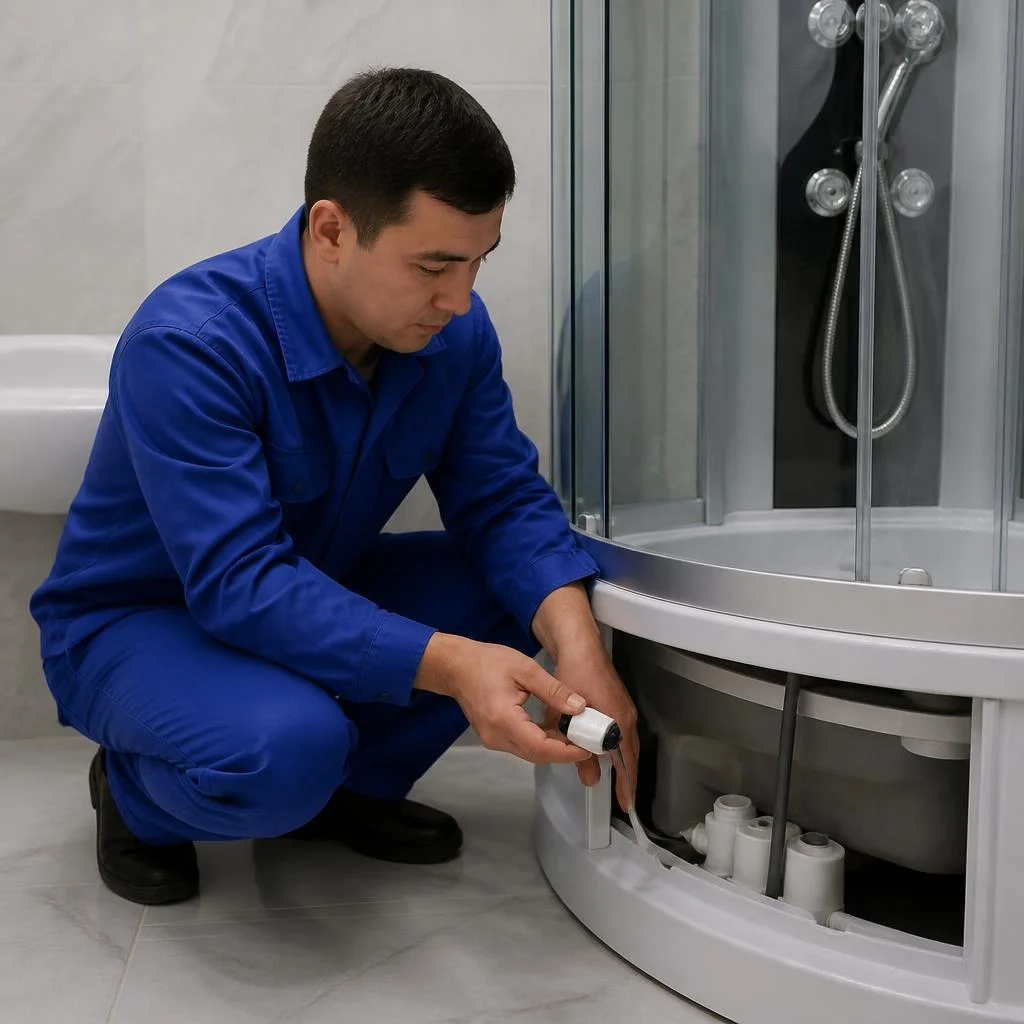
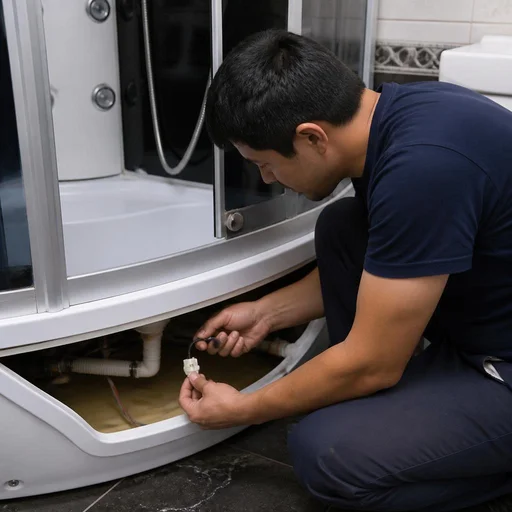
Fixing a cabin leak begins with finding the source: seams, drain hose, mixer or tray — this determines whether a part needs replacing or the tightness needs restoring. Restoring the tray and seams in Tashkent is often related to the shrinkage of silicone sealant: after 2-3 years the seam comes away and water goes under the cabin. We check the drain hose and mode diverter first — replacing them takes less time than disassembling the tray. We restore the tightness of seams using sanitary silicone with anti-fungal additives: ordinary compound turns black within a season. Water on the floor doesn't always mean "the tray is leaking" — in half the cases the drain hose or mode diverter is to blame; we check them first so as not to take the body apart for nothing.
How shower cabin repair works: diagnostics, on-site visit, work
Shower cabin repair is a sequence of steps: request, diagnostics, approval of work, fixing the fault on site or at the service center. Let's break down each stage and what the outcome depends on.
Shower cabin diagnostics: what we check first
Shower cabin diagnostics at Eco-Service is a mandatory first stage: the technician checks the electronics, water, steam and sealing to name the exact cause rather than replacing components at random. First, the electronics specialist tests the power supply, transformer and control panel, then checks the mixer, cartridge, thermostat and water level sensor, after that the steam generator with the heating element and the cabin fan, and finally inspects the tray seams, seals and the glass unit for hidden leaks. Checking the components takes 20 to 40 minutes, and a test run with water and steam takes about another half hour. Diagnostics before work goes faster if the owner immediately shows under what conditions the fault appears — after filling with water, when steam is turned on, or when switching modes: this halves the search for the cause.
Technician visit to your home or repair at the service center
An Eco-Service technician visits your home anywhere in Tashkent, while complex electronics are repaired at our own service center — we choose the format based on the type of fault. On site we handle work that requires access to the body and water: replacing the cartridge, mode switch, shower head, tropical shower, fixing a cabin leak, as well as replacing the mixer or drain hose. In search, clients often type shower cabin repair — and land here, although in fact they need a technician visit with spare parts. Working without intermediaries means the same technician handles the request from diagnostics to the post-assembly check, rather than passing the cabin to a third party. Electronics, the steam generator and the control unit are more conveniently taken to the center: there is no test bench on site to check the board under load and run the steam generator at full power. If the cabin is under the manufacturer's warranty, the part is also removed and serviced in the workshop — this preserves the factory seal.
How long the repair takes and what the timeframe depends on
- Replacing the cartridge, shower head, shower hose: 30-50 minutes on site, the part is in the technician's vehicle.
- Fixing a cabin leak, replacing the drain hose: 40-70 minutes with checking the seams under water pressure.
- Replacing the mixer or mode switch: 1-1.5 hours with disassembly of the body and testing both modes.
- Repairing the control unit, steam generator, replacing the heating element: 1-3 days at the center, including running the component under load.
- A rare part for a specific cabin model: the timeframe shifts by the time it takes to order the original spare part.
- Repair of a shower cabin with non-standard connections: an extra 30-40 minutes for fitting the fasteners and hoses.
Shower cabin mixer repair: cartridge, diverter, shower head
The mixer is the component that fails more often than others in shower cabins: it leaks from the body, won't switch modes, loses pressure. Let's break down what work we perform on it and how one job differs from another.
What mixer repair and cartridge replacement includes
Mixer repair for a shower cabin at Eco-Service means disassembling the unit, replacing the cartridge, checking the mode diverter and pressure-testing for leaks; if the body is worn, we replace the entire mixer. Inside the body there is a ceramic cartridge that meters hot and cold water: over time, limescale from Tashkent water builds up on its plates, and the lever starts to move stiffly or sticks in one position. The mode diverter is responsible for switching the flow between the overhead rain shower, the hand shower and the massage jets — its plastic gears wear out after 3-4 years of active use. After reassembly, the technician turns on the water and holds the unit under pressure: this shows whether a leak has started along the threads or the sealing rings. The cartridge isn't replaced only when the mixer leaks: if the water mixes poorly or the pressure fluctuates, the part is already worn — waiting until a full leak is risky, because water gets into the cabin body and onto the screed.
Table: work on the mixer, hose and shower head — what and when it's needed
| Work | When it's needed | What we replace |
|---|---|---|
| Mixer cartridge replacement | leak from the body, poor mixing | cartridge |
| Mixer repair | lever moves stiffly, makes noise | internal parts |
| Cabin mixer replacement | crack in the body, worn threads | the entire mixer |
| Mode diverter replacement | modes won't switch | diverter |
| Shower hose replacement | cracks, seepage at the nut | hose |
| Shower head replacement | clogged holes, broken body | shower head |
| Rain shower replacement | weak pressure from above | overhead shower |
The water supply unit requires repair more often than any other part is replaced: the unit operates under constant pressure and temperature changes. Replace the hose and shower head together if the cabin is older than 5 years: threaded connections wear out in sync, and a month after replacing one component the second will start leaking.
Can you repair the mixer yourself
You can replace the cartridge or shower head yourself if you have the right part and tool; repairing a shower cabin mixer with your own hands without experience usually leads to a repeat leak. Spare parts for shower cabins are sold on Uzum Market and in plumbing stores — cartridges, hoses, shower heads and diverters are freely available. The difficulty is that parts aren't always interchangeable: a cartridge of one brand won't fit the body of another by its seating diameter, and it has to be matched using the removed unit as a sample. This is exactly how people often write to the service: shower cabin door repair — and the technician immediately understands that the hinges have sagged, the magnetic seal no longer holds, and the glass is skewed and catching on the frame. Shower cabin repair also includes such cases: the main mistake of DIY work is an overtightened hose nut, the thread cracks, and the unit has to be replaced entirely instead of just one part. Such work is better left to a technician if the leak returns within a week after replacing the part.
Shower enclosure maintenance and restoration: prevention instead of repair
Maintaining an enclosure is cheaper than restoring it. We break down what regular care includes, which components wear out first, and when a full restoration of the body and systems makes more sense than replacing individual parts.
What shower enclosure maintenance includes
- Cleaning the jets and shower head: we remove limescale from the hydromassage nozzles with citric acid, and clear the openings of the shower head and tropical shower.
- Checking for leaks: we inspect the tray seams, door seals and silicone joints for microcracks and hardening.
- Servicing the mixer: we disassemble the cartridge and check the thermostat and mode switch for smooth operation.
- Diagnosing the electronics: we test the control unit, remote, lighting and water level sensor for correct signals.
- Flushing the drainage system: we remove blockages from the drain hose and check the operation of the siphon under the tray.
Shower enclosure restoration: when it is justified
Shower enclosure restoration is the restoration of watertightness, replacement of worn components and cleaning of the system, when the body and tray are still intact and there is no need to replace the enclosure. At Eco-Service, this procedure is performed without dismantling the body: the seams are re-sealed, the door seals are replaced, leaks at the joint between the tray and the base are eliminated, and the chrome surfaces are refreshed. It makes sense when the frame holds its geometry, the glass has no chips, and the electronics can be restored — then the work extends the service life by several seasons. In their requests, clients often write briefly: shower repair — and the technician immediately understands that an inspection of the components is needed, not a replacement of the entire enclosure. A separate operation is replacing the shower enclosure door: rollers, guides and magnets restore the tight fit of the panels if the leaf has not warped. Restoration makes no sense if the tray is cracked or the frame has rotted — replacing components will not stop the leak, and a new enclosure is more cost-effective.
Shower cabin repair technician: qualifications and service area
Who will come and where — two questions that most often determine whether to entrust the cabin to a service. We explain how the team is organized and the geography of service visits in Tashkent.
Who will come: shower cabin repair technician and electronics specialist
The Eco-Service shower cabin repair technician is responsible for water and sealing — mixers, cartridges, drain hoses, gaskets — while the cabin's electronics are handled by a separate specialist in electronic units. This division is not a formality: the control unit, remote control and transformer require a test bench to check the board under load, which is why they are diagnosed by an electronics specialist, not a generalist. Steam generators and thermostats are handled by a technician familiar with steam components: he checks the heating element, water level sensor and controller settings. Our staff includes technicians with at least three years of experience with hydromassage and steam cabins. When placing a request, ask who exactly will repair the electronics: a generalist technician without a test bench often replaces the control unit "at random," and the part fails again.
Service area: Tashkent and service districts
Shower cabin repair in Tashkent is covered by on-site visits: the technician comes to districts across the city, including Chilanzar, and complex components — control boards, steam generators — are accepted at Eco-Service's own service center. The on-site technician brings common spare parts: mixer cartridges, hoses, shower heads, mode switches, so typical work is completed in a single visit. For cabins with a steam generator and a heavy tray, some operations are moved to the workshop, where there is a test bench and lifting equipment. When placing a request, specify the floor and whether there is an elevator: for cabins with a heavy tray and steam generator, this affects whether the shower cabin technician can complete the work on site.
Shower cabin repair in the private sector and new buildings
Shower cabin repair in Tashkent's private sector and new buildings often requires a different set of skills than in older housing stock: here technicians encounter homemade water piping, weak pressure and no grounding. In the Sergeli and Yangihayot areas, cabins are often connected to storage tanks, which causes the water level sensor and thermostat to fail more often — they are checked before replacing the control unit. In new residential complexes with central water supply, leaks are more often related to tray gaskets rather than electronics. Clients often phrase the task as shower cabin repair and maintenance — and from such a request we immediately understand that a visit with a full set of consumables is needed. In our practice, a visit to a private house takes longer than an apartment visit due to clarifying connection points. Measure the water pressure with a manometer before calling — if the reading is below 1.5 bar, the cabin must first be connected through a pump, otherwise the repair will have to be repeated.
2-Year Warranty and Original Spare Parts: Why It Matters
Warranty and spare parts are what distinguish a service center from a private technician working without paperwork. Let's break down exactly what the two-year warranty covers and why we install original parts on cabins rather than compatible ones.
What the 2-Year Repair Warranty Covers
Eco-Service provides a 2-year warranty on completed work: if a replaced component — a mixer cartridge, control unit, or water level sensor — fails again, we fix it again free of charge. We issue a separate warranty certificate for each item: replacement of the cabin mixer, thermostat, steam generator heating element, and lighting are listed as separate line items, so in the event of a dispute it's clear which specific work is covered. For electronics, the period is counted from the installation date, not the request date — if a part was on backorder, that time doesn't eat into the warranty. Clients often find us by searching: shower cabin repair price — and through that query they land on the page with rates, where the cost is calculated after diagnostics. The warranty is valid only if there are no signs of tampering: if the component was disassembled by the client after our repair, the case becomes non-warranty.
Why We Install Original Spare Parts, Not Analogues
Eco-Service installs original spare parts for the specific cabin model: analogues are cheaper, but cartridges and water level sensors leak and trigger false alarms within the first weeks. The difference shows up in the geometry of the mounting seat and the stiffness of the membrane: a universal 35 mm cartridge fits into the mixer body with a gap, causing water to escape through the threads rather than through the spout. With electronics it's more complicated — a compatible control unit may not sync with the remote via protocol, and the cabin starts changing modes on its own. We select spare parts for shower cabins by the manufacturer's part number, not by a photo of the component. If an original part isn't in stock, it's more honest to wait for the delivery than to install an analogue: a repeat visit due to an incompatible cartridge costs more than waiting.
Customer Reviews and How We Handle Feedback
We collect Eco-Service customer reviews on Google Maps and Yandex.Maps, as well as on Telegram — they show which work was performed and how the visit went. After closing a request, we send a short link to the service profile: the review appears within a day, and it usually specifies the cabin model and the replaced component. In the Telegram chat, a client can send a photo a month later if something went wrong — we handle such messages first, before scheduled visits. Shower maintenance and mode adjustment after part installation we handle remotely via video: according to last season's request statistics, about 8 out of 10 follow-up questions concerned the settings, not the replacement itself. When reading reviews about a service, price and timelines aren't the main thing — look at whether the cause of the breakdown is named: services that write "replaced the part" without a diagnosis often come back with the same problem.
Conclusion
We've gathered the key things that matter before contacting a service: what to look for in diagnostics, which jobs can realistically be done in a single visit, and when restoration no longer helps.
Key Takeaways
- Diagnostics come first: the cause of a leak or electronics failure isn't always where the symptom appears — the tray seam leaks, but the culprit is a displaced drain hose.
- Quick jobs: replacing a cartridge, hose, shower head, and mode switch is usually done in a single visit, while restoring a steam generator and circuit board requires bench testing of the component.
- Prevention is cheaper: timely cartridge replacement and nozzle cleaning extend the cabin's service life and reduce the risk of costly steam generator restoration.
- Selection criteria: a 2-year warranty on work and original spare parts matter more than a low visit price — a cheap thermostat analogue fails within a season.
- Restoration or replacement: with an intact body and tray, restoration is justified, but cracks in the acrylic and a rotten frame make replacing the cabin more cost-effective than restoring it.