








When it's time to replace pipes: signs of wear and diagnostics
In Tashkent's Stalin-era buildings, Khrushchyovkas and new builds, pipes wear out differently: in some places steel lasts forty years, while in others it leaks by the tenth season. Let's look at how to tell "time to replace" from "can wait".
Signs that it's time to replace pipes
- Rusty or brown water: after the tap has been off, the water comes out with a reddish tint — the steel is breaking down from the inside, particles settle in the supply line and clog the mixer.
- Pinholes and wet spots: blistering on the paint, droplets on welded seams, constant dampness at the joints — the pipe wall has thinned to a critical thickness.
- Drop in pressure: at the same pressure in the riser, the stream from the tap weakens — the bore is clogged with deposits and rust.
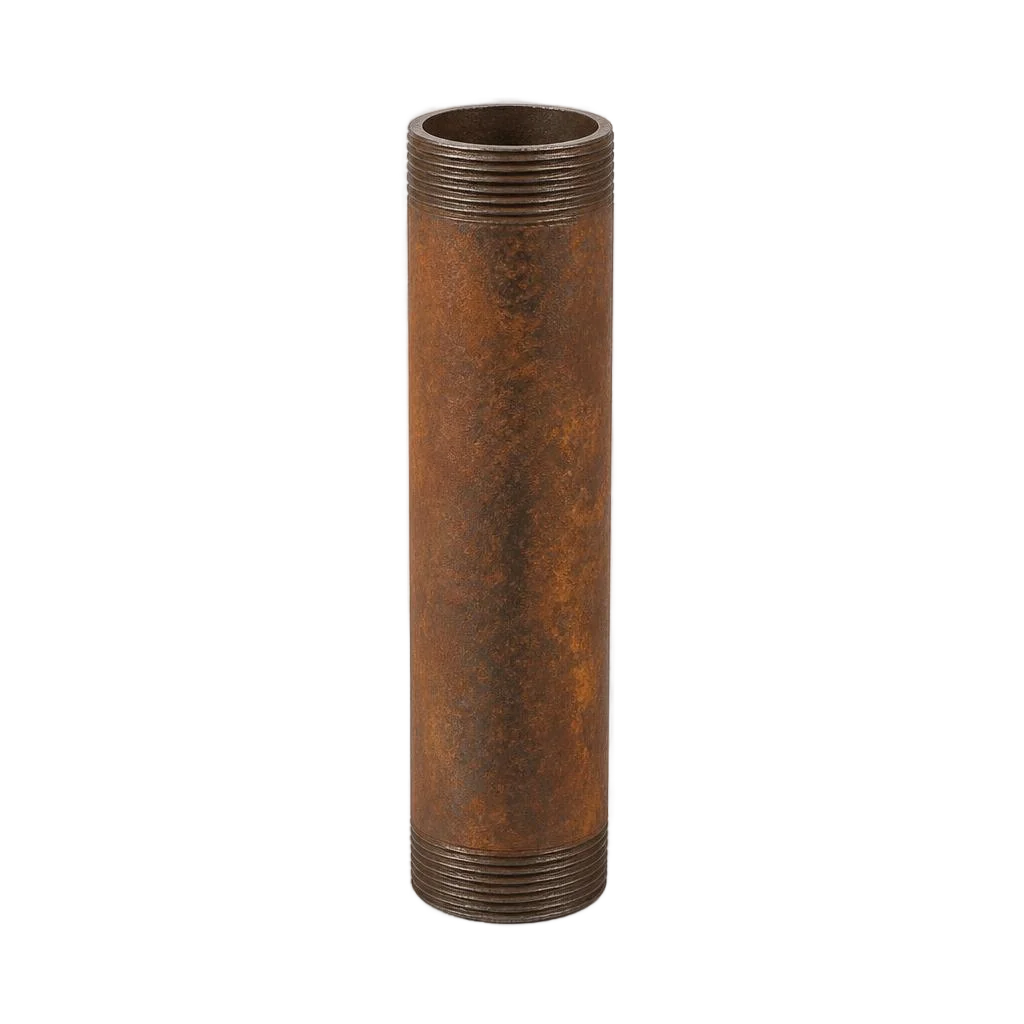
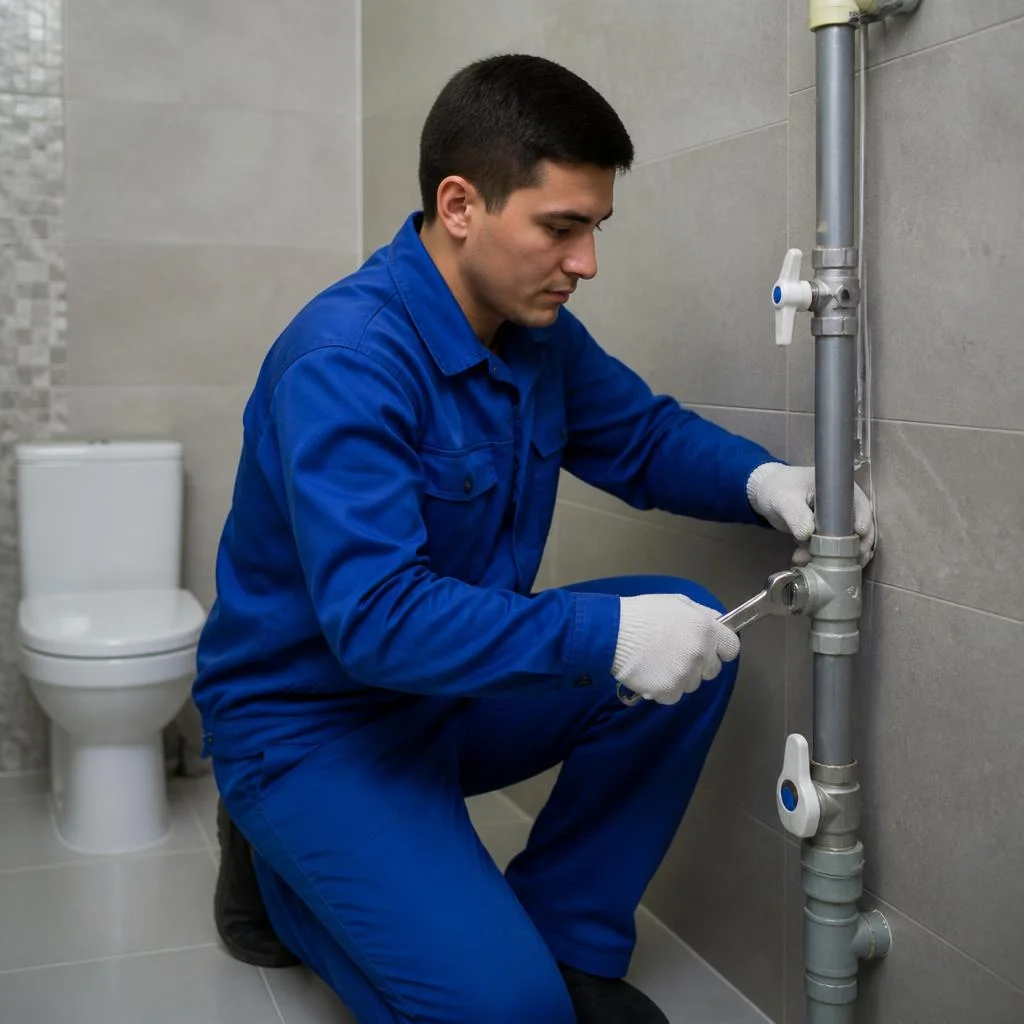
- Frequent leaks at joints: tightening the couplings and nipples helps for a couple of weeks, then it leaks again near the same spot.
- Constant noise in the pipes: humming and clicking when the tap is opened indicate a narrowed bore and water hammer inside the worn section.
Service life of pipes made from different materials
| Material | Service life | Where it is used |
|---|---|---|
| Steel pipe | 15-20 years | Risers and supply lines in older buildings |
| Polypropylene pipe | 25-30 years | Hot water, cold water, heating in new builds |
| Metal-plastic pipe | up to 25 years | Supply lines to mixers, radiator distribution |
| Copper pipe | 50 and more | Premium renovation, concealed distribution |
The actual service life depends not on the material, but on the quality of soldering and pressure testing — poorly welded polypropylene leaks sooner than old steel.
Diagnosing the condition of pipes before replacement
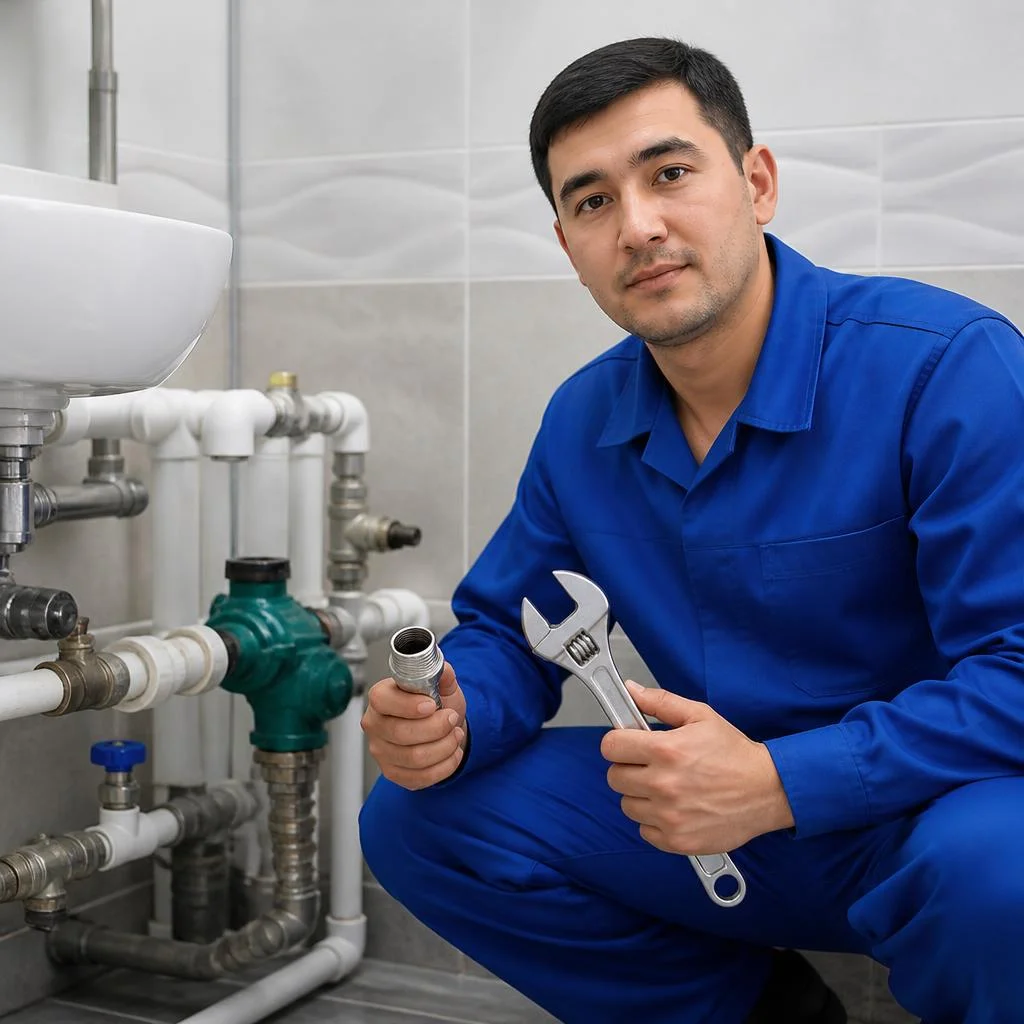
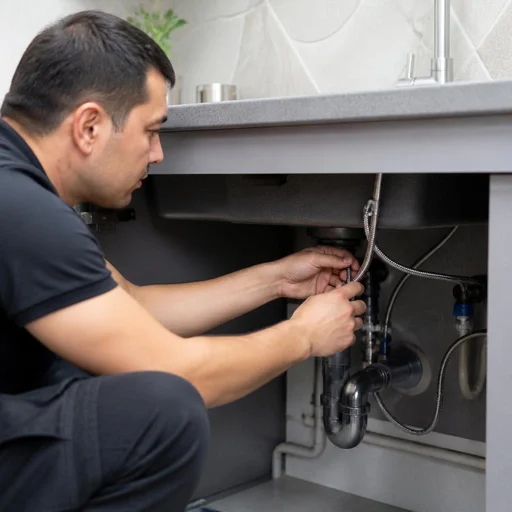
Before replacement, an Eco-Service technician inspects the riser, supply lines and shut-off valves in order to accurately determine the scope of work and not replace anything unnecessary. The check includes a visual inspection of welded seams and threaded connections, tapping the steel sections, assessing the condition of the shut-off valve on the riser and the radiator supply line, as well as measuring the pressure in the system. Pipe replacement begins precisely with such an inspection, not with dismantling: diagnosing the condition of the pipes takes 20-30 minutes per apartment and does not require opening up the walls. Often, based on the results of the check, it is enough to replace a section of the riser and the supply line rather than the entire riser — this noticeably reduces the scope of work. In their requests, clients often write briefly: plumbing pipe replacement — and the technician already understands that a calculation is needed for a specific section, not for the whole apartment.
Pipe replacement in an apartment: which systems we replace
In an apartment, four categories of sections are replaced: cold and hot water risers, connections to mixers and radiators, individual sections of the riser, as well as unions, couplings and shut-off valves. Let's look at the signs that determine what needs to be replaced right here.
Replacement of the cold and hot water riser
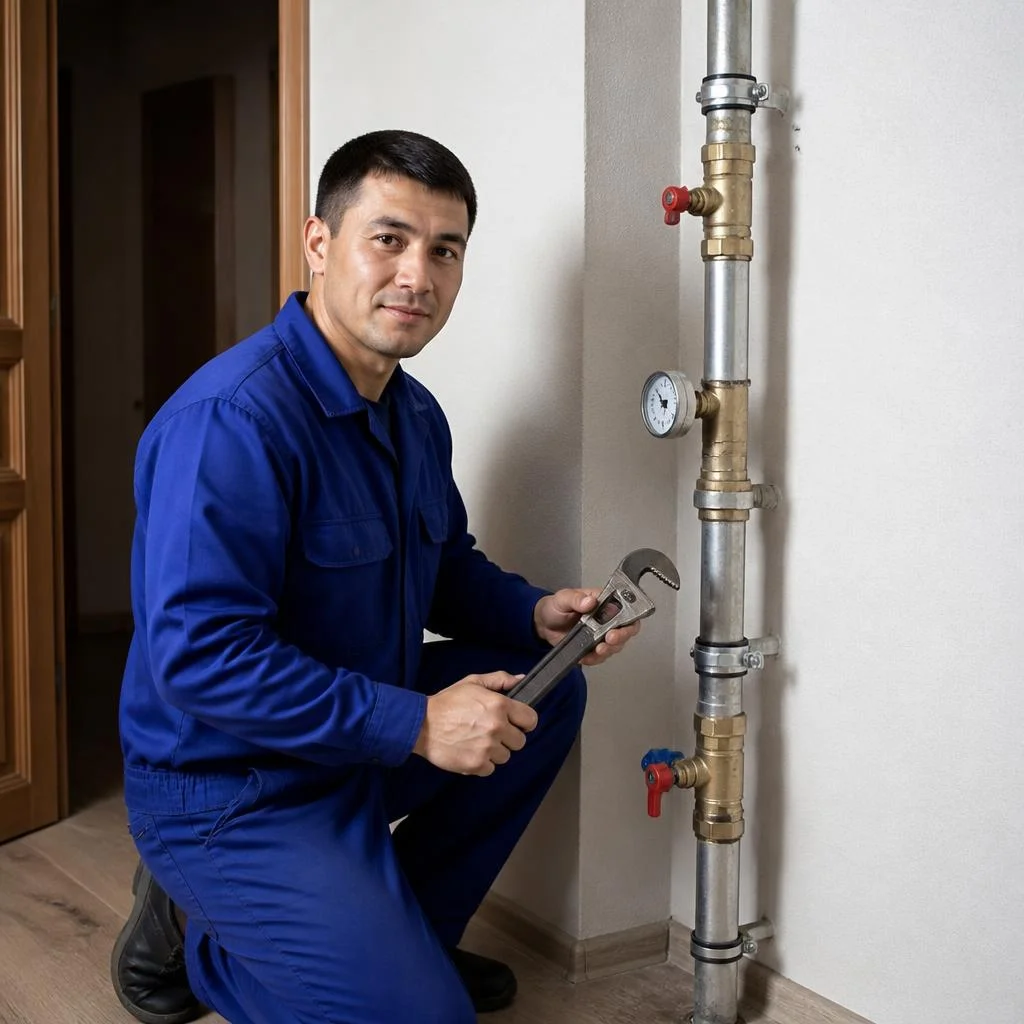
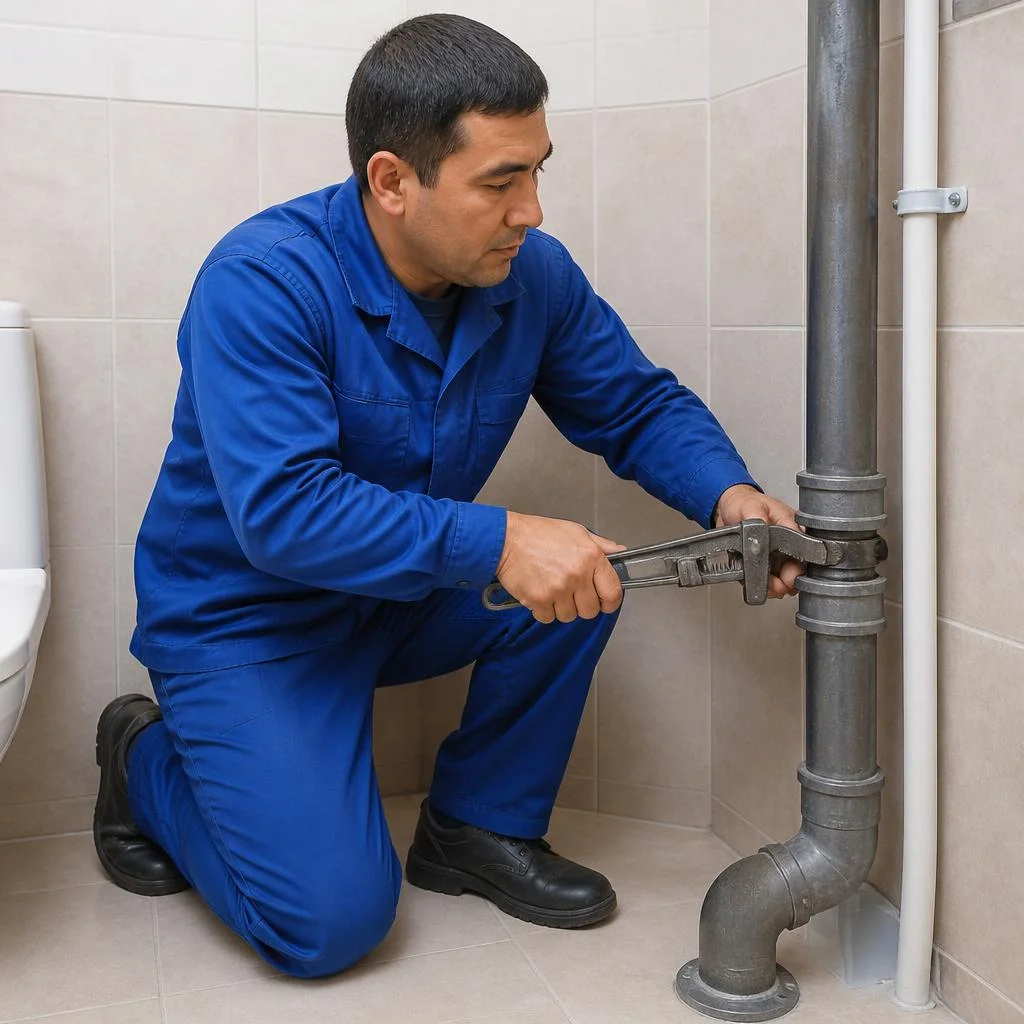
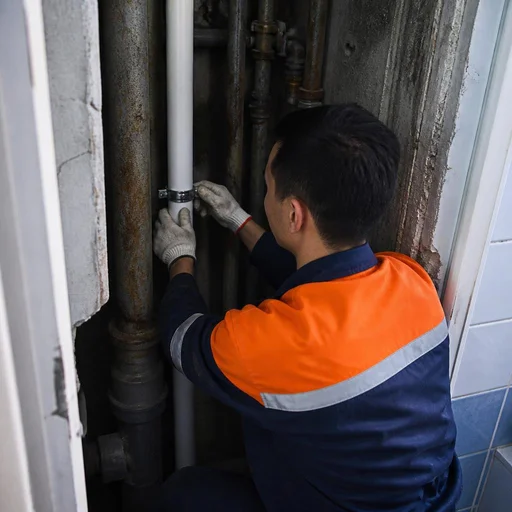
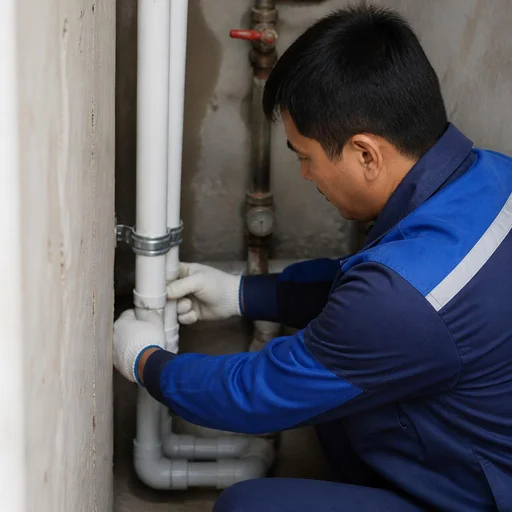
Eco-Service replaces cold and hot water risers with coordination of shutdown with the management company and notification of neighbors — without this, the work cannot begin, since the riser is shared by the entire entrance. The cold water riser and the hot water riser are renewed in one go: the steel pipe is dismantled along its entire height, a polypropylene one with compensators is installed, then the circuit is pressure-tested and every connection is checked under pressure. In Tashkent khrushchyovkas and panel buildings from the 1970s-1990s, risers are most often cast iron or steel with internal corrosion — on the outside the metal looks intact, but on a cross-section the wall is thinned to 1-2 mm. The riser is replaced from top to bottom in one go: if the work is split over two days, a temporary plug will remain between floors, which can fail.
Replacement of the connection to the mixer and radiator connection
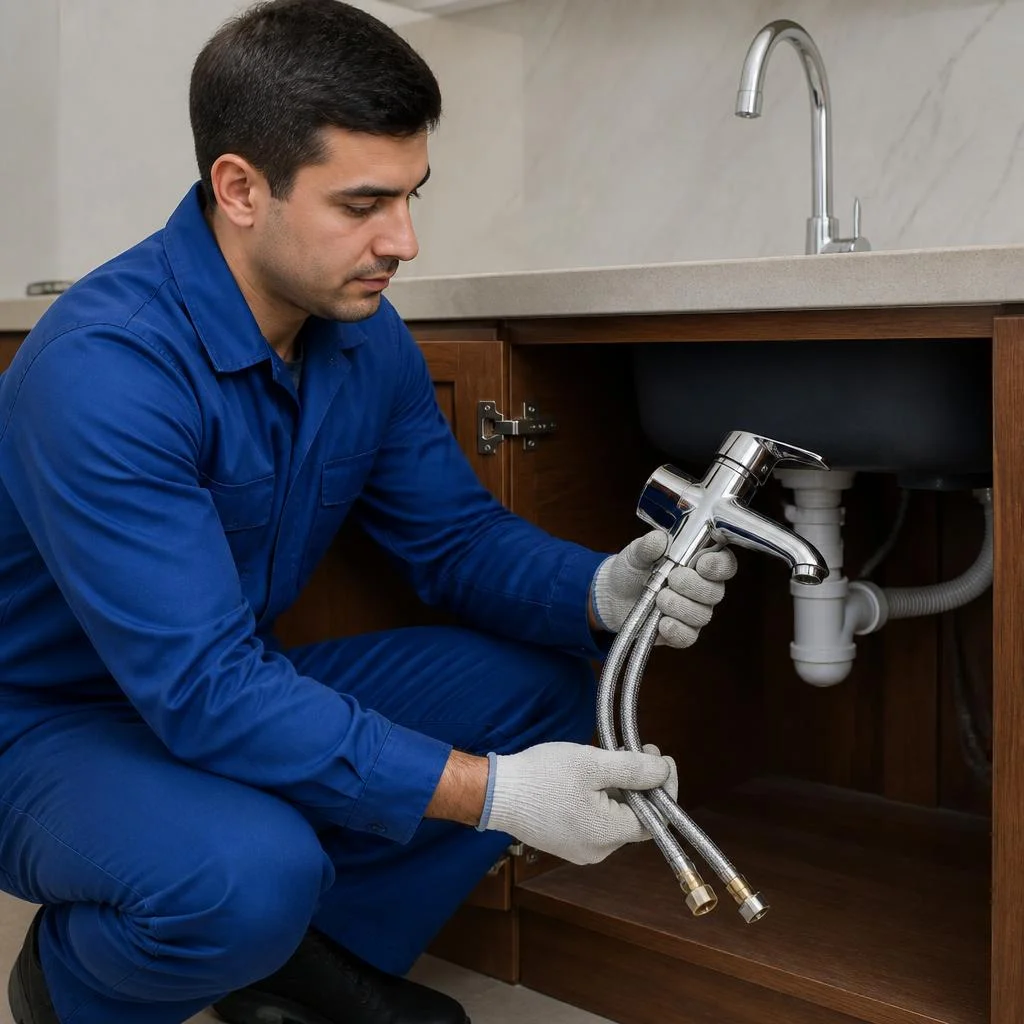
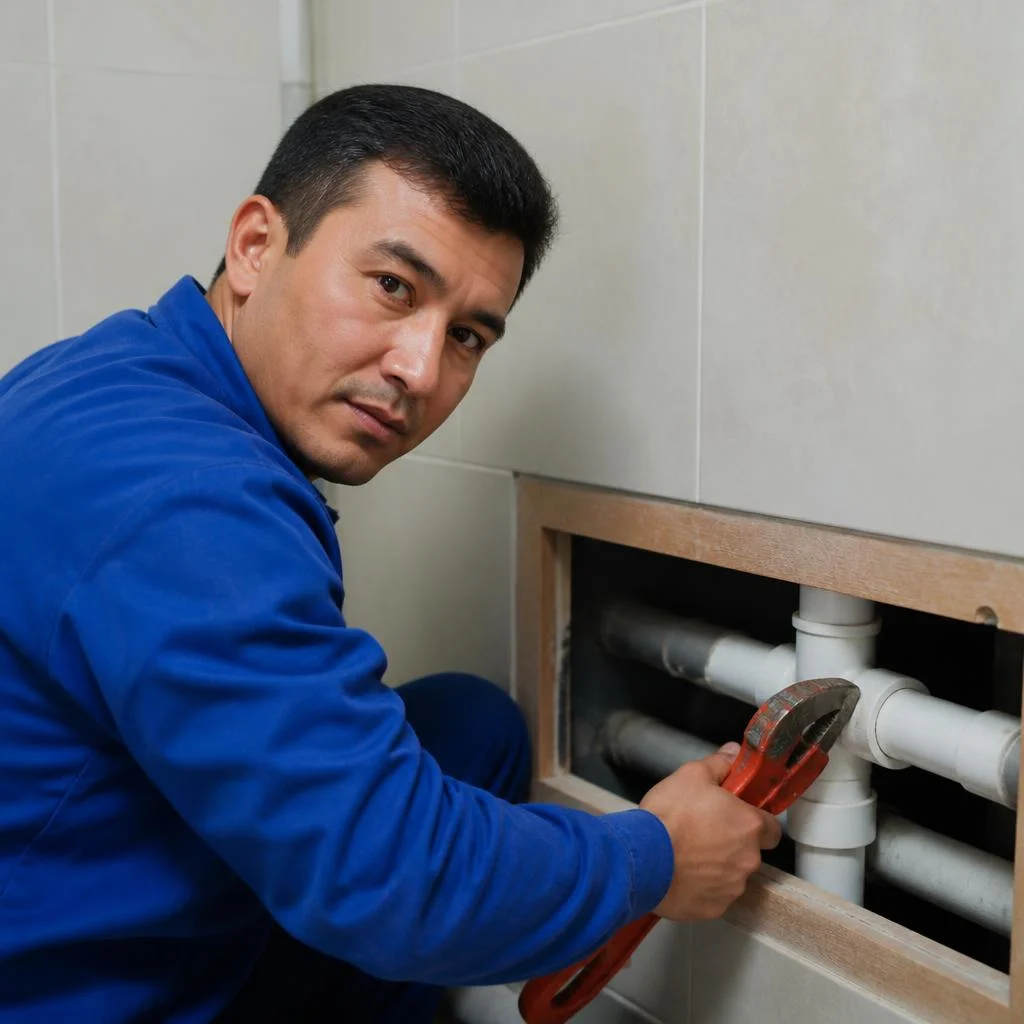
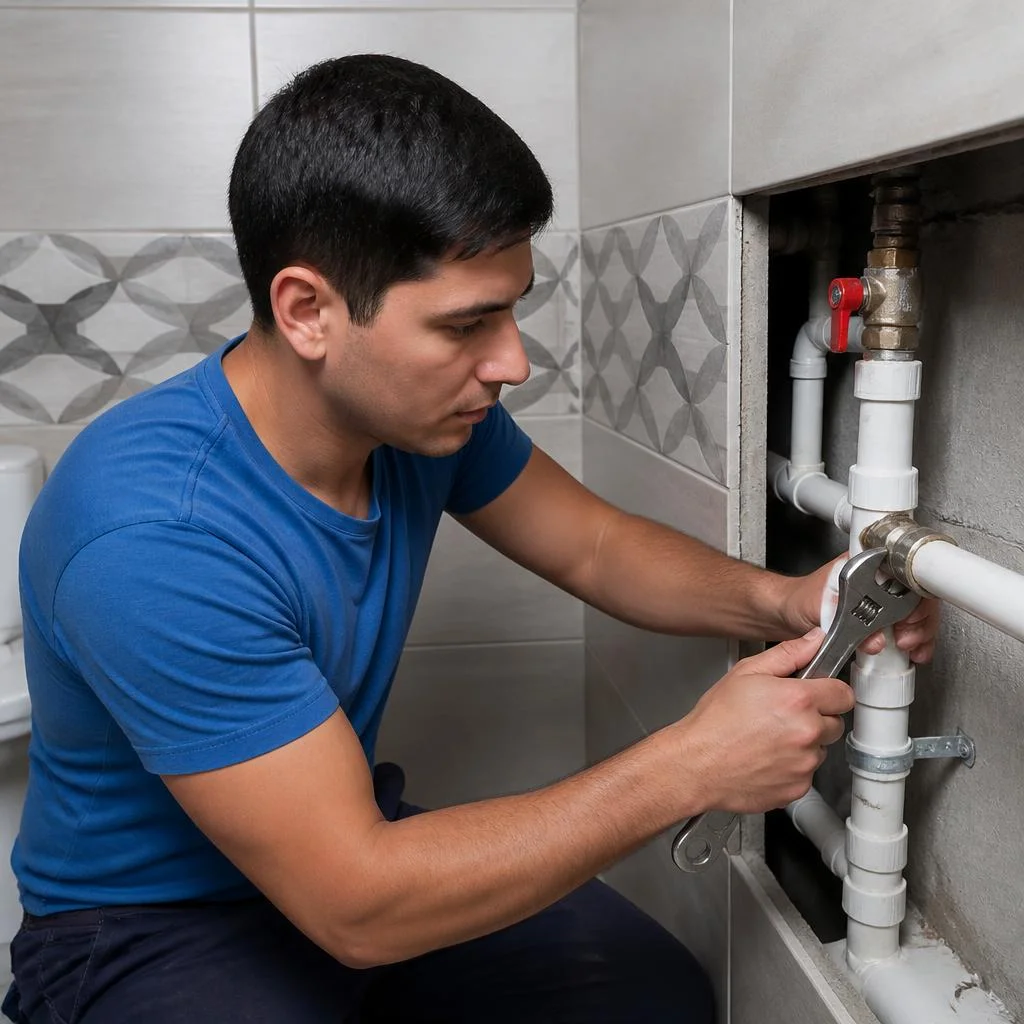
- Replacement of the connection to the mixer: the flexible hose or rigid pipe from the riser to the mixer is replaced through a service opening, without breaking open the tiles.
- Radiator connection: the connection to radiators is replaced with the heating riser shut off, and if necessary — with replacement of Mayevsky valves.
- Without dismantling tiles: in most cases access is through a hatch or niche, so the bathroom finish remains intact.
- Diagnostics before work: the technician checks the condition of threaded connections and pipe walls in the section up to 30 cm from the riser.
- Service life: a flexible connection lasts 5-7 years, a rigid one — longer; if the connection has already been replaced "in a hurry", it is better to replace it right away when renewing the pipe.
Replacement of a pipe on a section of the riser
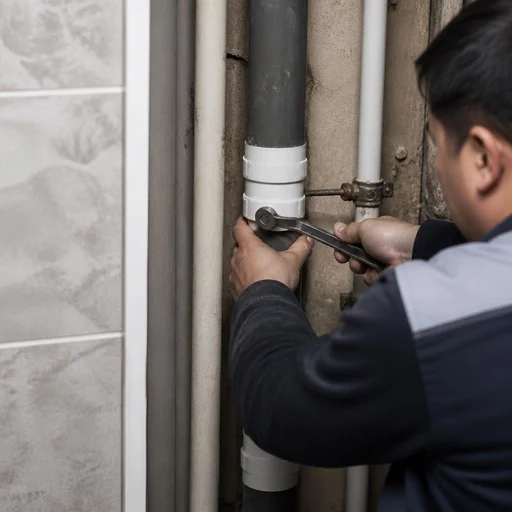
If the riser is generally in order, Eco-Service replaces only the damaged section — this is cheaper and faster than a full replacement. The work is done on a segment from 0.5 to 2 meters: the defective fragment is cut out, a new one is welded or soldered in, and they are joined via unions and couplings. Most often the section is replaced on the first and last floors — that is where condensate accumulates and the pressure drop is stronger than in the middle of the riser. The riser section is replaced with two expansion joints — they absorb thermal expansion and extend the service life of the joint.
Replacement of unions, couplings and the shut-off valve on the riser
- Unions and couplings: threaded connectors are replaced at the first signs of corrosion or leaks — they wear out faster than the pipes themselves.
- Shut-off valve on the riser: replaced with a ball valve, which shuts off the water by turning the handle 90 degrees.
- Ball valve: does not "seize up" with infrequent use and allows shutting off the water without calling the emergency service.
- Check after replacement: pressure testing of the circuit and inspection of all joints under working pressure.
- When to replace urgently: if the valve does not hold water or the union is wet — you cannot delay, a leak will flood the neighbors below.
What is included in the estimate
Clients often phrase the request as pipe replacement in the bathroom cost — and end up here, because the estimate in the bathroom is calculated separately from the total footage for the apartment. Another frequent search query is pipe replacement in an apartment price Tashkent: this is how people search when they want to understand the order of amounts before calling a technician. The estimate includes three components: the length of the section, the pipe material and the number of connection points. The technician calculates the scope after inspection, before the start of work, and records it in the report. Access affects the labor intensity: an open connection speeds up installation, one embedded in the wall adds opening up and restoring the finish. In Tashkent apartments with steel distribution, the work is more expensive than average for the site — the metal is cut and replaced with polypropylene, rather than repacking the threads. A separate pipe replacement on a short segment costs less than a full distribution, but the exact scope is only visible on site: the length of the riser, the number of floors and the type of connections cannot be included in the estimate in advance.
Replacing heating pipes in an apartment
Heating in Tashkent homes follows a seasonal schedule: in winter the system is under pressure, in summer it undergoes maintenance. That is why the price of installation in an apartment depends not only on the footage, but also on the window between heating seasons.
Installation of the riser and heating section
Eco-Service replaces risers and heating sections during the inter-heating season so as not to leave the building without heat during the cold months. We work on risers of series 1-464 and 1-335, typical for Chilanzar, Yunusabad and Sergeli: we dismantle the DN15-25 steel pipe and in its place install reinforced polypropylene or metal-plastic with adapters to the existing radiators. Clients often phrase the request briefly — pipe replacement, meaning the entire riser rather than a single section. Work on a riser affects all neighbours along the vertical, so we arrange approval with the management company and residents before starting — otherwise the welding in the stairwell will be stopped halfway. The heating riser is replaced with mandatory pressure testing — without it, the first start-up of the system may leak at the new joint.
Heating pipes made of polypropylene and metal-plastic
| Material | Operating temperature | Where we use it |
|---|---|---|
| Reinforced polypropylene | up to 95 °C | risers, in-apartment distribution |
| Metal-plastic | up to 95 °C | connections to radiators, concealed installation |
| Unreinforced polypropylene | up to 60 °C | cold water only |
| Steel | up to 90 °C | existing risers before replacement |
For heating, Eco-Service uses reinforced polypropylene and metal-plastic — they withstand the coolant temperature and do not deform. Polypropylene and metal-plastic pipes go in the same schedule with soldering of connections: the aluminium layer in reinforced polypropylene absorbs linear expansion, and the press fittings of metal-plastic withstand water hammer during start-up. Ordinary (unreinforced) polypropylene is not suitable for heating — at 70-80 °C it expands linearly and "pulls" the connections. In search, clients often type replacement of riser pipes price to estimate the budget before calling a technician — and land on this page.
Unions, couplings and heating shut-off valves
- Unions and couplings: threaded connections on the riser and distribution, we replace them when there are pinholes and thread stripping — the price of work on risers is calculated per unit.
- Ball valves: installed on the supply and return of the radiator so the unit can be removed without draining the riser.
- Thermostats: instead of a valve on the supply — they maintain the room temperature independently of the neighbours along the vertical.
- Radiator connections: the pipe from the riser to the unit; cast-iron radiators are often replaced together with it.
- Air vents: Mayevsky valves at the high points; without them the system gets airlocked after pressure testing.
Replacement of sewer pipes and risers
Sewerage differs from water supply in that it works by gravity: what matters is not pressure and tightness under pressure, but slope, diameter and access to inspection points. That is precisely why cast-iron risers in old Tashkent buildings are replaced more often than appearances suggest.
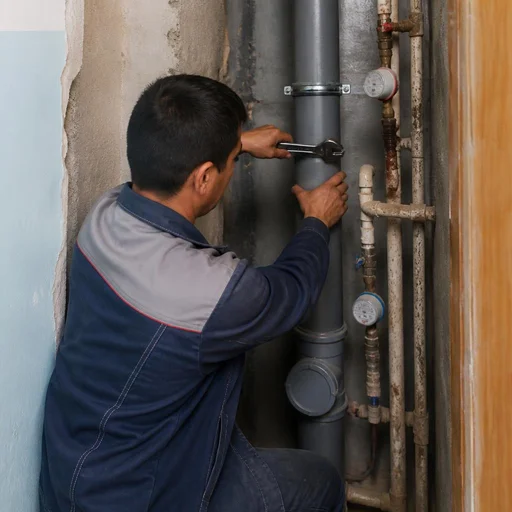
Replacement of a sewer riser
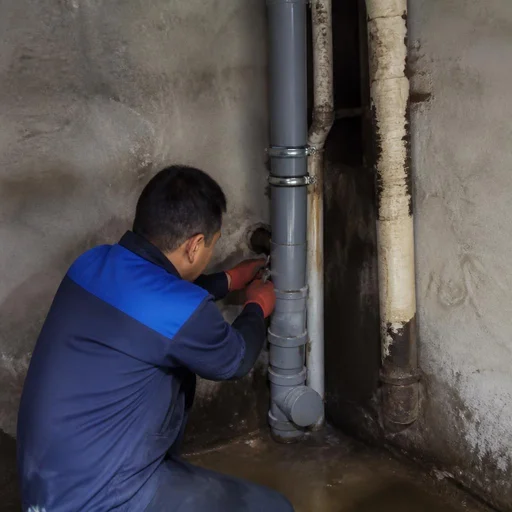
Eco-Service replaces sewer risers, switching from cast iron to polypropylene — while preserving slopes and inspection assemblies. In the khrushchyovkas and stalinkas of Chilanzar, Yakkasaray and Mirzo-Ulugbek district, cast iron lasts 40-50 years, after which the inner surface becomes overgrown with deposits and the bore narrows from 110 to 60-70 mm. We dismantle the riser floor by floor, install a 110 mm PP sewer pipe with socket gaskets and bring inspection points out on every second floor. The cast-iron riser is replaced entirely, floor by floor, in one go: if part of the cast iron is left in place, the cast-iron-to-plastic joint will eventually leak. When searching, clients often type in plumber pipe replacement services — and for such a request we immediately clarify whether it concerns a riser or a separate branch. In my opinion, it is cheaper to coordinate the work with the neighbours on the riser right away than to come back and redo it six months later.
Replacement of a pipe on a sewer section
- Slope diagnostics: before work, we check the actual slope with a laser level — in Tashkent buildings it is often already incorrect from the time of construction.
- Dismantling of the old section: we remove cast iron or rusty steel from the riser to the trap, without damaging the neighbours' tiles in the wet zone.
- Installation of the PP pipe: we lay 50 or 110 mm polypropylene with a slope of 2-3 cm per metre and secure it with clips every 50 cm.
- Inspection point at the bend: at every change of direction we install an inspection hatch — otherwise cleaning is only possible with a cable through the trap.
- Flow test: after assembly, we run 10-15 litres of water through and inspect all joints under load.
Replacement of a polypropylene sewer pipe
| Section | Diameter | Installation specifics |
|---|---|---|
| Toilet | 110 mm | Separate branch to the riser, slope 2 cm/m |
| Kitchen sink | 50 mm | Trap with water seal, branch length up to 3 m |
| Bath and shower | 50 mm | Drain with a dry seal when there is no trap |
| Washing machine | 50 mm | Separate outlet above the drain level |
| Riser | 110 mm | Socket gaskets, inspection point every other floor |
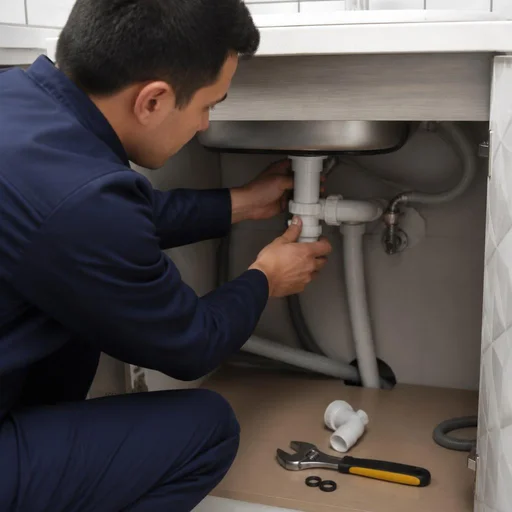
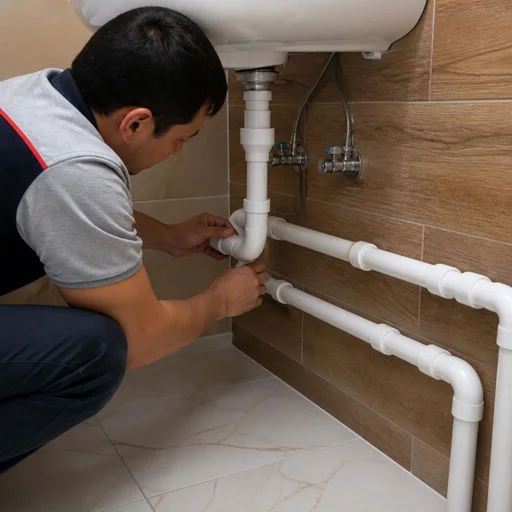
A diameter of 110 mm is required for the toilet, and 50 mm for the sink and bath; adapters between diameters are installed only via an inspection point. Replacing a sewer pipe with a polypropylene one is the most frequent request when renovating a bathroom, and here the most important thing is to select the right diameter for each fixture. If sewer pipes are to be replaced, we make the calculation after an inspection: the price of replacing sewer pipes in an apartment depends on the number of points and the linear metres.
Pipe materials: what to choose for the job
The pipe material determines the service life, the connection method, and whether walls will have to be opened up during the next renovation. We break down what to install for water supply, heating, and sewerage in an apartment.
Polypropylene, metal-plastic, copper: comparison
| Material | Connection | Where to use |
|---|---|---|
| Polypropylene | Socket fusion welding with a soldering iron | Water supply, heating, sewerage |
| Metal-plastic | Press fittings or compression fittings | Concealed routing in walls and screed |
| Copper | Capillary brazing | Premium heating systems |
| Steel | Threading, welding, unions | Existing risers due for replacement |
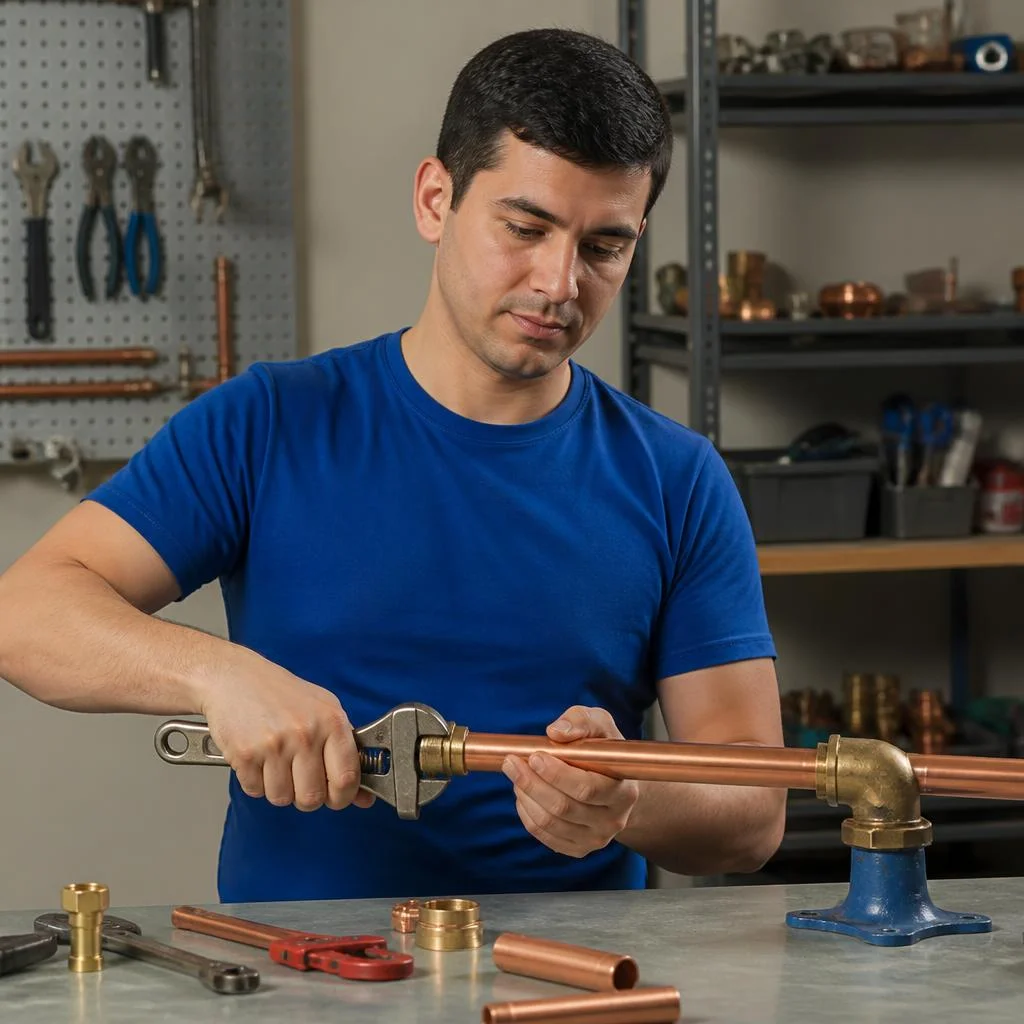
Polypropylene withstands pressure up to 25 bar at a working temperature of up to 95 °C, metal-plastic bends without fittings at turns, and copper lasts 50 years or more. Press fittings are crimped with press tongs in 5-7 seconds and require no access to the connection after installation, while compression fittings are tightened with a wrench and remain detachable. Copper must not be connected directly to steel — electrochemical corrosion occurs at the contact point, so a dielectric gasket is needed.
Replacing a steel pipe with plastic
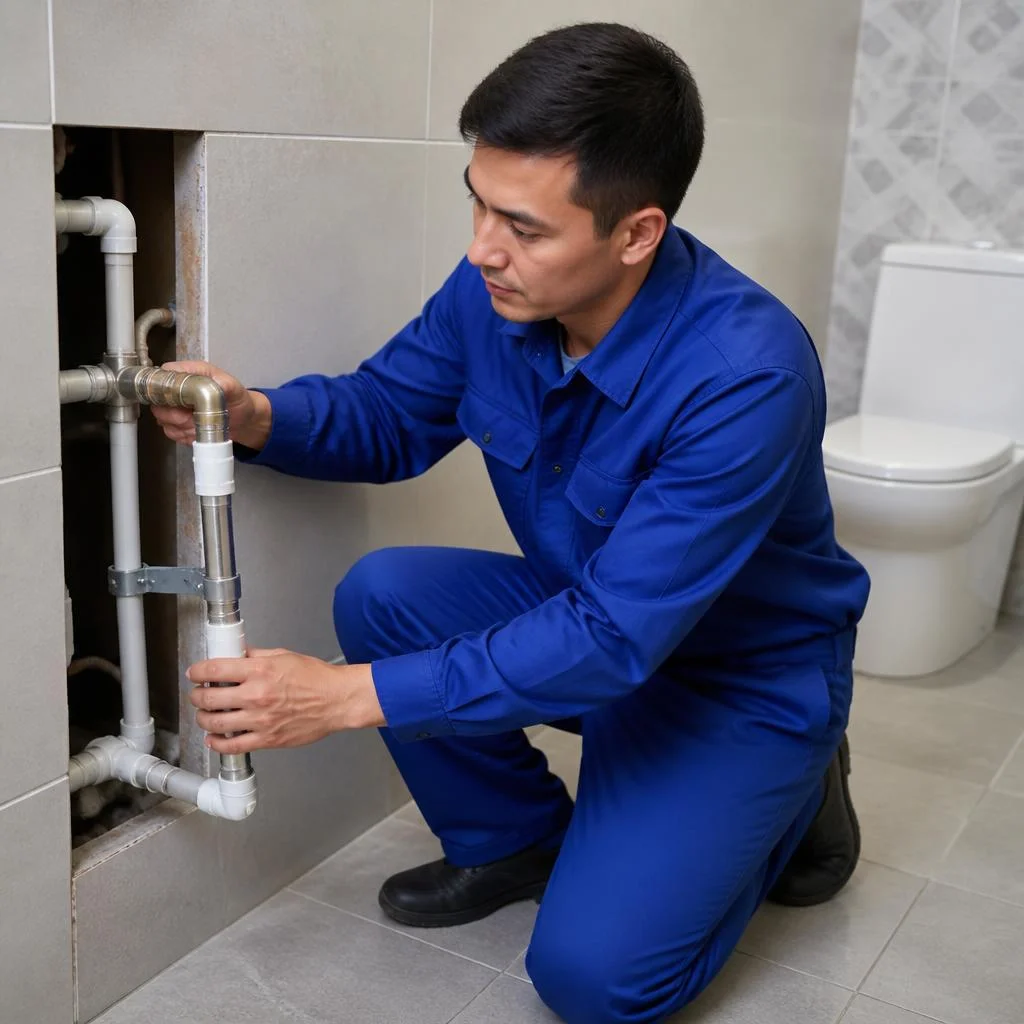
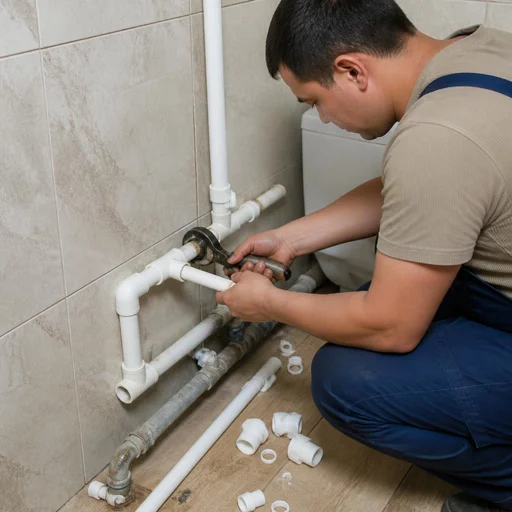
Eco-Service replaces steel pipes with plastic while preserving the diameter and connection points — without redoing the routing throughout the apartment. Most often we install polypropylene: it does not rust, does not become overgrown with deposits inside, and does not produce bangs during water hammer. Metal-plastic goes where the pipe runs into the screed or a chase — it bends along a radius and avoids extra angles and couplings. Before work, we open up and measure the old riser: an outer diameter of ½ inch corresponds to 25 mm polypropylene, ¾ inch to 32 mm. When switching from steel to plastic, it is important to preserve the inner diameter: plastic with the same outer diameter provides a larger bore and changes the pressure. That is why we select by inner cross-section, not by outer — otherwise the water will flow weaker at distant points. Clients often phrase the request as: replacement of heating pipes in an apartment price — and from it, it is immediately clear that a calculation for a specific routing is needed, not a general price list.
Polypropylene fusion welding and system pressure testing
- Preparation: we cut the pipes to measurements, chamfer the edges, degrease the ends, and mark the insertion depth with a marker.
- Fusion welding: we keep the heater at 260-280 °C, hold the part and fitting according to the time table, join them, and fix them without turning.
- Pressure testing: we fill the circuit, raise the pressure with a pressure tester above the working pressure, and hold it under a pressure gauge.
- Leak check: we inspect every joint, thread, and transition, and record the pressure drop over a control period of time.
- Heat control: overheating narrows the pipe bore from the inside — externally the joint looks fine, but the pressure in that section drops.
- Pipe replacement in Tashkent: in old buildings we carry out the check twice — before sealing the chases and after, so a leak is found before the final finishing.
How the work is carried out: stages, timelines and warranty
The work is structured as a sequence: request, diagnostics, installation, pressure testing, handover and warranty support. Below is what the timelines consist of, what the warranty covers and how coordination with the management company takes place.
Stages of work: from request to handover
- Request and diagnostics: the technician inspects the risers, supply lines and fittings, identifies the sections to be replaced and draws up an estimate on site.
- Dismantling of old pipes: we remove worn sections, nipples and couplings, and clear the passage points through the floors.
- Installation of new pipes: soldering of polypropylene or pressure testing of metal-plastic, installation of shut-off valves, connection to mixers and radiators.
- Pressure testing of the system: pressure check, monitoring of all joints and connections for leaks.
- Handover of the property: checking for leaks under working pressure, recording the result, handing over the warranty document.
2-year warranty on the work
Eco-Service provides a 2-year warranty on all pipe replacement work — including joints, fittings and pressure testing. The document lists the replaced components: riser, supply line, nipples, couplings, shut-off valve. A warranty claim is processed against a report and receipt, so keep both documents until the term expires. For polypropylene soldering and metal-plastic pressure testing the term is the same — two years — regardless of whether a section of the riser or the entire distribution in the apartment was replaced. There is one condition: the warranty is valid only if the operating conditions are observed — if after the work you re-solder a section yourself, the warranty on that component is voided. Clients often search for "pipe replacement Tashkent" — and land on our page, which describes the entire work procedure. Before calling a technician under warranty, photograph the leak location — from the photo the specialist can more quickly determine whether it is a manufacturing defect or mechanical damage.
Payment and technician visits across Tashkent
- Click: transfer by phone number or via the bank app after signing the report.
- Payme: payment by card or from the wallet balance, the receipt arrives in the app.
- Uzcard and Humo: we accept cards of both payment systems via a terminal on site.
- Visits across Tashkent: the technician arrives on the day of the request or the next day, the exact time is agreed by phone.
- Payment after acceptance: payment is made upon handover of the work, not in advance.
Coordination of work with the management company and neighbours
Eco-Service helps coordinate riser replacement with the management company and notify neighbours — this is a mandatory stage for work on common property. The cold and hot water riser belongs to the common property of an apartment building, so the request is submitted to the management company or the homeowners' association, not just to the technician. The request states the address, riser number, type of work and desired dates; neighbours are notified in writing or via the building's chat about the water shut-off. Plumbing services for pipe installation in older buildings often require a report on the condition of the utility networks before dismantling begins — this document is drawn up by the technician, and it is worth requesting it in advance. Shutting off the riser is agreed at least a day in advance: if neighbours are notified on the day of the work, someone may be left without water at an inconvenient moment. Work on common property in Tashkent rarely goes ahead without written coordination — in new buildings with a homeowners' association the procedure takes a day, in older housing stock sometimes longer.
Conclusion
We have gathered practical conclusions on replacing pipes in an apartment: when you can no longer put it off, which material suits a specific system, and which steps must not be skipped during installation.
Key takeaways
- Signs of wear: pinholes, rusty water, and pressure drops signal that spot repairs of a section do not solve the problem — the worn metal continues to deteriorate nearby.
- Material selection: polypropylene and metal-plastic cover water supply and heating needs, PP is used for sewerage, and copper is chosen where maximum service life is required.
- Riser or section: the riser is replaced entirely across floors in one go; a separate section — only for local wear confirmed by diagnostics.
- Approval: work on common property is coordinated with the management company and neighbors at least a day before the start, otherwise installation may be stopped.
- Post-installation check: pressure testing and leak monitoring are mandatory — without them, the first startup of the system causes leaks at threaded and welded joints.