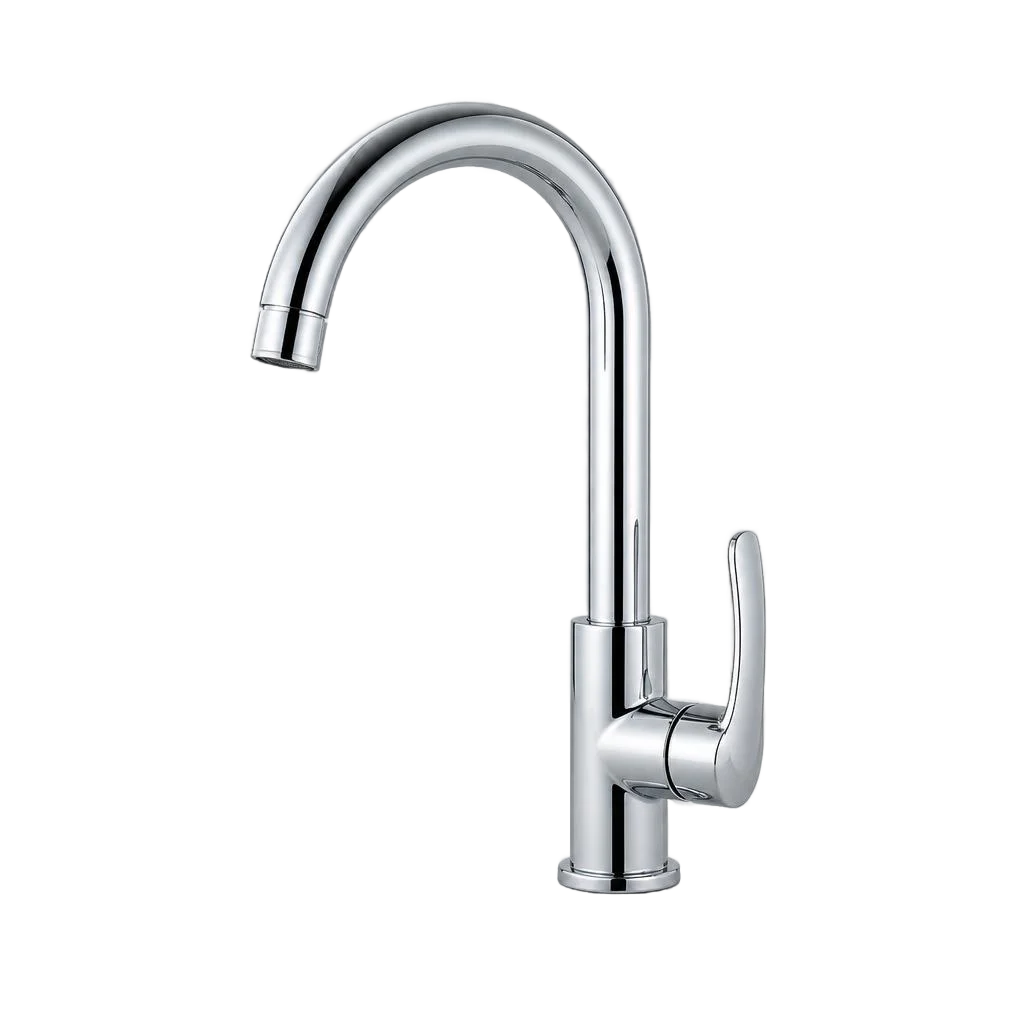

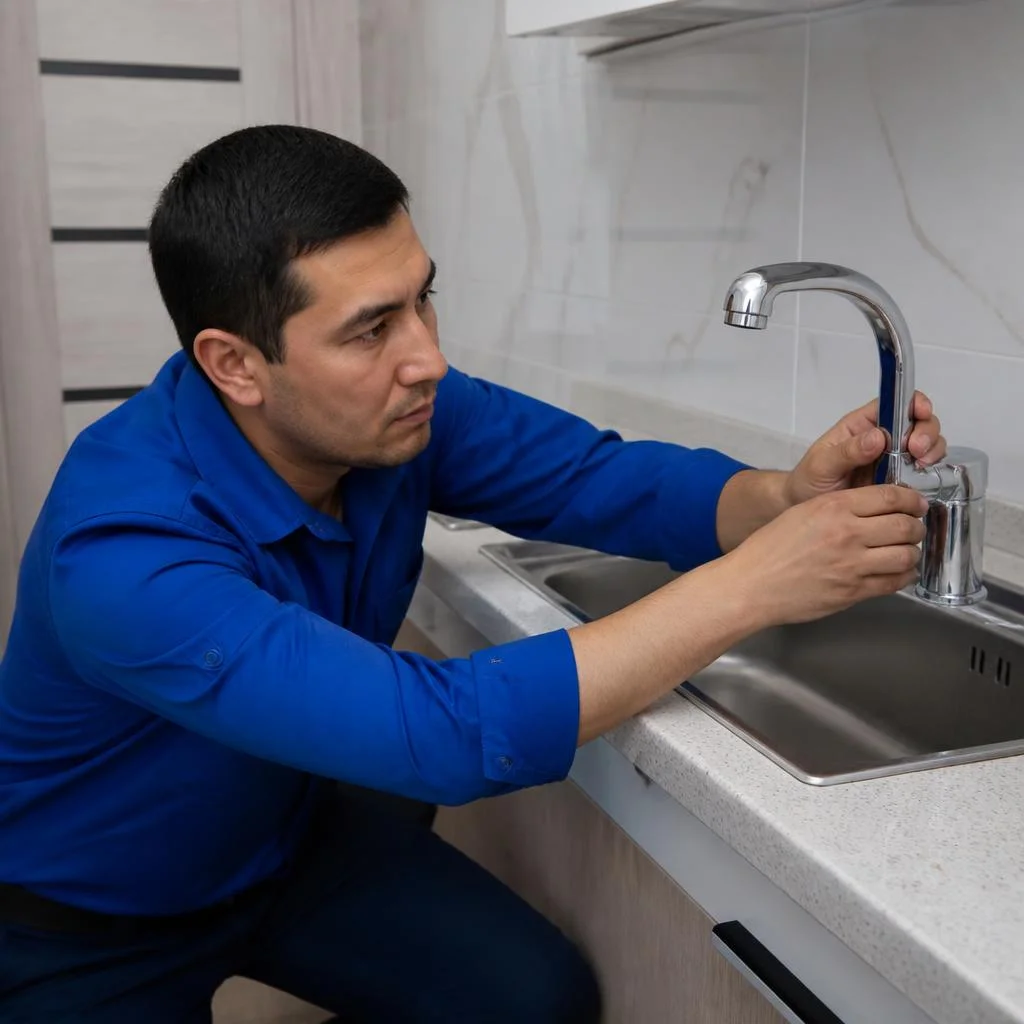
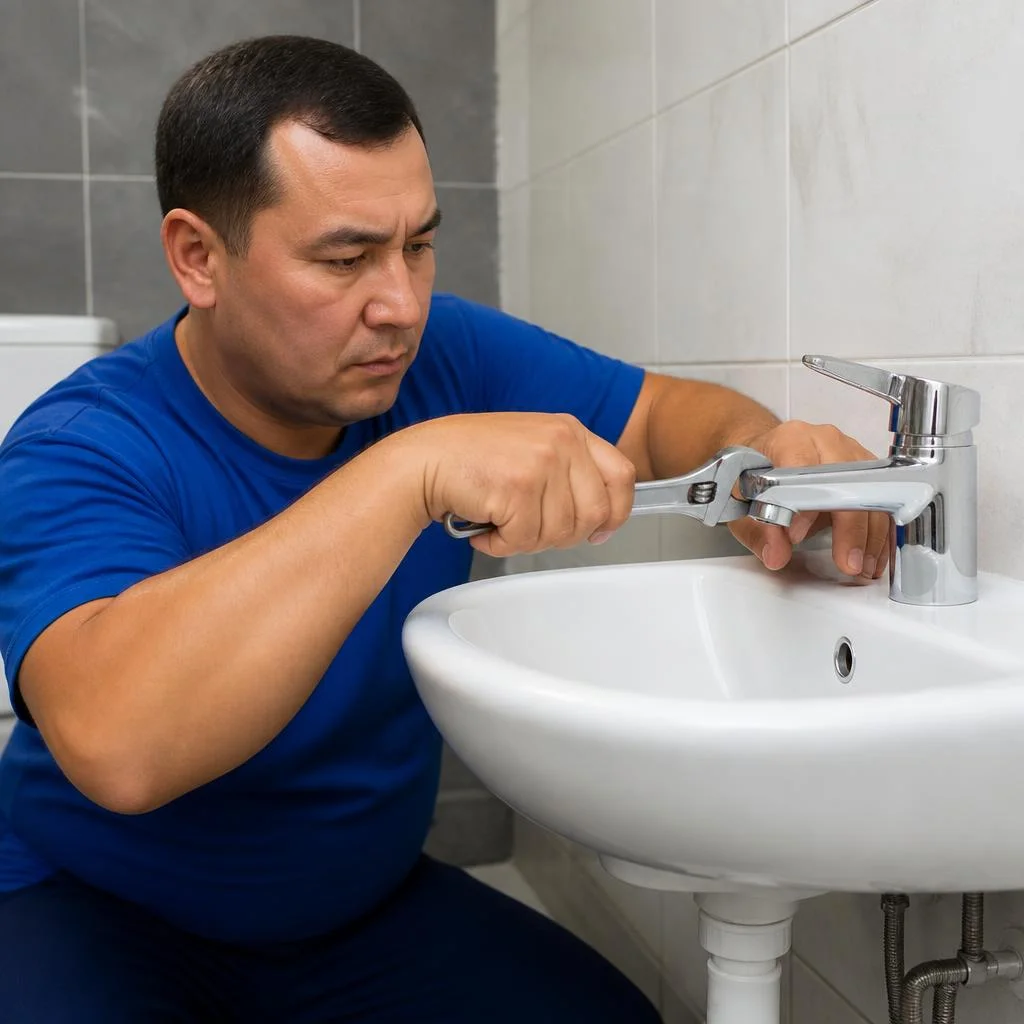
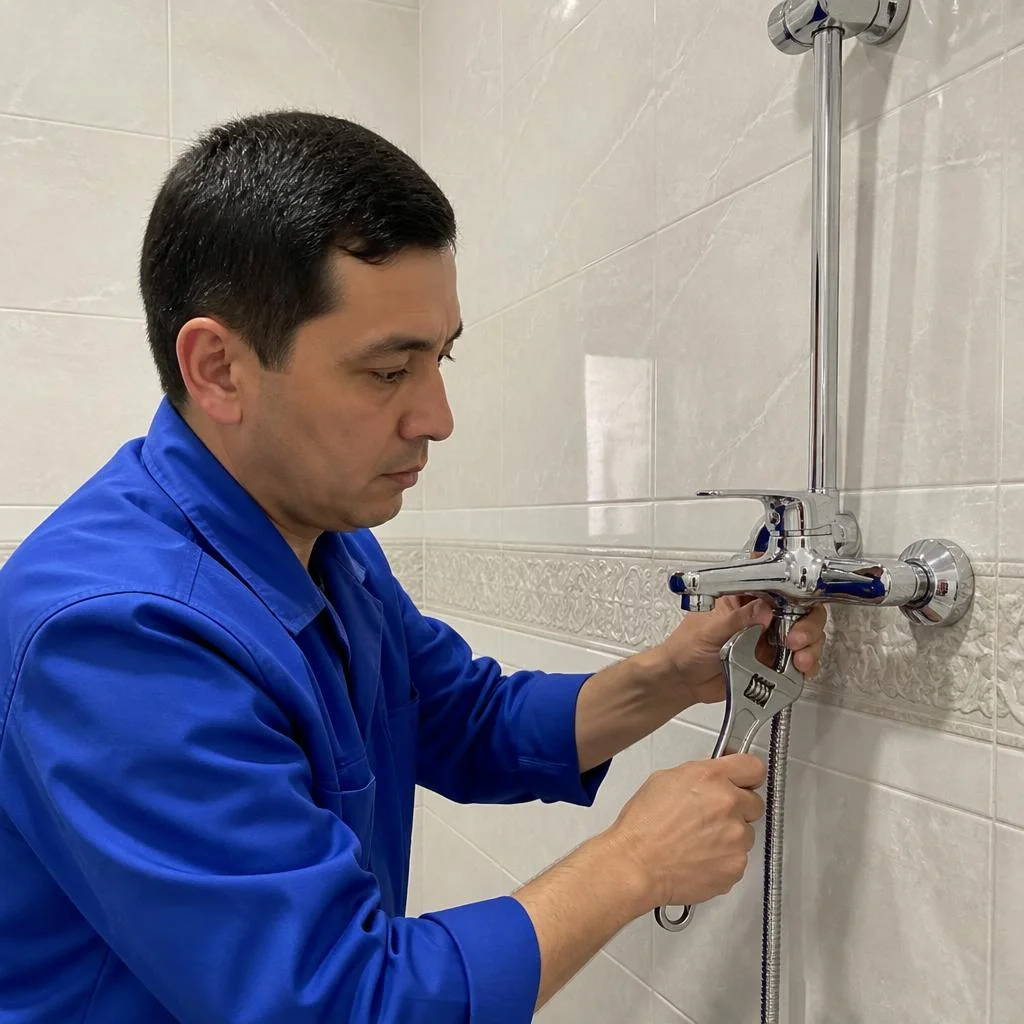








When it's time to replace the faucet: signs of wear and typical breakdowns
A faucet is a consumable component with a service life of 5-7 years, not "a lifetime". Below we break down the signals by which an owner understands: repair won't help anymore and replacement is needed.
6 signs that the faucet needs replacing, not repairing
- Constant dripping from the spout: the cartridge is worn out, replacing the gaskets works for 2-3 weeks, then the leak returns.
- Play in the lever: the stem is loose in the body, the switching action has become sticky or, conversely, too loose.
- Rusty water at start: corrosion inside the cast body, the water is discolored in the first 3-5 seconds after opening.
- Whistling when switching: clogging or deformation of the cartridge's ceramic plates, the noise gets louder every month.
- Cracks in the body: even a hairline crack in the casting won't seal, water escapes under the sink or into the wall.
- Green deposit at the base: oxidation of the brass and copper studs, a sign of electrochemical corrosion at the joint with the eccentric fittings.
Can a faucet be replaced without removing the old one
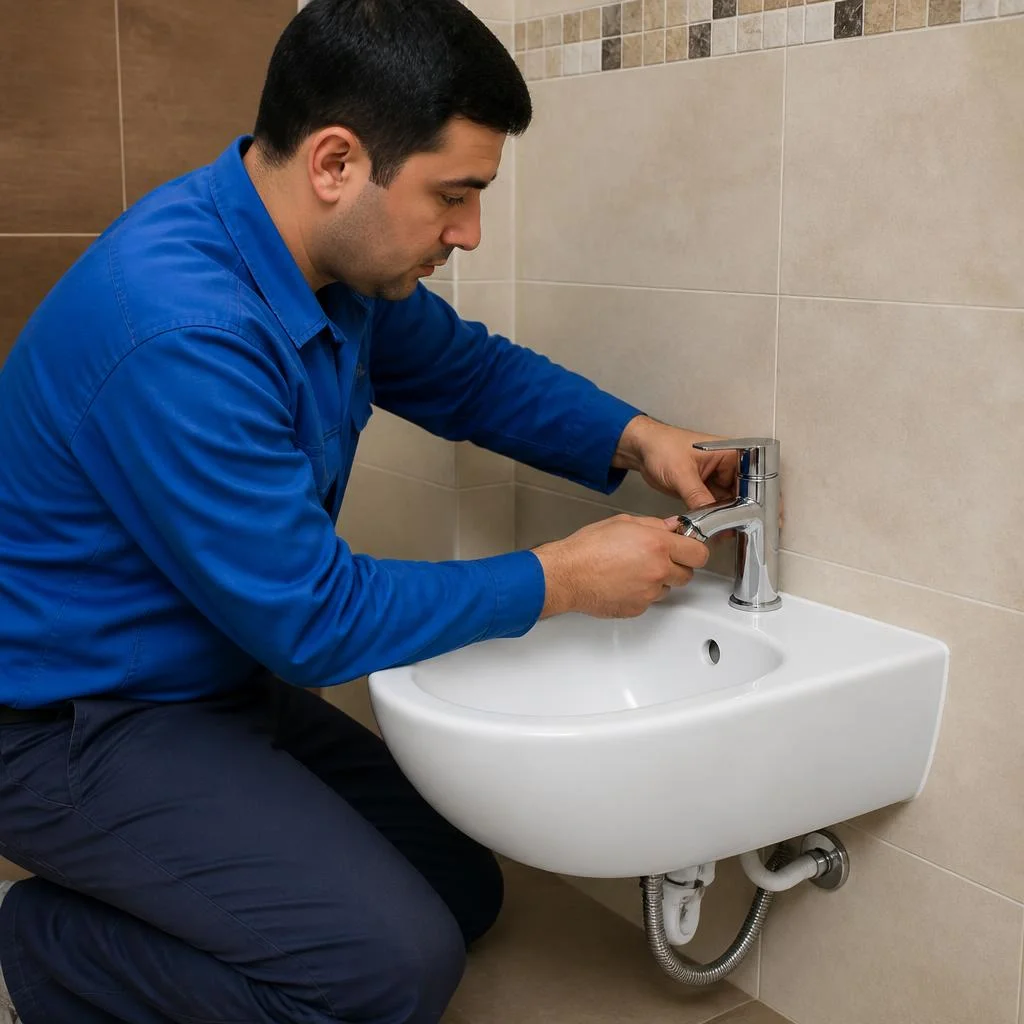
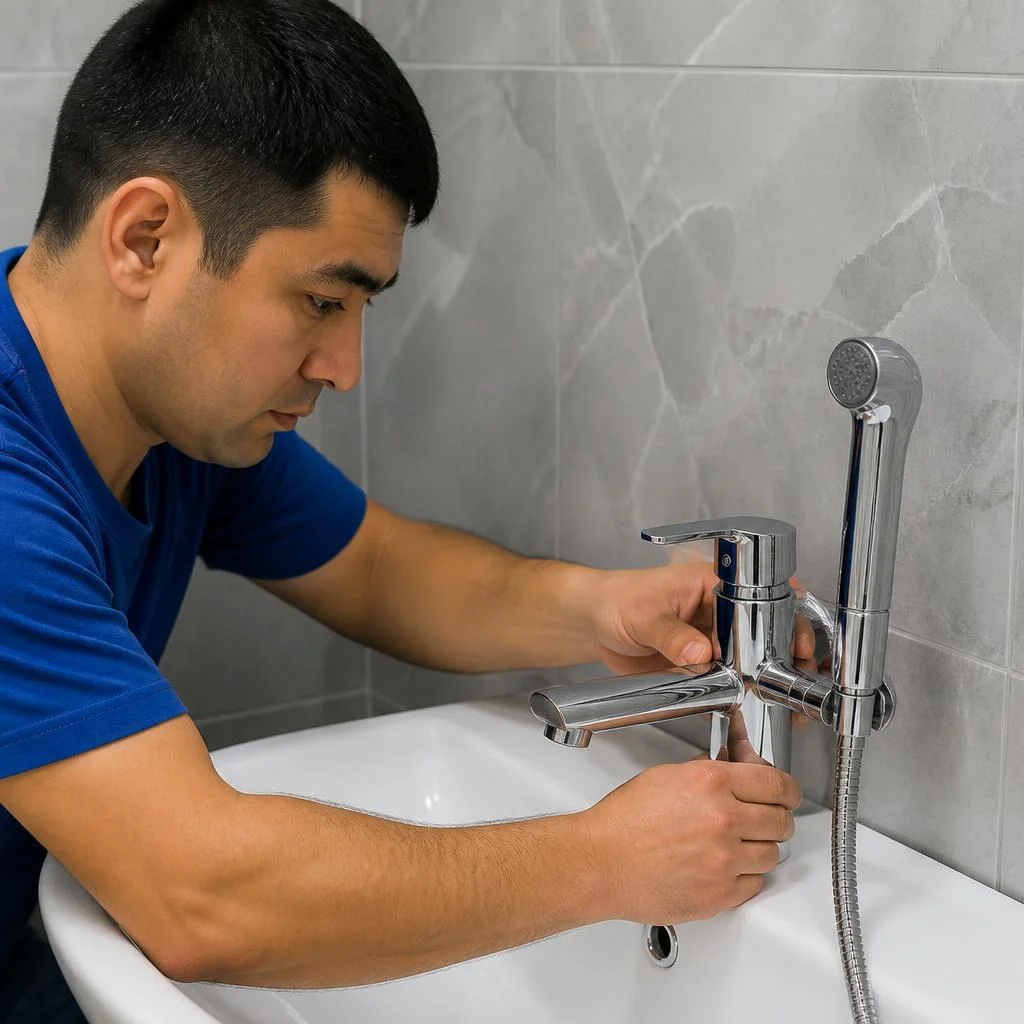
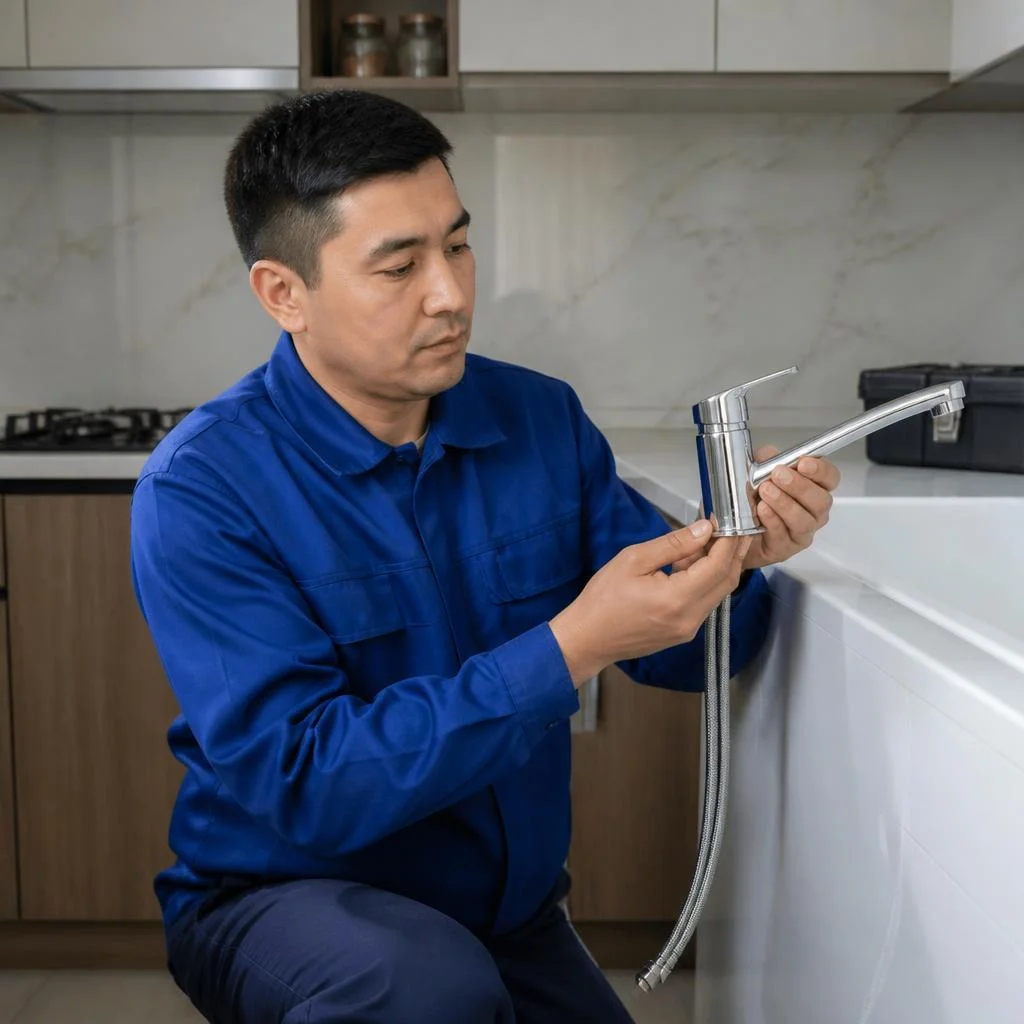
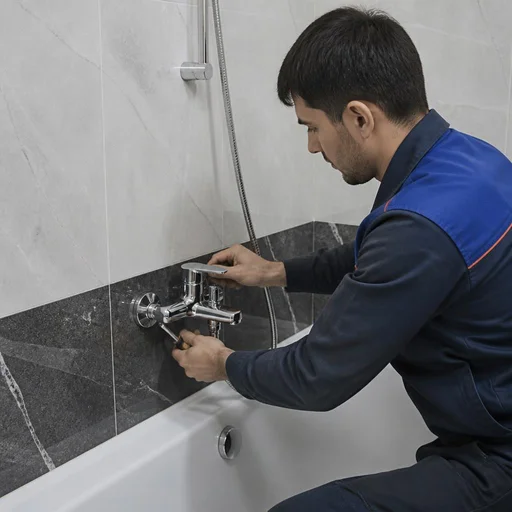
No — any installation begins with dismantling the old faucet, because the mounting seat, eccentric fittings and supply lines must be cleaned and checked before installing the new body. The technician removes the body, assesses the condition of the threads on the eccentric fittings, checks the flexible supply line for microcracks, and only then installs the new unit. Trying to "screw on" a new faucet onto old eccentric fittings without removing them is a common cause of a leak after 2-3 weeks: the old thread is already deformed and doesn't provide the necessary seal. If the faucet leaks through the body rather than the spout, repairing the cartridge won't help — a crack in the cast body won't seal, and water gradually escapes into the wall or countertop. The question "how much does faucet replacement cost" is not answered blindly from a price list, but after inspecting the unit: the type of body, the condition of the supply lines and eccentric fittings change the scope of work, which is why faucet replacement in Tashkent begins with diagnosing the mounting seat, not with hanging a new body.
Which mixers Eco-Service replaces: 10 types of turnkey work
The full range — from kitchen lever to concealed wall-mounted. The type of mixer determines the set of works, the tools and the visit time: a simple replacement in the kitchen and inspecting a niche with calibration of the thermostatic element are tasks of different levels.
Table: 10 types of mixers and what replacement includes
| Type of mixer | What replacement includes | Installation specifics |
|---|---|---|
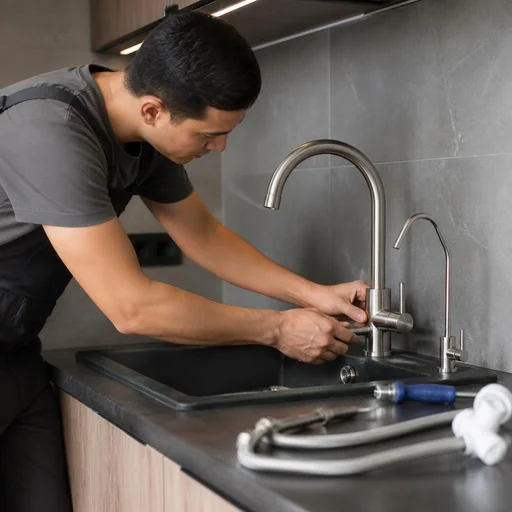
| Kitchen | removal, installation, connection | access to the countertop |
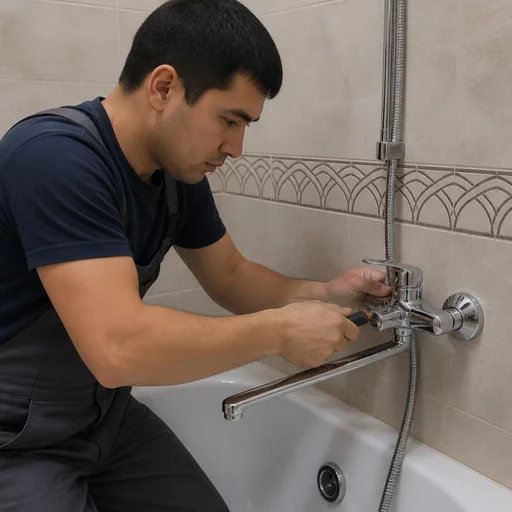
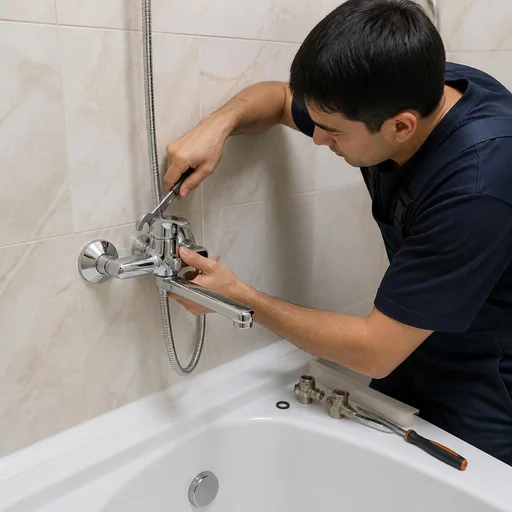
| Bathroom | removal, installation, eccentric fittings | wall-mounted installation |
| Shower | removal, installation, riser rail | checking the slope |
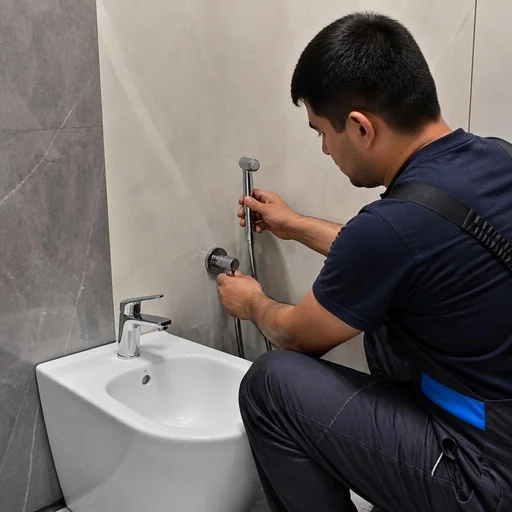
| Bidet | removal, installation, connection | compact niche |
| Bathtub | removal, installation, long spout | bathtub rim |
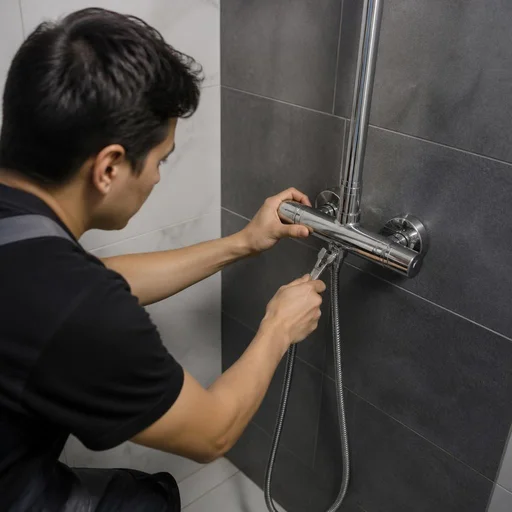
| Thermostatic | removal, installation, adjustment | calibration of the thermostatic element |
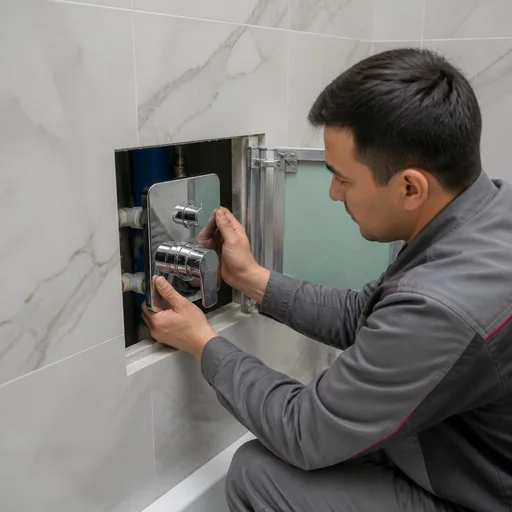
| Concealed | removal, niche inspection, installation | access through an inspection hatch |
| With a bidet spray | removal, installation, hose | additional connection point |
| With a long spout | removal, installation, reach | large-radius sink |
| With a filter | removal, installation, cartridge | connecting the filter |
How replacing a concealed mixer is different
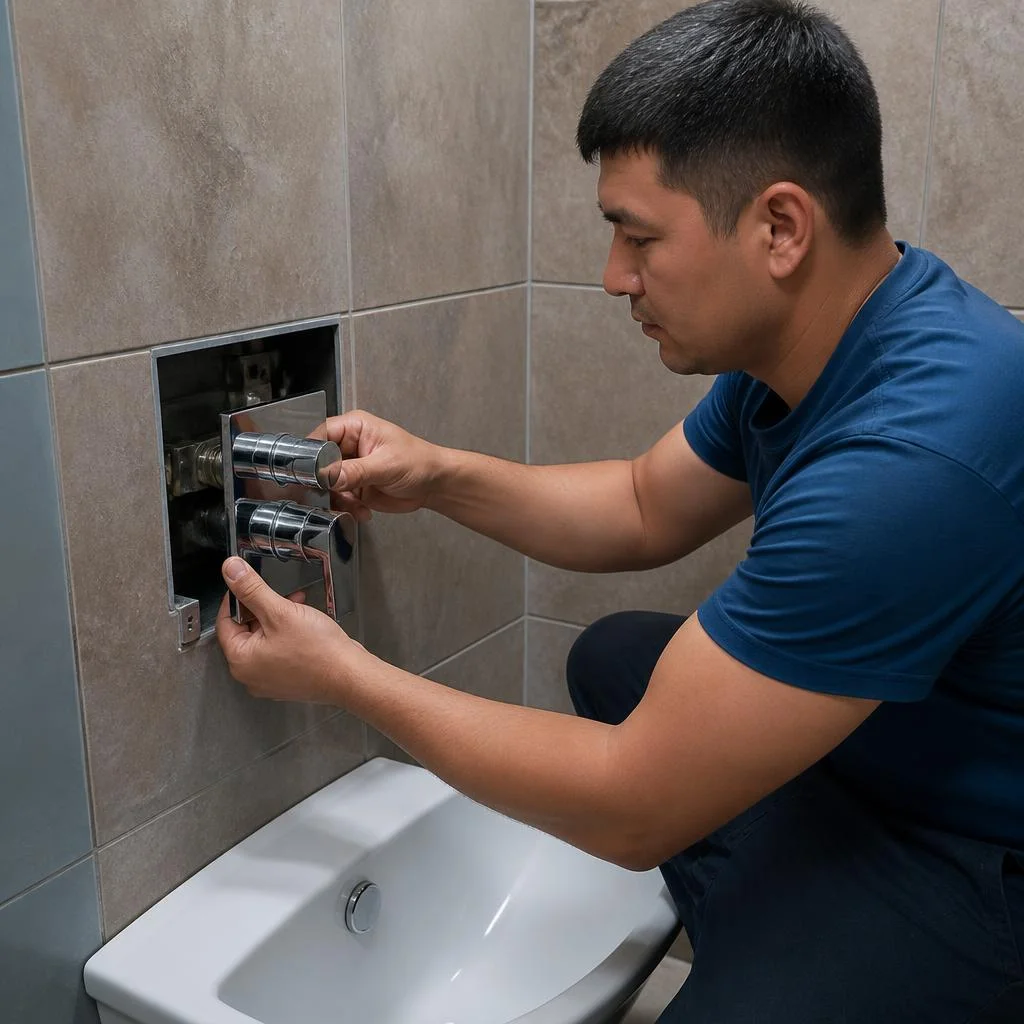
A concealed mixer has an installation unit in the wall, so the work includes inspecting the niche, checking the shut-off valves and replacing the cartridge — the job is impossible without access through an inspection hatch. In Tashkent new builds with drywall bathrooms, the hatch is often installed as standard, while in older buildings it has to be cut on site: the plumber removes the tiles at the service point, inspects the waterproofing of the wet zone and only then installs the new unit with shut-off valves. You can check in advance whether the niche has an inspection opening — this saves one visit. Clients often search for mixer installation — and land on this page, although the final estimate depends on the type of unit and the condition of the niche, not on the price for a single operation. If there is no hatch, plan the tile opening with extra time and material for sealing the seam so as not to damage the waterproofing.
Thermostatic mixer: why calibration is needed after installation
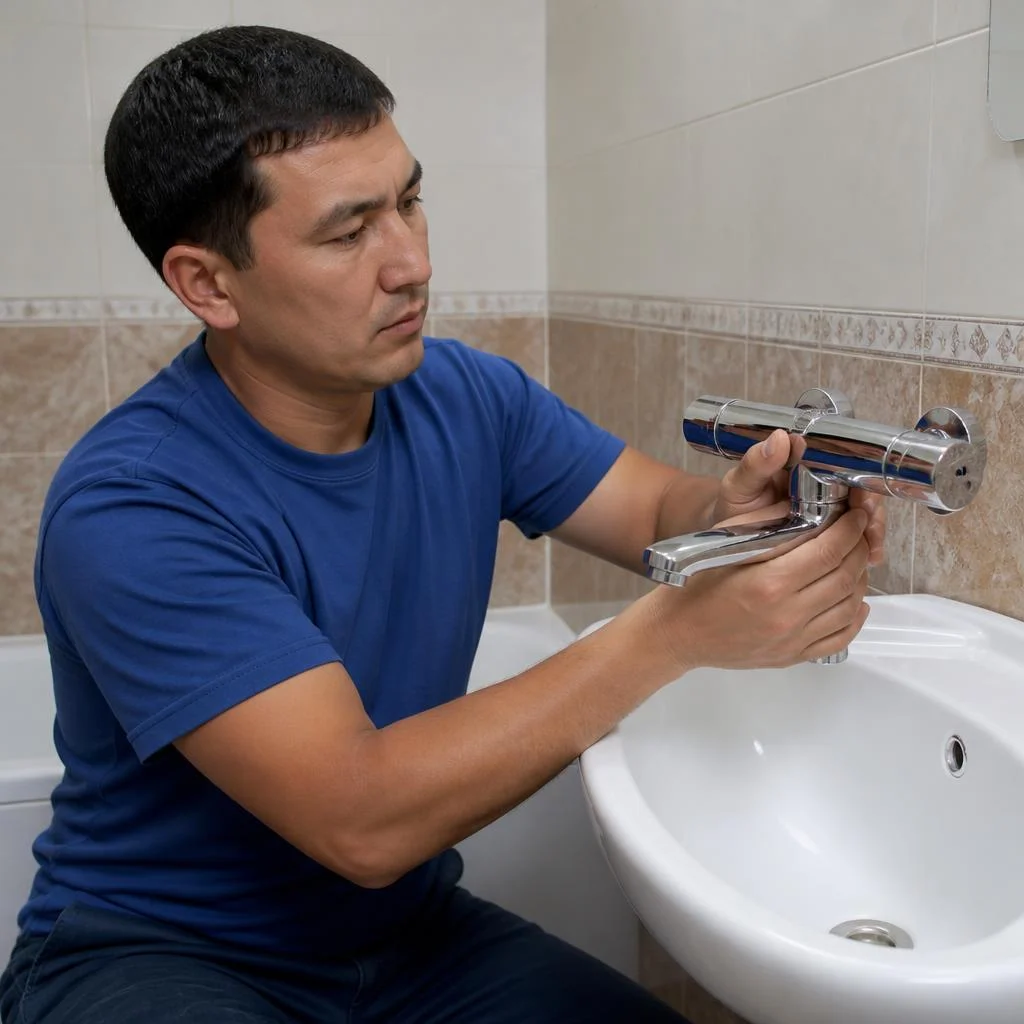
After installing a thermostatic mixer, we calibrate the thermostatic element to the actual pressure in the riser — without this, the water at the outlet does not match the set temperature. In Tashkent high-rises, the pressure in the system fluctuates from 1.5 to 4 bar during the day, and hard water with calcium salts settles on the heat-sensitive wax: because of this, the scale drifts by 5-8 °C already in the first month. The technician sets the stops at 38 °C and checks that the lock button triggers, and the rates for such work are calculated as a separate line item — calibration is included in the installation. Clients often search for the cost of replacement — and land on this page, although the final estimate depends on the type of unit, the condition of the niche and the need for re-adjustment. In buildings with unstable pressure, re-calibration 2-3 weeks after installation is normal practice, not a sign of a defect. Installing thermostatic fittings without calibration brings the technician a call-back on every third job.
How a mixer tap replacement goes: stages, tools and duration of work
We break down a standard visit step by step — from shutting off the water to checking for leaks. We show what exactly takes time and why some of the work cannot be skipped.
7 stages of replacing a mixer tap in a single visit
- Shutting off the water: we close the valve at the apartment inlet, and if the fittings are "seized up" — the riser, to relieve pressure in the circuit.
- Removing the old one: we take the mixer tap off the eccentric fittings, placing a container under the remaining water in the body and the supply line.
- Cleaning the seating point: we remove the old wrapping, deposits and traces of sealant from the threads of the eccentric fittings down to clean metal.
- Replacing the supply line and valves: we install new flexible hoses and angle valves if the old ones do not hold pressure.
- Installing the new one: we screw the body onto the eccentric fittings, level it and tighten it without skewing.
- Connecting: we connect the supply line to the valves, check the alignment and the tightness of each connection.
- Checking for leaks: we turn on the water, run hot and cold, and inspect the joints under pressure.
What tools are needed to replace a mixer tap
- Adjustable wrench: two sizes — for the mixer tap body and for the locknuts on the eccentric fittings.
- Wrench for eccentric fittings: a narrow open-end or a special one, to work in the recess by the wall without chipping the tiles.
- FUM tape or flax wrapping: sealing the threads on the eccentric fittings and the supply line inlets.
- Screwdriver and hex keys: for the cartridge, aerator and adjustment screws of concealed installation.
- Flashlight and cloth: to light up the recess behind the body and immediately wipe up water so it does not run down the wall.
How long a mixer tap replacement takes
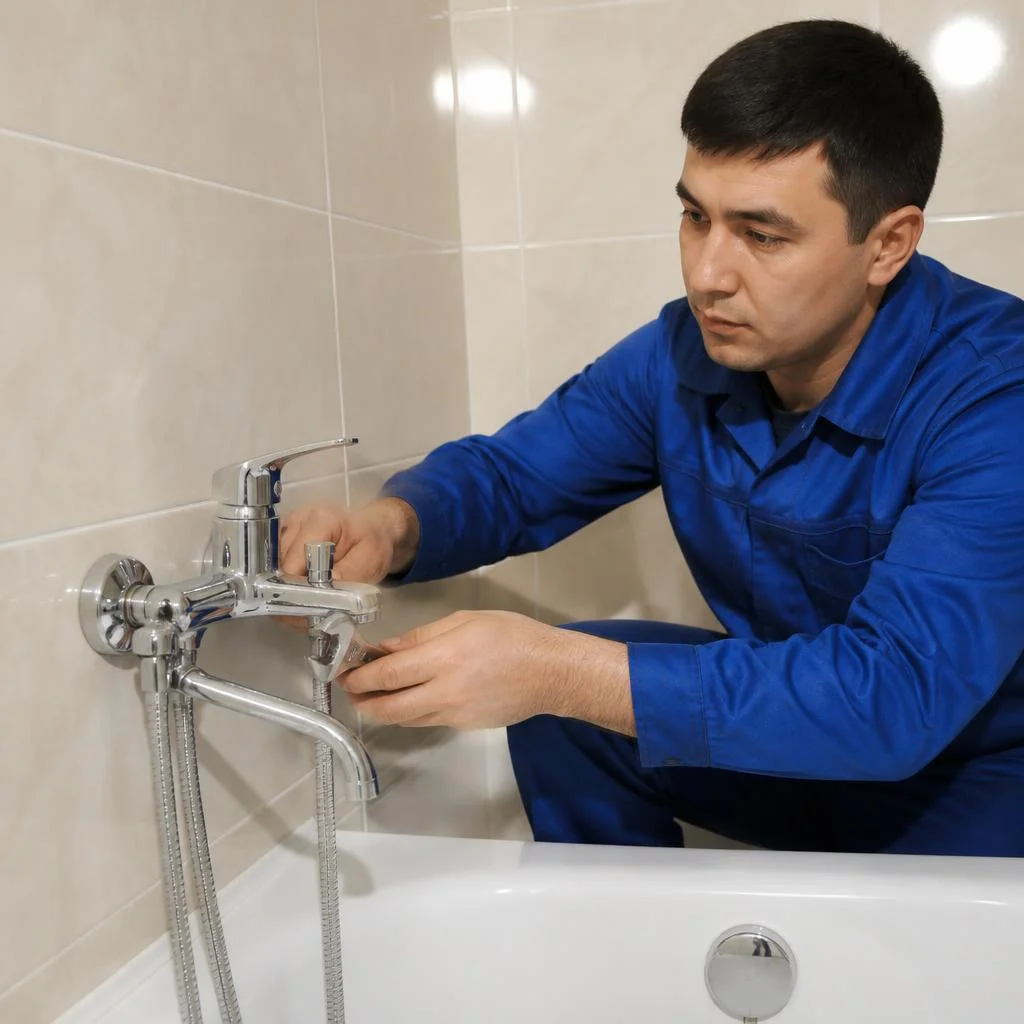
Eco-Service replaces a kitchen or bath mixer tap in 40-60 minutes, a shower one and one with a hygienic shower — in 60-90 minutes, a concealed installation with an inspection hatch — in 2-3 hours. Installing a mixer tap in Tashkent in a standard kitchen with working valves takes within an hour: 15 minutes for removal, 10 for cleaning the seating point, the rest — installation and checking. Replacing mixer taps in new buildings with plastic piping goes faster than in houses with metal pipes, where the threads often require running a die over them. Work with concealed installation and an inspection hatch takes the longest — up to three hours, because the decorative panel has to be opened and the condition of the internal unit checked. If during removal it turns out that the eccentric fittings have seized to the wall, the time increases by 30-40 minutes — this is not an "add-on", but real work to carefully extract them without damaging the tiles.
What changes along with the faucet: supply lines, valves, eccentric fittings
The faucet is only the visible part of the assembly. Beneath it, the supply lines, valves, eccentric fittings and the mounting seat do the work, and they are what determine whether the assembly will be leak-tight after reinstallation.
Why replace flexible supply lines and angle valves when installing a faucet
Eco-Service replaces flexible supply lines and angle valves together with the faucet, because the old parts have already served their lifespan and start leaking precisely at the moment of reinstallation. The rubber gaskets inside the braiding age within 3-5 years, and the brass valve body becomes encrusted with scale, which causes the handle to stop shutting off the water completely. On an assembly with two outlets, that means two flexible supply lines and two angle valves — in the kitchen under the sink, in the bathroom at the wall, and in the shower column. The lifespan of a stainless steel braided supply line is 5-7 years at a riser pressure of up to 6 bar, and after that period the metal loses its elasticity. If the old part is left under a new faucet, the leak will happen not through any fault of the installation but through the fault of the supply line — yet the client will still associate it with the technician's visit.
Eccentric fittings and cleaning the mounting seat: why it can't be skipped
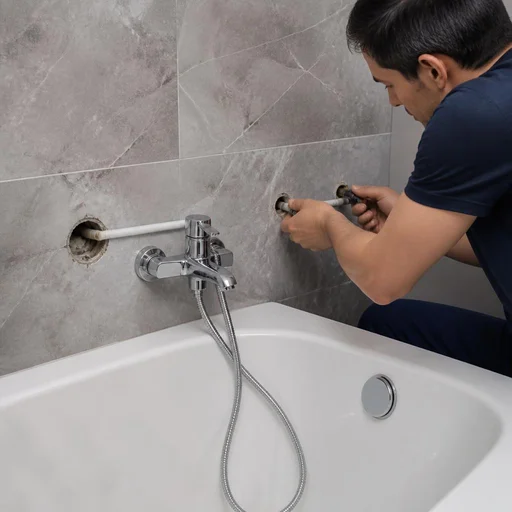
Eccentric fittings set the exact distance between the faucet outlets, and cleaning the mounting seat removes old sealant and deposits — without these two steps, the new faucet will not sit level and will not be leak-tight. The standard center-to-center distance is 150 mm, and eccentric fittings with an offset of 20-25 mm compensate for deviations of up to 15 mm if the wall outlets are uneven after the old plumbing layout. A layer of old sealant and lime on the mounting seat prevents the sealing gasket from pressing against the surface, which is why cleaning is done before installation, not after the first leak. If the eccentric fittings are corroded and won't unscrew, they are replaced together with the threaded section — trying to force them out strips the thread in the wall, and then the job moves into the category of relocating the connection point.
When relocating the connection point is needed
Relocating the connection point is needed when the new faucet does not match the center-to-center distance of the old outlets, or when the owner is changing the layout of the sink and bathtub. Non-standard models with a 200 mm center-to-center distance, concealed-mount faucets and wall-mounted shower columns almost always require re-soldering the outlets — the standard 150 mm does not fit them. In search, clients phrase this as faucet replacement Tashkent — and land on our page, although in fact they need the outlets relocated, not the body itself replaced. Another common query is faucet installation in Tashkent: it brings in owners of new-build properties where installation is done from scratch, while in older buildings the outlets are offset by 10-20 mm from the axis, and this is only discovered after dismantling. Relocation is the only job on the list that requires wall chasing and subsequent wall patching, so it is planned before tile laying, not after: otherwise the finished cladding has to be opened up and the waterproofing restored. Installation without relocation is completed in a single visit, whereas relocation adds at least a day to the timeline for patching and drying.
How to choose a plumber and not overpay for rework
We break down the signs that distinguish a professional plumber from a random handyman and why installing a faucet yourself often ends with calling a specialist a second time.
5 signs of a professional plumber
- Fixed price before the visit: the technician quotes the cost over the phone or in messages and does not change it during the work.
- Own tools: adjustable wrenches, a torque wrench for threads, an extractor for seized eccentric fittings, a pressure tester.
- Working with the entire assembly: a professional immediately checks the condition of the flexible supply lines, angle valves and eccentric fittings, not just the faucet body.
- Leak check after installation: turns on the water, runs the hot and cold lines, dries the connections and inspects them again after 10-15 minutes.
- Written 2-year warranty: the term and conditions are recorded in a work order rather than left as verbal promises, and a technician who quotes a price "after the fact" without a price list almost always adds line items during the job.
Can you replace a faucet yourself
Replacing a kitchen or bathroom faucet with your own hands is realistic if you have the tools and experience with threaded connections, but concealed installation and thermostatic models require qualifications. For an exposed model, two adjustable wrenches, flax packing or anaerobic sealant and 40-60 minutes of time are enough. Concealed installation means removing an access panel, working with the inner cartridge, adjusting the eccentric fittings and checking tightness behind the drywall, where a mistake costs you opening up the wall. After installation, a thermostatic faucet requires calibration to the actual supply temperature: without it, the cartridge goes into error mode and the water runs either 4-6 degrees colder or hotter than stated. In search, clients often type it briefly — faucet installation Tashkent — and from such a query the technician immediately understands the scope of work. Professional faucet installation in Tashkent is a separate service with a check of the entire assembly, and the main risk of doing it yourself is not a stripped thread but an unnoticed leak behind the wall or under the countertop: it is discovered weeks later, when mold has already set in and the laminate has swollen.
What to do if the faucet leaks after replacement
If the faucet leaks after installation, Eco-Service, under its 2-year warranty, makes a repeat visit and eliminates the cause — most often it is a loosened supply line connection or a shifted eccentric fitting. The causes break down as follows: in 60% of cases the culprit is an insufficiently tightened flexible supply line, in 25% — a misaligned eccentric fitting when installing on an old wall, in 15% — a defective gasket in the new cartridge. On the repeat visit, the technician checks the entire assembly, not just the spot where it drips — because water often travels along the thread away from the visible point. Before calling a specialist, shut off the water at the angle valves and wipe the connections dry — with a fresh water trail, the plumber can more quickly determine whether it is leaking along the thread, along the supply line or along the body. If water is going into the wall with a concealed installation, you should not unscrew the access panel yourself: without experience, it is easy to damage the O-ring and make the leak worse.
Why choose Eco-Service: direct provider, own center, 2-year warranty
A direct service provider and an intermediary organize their work differently: with one, the technician and the responsibility both stay within the company; with the other, a dispatcher stands between the request and the visit. Let's break down what this changes for the client.
Direct provider without intermediaries: what this gives the client
Eco-Service operates as a direct service provider: the plumber arrives from the service center, not from a dispatcher-intermediary, so the price is fixed by the price list, and responsibility for the work lies with a single company. In a setup with an intermediary, a dispatcher stands between the request and the technician, taking their own markup for routing the call; with a direct visit, this markup doesn't appear, and the warranty isn't redirected to a third party. From our experience on service calls, the difference is noticeable at non-standard addresses: in the new residential complexes of the Mirzo-Ulugbek district and in the old housing stock of Chilanzar, the technician decides for himself which parts to bring along and doesn't coordinate every item through a call center. The client communicates with the same person who performs the work, not with an operator on the line. If predictability of the estimate matters to you, choose a provider where the technician and the company are one and the same: then disputed situations are resolved by the work report, not through a chain of messages.
Own service center in Tashkent
Eco-Service has its own service center in Tashkent — you can come here in person, submit a request, and discuss the details of replacing a faucet with the technician before the visit. In-person reception is important for non-standard cases: concealed installation, relocating the connection point, eccentric fittings with stripped threads — the technician assesses the scope from photos or during a visit and immediately states the list of work. The usual scenario over the phone doesn't cover such tasks: the dispatcher only records "faucet replacement in Tashkent," and on site it turns out that installing faucets requires re-soldering the supply line and replacing the angle valves. At the center, you can show the faucet itself, clarify the cartridge model, and select compatible eccentric fittings before the crew's visit. For residents of remote neighborhoods — Kuylyuk, Sergeli, Yunusabad-19 — this saves a separate visit: you don't have to call the technician twice, first to diagnose and then to install.
2-year warranty on faucet replacement
Eco-Service provides a 2-year warranty on faucet replacement — it covers the installation, the supply line connections, and the work of the eccentric fittings, if the leak did not arise due to the faucet itself. The warranty period is counted from the date of signing the work report, not from the moment of purchasing the plumbing fixtures, so the client doesn't lose days on delivery and storage. The report records the faucet model, the type of supply line, the condition of the angle valves, and the pressure test result — these items are later used to determine the cause of the leak. The warranty does not apply if the client disassembled the assembly after installation or changed the supply line, so any modifications after the visit are best coordinated with the service center rather than done independently. In practice, most warranty claims are related not to installation but to independent replacement of gaskets: before any intervention, save a photo of the assembly and call the technician — this preserves the coverage.
Conclusion
The topic review has come to an end — let's gather the main points worth keeping in mind before calling a professional or working on the fixture yourself.
Key takeaways
- Signs of wear matter more than age: dripping from under the handle, play, and rusty water at startup indicate that cartridge repair no longer produces results.
- The type of faucet determines the scope of work: a kitchen one is replaced in an hour, while concealed installation with an access panel takes 2-3 hours and requires access through a hatch.
- Related parts are replaced together with the faucet: the supply line, angle valves, and eccentric fittings have served their life and start leaking precisely at the moment of reinstallation.
- A fixed price list and a written 2-year warranty are the two criteria that distinguish a professional plumber from a random handyman.
- DIY replacement is risky not because of stripped threads, but because of an unnoticed leak behind the wall that is discovered weeks later.
What affects the final estimate
- Faucet replacement Tashkent: the faucet replacement price is made up of the type of fixture, the condition of the mounting point, and the scope of related work — the total is calculated after inspection.
- Access to the connection point: concealed installation and relocating the point add the dismantling of the access panel and wall chasing, while a regular wall-mounted fixture does without this.
- Condition of the shut-off valves: corroded angle valves and eccentric fittings are replaced during the same visit, otherwise a second visit will be needed in a month.
- Body and cartridge material: brass models with a ceramic cartridge last longer than silumin counterparts and require repeat intervention less often.
- Floor level and riser layout: on the upper floors of panel buildings the pressure in the riser is higher, so after installation a leak test under load is mandatory.