







Why pipes freeze in Tashkent and how to recognize the problem
Tashkent is a city with mild winters, but nighttime frosts and worn-out utilities regularly lead to pipes freezing. Let's look at the causes of this phenomenon and the first signs by which the problem is recognized before an emergency.
Why pipes freeze: climate and network wear
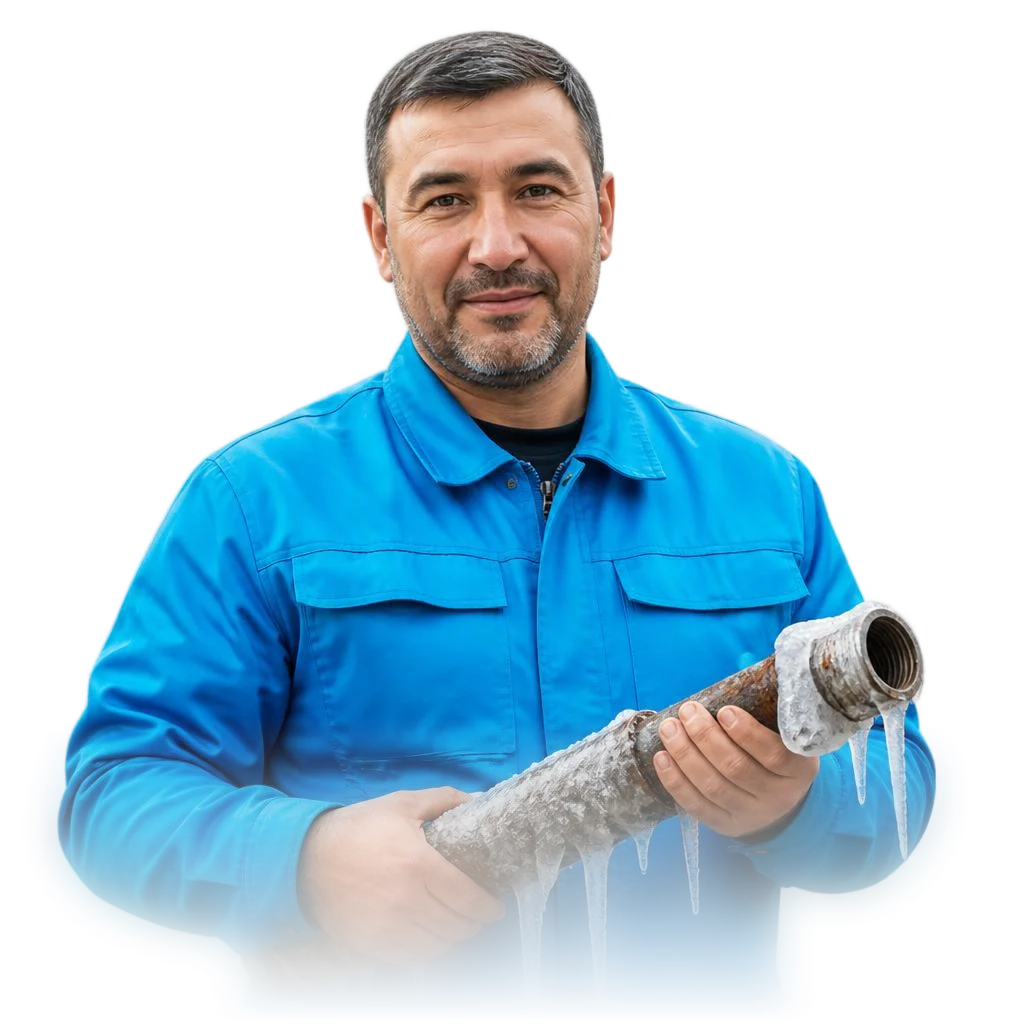
Water in a pipe freezes at temperatures below 0 °C, but the risk is created not so much by frost as by sharp nighttime temperature swings and freezing of the ground to a depth of up to 80 cm. In winter, the air warms up to +8…+12 °C during the day, and by morning drops to −5…−8 °C: in a single night, the ground and unheated basements lose the heat accumulated during the day. The old pipeline adds to the problems — in areas of Chilanzar, Yashnabad and Sergeli, cast-iron and steel mains have been lying there for decades, and thermal insulation at the inlets to private houses is in places absent. Thin plastic pipes in unheated basements and at inlets freeze faster than metal ones — plastic loses heat almost twice as intensively. This is exactly how people often write to the service: thawing plastic pipes Tashkent — and the technician immediately understands what is meant. Before the first frosts, check the condition of the insulation at the inlet to the house: a restored layer of insulation on an exposed section reduces the risk of freezing more noticeably than any heating of a main already gripped by ice.
Signs of a frozen pipe: when to call a technician
- No pressure: with the tap fully open, water does not flow or trickles in a thin stream — the first and most reliable signal of freezing.
- Humming and clicking: low sounds are heard in the pipes that were not there before — ice presses on the walls, and the metal responds with vibration.
- Frost and condensation: a white deposit or droplets appear on the surface of the pipe, wall or floor where it passes.
- Bulging of the wall or floor: the surface swells locally — a sign that the ice has already expanded and is pressing on the finish.
- Difference from neighbors: if the neighbors above have water but you do not, the frozen section is in your own distribution, and thawing pipes in Tashkent concerns precisely your riser or inlet.
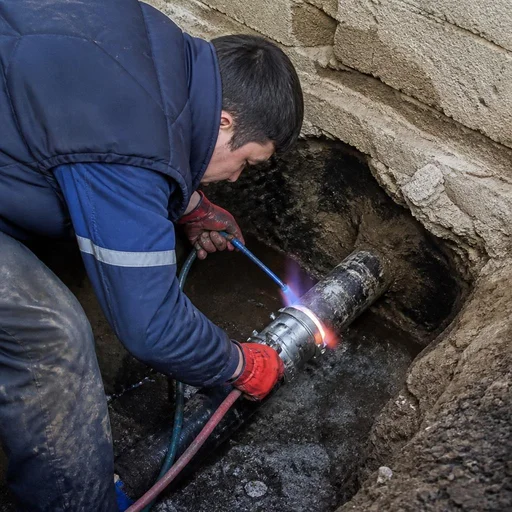
- Open flame is unacceptable: heating with a gas torch or blowtorch leads to a rupture of the wall and flooding — if there is no pressure, shut off the inlet and call a technician.
Pipe thawing by type and material: water supply, sewerage, plastic, metal
The method and equipment depend on the material and purpose of the pipe — water supply, sewerage, plastic and metal require a different approach to thawing. Below we break down how the work differs for each type.
Thawing water supply pipes in Tashkent: specifics and methods
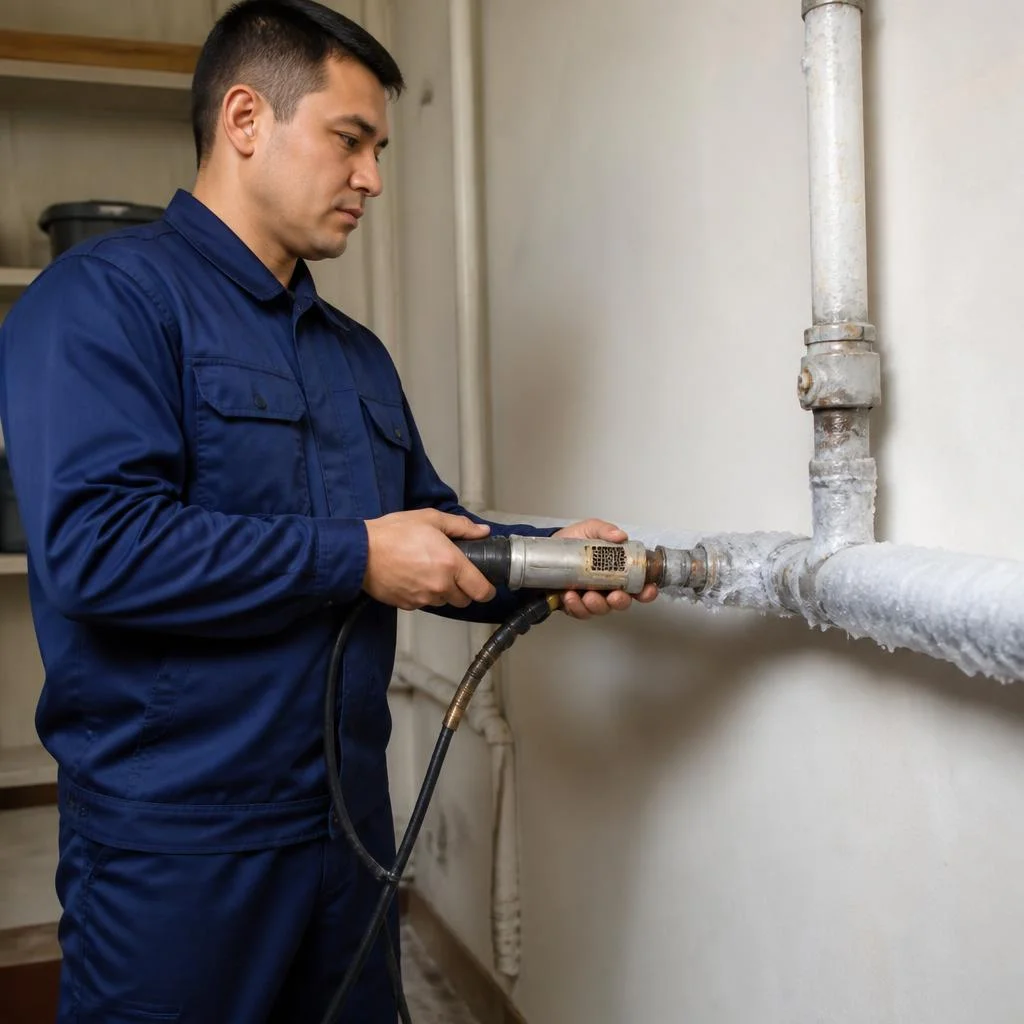
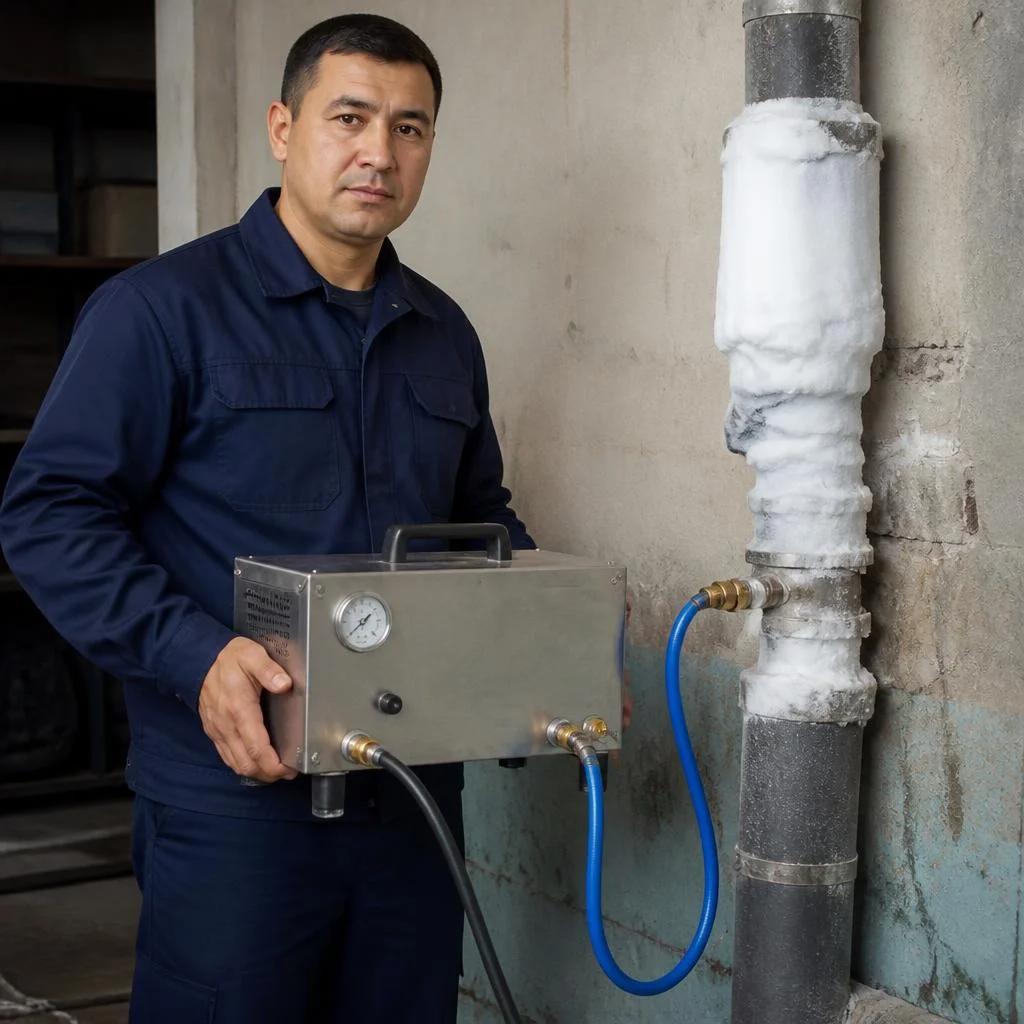
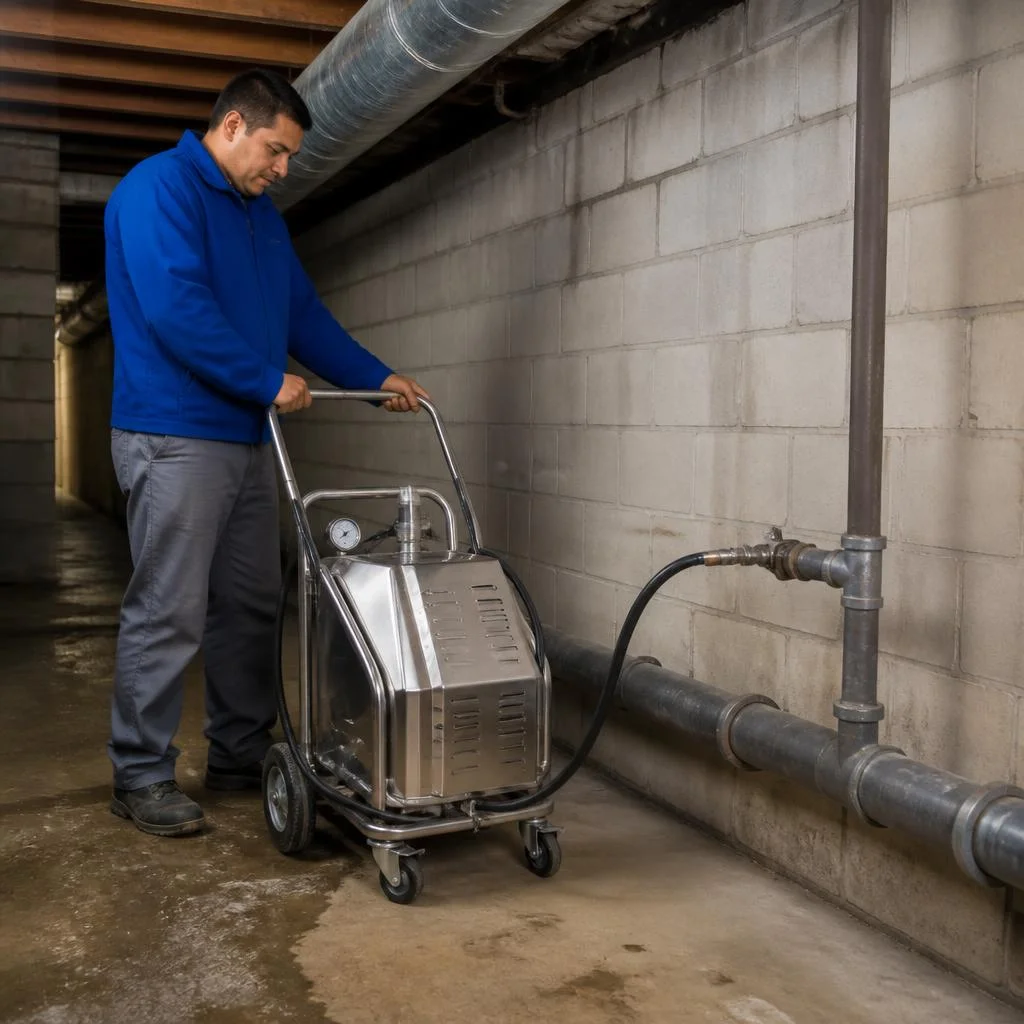
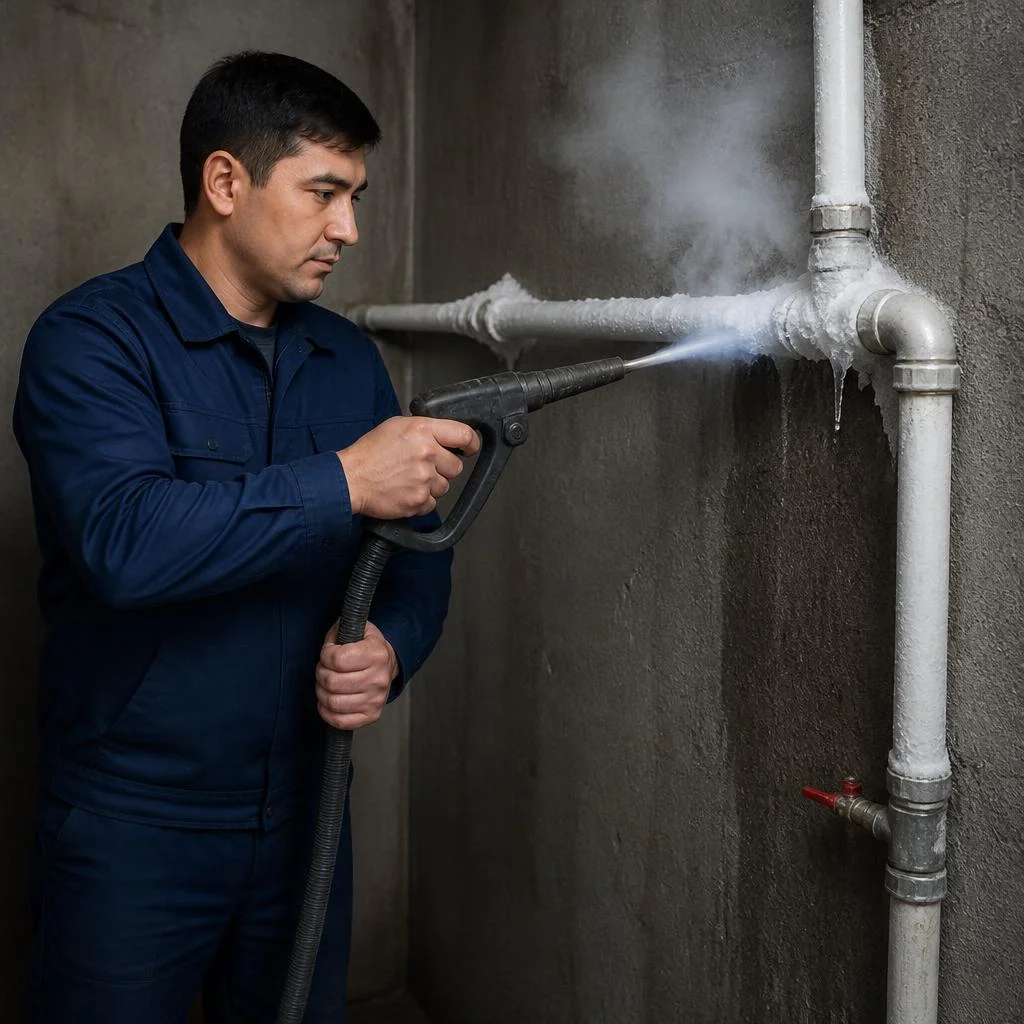
Eco-Service performs thawing of water supply pipes in Tashkent using a steam generator or electric heating — the method is selected based on the diameter and material of the pipe. On a 32 mm inlet, the steam generator melts the ice in 25-40 minutes, while on the in-apartment distribution line a 20-millimeter section is cleared with a heating cable in 15-20 minutes. Steam is supplied from the nearest accessible fitting so as not to open up the entire wall. Water supply pipes must not be thawed with an open flame: a sharp temperature change destroys the joints and leads to leaks that will appear after thawing.
Thawing sewer pipes in Tashkent: why you can't delay
Thawing sewer pipes in Tashkent requires calling a technician immediately: ice in the sewer blocks drainage and creates a risk of pipe rupture and flooding of the premises. In the private sector, in areas with septic tanks, an ice plug in a 110-millimeter pipe forms in a single frosty night, and water from the sink flows back onto the floor by morning. In search queries, clients most often type "sewer pipe thawing Tashkent" — and from this phrase the technician immediately understands that a steam generator is needed, not boiling water poured into the riser. Another frequent query is sewer pipe defrosting Tashkent: it comes from those whose drainage has stopped in the basement or at the inlet. We perform the heating through the nearest inspection manhole or tee, and on sections with a low slope we additionally check patency after thawing. Sewer pipes most often freeze in unheated basements and at inlets with insufficient insulation — after thawing, it is worth checking the slope and covering the problem area with thermal insulation so that ice does not form again the same night.
Thawing plastic pipes in Tashkent: a delicate approach
Thawing plastic pipes in Tashkent is performed only with gentle methods — hot water or electric heating, since plastic loses strength under sudden heating. In search queries this most often sounds like "defrosting plastic pipes in Tashkent" — for such a request a technician arrives with a heating cable, not with a blowtorch. We thaw plastic pipes on polypropylene distribution lines with a heating cable at a laying step of 10-15 cm and keep the temperature within 70-80 °C, without sharp spikes. Polypropylene and metal-plastic pipes withstand heating up to 95 °C, but when the water inside freezes they expand and may develop microcracks — after thawing we обязательно check the section for tightness.
Thawing metal pipes and pipes under pressure
Eco-Service thaws metal pipes without welding or cutting — we use a steam generator and heating cable, and we thaw pipes under pressure with flow-rate monitoring. On steel risers in Khrushchyovka and panel buildings in Tashkent, ice most often sits on threaded couplings and at narrowing points, so we heat along the entire length of the problem section, not just at a single point. Metal pipes with worn joints must not be thawed under full pressure — first we release the pressure, then heat the section, otherwise a threaded connection may rupture.
Pipe thawing by location: wall, screed, ground, riser, inlet
The location of the pipe determines the complexity of the work: exposed sections are thawed quickly, while those hidden in a wall, screed or ground require special equipment and take more time.
Thawing a pipe in a wall and screed without opening up
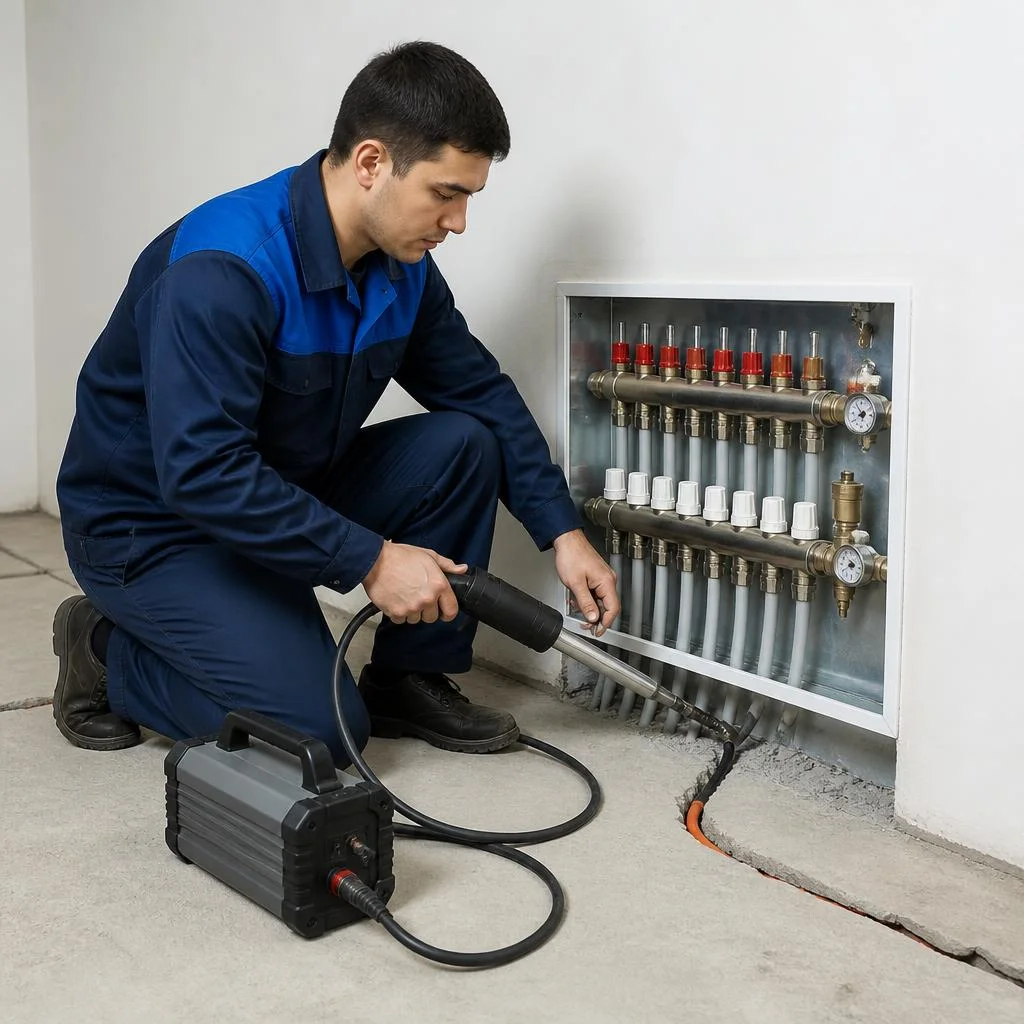
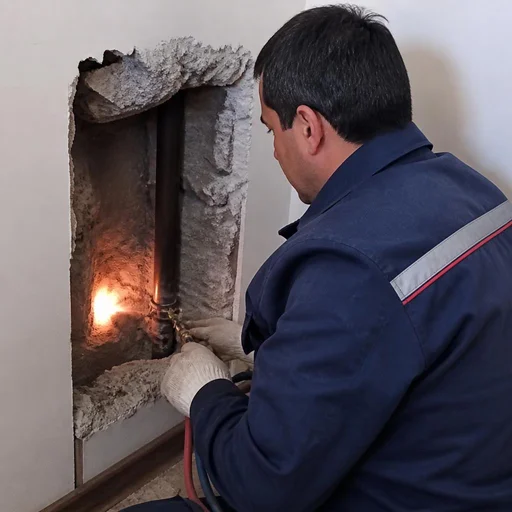
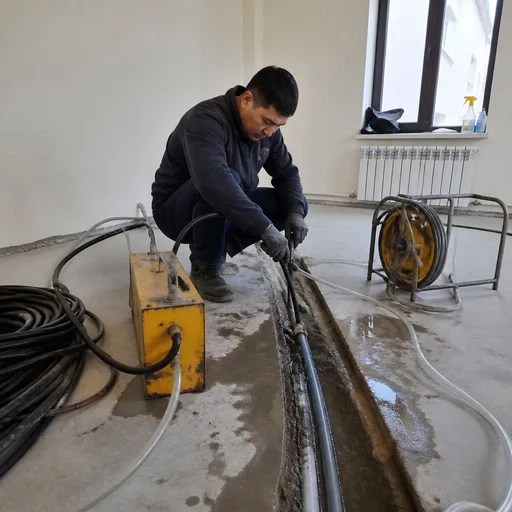
Eco-Service thaws pipes in a wall without opening it up and pipes in a screed without dismantling the floor — we use electric heating and hot air supply through service openings. The technician first locates the freezing point with a thermal imager, then feeds a heating cable into the riser or runs a steam generator hose to the nearest inspection hatch. In panel buildings of the 1-464 series in Chilanzar and Yunusabad, pipes most often run in a chase at a depth of 40-60 mm — we heat the section gradually so as not to overheat the polypropylene. In brick buildings in Mirzo-Ulugbek district the walls are thicker, so thawing takes 20-30 minutes longer. In requests, clients often write briefly — thawing a pipe in a wall — and the technician immediately understands what is meant. If a pipe in a wall has frozen twice in a season, that is a signal of insufficient thermal insulation — after thawing we recommend insulating the section, otherwise the problem will recur at the next cold snap.
Thawing a pipe in the ground and the inlet to the house
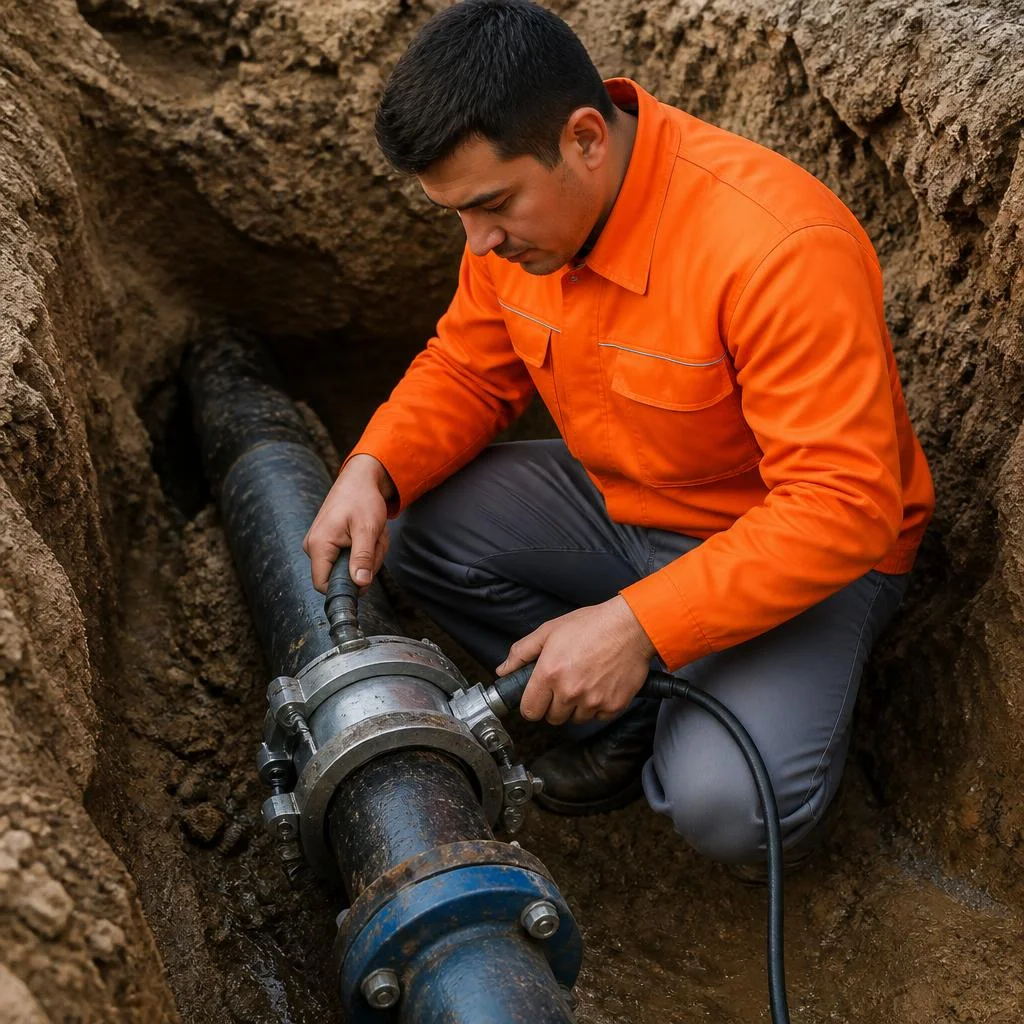
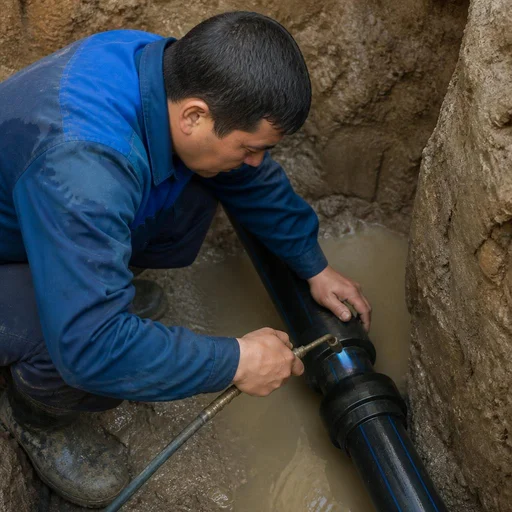
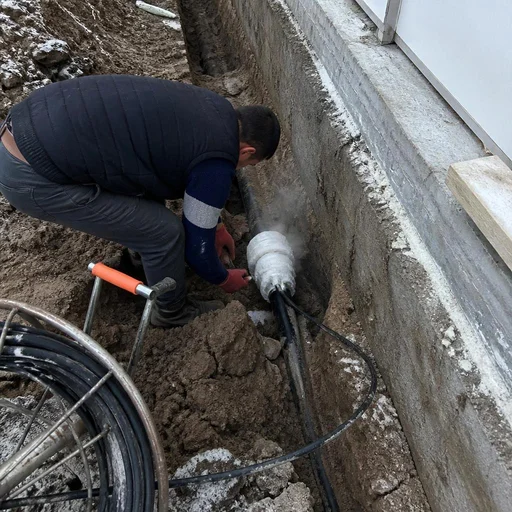
Thawing a pipe in the ground and the inlet to the house is done with a steam generator or a heating cable — the work takes more time due to the laying depth and frozen ground. In the private sector of Yashnabad and Sergeli, the inlet usually lies at a depth of 1.2-1.8 m from the main line to the foundation, and during prolonged night frosts it freezes 40-70 cm deep. The technician digs a pit at the foundation, feeds a flexible heating cable into the pipe through a tee, or heats it from outside with pressurized steam. Thawing pipes in Tashkent on exposed sections takes 1-2 hours, while a frozen inlet may require two visits. The inlet to the house is the most vulnerable point: it lies above the freezing depth and is the first to react to night frosts, so it should be insulated first.
Thawing a riser in the stairwell: coordination with the management company
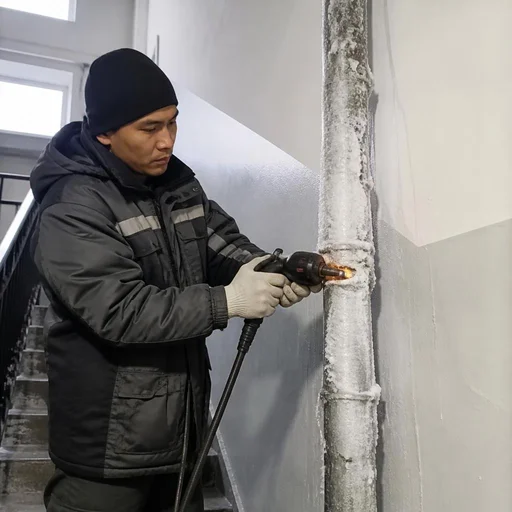
Eco-Service thaws a riser in the stairwell upon a request from residents or the management company — we carry out the work with notification of the management company and with access to the shared utilities. The riser most often freezes in the attic or basement, where the temperature drops below zero even when it is above freezing outside. The technician goes up to the technical floor, opens the riser insulation, feeds in the steam generator or electric heater and gradually thaws the section from top to bottom. In panel nine-story buildings in Sergeli and Yunusabad, the riser in the stairwell cools faster due to drafty vents — for repeat calls we recommend sealing the vents and insulating the pipe in the shared corridor. We perform pipe thawing in Tashkent in stairwells only after coordination with the management company. A riser in the stairwell usually freezes in the attic or basement — if the problem recurs, it is worth initiating insulation of the shared section through the management company.
Comparison of thawing complexity by location
| Pipe location | Thawing method | Work specifics |
|---|---|---|
| Exposed section | Hot water, steam generator | Quick access, one visit |
| In a wall | Electric heating, hot air | Without opening up, through openings |
| In a screed | Electric heating | Without dismantling the floor |
| In the ground | Steam generator, heating cable | Laying depth, frozen ground |
| Riser in the stairwell | Steam generator | Coordination with the management company |
| Inlet to the house | Heating cable, steam generator | High vulnerability to frost |
The complexity and method of thawing depend on the location: open sections are thawed in a single visit, while hidden ones require special equipment. The deeper the pipe, the higher the risk of damaging it during careless thawing — for hidden sections, the technician first determines the freezing point with a thermal imager, and thawing a pipe in a wall or screed is carried out with temperature monitoring every 10-15 minutes.
Thawing methods: steam generator, electric heating, hot water, pressure
Four methods cover almost all scenarios: steam generator, electric heating with a heating cable, hot water, and pressure thawing. The choice depends on the pipe material, its location, and diameter — let's break down when each one works.
Thawing with a steam generator: when we use it
A steam generator is the most effective method for pipes in the ground, risers, and service lines: steam is fed inside the pipe and heats the ice along the entire length of the section. On a 32 mm service line into a house, ice on a ten-meter stretch clears in 40-60 minutes, whereas hot water on the same section requires three times as long. The unit delivers a stable 140-160 °C at the outlet and works with metal-plastic, polypropylene, steel, and copper. A separate task is thawing plastic pipes: here steam requires temperature control, because overheating above 120 °C can deform thin-walled polymer products. Before feeding steam into a polymer pipe, hold it at the minimum temperature for the first five minutes — this will show how the material reacts to heating and protect it from deformation.
Electric heating with a heating cable
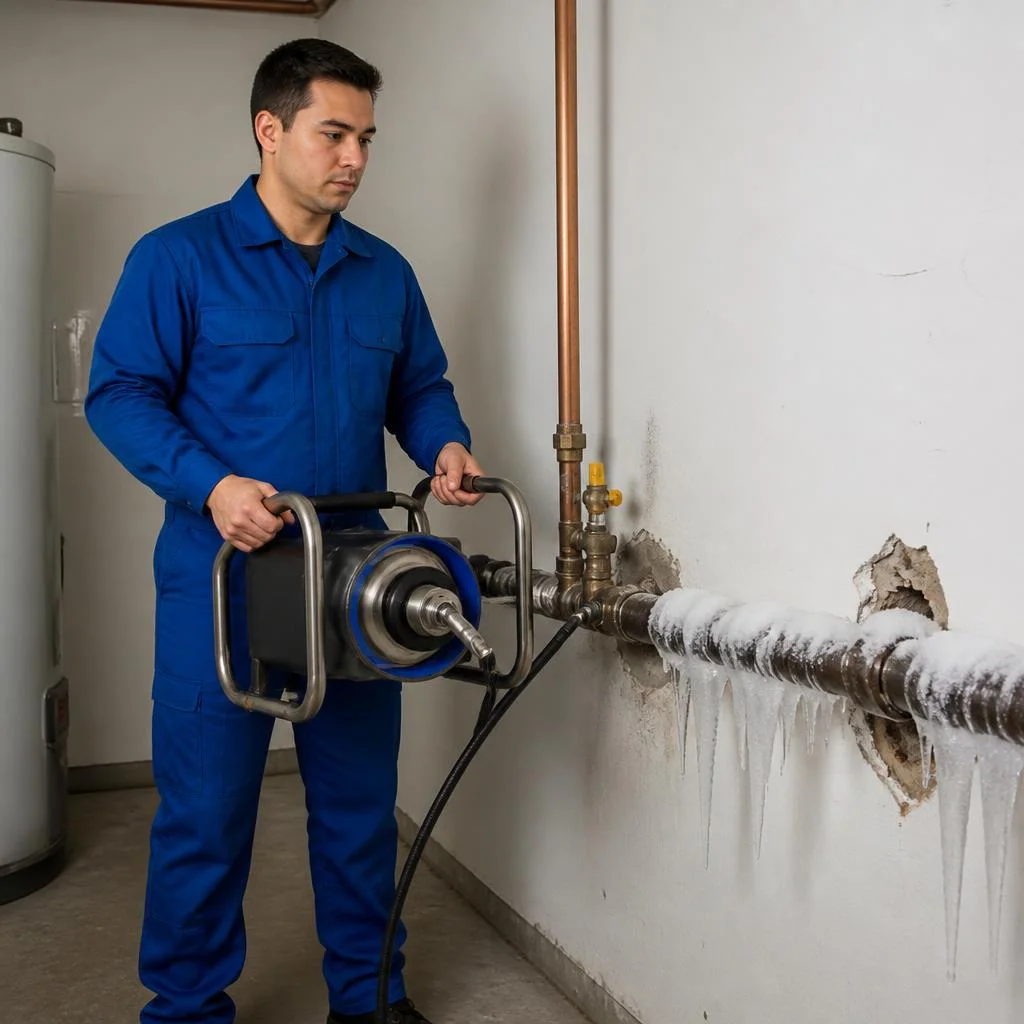
Eco-Service uses electric heating with a heating cable for pipes in walls, screeds, and hidden sections — the cable is inserted into the pipe or laid along it. On hidden sections, this is often the only method without opening up the structure: a cable 6-8 mm in diameter passes through bends where a steam generator is powerless due to condensate. The method works with polypropylene, metal-plastic, and steel, and the power is selected according to diameter — from 10 W per meter for thin pipes to 40 W for risers. Electric heating is the most controllable method: the temperature is regulated, which eliminates thermal shock to the material, but it requires access to the power grid at the site. In freezing weather, the cable heats the ice more slowly than steam, but evenly along the entire length — on a pipe in a screed, this reduces the risk of a crack.
Hot water and pressure thawing
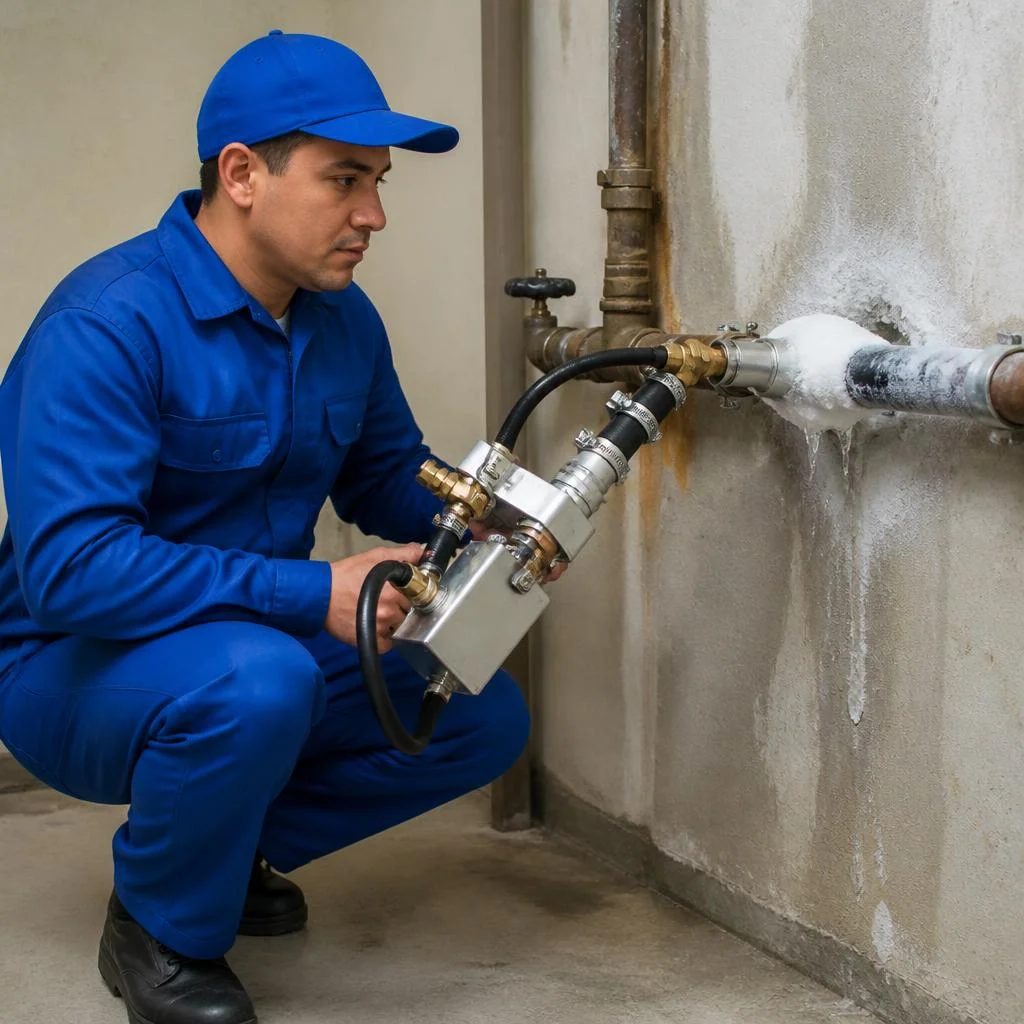
Thawing with hot water is suitable for open sections and metal pipes, while the pressure method is used when ice blocks the pipe over a short section. In requests, clients often write pipe thawing defrosting — and with such a request, the technician immediately understands that a visit with equipment is needed. On a metal pipe 25-50 mm in diameter, hot water at 60-80 °C softens the ice plug in 20-30 minutes, and a hydraulic shock at pressure up to 6 bar breaks it up over a stretch of up to three meters. Supplying water under pressure requires functioning shut-off valves — if the valve doesn't hold, the water will go into the riser and flood the neighbors. Hot water must not be fed into a plastic pipe at a temperature above 70 °C — sudden heating leads to deformation, so for plastic we use warm water with a gradual increase in temperature. Start at 40 °C and raise it by 10 °C every five minutes — this way polypropylene survives thawing without cracks.
Defrosting of auxiliary equipment: radiators, boilers, pumps, meters
It's not just pipes that freeze: radiators, boilers, pump stations, meters and filters require separate thawing. Each type of equipment has its own method and its own set of checks after thawing.
Thawing a heating radiator and towel warmer
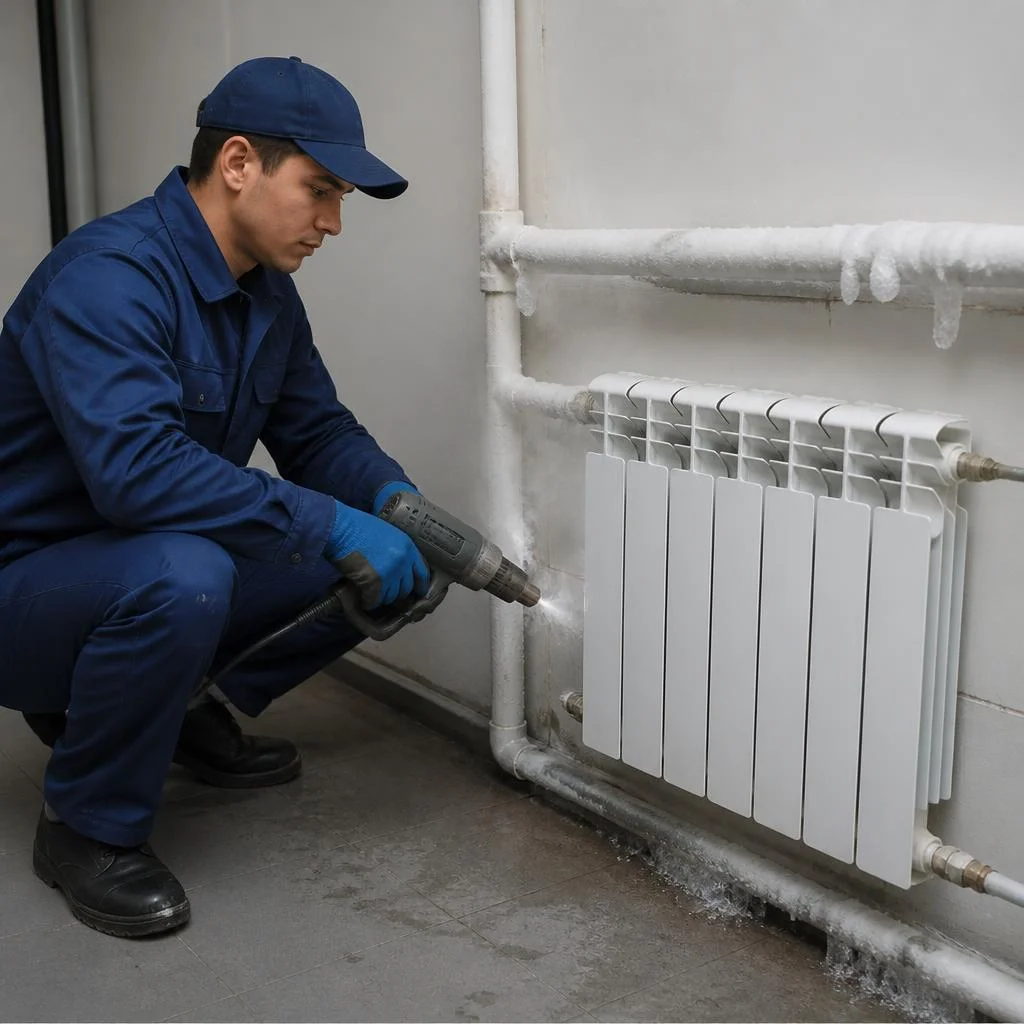
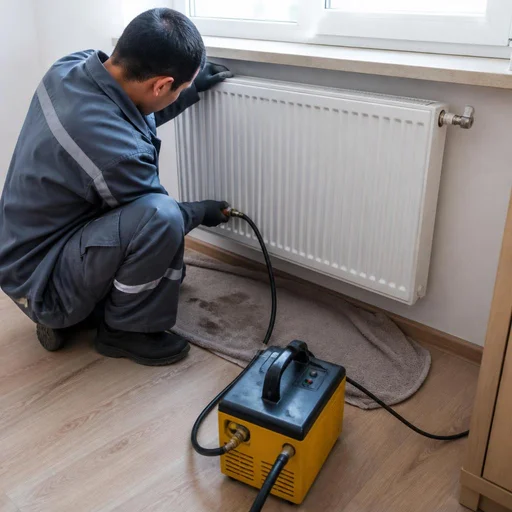
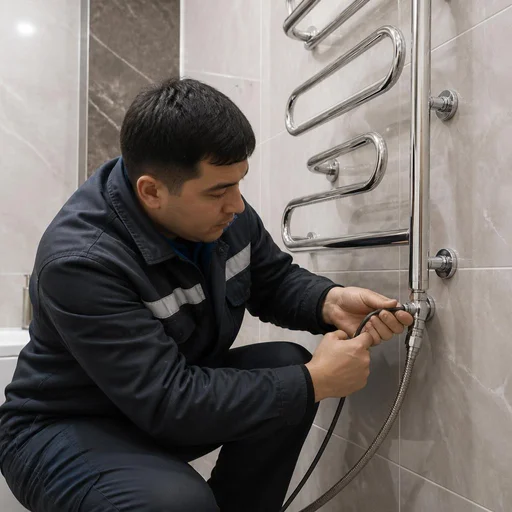
Eco-Service thaws heating radiators and towel warmers without dismantling — with hot water and electric heating while monitoring pressure in the circuit. We warm cast-iron sections more slowly than bimetallic ones: cast iron holds heat longer but tolerates sudden temperature changes worse, so we apply heat in stages of 15-20 minutes. We thaw a stainless steel towel warmer in the bathroom through the supply pipes, without removing it from the brackets — the connections and seals stay in place. A radiator usually freezes when the heating is off during frost, and after thawing we check each section for leaks: ice expands and could have damaged the gaskets between sections or the threaded fittings. Clients search for water pipe defrosting Tashkent — and land on this page, although the subject here is heating appliances. We carry out the check by pressure testing at low pressure before starting up the riser — this way a leak is visible before the neighbors below get their ceiling flooded.
Thawing a boiler, pump station and hydraulic accumulator
Eco-Service defrosts boilers and heating circuits, thaws pump stations in private homes and restores hydraulic accumulators without replacing the equipment. A boiler in Tashkent's private sector freezes when the power goes out on a frosty night: circulation stops, and the water in the heat exchanger and circuit turns to ice. We lay a heating cable along the circuit and on the heat exchanger, and apply heat gradually — a sudden temperature change breaks soldered copper joints. We thaw a pump station with a hydraulic accumulator using external electric heating, without disassembling the unit. After thawing we check the tank membrane and the pressure switch: ice stretches the rubber, and without checking, the station starts cycling frequently or fails to hold pressure. We replace the membrane and switch only when damage is confirmed — in most cases the unit is restored after warming.
Thawing a water meter, filter and pressure reducer
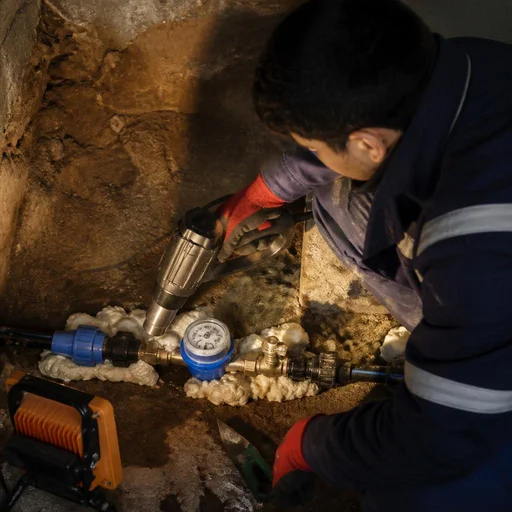
Eco-Service thaws water meters, filters and pressure reducers — these elements freeze first due to the small volume of water inside. The impeller of a 15-20 mm meter gets blocked at the very first ice plug: the volume of water in the measuring chamber is minimal, and a few hours outside is enough for it to freeze. A fine filter and pressure reducer are installed at the inlet and freeze earlier than the rest of the plumbing — we thaw them with hot water through the housing, without removing the cartridge. After freezing, a meter often requires verification or replacement: if after thawing the readings don't change with the tap open, the technician records this in a report for contacting the water utility. Clients search for pipe defrosting Tashkent price — and land on this page, although we always calculate the cost after an inspection, not from a single inquiry. A report describing the condition of the seals and the readings is the only document the water utility accepts for recalculation and replacement of the device.
Table: thawing methods by equipment type
| Equipment | Thawing method | What we check after |
|---|---|---|
| Heating radiator | Hot water, electric heating | Leak-tightness of sections |
| Towel warmer | Hot water | Connections and seals |
| Boiler and circuit | Electric heating, hot water | Sensors, control board |
| Pump station | Electric heating | Membrane, pressure switch |
| Hydraulic accumulator | Electric heating | Membrane, pressure |
| Water meter | Hot water | Readings, verification |
| Filter and reducer | Hot water | Leak-tightness, adjustment |
Equipment with electronics — boilers and pump stations with control units — must not be thawed with an open flame: sensors and circuit boards fail from local overheating. We carry out heating gradually, in steps of 10-15 minutes for every 5-7 degrees, so that the internal elements warm up evenly.
How a technician visit works and what is included in the job
Let's break down an emergency call-out from the first call to the moment water flows through the system again: the procedure for requesting service, the scope of work at the site and the payment terms by district.
Pipe thawing services in Tashkent: how to call a technician
Pipe thawing services in Tashkent from Eco-Service are available around the clock: you leave a request by phone or on Telegram, and a technician sets out within an hour across the city. The dispatcher takes the call at any time of day, records the address and clarifies the nature of the emergency — whether the supply line, the return line or the sewer has frozen. Emergency calls are handled by crews on duty with steam generators and electric heating cables: the right equipment goes to the site right away, not a universal kit. We handle night calls from 23:00 to 06:00 faster — the load on the networks drops, and the technician reaches the address without traffic jams. In search, clients often type pipe thawing Tashkent — and land on our page, so the easiest way to leave a request is right here. When you call, describe where the pipe runs and when the water disappeared — this helps the technician take the right equipment and reduce the time spent working at the site.
What is included in the technician's work at the site
- Diagnostics: the technician taps and measures the section, finds the edge of the ice plug and determines exactly where the flow is blocked.
- Choosing the method: for metal-plastic and polypropylene he uses gentle heating, for steel and copper — a steam generator or heating cable.
- Thawing: he applies heat gradually, so as not to create a temperature difference and not burst the pipe from the inside.
- Checking the pressure: he opens the nearest taps and makes sure water flows through the entire branch, not just up to the first outlet.
- Checking for leaks: he inspects the joints, couplings and threaded connections for leaks after thawing.
Payment and the service area across Tashkent
Pipe thawing in Tashkent city — the Eco-Service service area: we work in all districts, payment is accepted via Click, Payme, Uzcard and Humo. Crews travel to Yunusabad, Mirzo-Ulugbek, Yashnabad, Sergeli, Chilanzar, Uchtepa, Shaykhantakhur, Almazar, Bektemir, Yakkasaray and Mirabad districts — from the center to the outskirts such as Kuylyuk and Yangibazar. We also provide pipe thawing services in the suburbs: we travel to Keles, Zangiota and Chirchik by prior arrangement. The cost of the work depends on the location of the section and the chosen method — the technician quotes it after the inspection, before the work begins. Payment can be made after the work is completed: first we fix the emergency, then we prepare the closing documents and accept payment.
Warranty, Safety and Freeze Prevention
Thawing pipes is a job after which it is important to understand the boundaries of the technician's responsibility and your own. We break down what the warranty covers, which mistakes to avoid when heating on your own, and how to insulate vulnerable sections so you don't have to call the crew again.
2-Year Warranty on Pipe Thawing
Eco-Service provides a 2-year warranty on pipe thawing and related equipment — if a section freezes again through our fault, we perform the visit and the work free of charge. The warranty certificate is issued for the property, indicating the address, date, heating method and the length of the treated section: the steam generator, heating cable or hot water are recorded in the report so that on a repeat call the technician can see the history. For risers in a stairwell and service lines into a house, the warranty covers the entire thawed segment, not just the connection point. The warranty is valid provided the technician's insulation recommendations are followed — if a pipe freezes because of missing insulation, that is no longer a warranty case, but a reason to eliminate the cause.
Safety During Thawing: What Not to Do
- Open flame: a blowtorch or torch produces local overheating above 300 °C — metal warps, plastic melts, the joint loses its seal.
- Boiling water into a plastic pipe: polypropylene and metal-plastic crack along the seam under a sharp temperature change, especially at threaded fittings.
- Rapid heating under pressure: heating without releasing pressure expands the ice and bursts the wall from the inside.
- Heating with a torch near the meter: the proximity of the seal and plastic parts of the metering unit makes this method dangerous for sealed equipment.
- Waiting too long: while the pipe remains frozen, the ice expands and deforms the walls — delay increases the risk of a crack. If the pipe has already cracked, thawing will only worsen the leak — first shut off the water, then call a technician to thaw and repair the section.
Preventing Pipe Freezing and Insulation
Eco-Service recommends insulating the service line into the house, risers in the basement and exposed pipe sections before cold weather sets in — this reduces the risk of freezing and repeat calls. In Tashkent practice, the sections that most often freeze are those in unheated basements of apartment buildings, service lines into private houses in Chilanzar, Yunusabad and Sergeli, as well as pipes in attics and vestibules. A combination of three elements works: a jacket of foamed polyethylene or mineral wool, a heating cable with a thermostat along the problem segment, and a shut-off valve with a drain for emptying water while you are away. In search, customers often type "pipe thawing services" — and land on our page, although in fact they need prevention, not an emergency call-out. A heating cable laid along a vulnerable section costs less than a single emergency thaw and works automatically when the temperature drops.
Conclusion
Pipe thawing is a task with several variables: material, location, method. Below are five conclusions that help you assess the situation faster and choose the right course of action.
Key Takeaways
- The cause is not only frost: Tashkent utilities freeze because of nighttime frosts and worn-out networks, not only in severe sub-zero temperatures.
- The method depends on the material and location: a steam generator — for soil and risers, electric heating — for hidden sections, hot water — for exposed pipes.
- Hidden sections are not opened up: pipes in walls, screed and soil are thawed without dismantling, using special equipment.
- Equipment freezes too: radiators, boilers, pump stations and meters require a separate approach.
- Prevention is cheaper than an emergency: insulating vulnerable sections reduces the risk of re-freezing and emergency call-outs.