










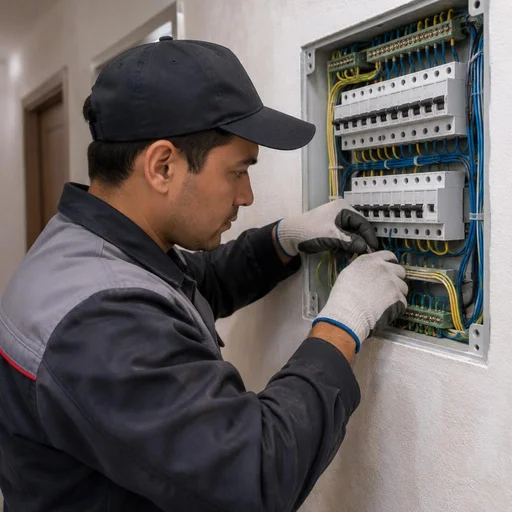
When old wiring in a home becomes dangerous
In Tashkent buildings of Soviet construction, the service life of the aluminium line was exhausted long ago: it was designed for light bulbs and a television, but today it powers air conditioners and induction cookers. Let's look at the signs that determine wear and when the line needs to be replaced entirely.
Signs that the wiring needs replacing
- Warm sockets: the plastic heats up when a kettle or heater is switched on — the contact has loosened and heats up under load.
- Smell of burnt plastic: the insulation is breaking down from the inside, and the smell is noticeable before any visible soot appears.
- Flickering lights: when a powerful appliance is switched on, the light dims — the aluminium has oxidised in the twists and no longer carries the current.
- Circuit breaker tripping for no reason: the protection trips even under a normal load — the line can't handle it.
- Twists instead of terminals: in the junction boxes the wires are connected with a twisted pair without ferrules or clamps — a typical mistake of old installations.
Why old wiring is dangerous in panel buildings and khrushchyovkas
In the panel buildings and khrushchyovkas of Tashkent, the line was designed for a load of 1-2 kW, while a modern kitchen with an electric kettle, microwave and multi-cooker draws three times as much. Aluminium with a cross-section of 2.5 mm² heats up under such conditions, oxidises at the contacts and gradually loses conductivity; in the corridors and kitchens of Soviet series, the socket groups often ran on a single line for the whole apartment. In panel buildings the routes are cast into the slabs, and in khrushchyovkas the channels run in the seams between blocks, so the path of the new line is determined in advance so as not to weaken the load-bearing structures. In my view, it's cheaper to open up the seam once for a new route than to chase a load-bearing panel blindly.
When a partial replacement is enough
We do a partial replacement when the wear is local: we replace the line of one room or the kitchen without touching the rest of the wiring. This scenario is suitable if the incoming cable and the distribution board are in order, and the old line has burnt out at a single point — for example, after an overload in the kitchen. This scope of work in one room takes one or two days and doesn't require opening up the floors throughout the apartment; the incoming cable must still be checked under load, and the breaker in the board checked for compliance with the cross-section. A partial repair is justified only if the incoming cable and the board are in order — otherwise the new line will run into an old breaker and won't provide protection. In our practice, it's Eco-Service that people most often contact specifically for a local repair after a socket group has overheated. Clients often phrase their request as wiring replacement in Tashkent when what they actually need is a specific section, not the whole apartment.
What a turnkey wiring replacement includes
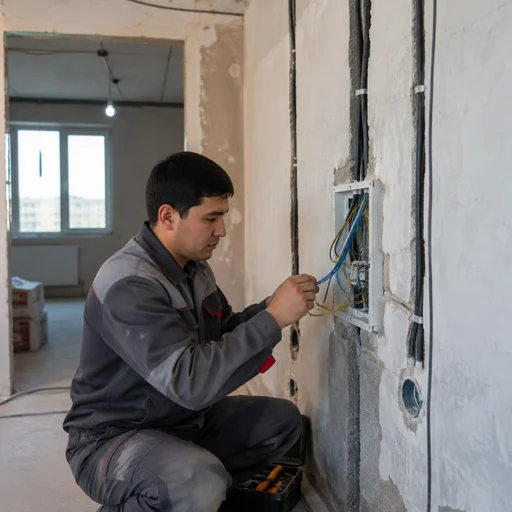
The crew manages the project from the first site visit to handover: dismantling the old cable, marking out, wall chasing, laying new lines, assembling the panel, connecting the points. This isn't "pulling a cable," but tying cable, circuit breakers, RCDs and every socket into a single system.
Stages of work: from dismantling to connection
- Site visit and measurements: the technician records the points, calculates the length of the runs and selects the cable cross-section for the load of each line.
- Dismantling: we remove the old aluminium cable, take off sockets, switches and the panel, and clear the chases for the new line.
- Marking out the runs: we mark the routes along the walls and ceiling before chasing — this way the runs don't intersect with gas and water pipes.
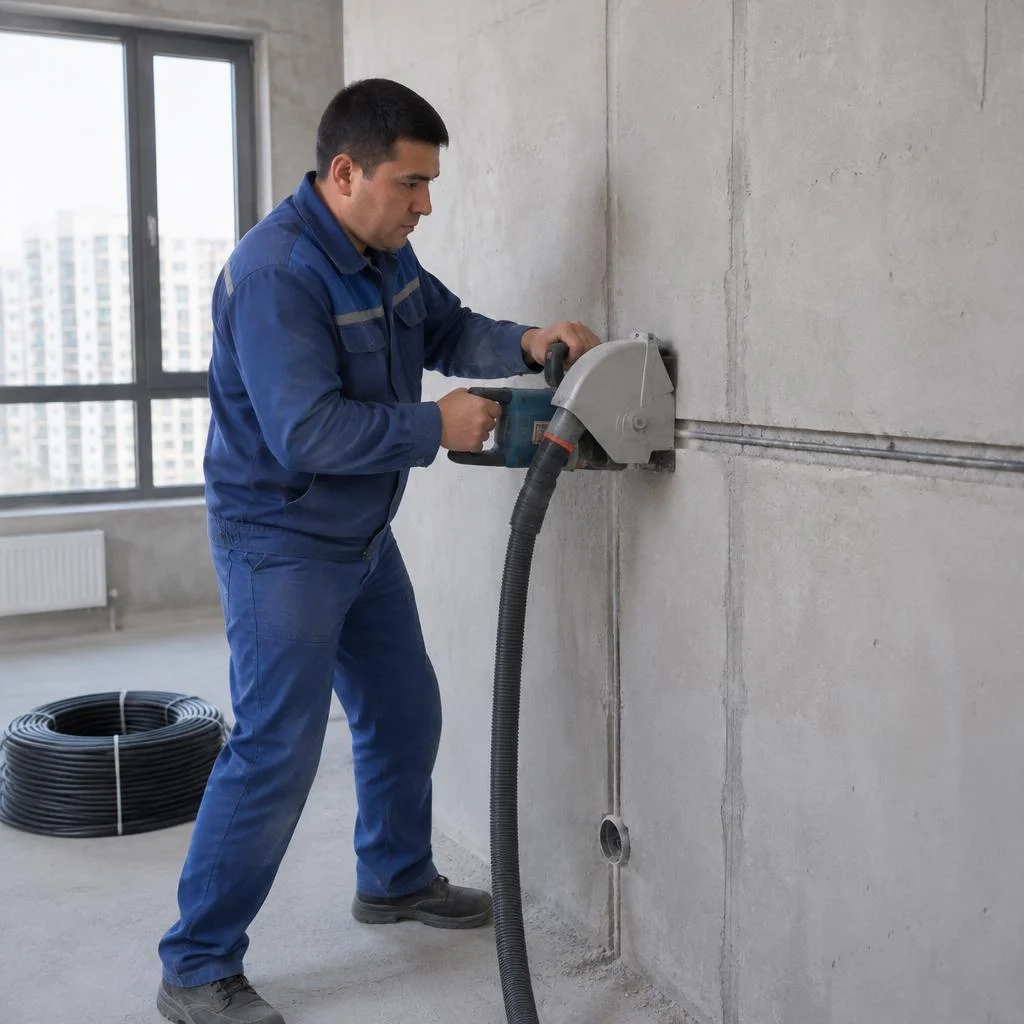
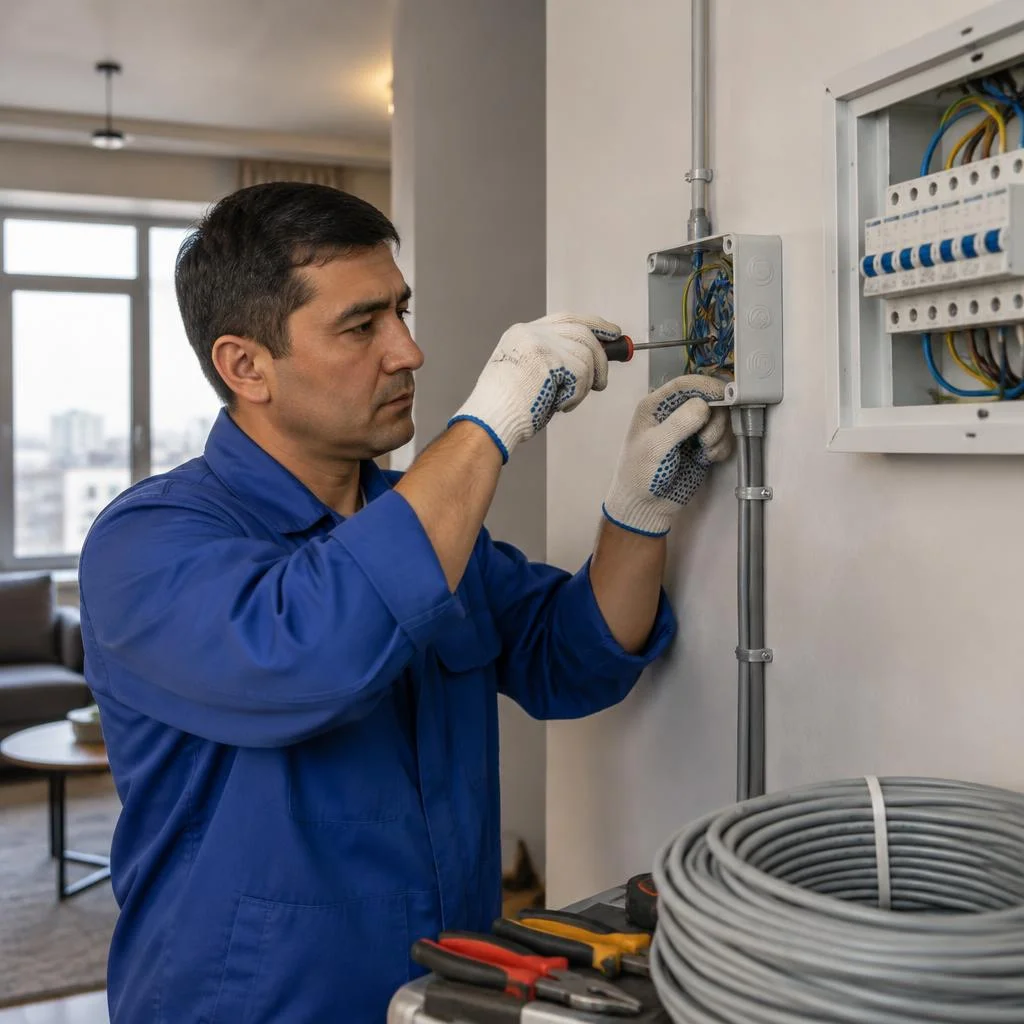
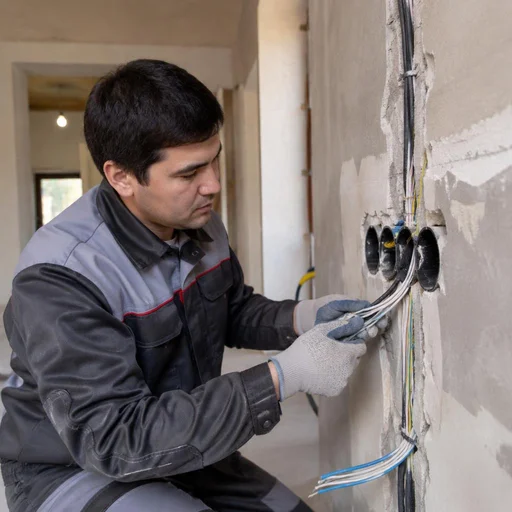
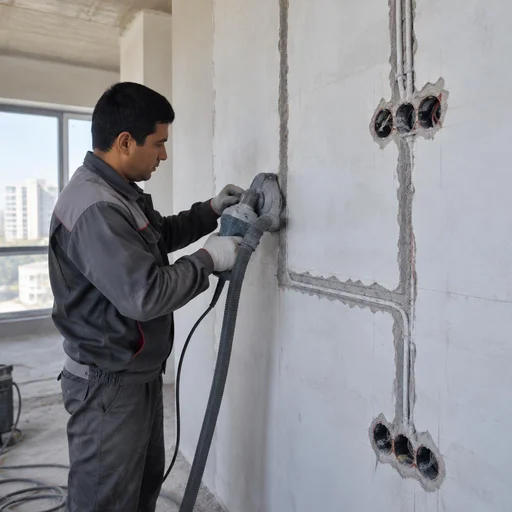
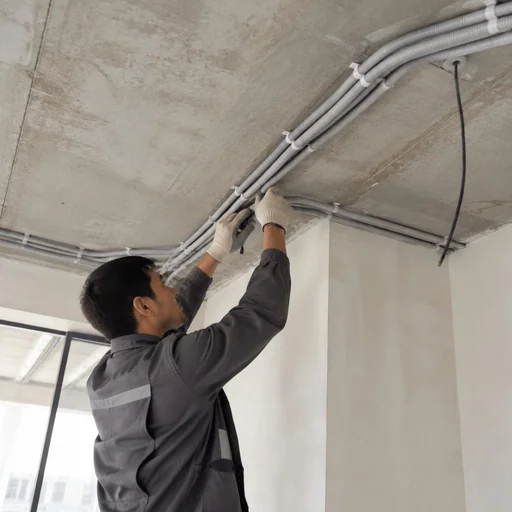
- Chasing and laying: we cut chases for the cable, run the line in corrugated conduit or cable duct, secure it and bring the ends out into the mounting boxes.
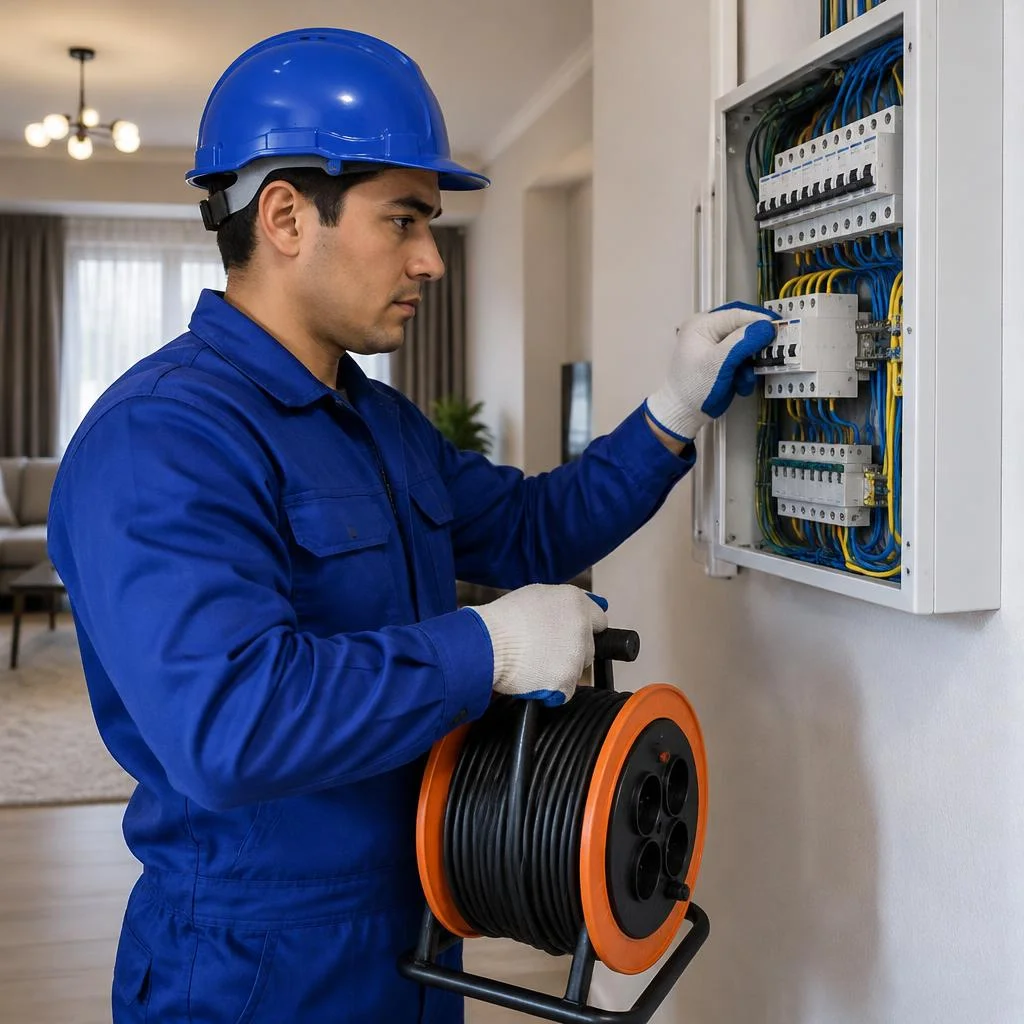
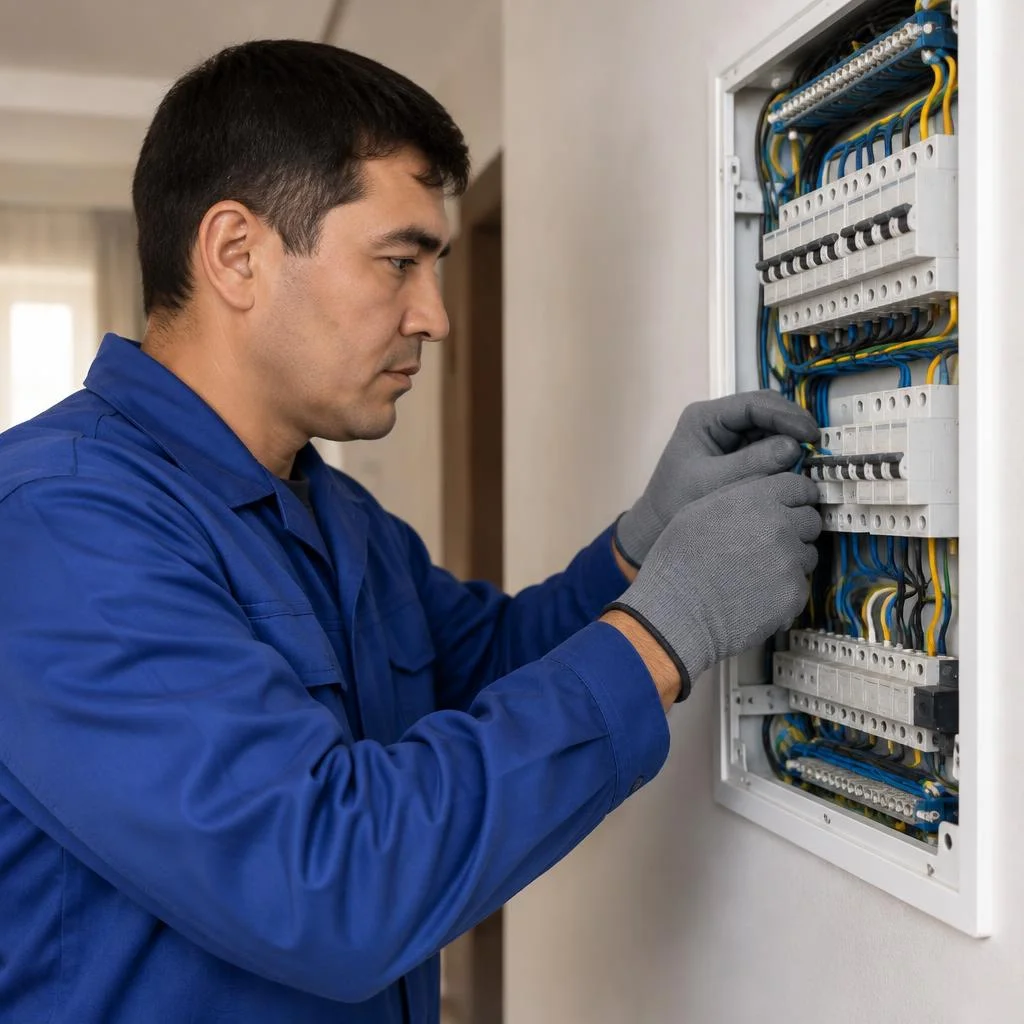
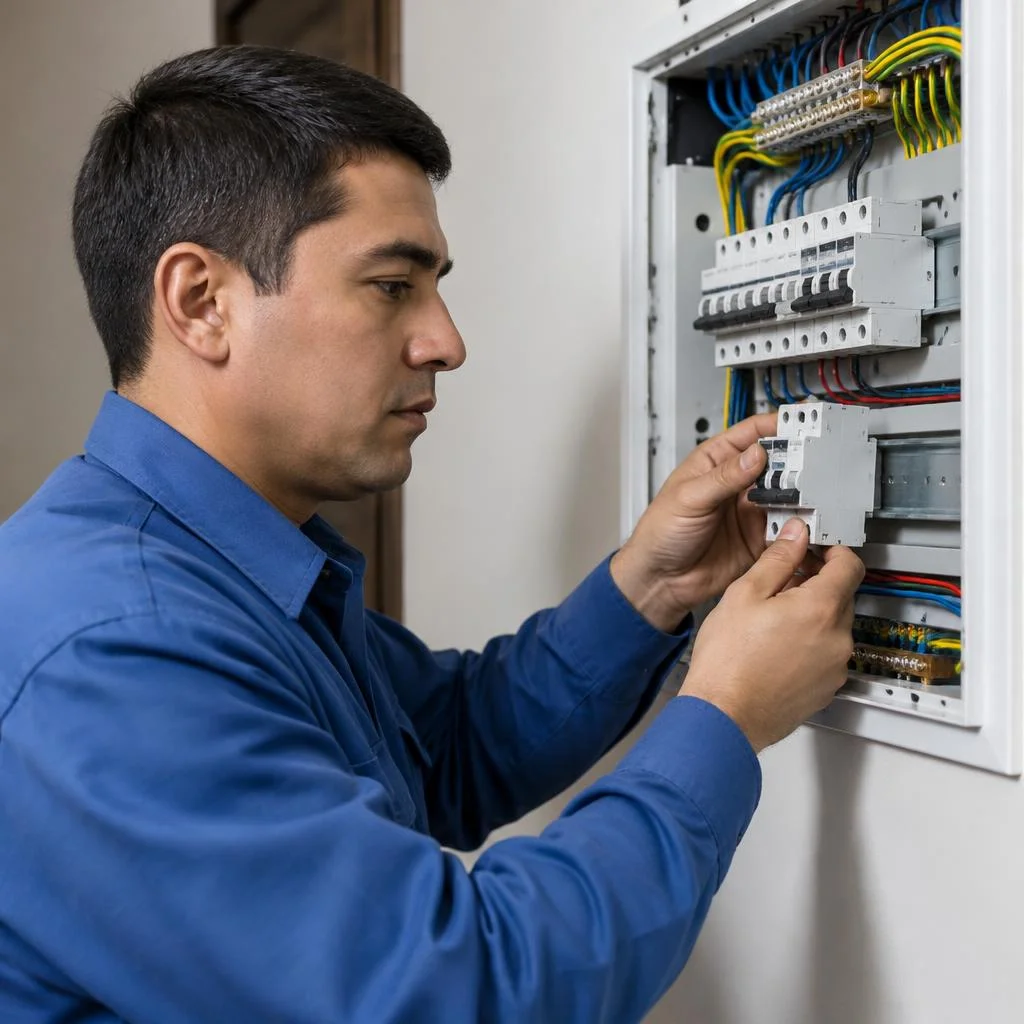
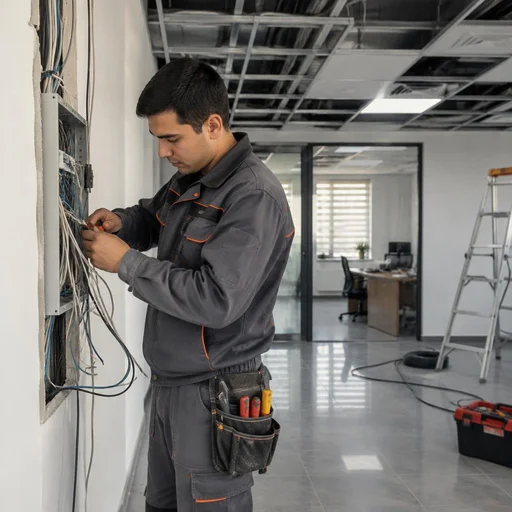
- Panel and connection: we assemble the panel with circuit breakers, RCDs and a voltage relay, connect the wires in the junction boxes and hook up every point.
What a turnkey apartment wiring replacement includes
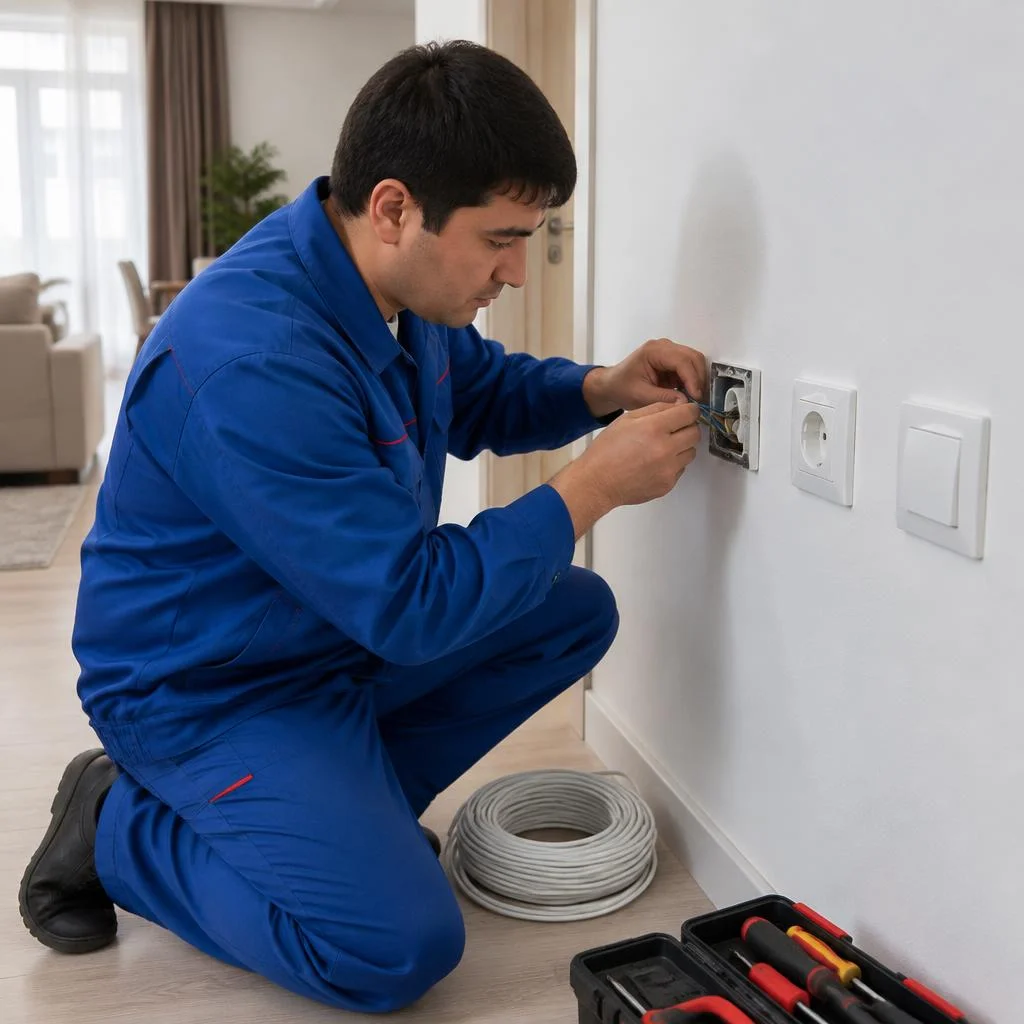
A turnkey apartment wiring replacement includes the full cycle: new wiring distribution across the rooms, assembly of the apartment's electrical panel, installation of sockets and switches, connection of the lighting. We run the wiring in separate lines — kitchen, bathroom, rooms and lighting each go on their own circuit breakers, so an overload in the kitchen doesn't cut the lights in the bedroom. For each line we calculate the current and select the cross-section: the socket group gets one cable, the hob and boiler get a separate one, with a power reserve. We connect the lighting through a separate circuit breaker, so that replacing a bulb or chandelier doesn't require shutting off the whole panel. Eco-Service agrees on the number of points before chasing begins: adding a socket after the cutting means a new chase and an extra day of work.
Connecting wires and installing junction boxes
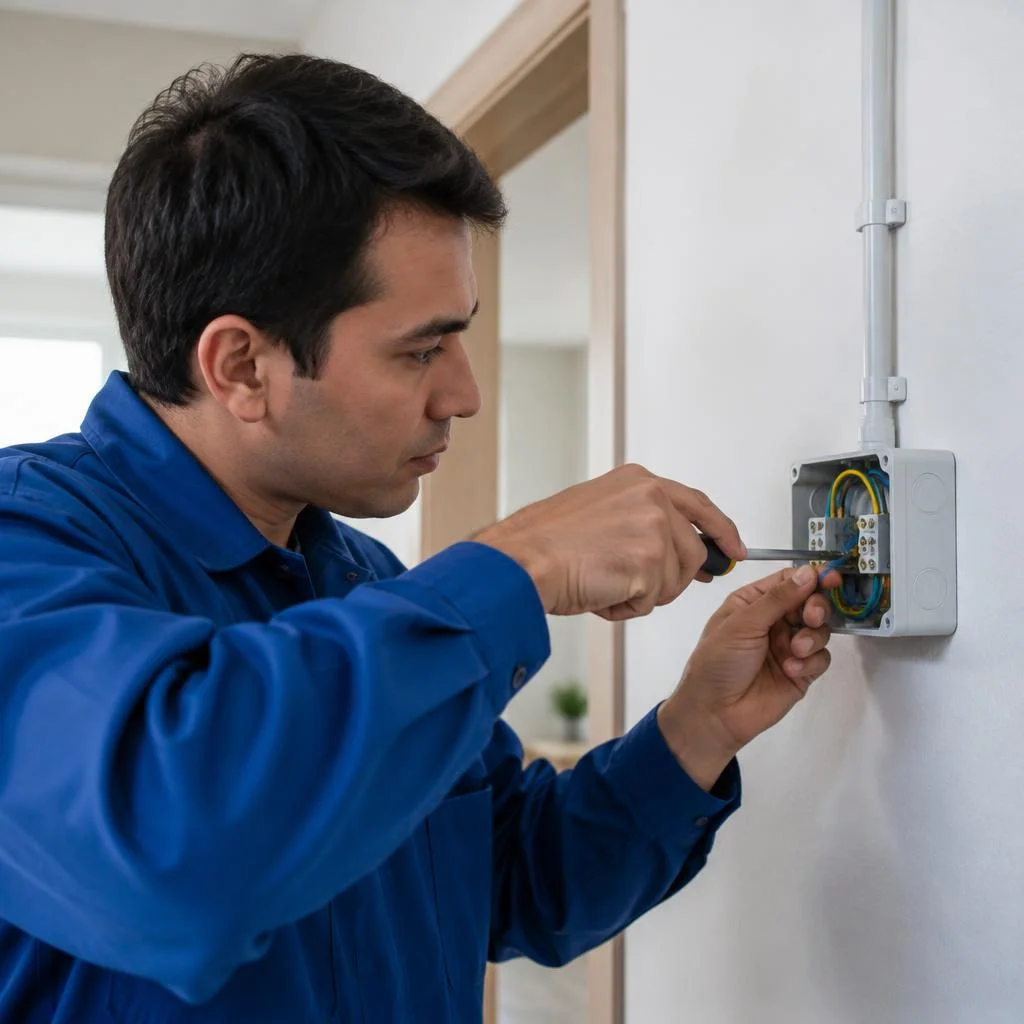
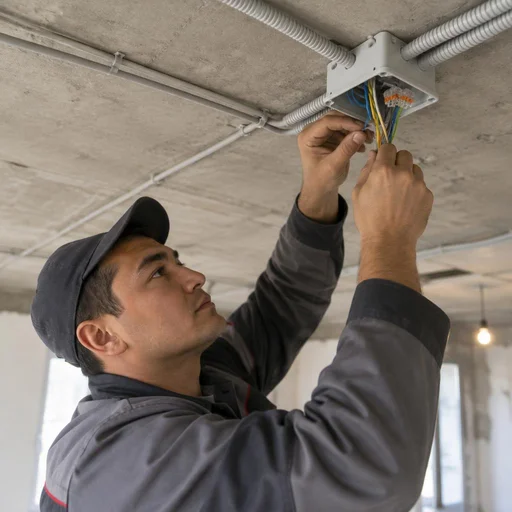
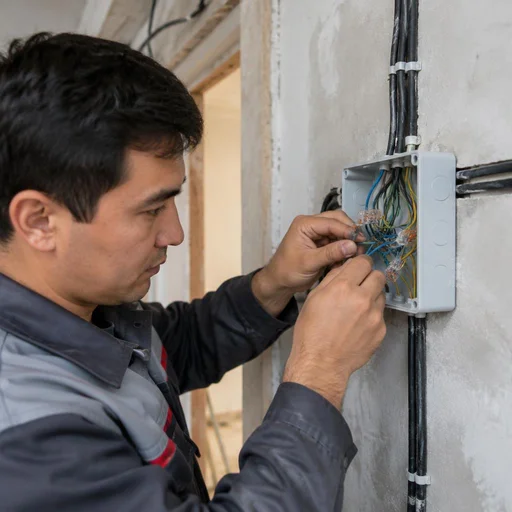
We connect the wires in the junction boxes with terminal blocks and welding, not with twists — a twist heats up and oxidises under load. We check every connection for tightness and continuity, and we position the box so that it remains accessible. In search, clients often type "wiring replacement in a house Tashkent" — and land here, although what's meant is specifically the connections and boxes. One apartment usually ends up with three to six junction boxes: one per room plus a common one for the lighting. If a line is long, we install an intermediate box — this reduces the voltage drop at the far sockets. Every box must remain accessible: if it's walled in without an access hatch, a fault will mean breaking open the finish. That's why we bring the boxes out under a hatch in advance or leave them in the ceiling space.
How we select cable, circuit breakers and RCDs for the load
Cable cross-section and breaker rating cannot be chosen "by eye" — an error in the calculation leads to overheating of concealed wiring. Below we explain how we calculate the load for each line and select the equipment.
Copper or aluminum: which cable we install
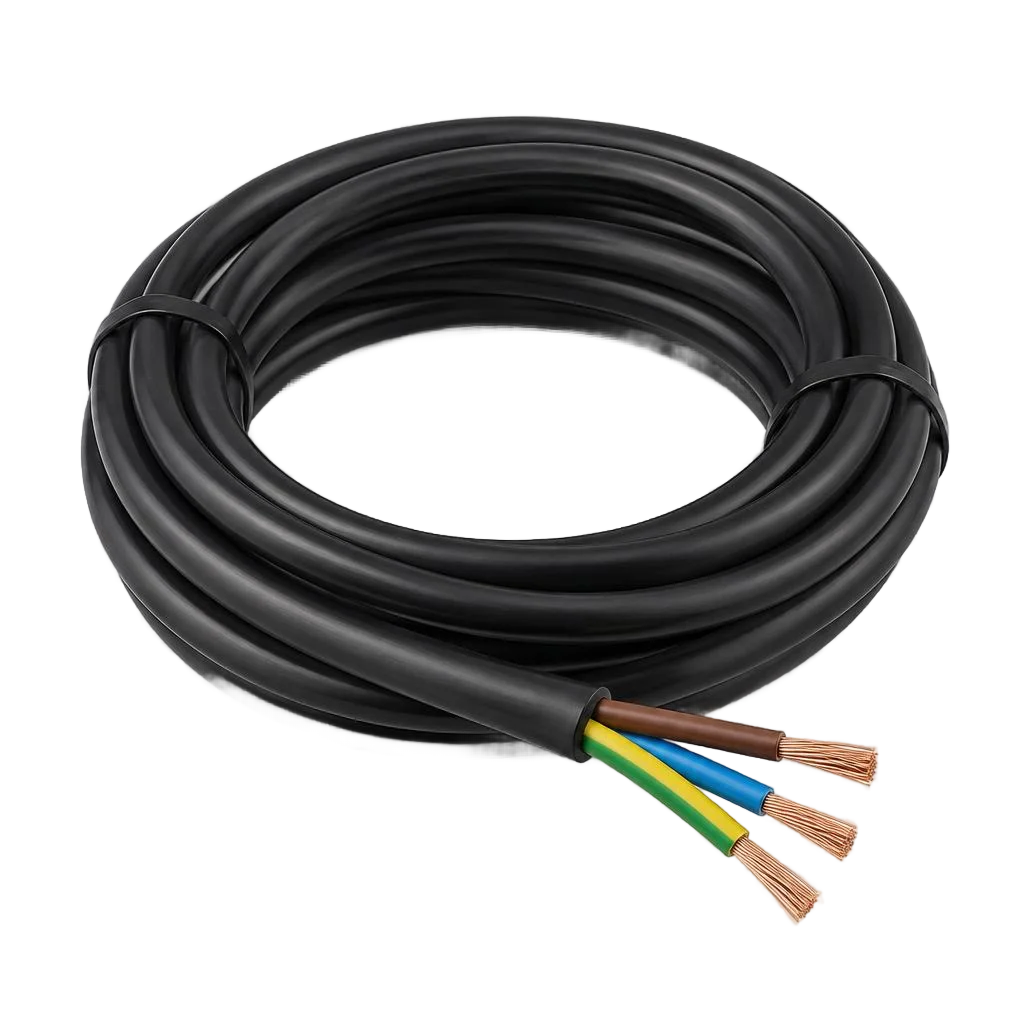
We install VVGng copper cable: it handles a higher load, does not break at bends and lasts longer than aluminum. Copper withstands a current density of about 10 A per 1 mm² versus 4-6 A for aluminum, so with the same cross-section a copper conductor can carry a line with a stove or boiler, while an aluminum one heats up even on a socket group. VVGng does not spread fire during a short circuit — this is important for concealed installation in a chase, where the cable is covered by plaster and does not cool. Aluminum must not be twisted directly with copper — at the junction of the two metals a galvanic pair forms, and the contact breaks down within just a few months. In search, clients often type "electrical wiring replacement in an apartment Tashkent" — and land on this page, so we explain the logic behind choosing the metal. If aluminum branches remain in an old house, we do not extend them with copper by twisting, but replace the section entirely or install terminal blocks. In the private sector with an aluminum service drop from the pole, we separately check the contact at the service entrance — it heats up first when the connection is poor.
Cable cross-section for the load of each line
| Line | Cross-section | Breaker |
|---|---|---|
| Lighting | 1.5 mm² | C10 |
| Socket groups | 2.5 mm² | C16 |
| Kitchen, washing machine | 2.5-4 mm² | C20-C25 |
| Electric stove | 4-6 mm² | C32 |
| Apartment service entrance | 6-10 mm² | C40-C50 |
An undersized cross-section is the main cause of concealed cable overheating: the wire heats up unnoticed, and the insulation ages several times faster. We calculate the load for each line separately: we add up the power of the appliances, divide by the voltage of 220 V and take a cross-section with a 20-30% margin. For the capital's market this is especially sensitive — in old buildings a single 2.5 mm² aluminum line ran the entire apartment, and today an air conditioner, microwave and washing machine are all hung on it at the same time.
Breakers, RCDs, RCBOs and voltage relays in the panel
- Circuit breaker per line: we install C10 for lighting, C16 for sockets, C25-C32 for the stove — we select the rating according to the cable cross-section so that the breaker trips before the wire heats up.
- RCD for wet areas: for the bathroom and kitchen — at 30 mA, it disconnects the line in case of leakage through water or damaged insulation, protecting a person from electric shock.
- RCBO instead of a pair: where there is little space in the panel, we install an RCBO — it combines protection against overload, short circuit and leakage in a single module.
- Voltage relay at the service entrance: disconnects the apartment when the voltage goes beyond 190-250 V, before the surge burns out the appliances.
- Panel assembly: we label the lines, group the breakers by zone, and leave room for 2-3 spare modules for future connections. Through Eco-Service you can have an apartment or office panel assembled with ratings selected for the specific load.
Installation methods: wall chasing, corrugated conduit, or cable trunking
Cable to sockets and the distribution board can be routed in three ways: hidden in the wall, laid in corrugated conduit under the screed, or run exposed in trunking. The choice depends on the stage of renovation, the wall material, and whether you plan to change the line in the future.
Wall chasing for wiring
Wall chasing is concealed cable routing: after the work, the wires in the wall are not visible, but the surface requires plastering and finishing. In an apartment undergoing a full renovation, the work almost always follows this route: we cut a chase 20-30 mm deep and wide enough for 2-3 cables, lay them, secure them, and plaster over them. In panel buildings in Tashkent, the route is run along the ceiling or along the floor, because in load-bearing walls the chase depth is limited by regulations and you cannot cut through the wall — this weakens the structure. In brick and monolithic buildings there is more freedom: horizontal chases are permitted, but no longer than a third of the wall. Plan wall chasing before the final finish — after tiles or wallpaper are laid, opening up the walls again is more expensive than immediately laying in a reserve in the number of lines.
Laying cable in corrugated conduit
Corrugated conduit protects the cable from mechanical damage and allows it to be pulled under the screed or in the voids of the floor structure. In our practice, this is how lines are run to kitchen sockets, to underfloor heating, and along inter-floor slabs: a PVC pipe 16-20 mm in diameter is laid before pouring, and VVGng-LS of the required cross-section is pulled inside. Corrugated conduit does not burn and does not support combustion, and in the event of a short circuit it keeps the products of combustion inside — this reduces the risk of fire in voids. In the private sector of Tashkent, it is often laid in a screed on the ground, where direct cable installation is prohibited. Do not embed corrugated conduit in concrete tight to its diameter: leave a reserve, otherwise it will no longer be possible to replace the cable inside without opening up the floor.
Cable trunking: replacing wiring without wall chasing
| Scenario | Trunking type | What to consider |
|---|---|---|
| Rented apartment | PVC 40×25 mm | Removable without marks on the wall |
| Office, open space | Main-line 60×40 mm | Separation of power and low-current lines |
| Home workshop | Trunking with a divider | Protection from dust and moisture |
| Temporary line | Self-adhesive mini-trunking | Up to 3-4 cables of 2.5 mm² cross-section |
| Through Eco-Service | Turnkey trunking | Installation with fasteners and end caps |
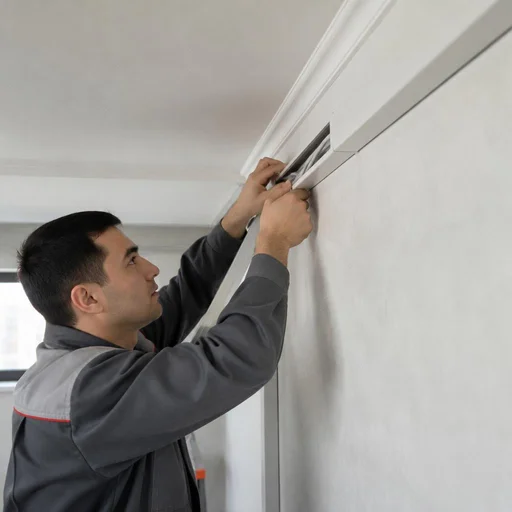
Cable trunking is a way to run a new line without wall chasing: the cable runs along the wall in trunking that covers it and protects it from damage. This option is convenient in rented apartments and offices: the line can be rerouted or extended without renovating the walls, and when moving out, it can be dismantled and taken along. The only limitation is that the exposed route is visible and takes up 2-4 cm from the wall, so in living rooms the trunking is placed under the ceiling or behind furniture.
Rewiring in an apartment, private house and office: how the work differs
The principle is the same — new wiring and line protection. But the amount of cable, the panel layout and the order of work depend on the type of property: an apartment, a private house and an office are calculated differently.
Electrical installation in an apartment in Tashkent: what we take into account
Switching from aluminium to copper, routing lines to the rooms and assembling an apartment panel with an RCD for the kitchen and bathroom — that is what a typical project in an apartment in Tashkent looks like. In panel buildings and khrushchyovkas, old aluminium conductors with a cross-section of 2.5 mm² cannot handle the modern load: an induction hob, a boiler and a washing machine together draw up to 8-10 kW on a single group. We run separate lines for each high-power point: the hob — 6 mm², the boiler and washing machine — 4 mm² each, socket groups — 2.5 mm², lighting — 1.5 mm². We assemble the apartment panel with 12-18 modules, with a 30 mA RCD for wet areas and 16-25 A circuit breakers per line. Clients often search for "apartment rewiring price" — and land here, so we calculate the estimate after a site survey: it depends on the floor area and the number of points. In an apartment, the most important thing is to agree on the points before wall chasing — moving a socket after renovation will cost more than installing it in the right place from the start.
Electrical installation in a house in Tashkent: the private sector
Work in a private house starts with the supply from the pole: we run the cable to the panel, install earthing and route lines to the rooms, outbuildings and outdoor lighting. In the private sector the supply is more often single-phase, so grid surges hit all the equipment at once — the fridge, the boiler and the pump fail simultaneously. We install a voltage relay at the supply, circuit breakers for each group and a separate line for outdoor lighting with moisture protection. For outdoor use we take cable in corrugated conduit or armoured cable, and for outbuildings — cable with double insulation. We make the earthing as a loop of three rods or connect to an existing one. For the private sector, earthing and a voltage relay are critical: with a single-phase supply from the pole, grid surges hit all the equipment at once.
Electrical installation in an office: load and continuity
| Office zone | Line cross-section | Protection |
|---|---|---|
| Workstations | 2.5 mm² | 16 A circuit breaker per group |
| Server room | 4 mm² | 30 mA RCD + voltage relay |
| Climate control equipment | 4 mm² | 25 A circuit breaker |
| Lighting | 1.5 mm² | 10 A circuit breaker |
| Kitchen and coffee area | 4 mm² | 30 mA RCD |
| Office panel | — | Main circuit breaker + RCD |
In an office we run separate lines for workstations, the server room and climate control equipment, so that the load does not drag down a single group. We plan office work by zones so that some of the premises remain operational — a full shutdown is only needed at the stage of connecting the panel.
Timelines, a 2-year warranty and how we control quality
We fix the scope and timelines in the estimate before work begins, and after handover we are responsible for the result under the contract. Below — how we plan the schedule, what the two-year warranty covers and who exactly carries out the installation.
Wiring replacement timelines and how we plan them
We complete a standard apartment within a few working days, a private house and an office take longer, and we fix the exact timeline in the estimate after the inspection. The inspection takes about an hour: the technician counts the connection points, assesses the wall material and the condition of the incoming cable, after which a specific handover date appears in the estimate. The timeline is affected not by the floor area but by the number of points and the density of the walls: in a concrete slab, chasing is two to three times slower than in brick or gypsum block, and hidden cable routing in panel buildings adds a day or two for passing through load-bearing sections. In search, clients often type "wiring replacement Tashkent" — and land on our page, so we break down the timelines by stage. We agree on the estimate and schedule in writing so that the date does not shift during the work. Request a breakdown of timelines by stage — that way you can see at which step a delay is possible and how it is compensated.
2-year warranty on work and materials
We give a 2-year warranty on electrical installation work: it covers both the work and the installed equipment — circuit breakers, RCDs, voltage relays, RCBOs. The terms are set out in the contract: a warranty case is documented by an act and a receipt, and the technician's visit for diagnostics is included in the service. The two-year term applies to the assembly of the distribution board, the connections in the junction boxes and the socket group lines, not just the visible part. The warranty is valid as long as the board remains accessible and is not reworked by a third-party technician — otherwise it is impossible to confirm the cause of the fault. Keep the act and do not seal the junction boxes shut: access to them is needed both for the warranty inspection and for checking the connections after a few years.
Our own technicians and payment via Click, Payme, Uzcard
- Our own technicians: the work is carried out by Eco-Service's in-house electricians without subcontracting, so the same person who performs the installation is responsible for the quality.
- Direct contract: the client signs the agreement directly with the contractor, not with an intermediary — there is no need to look for a subcontractor down the chain.
- Payment: we accept via Click, Payme, Uzcard and Humo, in cash or by transfer to an account; we issue a receipt for the entire scope of work.
- Reviews: clients leave ratings on Google Maps, Yandex.Maps and Telegram — they show the real timelines and the quality of board assembly.
- Feedback: for a warranty request we visit within the period agreed in the contract, and we carry out diagnostics and replacement of the faulty element at no extra charge.
Conclusion
Electrical installation is work where every calculation error becomes visible not immediately, but after months of overheating and failures. Below — brief conclusions that will help you make a decision before work begins.
Key takeaways
- Cable: aluminium wiring older than 25-30 years is replaced with copper — it does not handle the load of modern appliances and heats up at the twists.
- Calculation: the core cross-section and the rating of the circuit breaker are selected for the load of each line separately, not "by eye" and not on the principle of "the thicker, the better".
- Routing: the method — chasing, corrugated conduit or cable duct — is chosen according to the type of walls (brick, panel, drywall) and plans for the final finish.
- Property: in an apartment, house and office the scope of work differs — from wiring distribution across rooms to the incoming supply from a pole and separate zones for the server room and air conditioners.
- Documents: a fixed estimate before the start and 2-year warranty obligations protect against additional charges during the process and rework after handover.