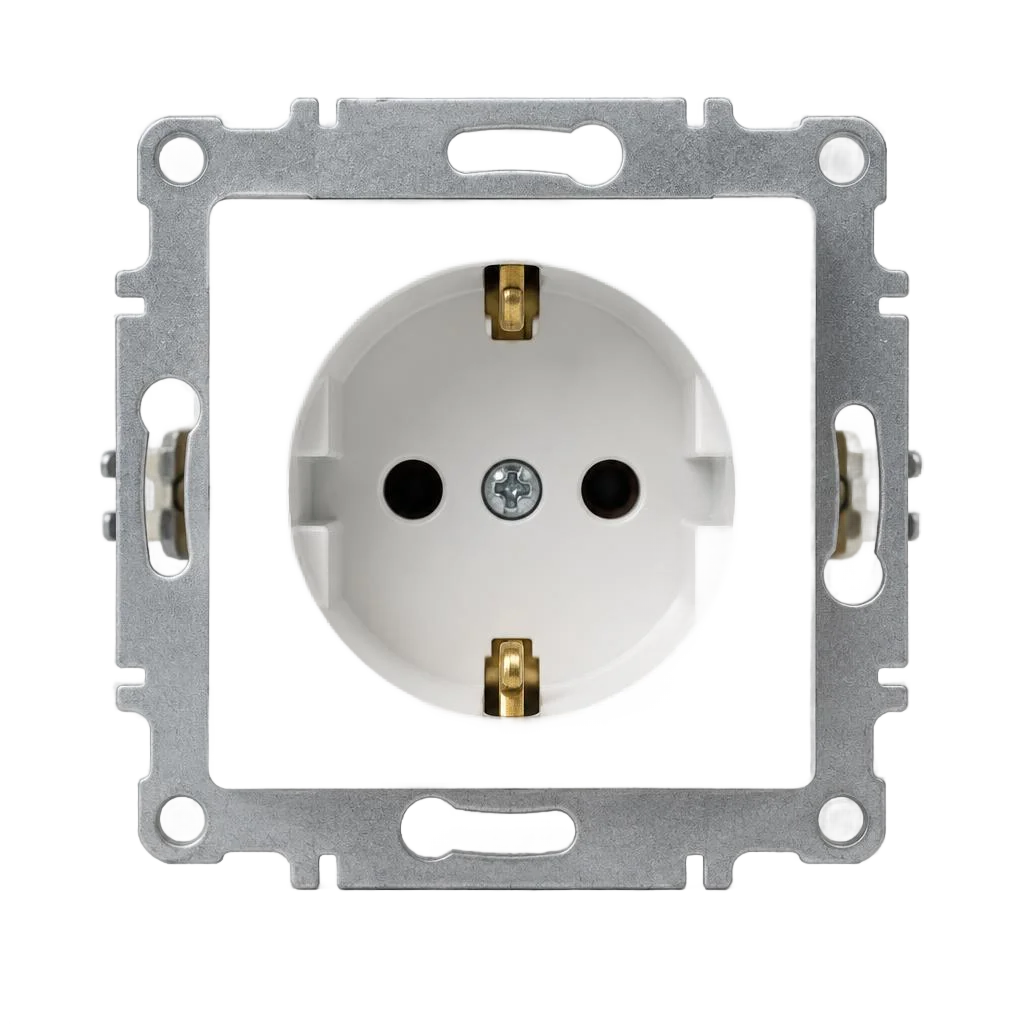

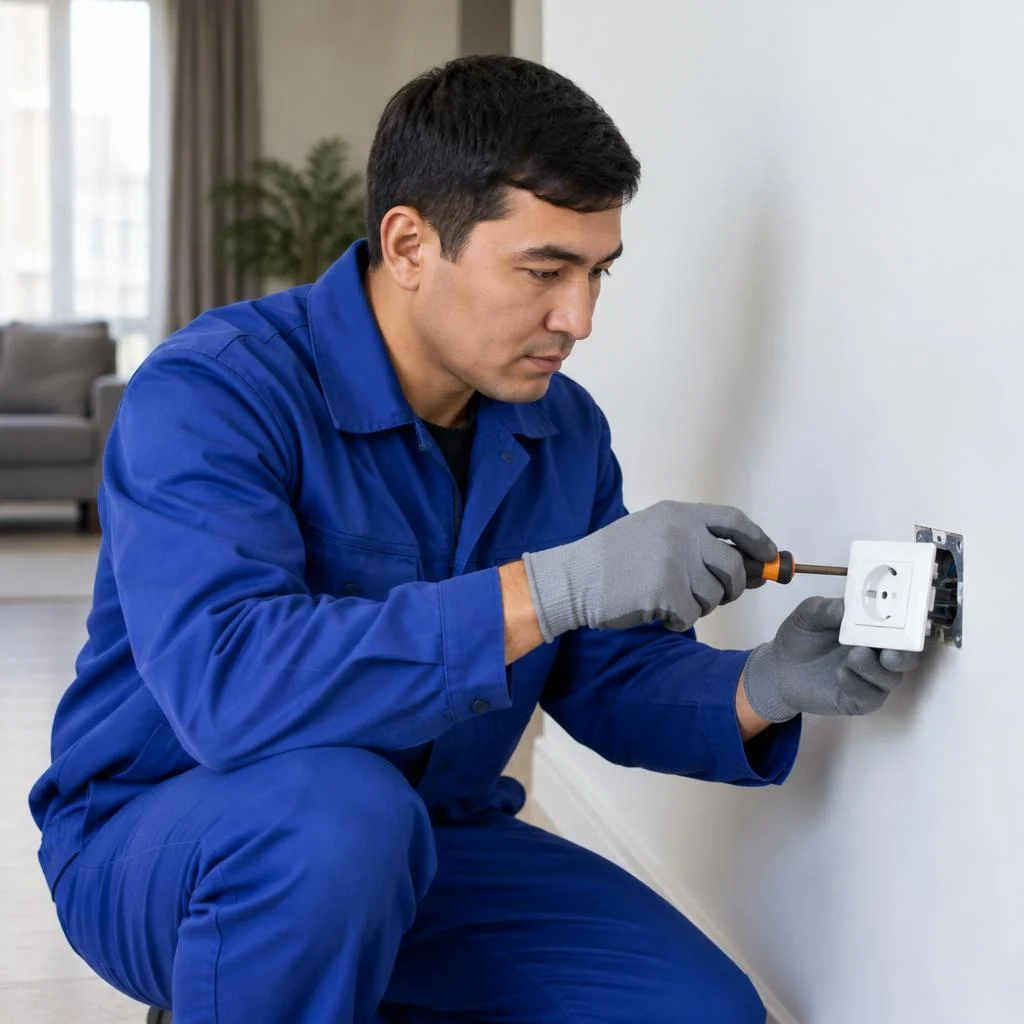

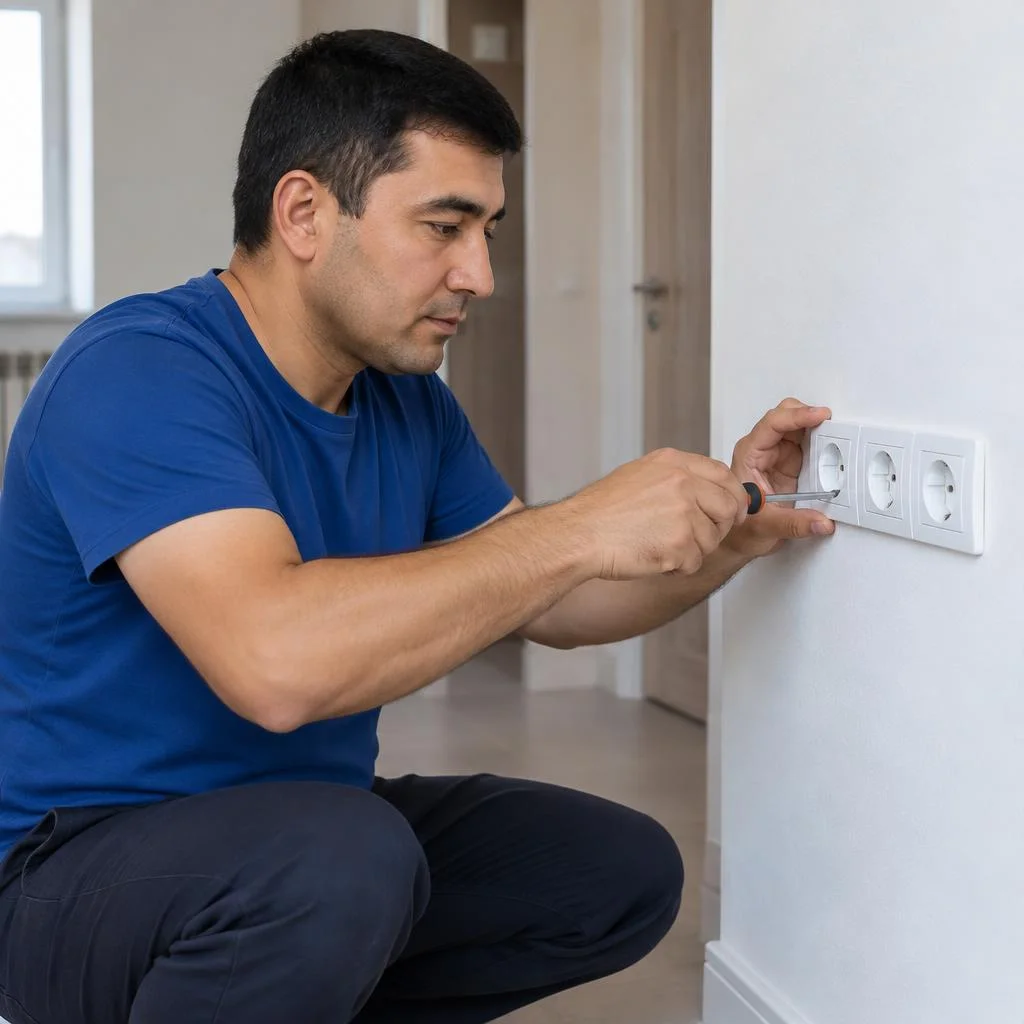
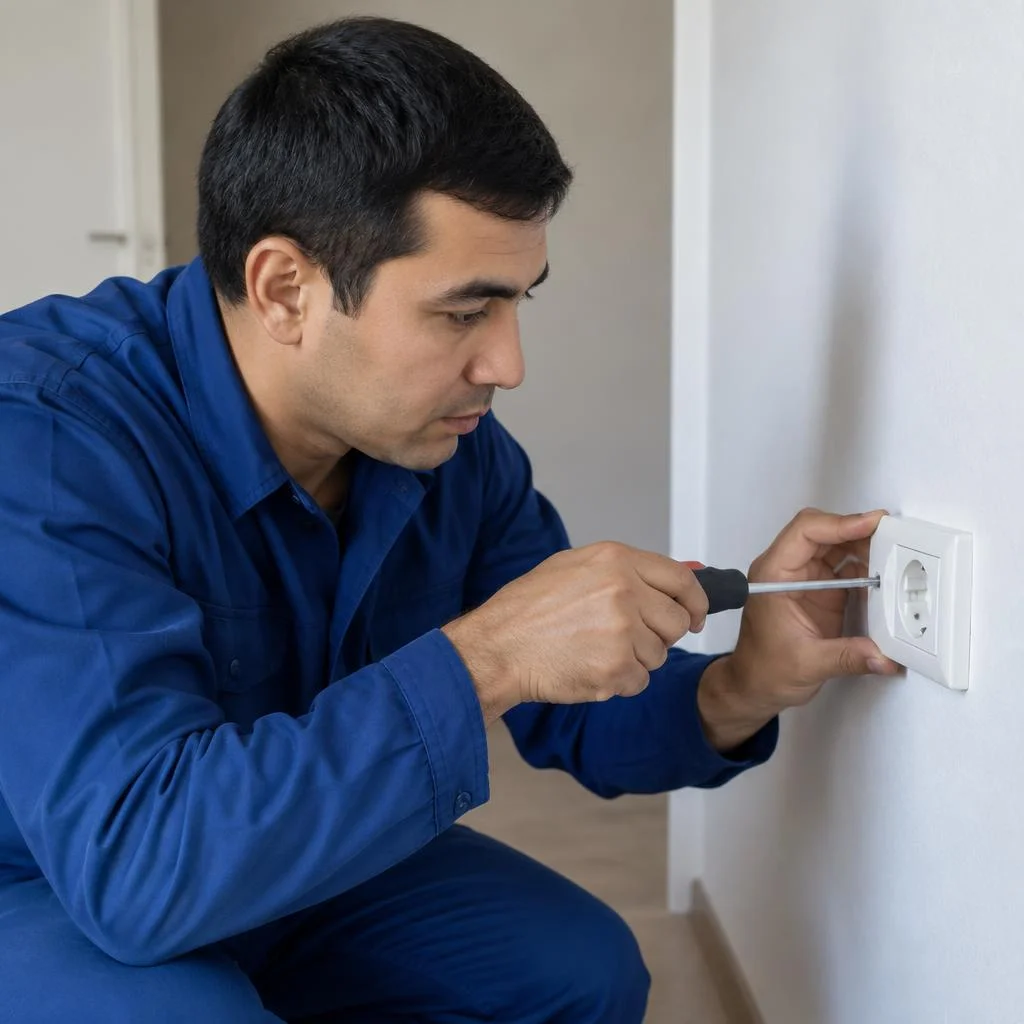
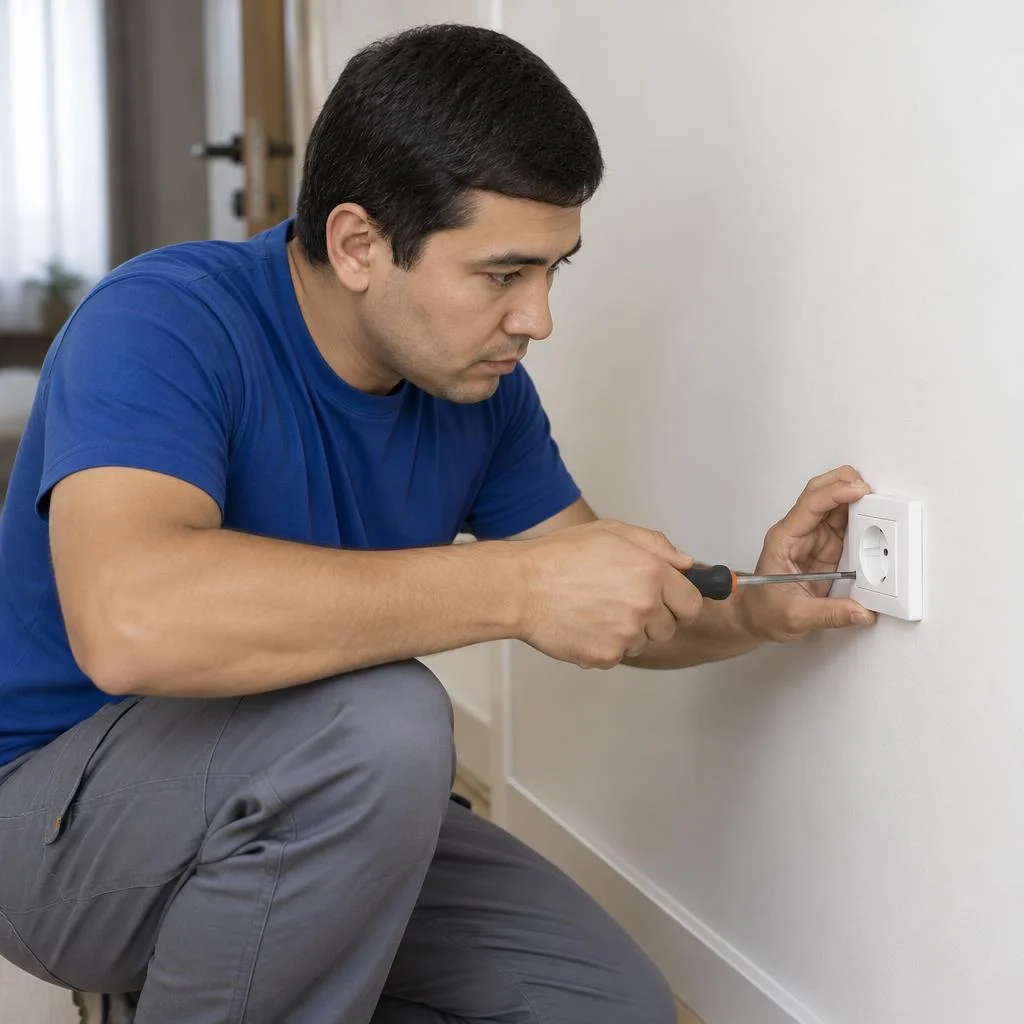
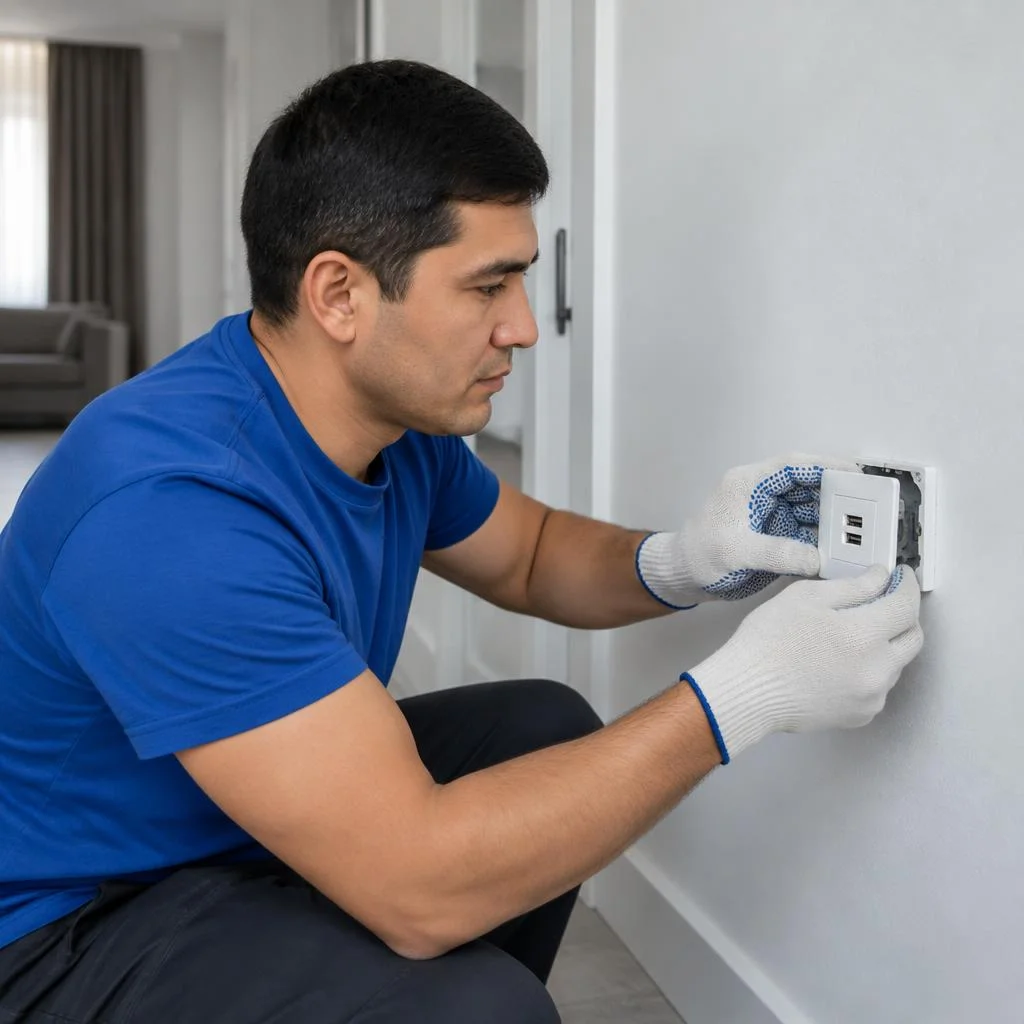
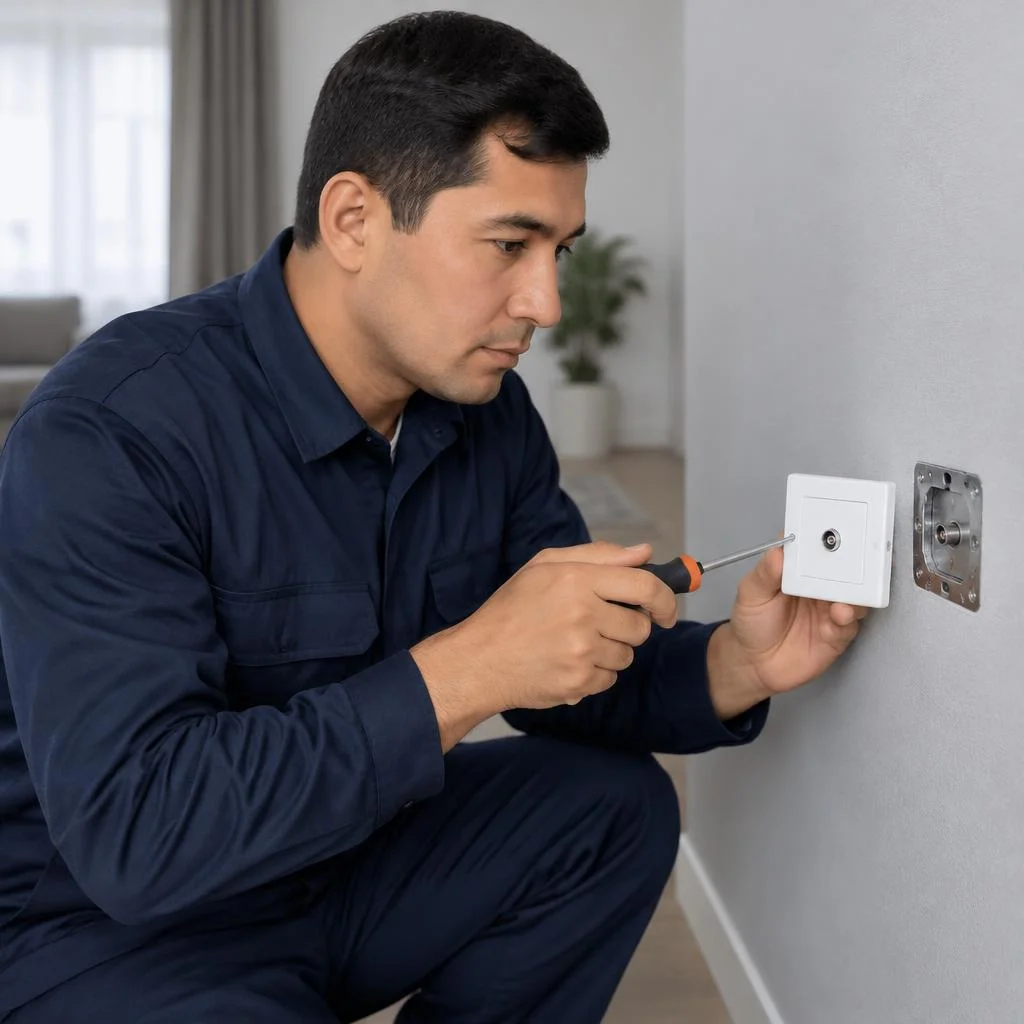
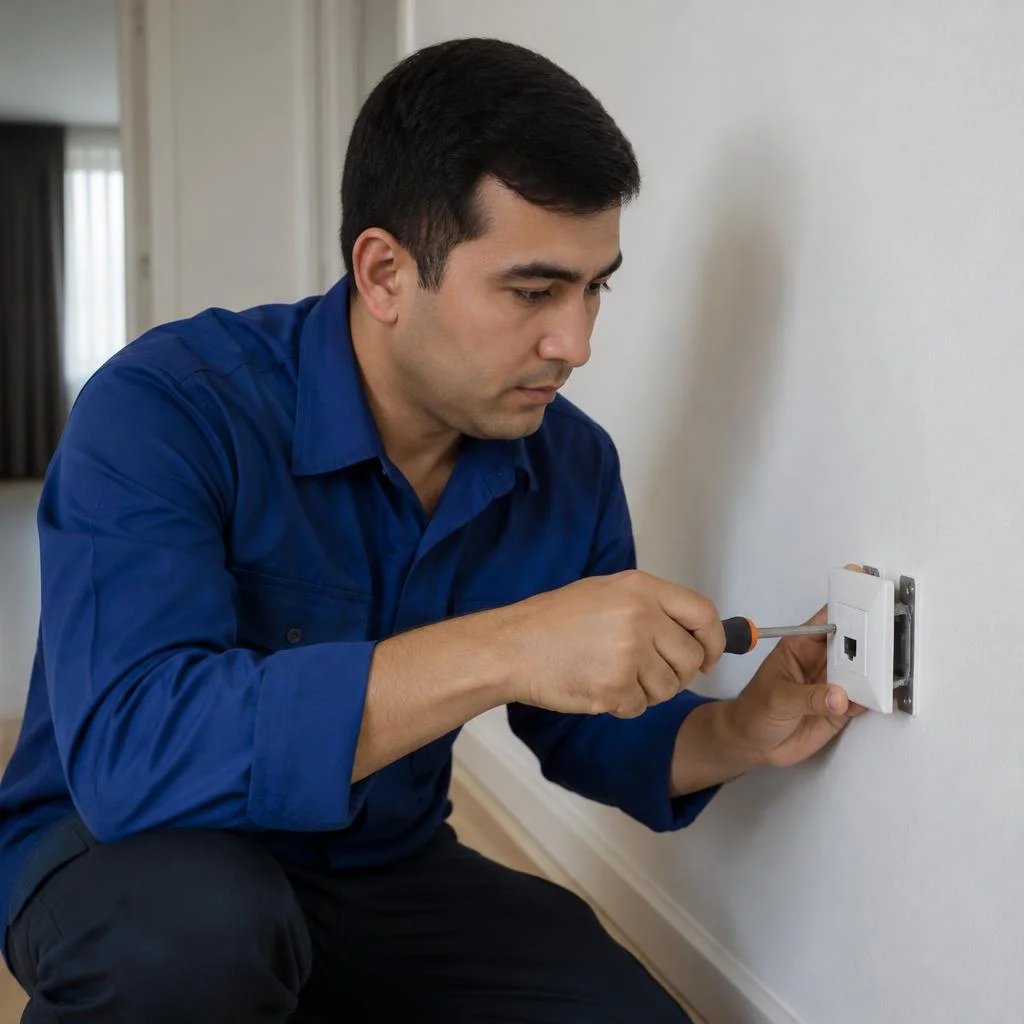
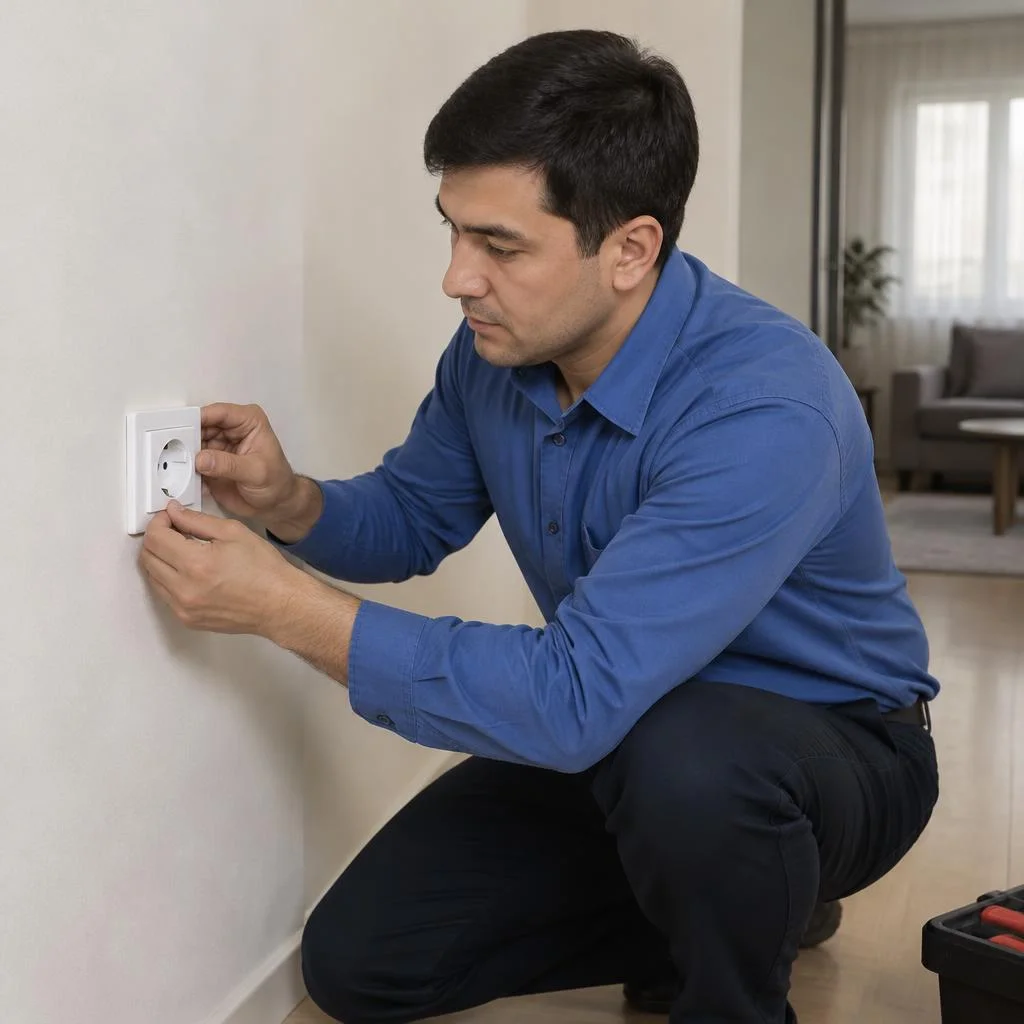








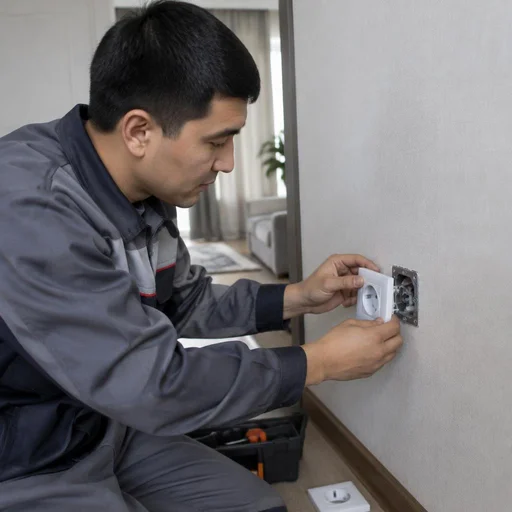
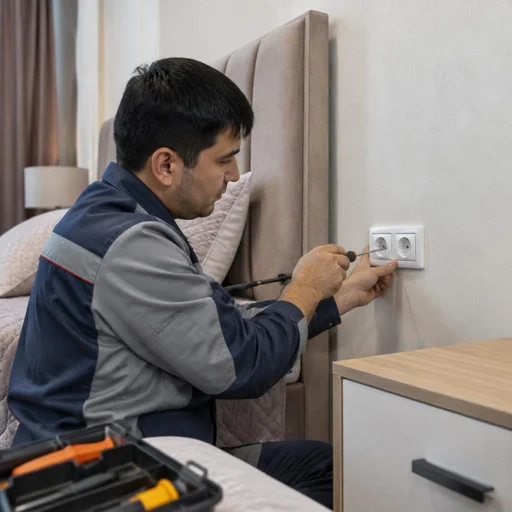
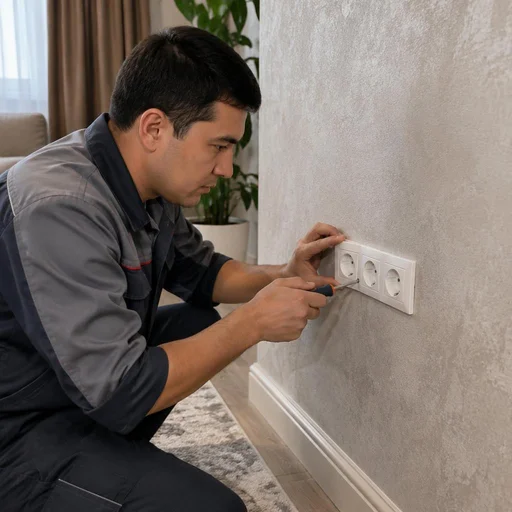
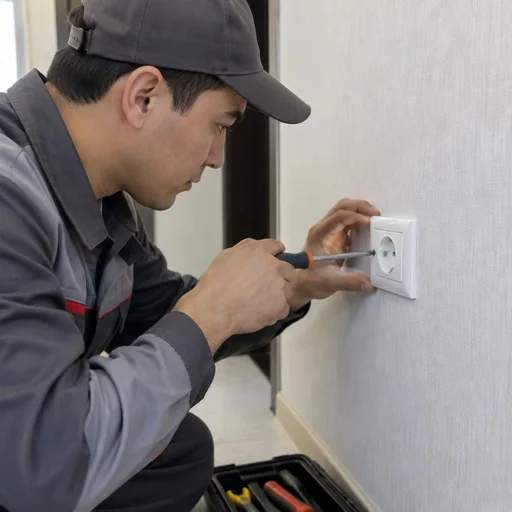
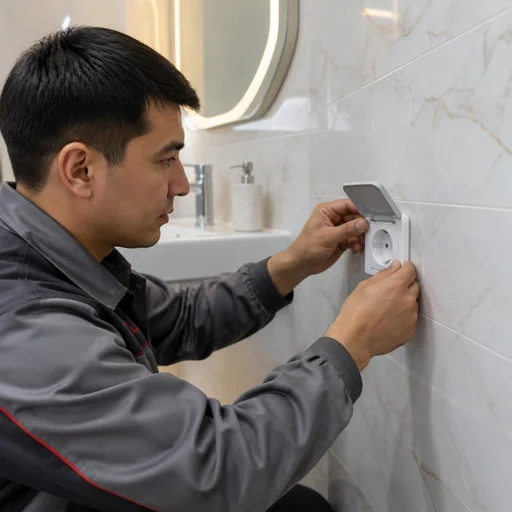
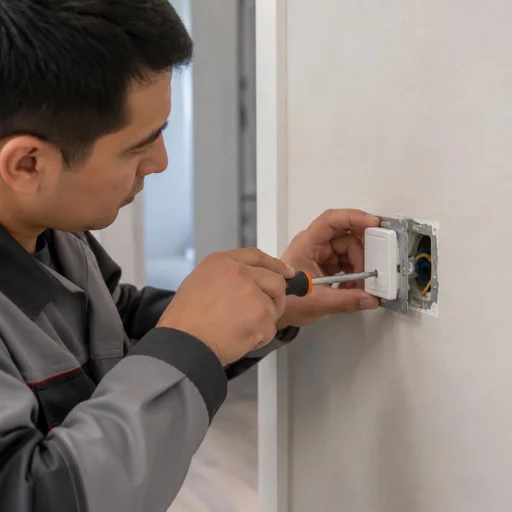
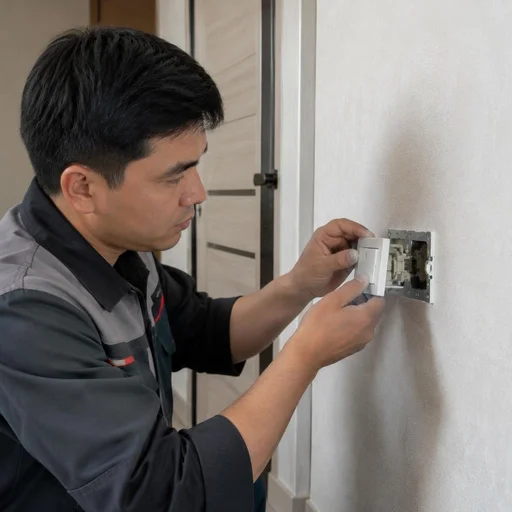
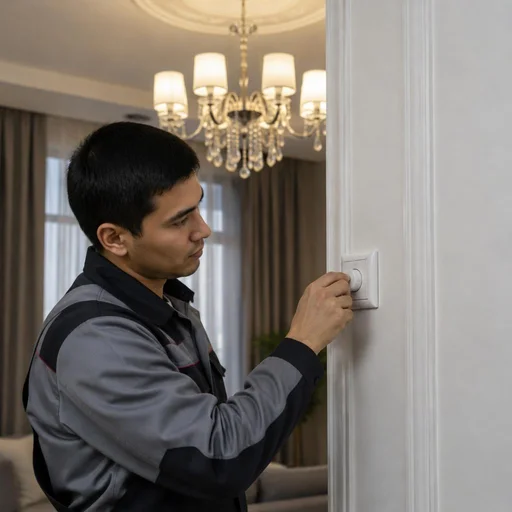
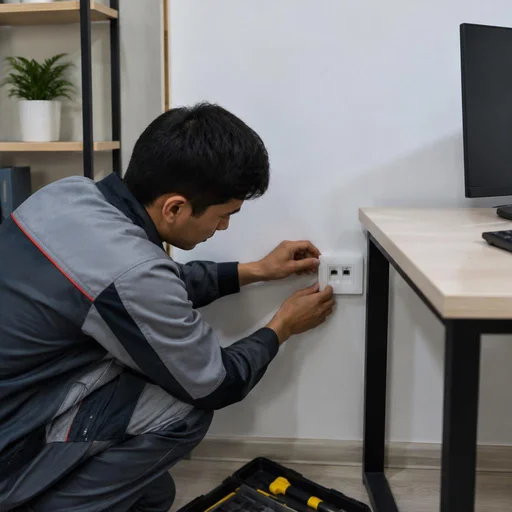
What sockets and switches Eco-Service installs
Installation of sockets and switches covers the full range of points — from a basic single one to power and low-voltage lines. The type of each is determined by the purpose of the appliance and the load on the line, not just the appearance of the fittings.
Basic and multi-gang sockets: single, double, triple
Eco-Service installs single, double and triple sockets — multi-gang models are assembled on a common back box and powered from a single line. One post covers one power point; a double and triple give two or three receptacles at the same mounting location, which is convenient behind a desk or by the TV. Installing them as a block is more cost-effective in terms of labor: chasing and cable routing are done once, not three times. In search, clients often type "socket switch installation price" — and land on this page, where it's clear what the work consists of. A multi-gang socket does not increase the permissible load on the line — the total power of appliances is limited by the cross-section of the routed cable, not by the number of receptacles, so when choosing, calculate the total current of the equipment, not the number of free slots.
Grounded sockets, with cover and USB
- Grounding: installation of a grounded socket, the price of which reflects work with a third conductor, is mandatory for washing machines, boilers and kitchen appliances — without the ground loop the appliance body remains at potential.
- Cover: protects the mechanism from splashes by the sink, in the laundry room and bathroom, extending the service life of the fittings more than its own ingress protection rating.
- USB module: convenient by the bed and on the kitchen countertop — charges gadgets without an adapter, but does not replace a regular receptacle for high-power appliances.
- Loop check: before handing over the point, the technician measures the grounding resistance — installing a grounded socket is not enough, it's important to make sure the loop actually works.
Low-voltage and power: TV, internet, power
Eco-Service performs installation of a power socket when the line runs as a separate cable of increased cross-section for a stove, boiler or machine, as well as TV and internet sockets — low-voltage lines are routed separately from power lines. A network socket for a router or TV requires shielded twisted pair and its own back box, while a TV one requires a coaxial cable with matched impedance. A three-phase socket, the price of which depends on the number of phases and the cross-section of the conductors, is used for machines and powerful equipment in workshops. A power point is powered by a separate cable of increased cross-section and protected by its own breaker in the panel. In search, clients often type "installation of sockets and switches" — and land on this page, where it's clear that low-voltage and power lines are calculated differently. Connecting such a point to a common group line defeats its purpose, so plan the power line before the final wall finishing.
Switches: rocker, two-way, intermediate, dimmers
- Single-gang: a basic circuit for one lighting group, the most common option in living rooms and utility areas.
- Two- and three-gang: control two or three groups from one point — convenient in a hallway where a chandelier and spotlights are wired.
- Two-way: turns on the light from two points — at the bedroom entrance and by the bed; paired installation of a socket and switch here requires thoughtful wiring.
- Intermediate: adds a third and subsequent control points to two two-way switches — a circuit for long corridors and stairwell spans.
- Dimmer: smoothly adjusts brightness; for LED lamps a model with a compatible driver is needed, otherwise flickering appears at low brightness.
Summary table: socket type and what installation includes
| Installation type | Connection | Mounting location | Purpose |
|---|---|---|---|
| Single socket | 2-3 wires | 1 back box | general power supply |
| Double / triple | shared line | 1-2 back boxes | several appliances nearby |
| With grounding | phase/neutral/ground | 1 back box | high-power equipment |
| With cover | phase/neutral/ground | 1 back box | wet areas |
| USB | phase/neutral | 1 back box | charging gadgets |
| TV / internet | low-voltage line | 1 back box | signal, network |
| Power | dedicated line | reinforced back box | stove, machine tool |
Table row with Eco-Service participation: the price in the service price list is tied to each item in the lineup, so the total for a project is calculated as the sum of the selected types, not an average rate. Choose the type based on the appliance, not on appearance — the fittings can be replaced later, but redoing the line and back box is expensive.
Flush or surface-mounted: which installation suits your property
The type of installation is determined by the wall material and the condition of the wiring. We break down when a flush-mounted socket is chosen and when a surface-mounted one is — using examples from Tashkent's housing stock of various eras of construction.
Flush-mounted (built-in) socket: when it is suitable
At Eco-Service, the installation of a flush-mounted socket is carried out with a mounting box in the wall — the mechanism is recessed flush, and the cable runs into a chase or cable duct. The built-in model is the basic standard for new buildings in Chilanzar, Yunusabad and Mirzo-Ulugbek district, where the walls are made of monolithic concrete and brick, and the wiring is laid concealed at the rough finishing stage. The work begins with drilling a hole for the mounting box, then comes chasing the wall for the cable, feeding in the conductors and securing the mechanism with spreader claws. Installation of flush-mounted sockets in the concrete walls of panel buildings is done with a 68 mm diamond core bit — impact tools cause microcracks that show through the plaster after the final painting, so on monolithic concrete we work only with diamond tools with water cooling. Clients often search for "installation of a flush-mounted socket" — and land on this page, where the entire sequence of concealed installation work is broken down. A separate topic is the installation of a socket and switch in a single unit: a shared channel is chased for two mounting boxes, and the conductors are divided into groups so that the power line and lighting do not cross at a single point. When asked about "socket installation price", we explain: the total depends on the wall material, the length of the chase and the number of mounting boxes, and the technician gives an exact estimate after an inspection. Clients also specifically ask about "installation of sockets with grounding" — on a concealed line, the ground circuit is run with a third conductor to the distribution board, and without it, appliances with a metal housing operate at risk.
Surface-mounted and exposed socket: when this is the right choice
Installing a surface-mounted socket does not require chasing — the mechanism is attached to the wall surface, which makes it the solution for exposed wiring and temporary lines. The surface-mounted model involves attaching the mounting plate directly to the wall, with the cable running in a cable duct along the skirting board or under the ceiling. The exposed variant is in demand in Tashkent's old housing stock — in the buildings of the Chilanzar and Sairam developments, where the walls are adobe or made of fired brick with crumbling plaster. Installing an exposed socket on a wooden wall or in a garage is safer than a built-in one: exposed wiring cools better, and its condition is visible during a routine inspection, so such a line is easier to monitor without opening up the finish. The request "installation of a surface-mounted socket" is heard by Eco-Service technicians every day — from it, it is immediately clear that the client does not need chasing. When a client writes "surface-mounted socket installation", it is almost always about a ready line for a washing machine or a boiler in a utility room. And if an electric stove or a machine tool is to be connected, we clarify whether a grounded socket needs to be installed — on an exposed line, the ground circuit is run with a separate conductor to the distribution board. Clients type the phrase "installation of a surface-mounted socket price" when they want to estimate the budget in advance — and here we honestly say that surface-mounted installation costs less than concealed, because it does not include chasing and restoring the finish. A separate query that clients enter into search is "socket installation cost": from it, it is clear that the person is still choosing between an exposed and a concealed line and wants to understand the order of the numbers before calling a technician.
Comparison: flush-mounted vs surface-mounted — which to choose
| Parameter | Flush-mounted | Surface-mounted |
|---|---|---|
| Wall | concrete, brick, drywall | any |
| Wiring | concealed | exposed |
| Chasing | needed | not needed |
| Scope of work | higher | lower |
| Repair afterwards | plastering, painting | none |
| Line replacement | opening the wall | removing the duct |
Drywall walls accept both types: a recessed back box is seated using a butterfly anchor, while a surface-mounted model is installed without cutting into the sheet. The price for the internal option includes channeling the wall for the cable, installing the back box and final grouting, while for the surface-mounted one it includes only mounting the plate and connecting. The cost of a surface-mounted socket and an external one in the price list is lower than concealed installation. For owners of apartments in panel buildings from the 1960s-80s with aluminum wiring, the surface-mounted option allows replacing the line without cutting into the walls — this is faster than a major renovation and does not require relocating residents during the work. In the price list, the prices for installing sockets and switches are listed as a separate line, and for a three-phase line we always quote the installation of a three-phase socket price after inspecting the panel — the cable cross-section and circuit breaker are selected based on the equipment's power. If the site is an office or store with a dozen points, the client cares about the cost of installing sockets and switches for the entire premises, and we calculate such an estimate based on the number of groups and the footage of the runs, not per single point.
How the installation of sockets and switches is carried out: stages of work
We break down the full cycle — from marking the route to testing the point under load. This shows what the work on sockets and switches consists of, the price, and what exactly you will accept upon completion.
Marking and chasing the wall for cable
Eco-Service starts with marking the route and chasing the wall for cable — the depth and width of the chase are selected for the conductor cross-section, not "by eye." For a lighting line, a 1.5 mm² cable is sufficient; for a socket group we take 2.5 mm²; for an electric stove or boiler — 4-6 mm², and each rating has its own seating depth in the chase. We mark the route with a laser level: the horizontal line along the level of the sockets at a height of 30 cm from the floor, the verticals — strictly upward to the ceiling distribution or downward to the panel. Horizontal chases longer than a meter in load-bearing walls weaken the structure — the route is run vertically from the mounting box, and turns are made at a right angle. Clients often search for "install socket price" — and land on this page, where the breakdown starts from the route itself, not from a ready-made figure.
Installing the mounting box: concrete, brick, drywall
- Concrete: seating with a 68 mm diamond core bit, the mounting box is set on alabaster or gypsum mortar, the edge is brought flush with the wall.
- Brick: a core bit through brick goes more smoothly, but the masonry joint can deflect the drill — the hole is centered according to the markings and cleaned up with a rotary hammer.
- Drywall: a mounting box with expansion tabs or a backing profile behind the sheet, seated without mortar, resting on the frame.
- Checking the seating: after the mortar sets, the mechanism must not wobble — we test by pressing and lightly pulling, and any play greater than a millimeter is redone immediately.
Connecting the mechanism: phase, neutral, ground
Eco-Service connects the socket mechanism observing polarity — phase, neutral and ground are distributed across the terminals, with ground connected first. On mechanisms with screw clamps, we strip the conductor by 10-12 mm and crimp it; on screwless ones — we insert until it clicks and check by tugging; for installing a point with grounding we use three-core VVGng 3×2.5 cable with a yellow-green conductor. We put the phase on the right, the neutral on the left — this is the convention in most series, but on old panels in Tashkent the wiring is sometimes reversed, so before connecting we test with an indicator screwdriver. Swapped phase and neutral in a socket do not prevent the appliance from working, but they make repairs without switching off the breaker dangerous — check with an indicator before any work. If a concealed-installation socket is needed, the mechanism is seated in the mounting box flush with the wall, and polarity here is doubly important.
Checking grounding and handing over the point under load
Eco-Service checks the grounding and tests the point under load before handover — the technician makes sure the circuit is closed and the mechanism withstands the working current. With a multimeter we measure the resistance between ground and neutral, check for any break along the entire line to the panel; in panel buildings of older construction the circuit is often absent, and then we offer a separate grounding bus. Under load we run the point with a rotary hammer or a 1.5-2 kW heat gun for several minutes — this reveals a weak contact in the terminal that is not visible at idle. Checking grounding with a multimeter shows the circuit resistance, not just the presence of a wire — "ground" on paper and working ground are different things. If a surface-mounted socket is to be installed, we check the circuit just as strictly: open installation does not cancel grounding requirements.
How long does it take to install one point
Installing a single socket in a finished wall takes an Eco-Service technician about 20-40 minutes; in a new building from scratch it takes longer due to chasing and fitting the back box. If the wall has already been chased, the back box fitted and the cable run, the cost of installing one socket is determined only by work with the mechanism — stripping the cores, connecting and testing. The full cycle from scratch in concrete is marking, chasing, fitting the back box, laying the cable and connecting, and here the count is in hours, not minutes. The timeframe depends not on the mechanism but on the preparation — if the route and back box are already ready, replacement takes minutes, not hours. Clients often phrase the request as installation of power sockets — and in response they get not a single figure but a breakdown by stages, because the time per point directly determines how many lines end up in the estimate.
What the cost of installation consists of
The cost of work on sockets and switches consists of four stages: marking, chasing, fitting the back box and connecting the mechanism — each item is counted separately in the price list. The price depends on the wall material and the type of mechanism, so the estimate always states the scope of work, not an average figure. The cost of one point in a finished wall is lower than in a new building from scratch, because chasing and fitting the back box are charged as separate lines. The rate does not change with the number of points on the site — the rate per unit is fixed, and a power socket and power sockets on one line are charged at the same tariff per point. The cost also includes testing under load and cleanup after chasing — these works are included in the tariff and are not paid extra. The price does not depend on the floor or the distance of the site within Tashkent. Clients search for installation of one socket price — and get a calculation by the same logic: stages plus wall material. Another frequent request is installation of sockets price per point: our rate per unit is fixed and does not grow with volume. Some search more briefly — price installation socket, and in the estimate it is the same item per point. The price list also has both socket installation price and cost of socket installation — it is the same line, just in different wording. Separately, clients ask about installation of sockets and switches price — and here the logic is the same: you pay for the stages, not for the name of the item.
Scenarios: new build, old housing stock, wet areas
The same service looks different in a new build, a Khrushchyovka and a bathroom: the layout marking, the connection method and the protection requirements change. We break down three scenarios and what determines the result in each of them.
Turnkey installation in a new build
Eco-Service performs turnkey installation in a new build — from marking all the points according to the plan to the final connection and testing of every line. In Tashkent's new builds — the Yashnabad, Mirzo-Ulugbek and Sergeli massifs — the walls are still without finish, so the marking is done according to the developer's layout and the furniture plan, and the cable is run with a cross-section for the specific load: 2.5 mm² for socket groups, 4 mm² for the kitchen line for the hob. Clients often phrase the request as installation of switches and sockets, and at this stage it is precisely important to agree on the point plan before the rough-in wiring. First we agree on the scheme, then comes the rough-in wiring with the installation of back boxes, and only after plastering and painting — the final assembly of the mechanisms. In a new build it is cheaper to lay in a reserve of points and cross-section right away: adding a socket to a finished renovation is more expensive than doing it at the rough-in stage. When it comes to the power line for the hob, clients search for "power socket installation price" — and land on this page. If a hidden mechanism is needed in a finished wall, they search for built-in socket installation — and the technician immediately understands what is meant.
Replacing sockets in old housing stock (Khrushchyovkas, panel buildings)
Eco-Service replaces sockets in old housing stock taking into account aluminium wiring — installing a new mechanism on an old line requires checking the condition of the conductors and contacts. In the Khrushchyovkas and panel buildings of Chilanzar, Yunusabad and Almazar district, the wiring is often aluminium, it is 40-50 years old, and the conductor under the old terminal is already crimped and broken. We open up the point, strip the conductors, assess their cross-section and only then decide: to install the mechanism on the existing line or to run new copper from the distribution board. In old housing stock, a surface-mounted socket installation often saves the day — when it is impossible or impractical to chase a load-bearing panel for a hidden point. Aluminium under a screw terminal flows and loosens over time — when replacing a socket in a Khrushchyovka, the contact should be reworked, otherwise the point will heat up under load. For outdoor lines on the facade or in a utility room, the request sounds like outdoor socket installation — and the technician immediately understands what is meant. When a new mechanism is needed in place of the old unit, clients write new socket installation — and move on to the quote.
Sockets in wet areas: bathroom, kitchen by the sink
Eco-Service installs sockets in wet areas with a cover and grounding — in the bathroom the point is placed outside the direct water jet. According to the requirements for electrical installation in damp rooms, the socket is placed no closer than 60 cm from the shower and sink, and in the kitchen — to the side of the sink, not above it. The protection is selected by class: IP44 with a cover for the area around the sink and IP55 if the room has no window and has constant humidity. Clients often search for internal socket installation, but in a wet area hidden installation requires sealed back boxes and separate line protection. A moisture-proof socket protects against splashes, but not against steam — in a bathroom without ventilation, condensation settles on the terminals, so the point is placed further from the shower. When a circuit with grounding and leakage protection is needed, they search for "grounded socket installation price" — and move on to the quote. And if a person is only interested in the budget for a point in a damp room, they type socket installation cost — and the technician immediately understands what is meant.
Timelines, Warranty and Work Acceptance
How long the installation will take, what exactly the warranty covers, and how to accept the work so that no questions remain after the technician leaves — we break it down step by step.
2-Year Warranty on Installation
Eco-Service provides a 2-year warranty on the installation of sockets and switches — it covers both the technician's work and the correctness of the connection: terminal tightening, phase and neutral wiring, and the connection of the grounding conductor. If after six months the point starts to heat up or contact is lost due to a loosened terminal, the visit and repair are handled as a warranty claim, not as new paid work. The warranty card is issued for the property, tied to the address and installation date, so keep your receipt and do not wall up the point completely — access to the mechanism is needed for diagnostics. People often type "socket and switch installation price" into a search engine — and end up here, although the final estimate is made up of the wall material, the depth of the mounting box, and the number of points at the property, not a price list per single point. The warranty is only valid if the receipt is kept and access to the point is maintained: if the socket was walled up or reconnected by yourself, there is nothing to base a claim on.
How Acceptance Works: What to Check Together with the Technician
- Mechanism connection: the technician shows where the phase, neutral, and ground are connected, and checks the terminal tightening with a screwdriver.
- Grounding: a voltage tester screwdriver and a tester confirm the presence of the grounding contact and the absence of swapped poles.
- Load test: a hair dryer, heater, or rotary hammer is plugged into the socket — the point must handle the load without voltage drops.
- Heat check: after 10-15 minutes of operation under load, the housing and terminals are felt by hand — a warm housing indicates a weak contact.
- Appearance: the frame sits without gaps, the mechanism does not wobble in the mounting box, and the cover opens freely.
What to Do If the Socket Stops Working
Eco-Service accepts warranty claims through its own service center in Tashkent — the technician visits the property, diagnoses the point, and fixes the fault. A claim is filed using the order number or warranty card: the dispatcher confirms the address, the nature of the fault, and agrees on a visit time, usually within one business day. On-site diagnostics take 20-40 minutes: the technician checks the voltage at the terminals, the condition of the mounting box, the integrity of the insulation, and the connection to the line in the panel. Before calling a technician, check the circuit breaker in the panel — half of all socket "failures" are a tripped line protection, not an installation defect.
Why order from a direct provider rather than a private handyman
How a direct service provider differs from an aggregator and a private individual — what to look at when choosing whom to entrust with electrical installation in an apartment or office.
An in-house service center, not an aggregator
Eco-Service is a direct provider of the service with its own service center in Tashkent, not an aggregator passing the order to a random handyman. The request goes directly to the service, the dispatcher records the address and the nature of the work, after which a staff electrician — not a contractor from a freelance list — travels to the site. If a point works unstably after installation, the client returns to the same center where the order was placed — not searching for the contractor via messages. With an aggregator, responsibility is blurred between the platform and the contractor: the platform points to the handyman, the handyman points to the platform. With a direct provider, there is no one to file a claim against except the provider itself, and this works in the client's favor. Clients often phrase the task in their own words — install sockets or replace a failed point — and the dispatcher accepts the request without clarifying questionnaires. In search, many type in the cost of installing sockets and switches — and land on a page with a direct contractor, not a storefront of intermediaries. Keep the work completion certificate with the request number — using it, the service retrieves the history of the property, even if the handyman who did the installation is already at a different address.
The handyman's qualifications and what he brings with him
- Hole saw for the mounting box: 68 mm diameter for concrete and brick, 60-65 mm for drywall — the hole comes out even, without chipping the plaster at the edge.
- Wall chaser or angle grinder with a vacuum: cuts a groove for the cable to a specified depth and immediately collects the concrete dust, rather than leaving it on the furniture.
- Multimeter and voltage tester screwdriver: check for the presence of phase, the integrity of the neutral and the resistance of the grounding loop before connecting the mechanism.
- Consumables included: mounting boxes, gypsum mix for fixing in concrete, WAGO terminals, insulating tape, dowel nails — nothing extra needs to be purchased.
- Protection of the premises: a rotary hammer with a dust extractor, masking tape and film on the floor — after the visit, a cleaned installation area remains.
Reviews and portfolio of completed work
Reviews of Eco-Service are collected on Google Maps and Yandex.Maps, and the work portfolio is published on Instagram and Telegram. In the map listings you can see the distribution of ratings and client texts for specific addresses, and in the feeds — before-and-after photos: wall chasing for cable, installation of mounting boxes in a panel wall, assembly of a distribution board. For the query electrician socket installation, what matters is not the "five-star" rating, but the description of a property similar to yours: a review about installation in a new building with monolithic walls won't tell you how the handyman worked around voids in the panel of a Khrushchyovka. Clients search for socket installation, network socket installation, external socket installation — and through these queries they land on listings with photo reports for specific addresses. They separately ask about surface-mounted socket installation price and socket installation price — the handyman names the cost after inspecting the wall, and in the reviews you can see what the client paid for in a similar case. A frequent query is price for socket installation, and from it you can see that people are interested not only in the figure, but also in what it is made up of. In reviews, look not at the rating, but at the photos and description of the property — a review with specifics about a panel building or a bathroom is more useful than a dozen generic "all good" ones. Before calling, ask for a portfolio specifically for your type of wall: socket installation in Tashkent is done in monolith, in drywall, and in old housing stock — the experience with each material is different.
Conclusion
Installing sockets and switches is a job where the decision is made once and for years to come. Below are five conclusions that most often determine whether a point will work without complaints.
Key conclusions
- The appliance determines the type of socket: redoing the line and the mounting box for a load is more expensive than changing the fittings themselves, so the power is calculated before purchase.
- The wall dictates the installation: a flush-mounted socket requires chasing and a mounting box, while a surface-mounted one is installed on the surface and does not touch the finish.
- Grounding is checked with a multimeter: for a washing machine, boiler, and wet areas the contact is mandatory, and its presence cannot be confirmed "by eye."
- In older housing stock, the wiring matters more: the condition of the aluminum core and twists in a panel building affects safety more than the model of the new socket.
- Warranty and acceptance testing under load distinguish systematic work from a one-off job: the point is checked with the appliance turned on, not just "there is light."