







Why radiators in Tashkent get clogged and how to tell it's time to clean
A radiator clog rarely happens in a single season — it is built up by hard water, sludge and pressure fluctuations in the circuit. Let's break down what a clog consists of and by which signals it is caught before a breakdown.
What a clog consists of: scale, sludge and Tashkent's hard water
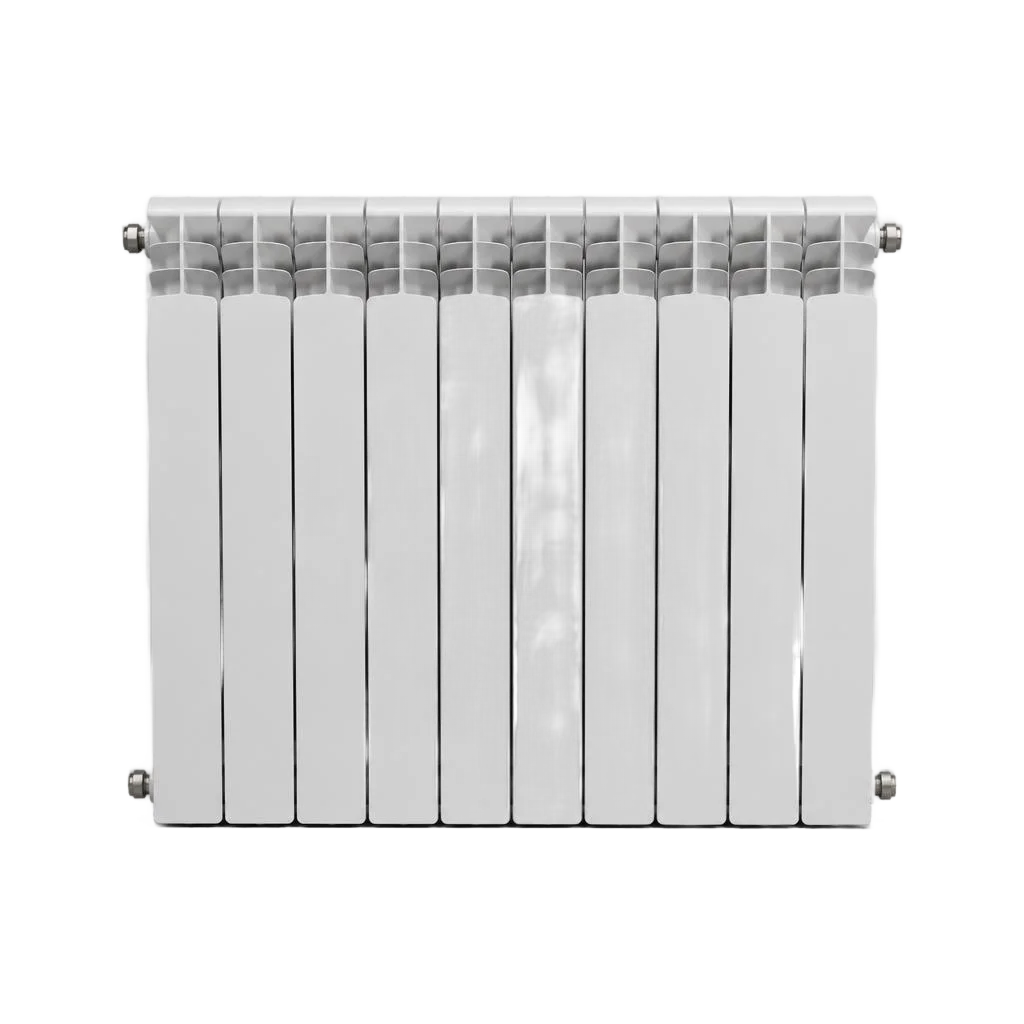
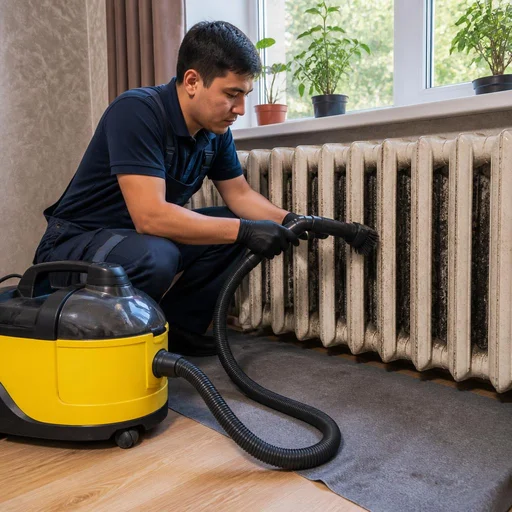
The main causes of clogging are scale from the hardness salts in Tashkent water, sludge from corrosion products and suspended solids from the coolant, which settle in the lower sections. Water from the city mains carries an elevated concentration of calcium and magnesium: when heated above 60 °C, the salts precipitate into a solid deposit on the inner walls of the channels. Added to them is sludge — fine rust from cast-iron risers, mill scale from welded seams and sandy suspended matter carried by circulation. A scale layer only 1 mm thick reduces the heat output of a section by roughly 10-15%, while sludge clogs the lower manifold and blocks the flow. The higher the coolant temperature, the more intensively the salts crystallize — that is why the sections at the supply, not at the return, become overgrown the most; at the very first maintenance check, inspect the upper connections and the first section block along the flow.
Signs that the radiator needs cleaning: 5 signals
- Uneven heating: the top of the section is hot, the bottom barely warm — scale and sludge have blocked the flow in the lower manifold.
- Clicking and humming in the riser: deposits break off the walls and hit a narrowing, the flow moves in jerks.
- Pressure drop in the circuit: a clogged radiator increases hydraulic resistance, the gauge on the boiler shows a drop.
- Rising gas consumption for autonomous heating: the boiler keeps the burner on longer to heat the same rooms.
- Cold sections with a hot supply: the outer blocks do not heat, although the supply is working normally.
Why a delayed battery cleaning is dangerous
A delayed battery cleaning leads to corrosion from the inside, rupture of sections under pressure and boiler failure due to rising hydraulic resistance. Scale works as a heat insulator: the metal under the salt layer overheats locally, while on the outside it contacts moisture and oxygen — corrosion accelerates 2-3 times. Aluminum sections corrode faster than cast-iron ones on contact with aggressive reagents, so universal "folk" remedies are more dangerous for them than for cast iron. A clogged circuit presses on seals and threaded connections — during pressure testing such joints leak first. Measure the temperature at the supply and return: a difference above 15 °C indicates a clog, and then flushing the radiator is cheaper than replacing sections after a rupture.
What solves the problem before the season starts
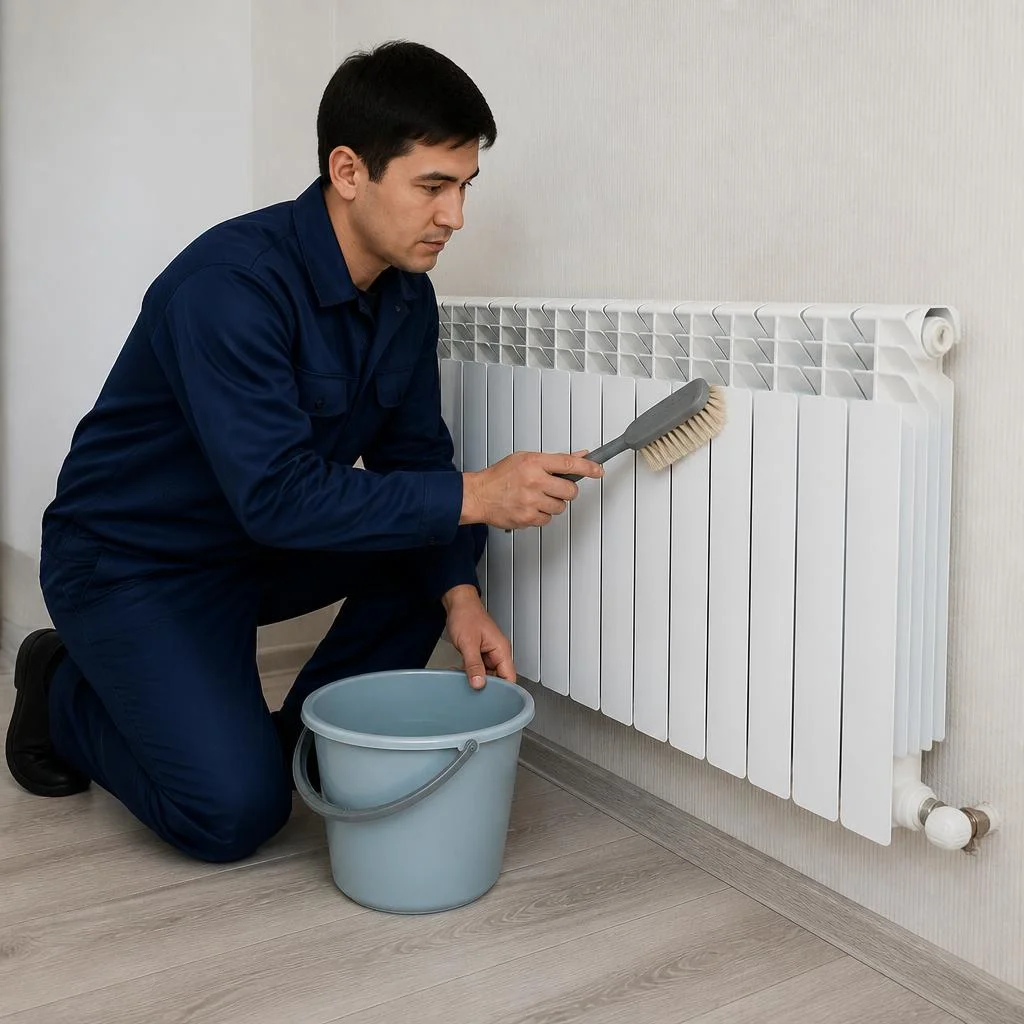
Radiator cleaning in Tashkent covers three tasks at once: it removes scale from the walls, washes sludge out of the lower manifold and restores the design flow. In apartments with bimetallic blocks, the thin channels become overgrown faster than cast-iron ones, so bimetallic radiator maintenance is planned before the first frosts, and flushing bimetallic radiators requires controlled pressure so as not to damage the steel inserts inside the aluminum casing. The chemical composition is selected according to the section material and the degree of overgrowth: for cast iron, alkaline reagents are acceptable; for aluminum, only neutral inhibitor ones. Requests to the service often read exactly like this: cast-iron battery cleaning — and the technician immediately understands what is meant. In my opinion, it is cheaper to spend one visit on maintenance in the fall than to open up the circuit in January, when the riser no longer provides heat.
Battery/radiator cleaning in Tashkent: what services Eco-Service covers
From diagnostics to ultrasonic treatment of sections: we break down which work formats cover different radiator conditions and how to choose the right one for a specific case.
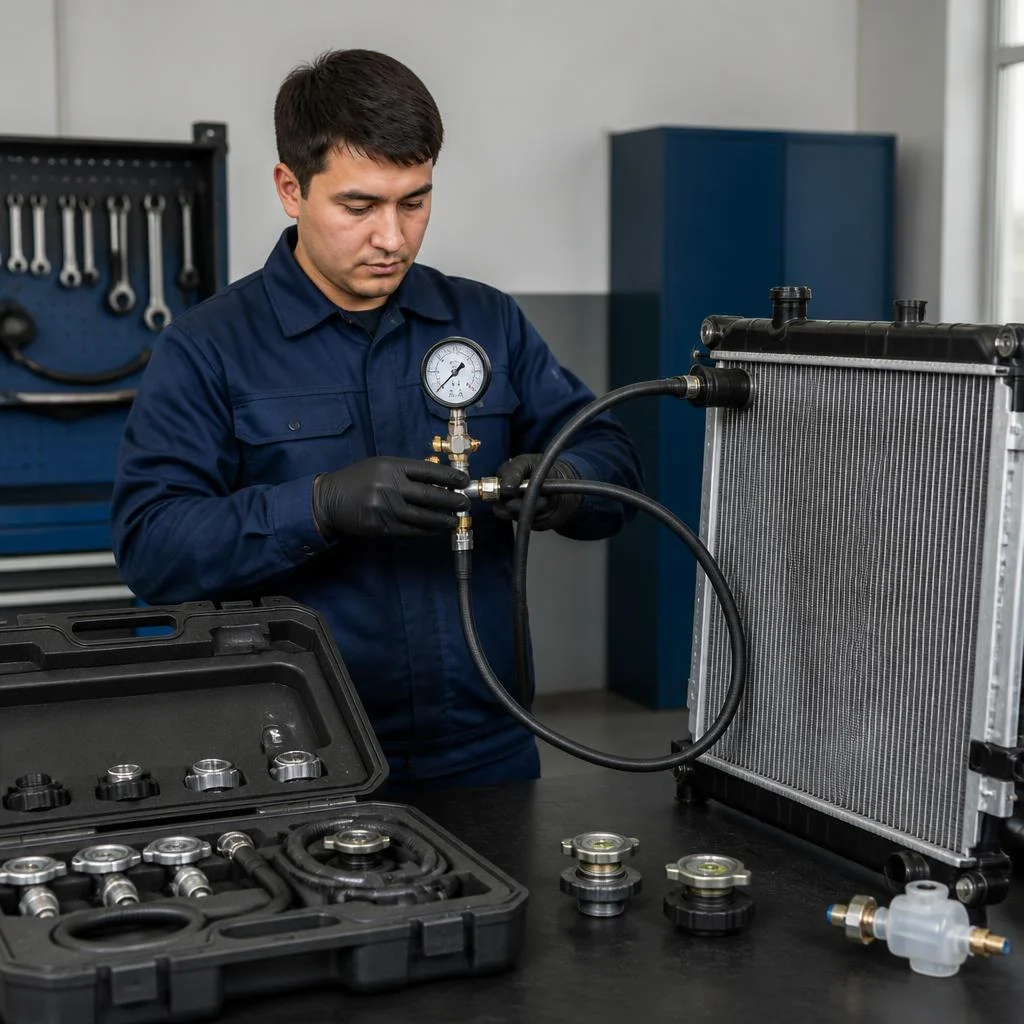
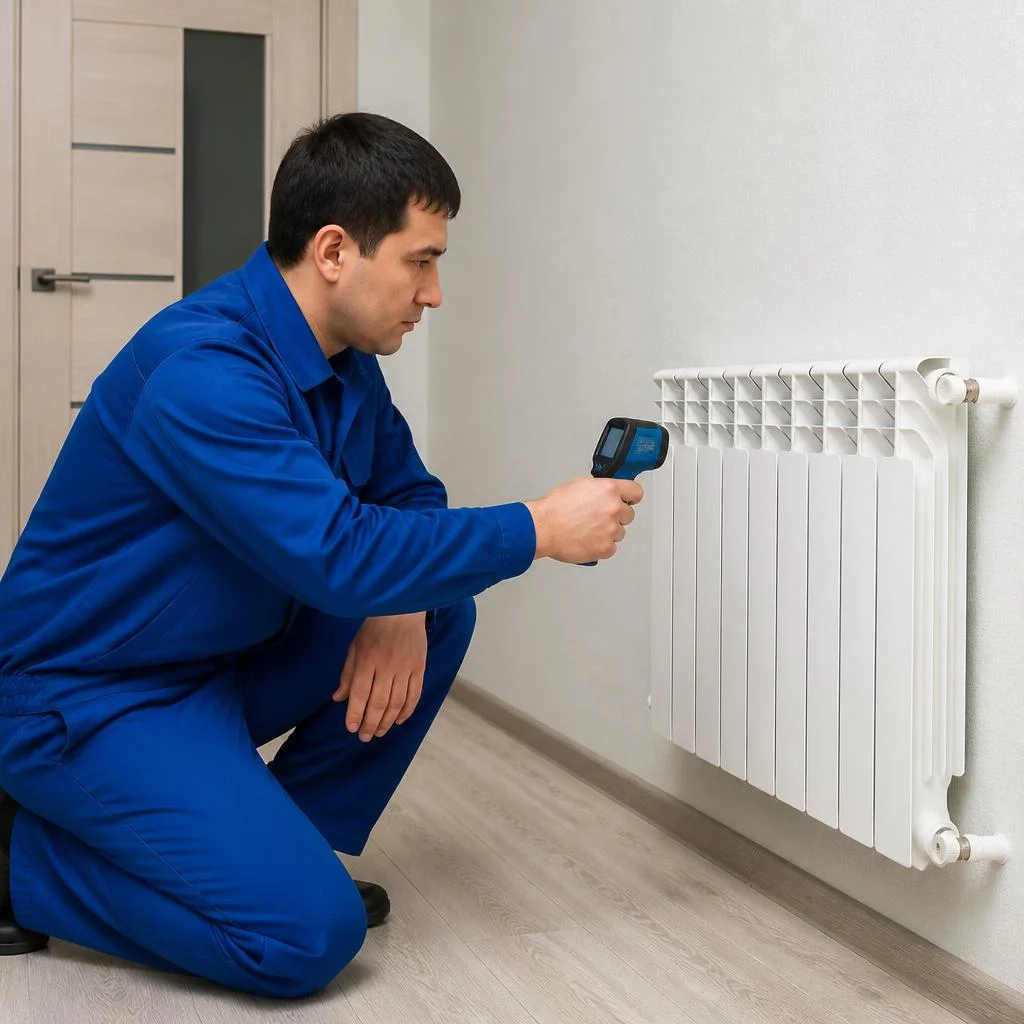
Diagnostics before work: leak testing, thermometry, defect inspection
- Circuit leak testing: pressure testing identifies pinholes and loose connections before flushing begins — otherwise water under pressure will wash out the joint.
- Radiator thermometry: temperature measurement across each section shows where air and sludge plugs are located and where the radiator heats normally.
- Battery defect inspection: assessment of wall thickness, thread and end-face condition — it shows whether a section will survive flushing or is due for replacement.
Radiator flushing internally and with removal: what's the difference
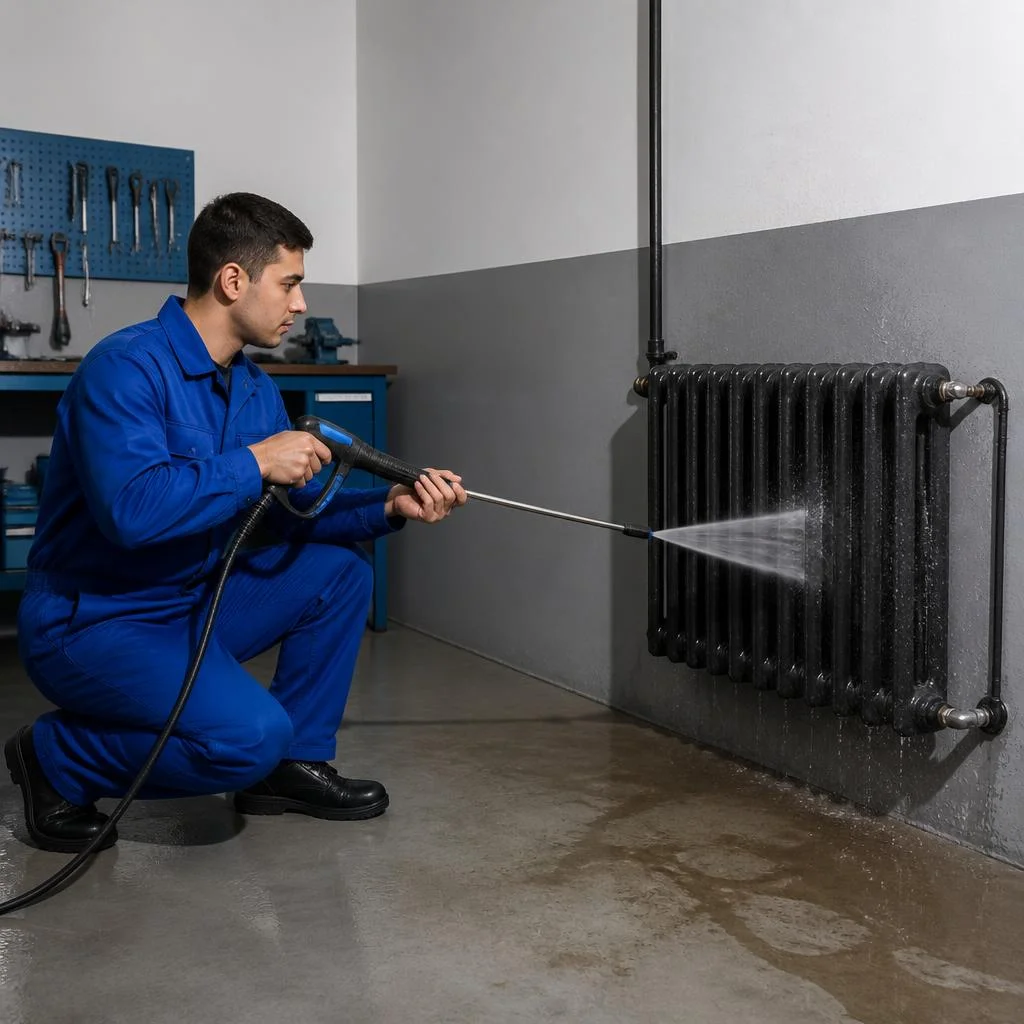
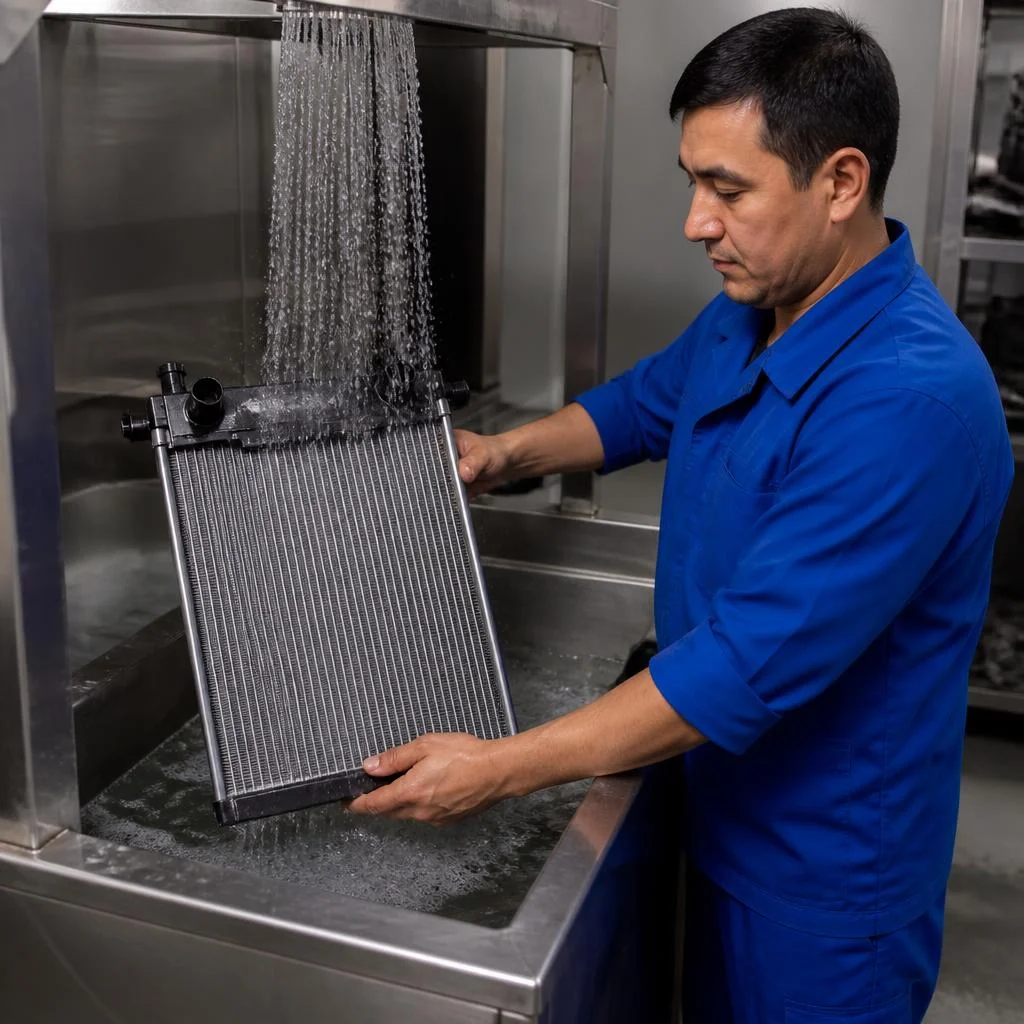
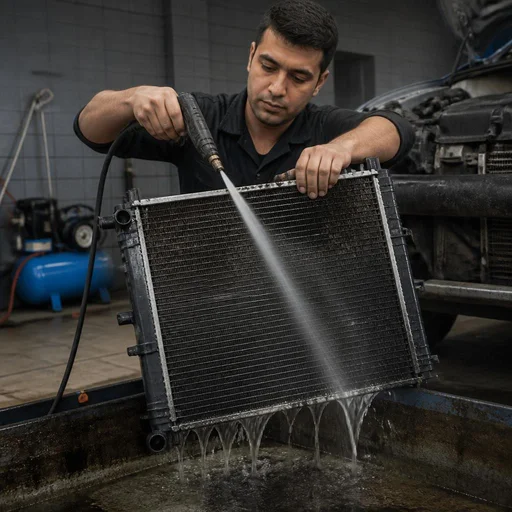
Internal radiator flushing is done without dismantling and is suitable for preventive maintenance, while radiator flushing with removal is needed for dense sludge and scale, when sections are taken out and treated separately. Internal battery flushing in an apartment takes less time and does not require draining the entire system, but it only flushes the flow-through part of the circuit. With removal, the process is different: the radiator is disconnected, taken to a work area, and a cleaning solution is run through it under pressure, after which each section end-face is cleaned separately. This format is chosen when deposits have compacted into a dense layer and water barely moves through the circuit. A separate service is cast-iron radiator cleaning: massive sections with thick walls handle such loads more easily than thin-walled ones, but require a larger volume of cleaning solution and more time for heating. Removing the radiator gives access to the section end-faces — that is exactly where up to 70% of deposits accumulate, which are not washed out when flushing inside the circuit.
Chemical, hydrodynamic and ultrasonic cleaning: what to choose
| Method | When we use it | What it removes | Radiator type |
|---|---|---|---|
| Chemical radiator flushing | Scale and lime deposits | Dissolves the salt layer | Cast iron, steel, bimetallic |
| Hydrodynamic flushing | Dense sludge in the circuit | Knocks out deposits under pressure | Cast iron, steel |
| Ultrasonic cleaning of sections | Caked layer after chemicals | Removes the softened layer in a bath | Bimetallic, aluminum |
| Flushing inside the circuit | Preventive maintenance, light deposits | Fresh deposits | All types |
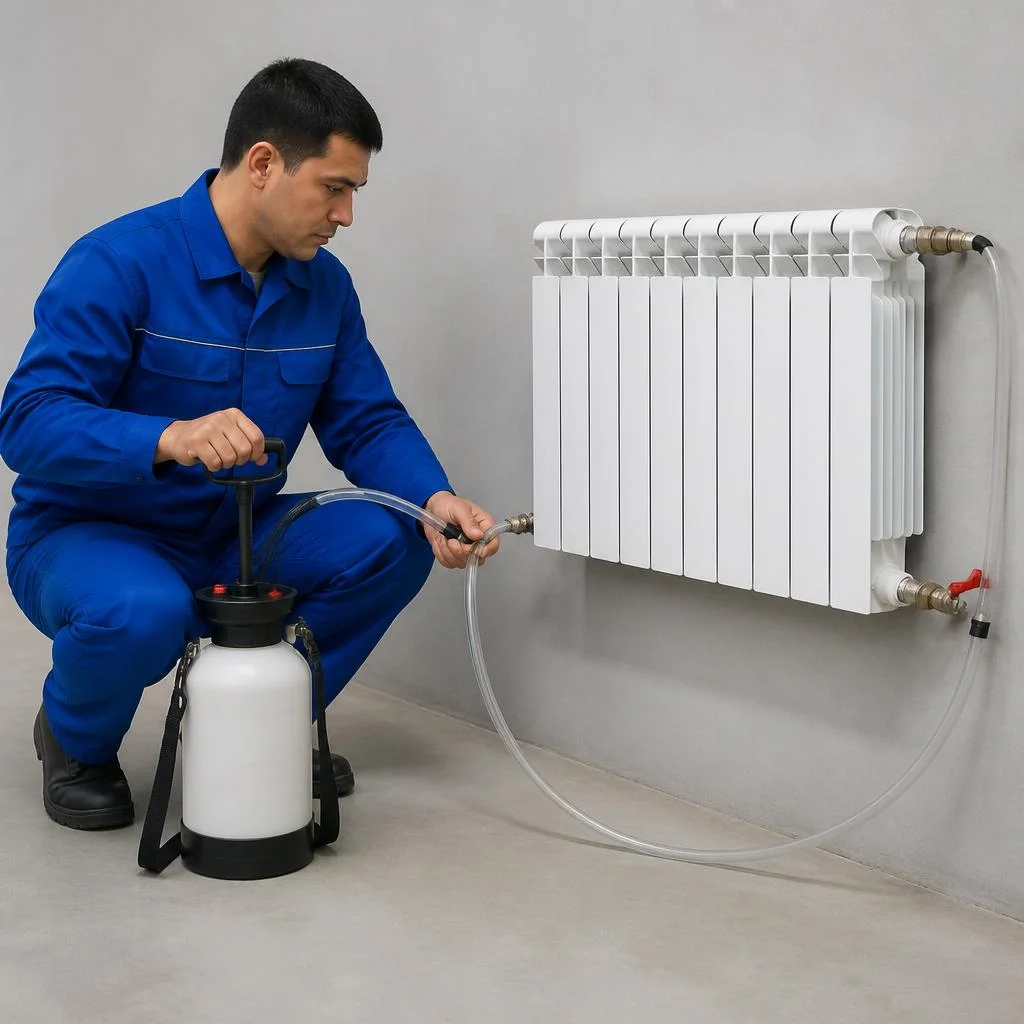
Chemicals and ultrasound cannot be swapped: the reagent softens deposits, and ultrasound removes the already softened layer — if the stage is skipped, the section will remain partially clogged. On a hydrodynamic unit, pressure is selected according to wall thickness: for thin-walled aluminum it is lower than for cast iron. A frequent client question is how much it costs to flush a radiator; the price depends on the method: internal treatment costs less than removal and ultrasound, but it is not suitable for every radiator.
Cleaning the radiator of an air conditioner, car, laptop and server
- Air conditioner radiator: the outdoor unit is removed from the brackets, the fins are washed from dust and fluff, then the drainage is checked.
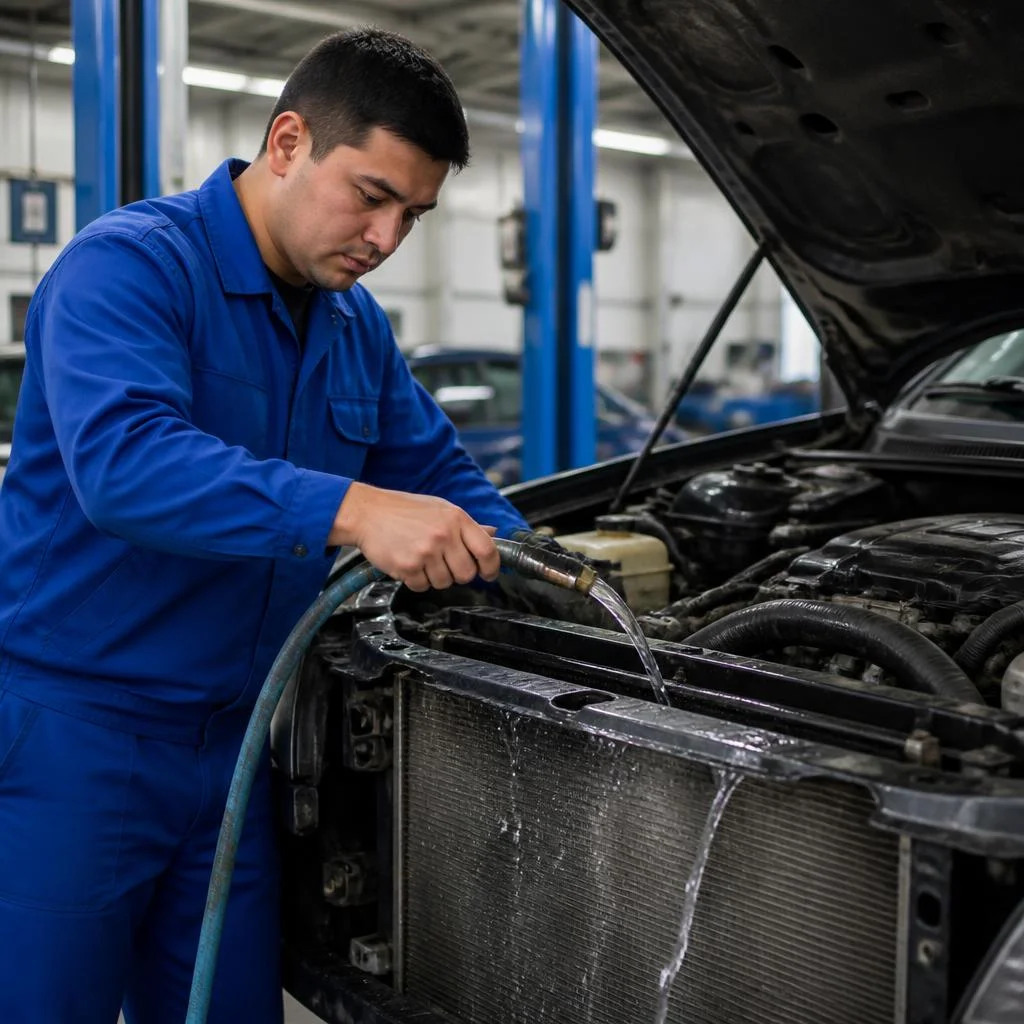
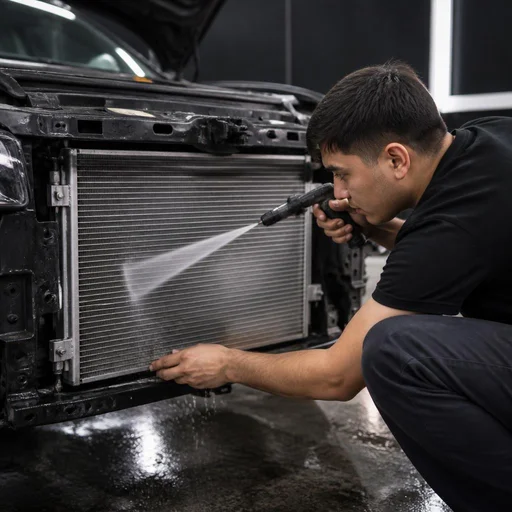
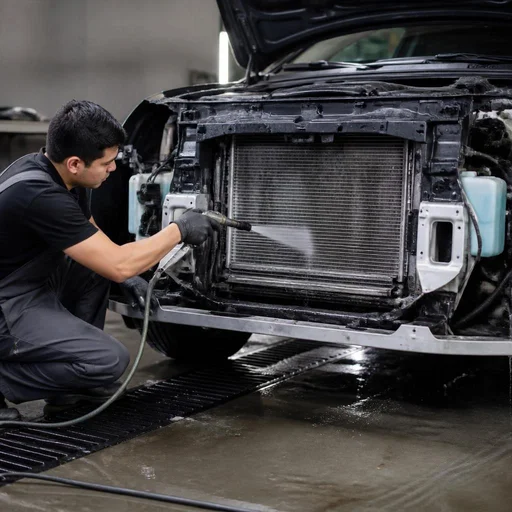
- Car radiator: the fins are washed outside and inside, and the air conditioner radiator and intercooler are blown out separately.
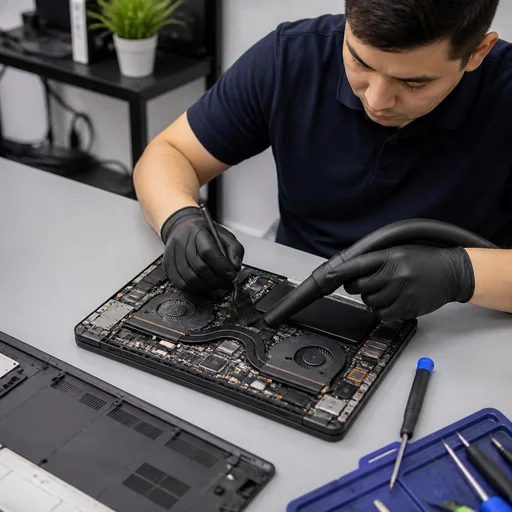
- Laptop radiator: the cooling system is disassembled, the heat sink is cleaned of compacted dust and the thermal paste is replaced.
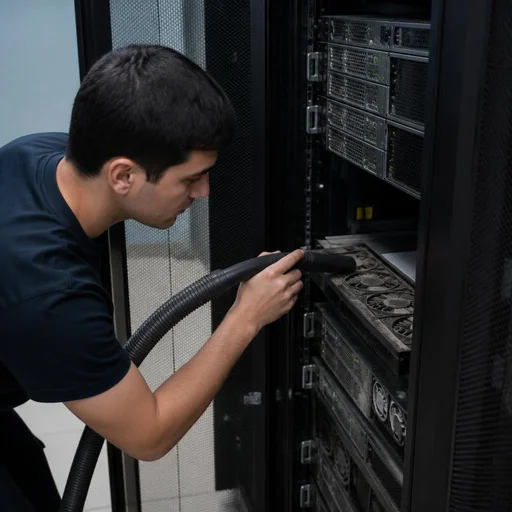
- Server radiator: cleaned in the rack without stopping neighboring units, the fins are blown out and the temperature under load is monitored.
- Compressor radiator: the finning is removed, oil deposits and scale are removed, and tube patency is checked.
- Heating radiator cleaning: cast-iron, bimetallic, aluminum and steel batteries are treated according to the same logic of removing scale and sludge.
Cleaning heating radiators by battery type: cast iron, bimetal, aluminum, steel
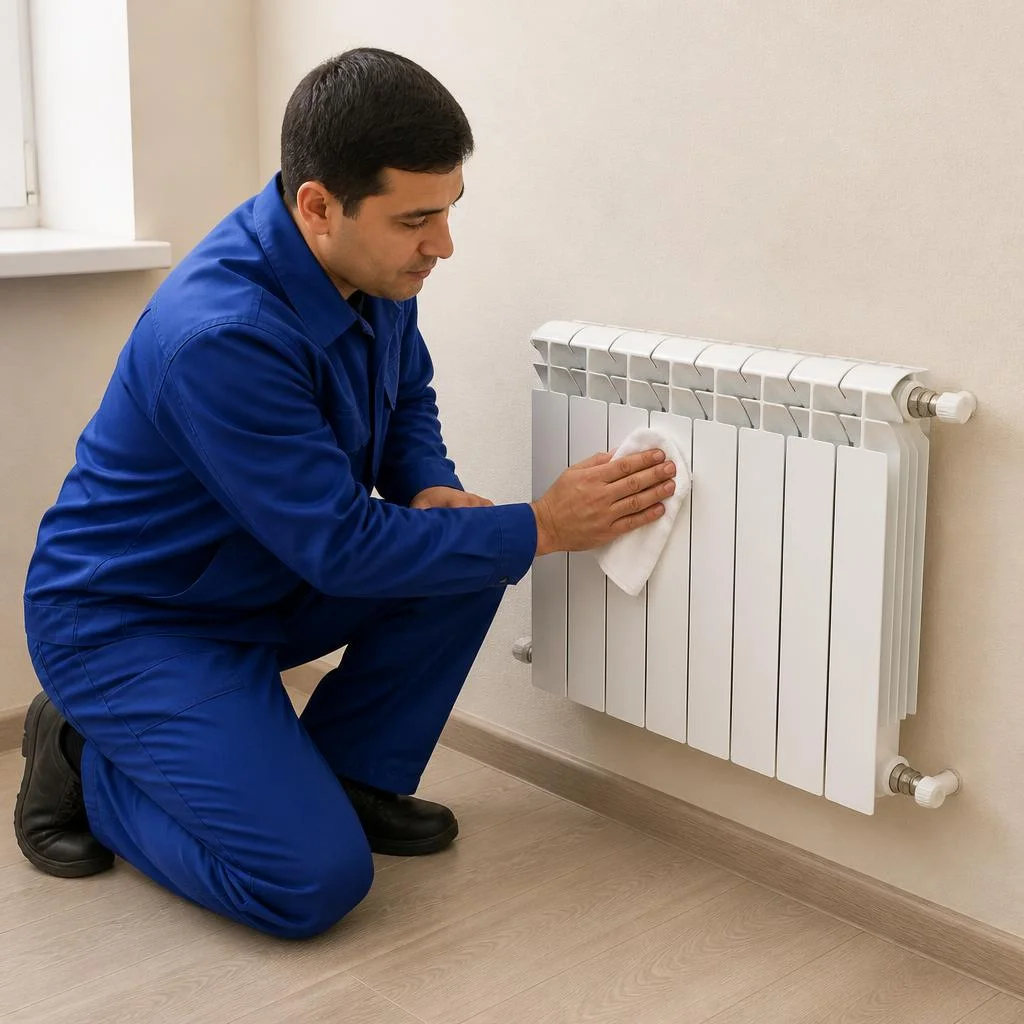
Heating radiator maintenance always starts with the material of the sections: cast iron, bimetal, aluminum and steel hold scale differently and react to chemicals differently. We break down why the method, pressure and temperature are selected for each type.
Cleaning a cast iron battery and flushing cast iron radiators
A cast iron battery requires mechanical and hydrodynamic treatment: cast iron holds scale more densely, but tolerates harsh chemicals and high pressure with ease. Inside the section, deposits build up in layers — loose sludge on top, and below it a dense mineral shell that does not dissolve with household products. We supply the chemical heated to 60-70 °C and hold it in the circuit for 40-60 minutes, after which we knock out the residue with a hydrodynamic unit at pressure up to 120 bar. On cast iron radiators of the MS-140 series, this scheme removes up to 90% of the internal layer without dismantling the riser. Through Eco-Service, the procedure includes mandatory blowing out of each section individually — a common circuit will not show where stagnation remains. Cast iron sections must not be overheated when drying after flushing — a sharp temperature change causes microcracks along the seams that will only show up during the heating season.
Cleaning bimetal radiators and flushing bimetal batteries
Bimetal radiators are serviced with mild chemicals: the steel core inside is protected, but the aluminum fins outside are sensitive to aggressive chemicals. We use neutral compounds with pH 6-8 and pressure no higher than 60 bar — this is enough to wash sludge out of the steel channel without touching the aluminum fins. Flushing bimetal radiators is based on circulation: the solution is run through the sections with a pump for 25-30 minutes, then the circuit is flushed with water until a neutral reaction. On Global Style and Rifar Monolit models, after such treatment the heat output returns to the rated value in 8 out of 10 cases. Bimetal more often clogs in the steel core, not in the fins — so a visually clean radiator can lose heat output due to internal narrowing of the channel.
Cleaning an aluminum radiator and flushing aluminum batteries
An aluminum radiator is treated with neutral compounds and moderate pressure: aluminum corrodes from alkalis and acids faster than cast iron and bimetal. Flushing an aluminum radiator takes place in a closed circuit with a corrosion inhibitor — it keeps the pH in the range of 6.5-7.5 and prevents the wall from thinning. We keep the pressure up to 40 bar: higher — risk of deformation of the thin section, especially on models with a wall thickness of 1.2-1.5 mm. After flushing, aluminum sections must be blown out and dried — residual moisture combined with air triggers pinpoint corrosion from the inside within 2-3 weeks.
Cleaning a steel radiator and comparison by battery type
A steel radiator requires care: the thin walls of the panel do not tolerate high pressure, so at Eco-Service we work with chemicals and gentle flushing. Steel panel radiators lose heat output not from scale, but from sludge in the lower manifold — it is only visible after removing and tilting the radiator. For owners of apartments with black steel piping, servicing the batteries once every 3-4 seasons extends the service life of the panel: sludge in the lower manifold clogs the passage faster than scale on the walls. Clients often search for this service with the query Cleaning batteries/radiators — and land on a page where all four types of sections are covered. A steel panel heats worse not because of the metal thickness, but because of a clogged lower manifold: after chemical treatment, heat output returns to the rated value within the first day. Before ordering, ask the technician whether the radiator is removed from the wall — on blind brackets, part of the sludge remains in the manifold and is only washed out on the second procedure.
Radiator flushing in an apartment and a private house: how the technician's visit works
A technician's visit covers two scenarios: an apartment with a riser and a private house with autonomous heating. Below we'll break down what is done on site, what goes to the service center, and which districts of Tashkent we cover.
Flushing batteries in an apartment: what the technician does on site
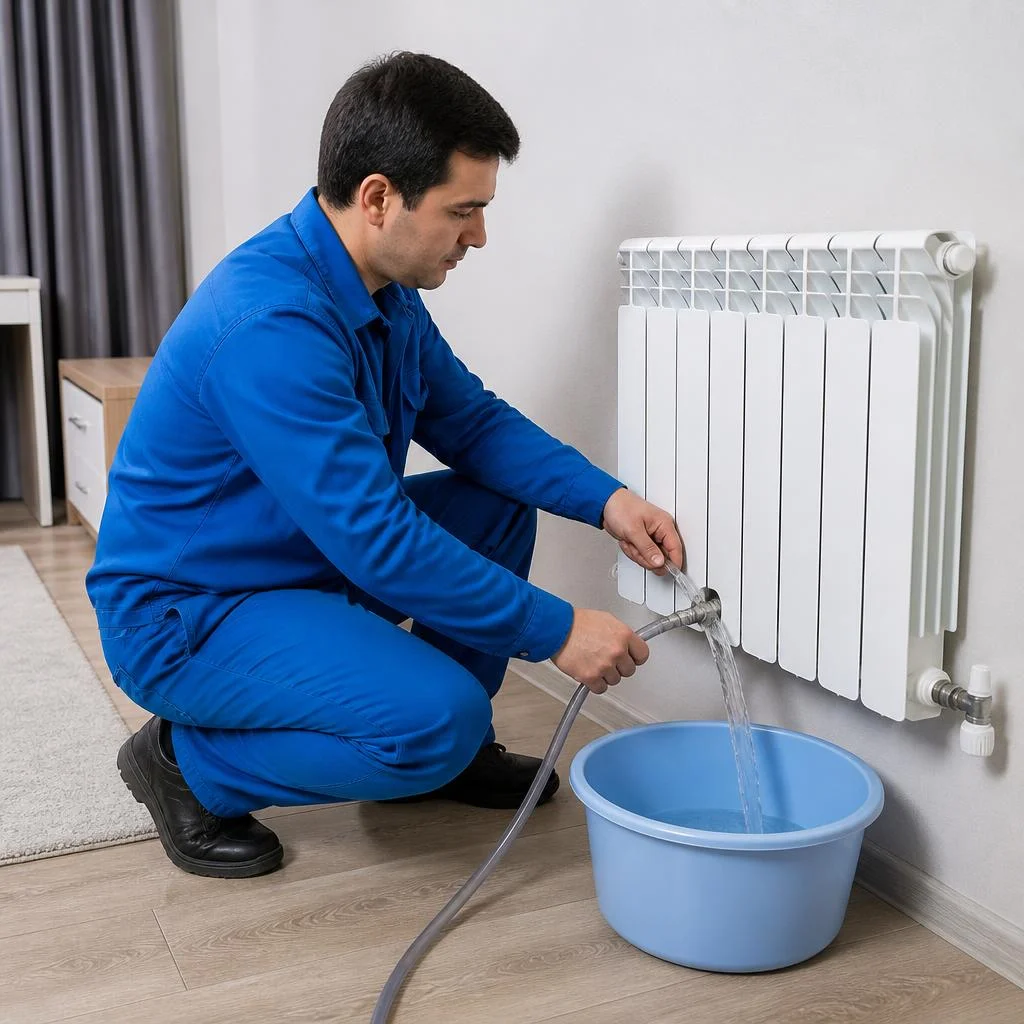
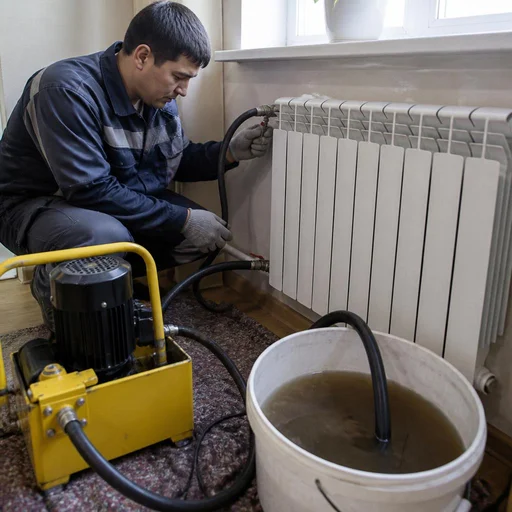
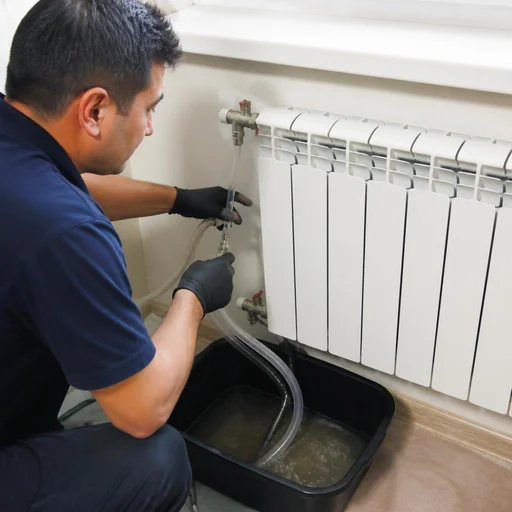
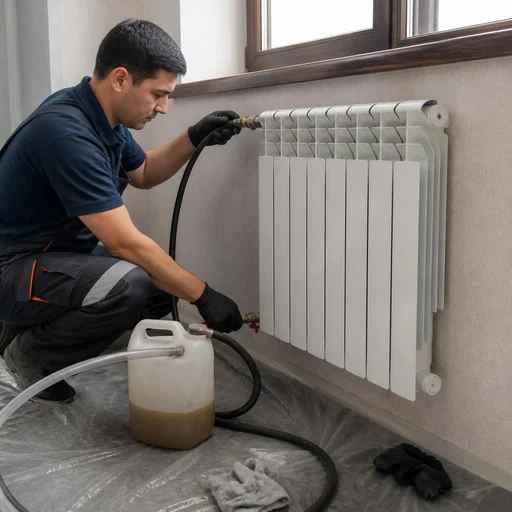
Flushing batteries in an apartment is done without dismantling the riser: the technician connects a hydrodynamic unit to the radiator through the bleed valve, flushes the circuit under pressure, and checks for leaks after the work. Cast-iron radiator servicing is also performed on site — sections clogged with sludge are knocked out with a pulsed flow without removing them from the brackets. Before supplying water, the technician records the supply and return temperatures so that after the procedure he can show the difference in degrees: on neglected batteries it reaches 12-15 °C. This is often exactly how it's written to the service: Cleaning of batteries/radiators — and the technician immediately understands what it's about. The work is carried out by Eco-Service, and in an apartment with a riser you can't release the pressure alone — the technician coordinates the shutdown with the management company so as not to leave the neighbors on the riser without heat.
Radiator cleaning in a private house and with autonomous heating
Radiator cleaning in a private house goes together with an inspection of the autonomous heating circuit: we assess the condition of the boiler, circulation pump, expansion tank, and all radiators in the system in a single visit. In an autonomous system, the clog is distributed unevenly — the radiator closest to the boiler clogs first, so cleaning the radiator only in the cold room is pointless: after flushing one section, the sludge will redistribute and surface in the far wing. At private properties, Eco-Service additionally performs pressure testing of the circuit after assembly — it reveals microcracks that did not show up under riser pressure. If the boiler has scaled up, flushing the batteries and radiators in the house without treating the heat exchanger will give only a temporary effect: after 2-3 weeks the temperature in the circuit will drop again.
Service districts and work timelines in Tashkent
- Yunusabad and Mirzo-Ulugbek: visit on the day of request, standard battery cleaning takes one visit of 1.5-2 hours.
- Chilanzar, Yashnabad, Sergeli: we work by schedule, we confirm the slot in the morning, visit within 24 hours.
- Almazar, Shaykhantakhur, Uchtepa: old housing stock with cast-iron risers, coordination with the management company takes up to 1 business day.
- With removal and ultrasound: flushing radiators with removal of sections — two visits: dismantling and installation, in between the sections are treated at the service center.
- Plug on the circuit: while the sections are in the ultrasonic bath, the technician leaves a temporary plug — the system remains sealed, neighbors on the riser don't lose heat.
- Far suburbs: Kibray, Zangiata, Chirchiq — we plan the visit as a separate route, the timeline is agreed upon when placing the request.
- Drop-off at the center: if the radiator is brought in yourself, intake and defect inspection are done without waiting for the mobile crew.
Battery repair and restoration: section replacement and thread cutting
Sometimes after flushing the radiator still doesn't heat evenly: the cause is not scale, but a mechanical defect in the section or a stripped threaded connection. Let's look at when flushing is not enough and repair is required.
When battery section replacement is needed after flushing
Battery section replacement is needed if after flushing the section remains cold, or there is a pinhole or a crack along the seam — flushing does not eliminate such defects. Battery inspection shows this precisely: the technician measures the temperature of each section, checks the seams and joints for tightness, and the results show where the metal no longer holds pressure. On cast-iron radiators of the Soviet-assembled MS-140, a pinhole along the lower manifold occurs more often than on bimetallic ones — decades of wear have taken their toll. Replacement is best done immediately after flushing, while the circuit is disassembled: reopening the radiator a season later costs more than combining the work. That is why the question "how much does radiator flushing cost" in practice is often resolved together with repair: at Eco-Service, inspection and battery section replacement are done in a single visit, and after reassembly the circuit is checked with pressure testing.
Thread cutting on a section during radiator repair
Thread cutting on a section is needed when the connection is stripped or seized and the radiator cannot be reassembled without restoring the threaded unit. A stripped thread on the nipple is a typical picture after an unsuccessful DIY cleaning of cast-iron batteries, when the sections were unscrewed without support and skewed. But routine maintenance of cast-iron batteries with proper support of the unit does not produce such a defect. Threads are cut only on a removed section — attempting to do this on an assembled radiator results in skew and a leak at the connection in the very first heating season. This is exactly how requests often come into the service: cleaning of cast-iron batteries — and the technician immediately understands that disassembly and restoration of the threaded unit are needed. Thread cutting on a section at Eco-Service is performed as a separate service or in combination with section replacement, if the threaded unit can no longer be restored. For those looking for radiator cleaning Tashkent, it is worth keeping in mind: radiator cleaning and repair of threaded connections solve one task — to restore even heating and tightness to the battery.
Warranty, service center, and why Eco-Service rather than a private technician
A one-time service from a private technician ends the moment he leaves. Working with a service organization means a warranty card, calibrated equipment, and accountability for the result. Let's break down what exactly stands behind these words.
2-year warranty on radiator cleaning
We provide a 2-year warranty on all radiator cleaning work: if the radiator again loses heat output through our fault, we return and fix it free of charge. The warranty covers flushing of aluminum, bimetallic, cast iron, and steel radiators, as well as the tightness of connections after section removal. The circuit's tightness is checked before the acceptance report is signed — pressure testing shows whether the threads and gaskets hold after reassembly. Radiator thermometry before and after the work records the temperature difference in degrees: this measurement is attached to the warranty card and serves as proof that heat output has increased. In their requests, clients often write briefly — battery cleaning — and sometimes type radiator flushing, and the technician immediately understands what is meant. Based on our practice, repeat calls during the warranty period mainly concern old cast iron risers, where the cause is not the quality of flushing but the condition of the entire building's circuit.
Our own service center in Tashkent: what it provides
Eco-Service has its own service center in Tashkent: sections for ultrasonic treatment undergo it on our equipment, not in makeshift conditions. The ultrasonic bath knocks scale out of the internal channels of the section, where a mechanical brush cannot reach; specific chemical reagents are selected for each type of metal, and the hydrodynamic unit supplies water under controlled pressure — without the risk of rupturing thin-walled sections. Radiator flushing in an apartment or private house is performed by a mobile crew, but complex cases — heavily fouled sections, clogged risers — are brought to the center, where there is a stationary test bench. In their requests, clients often write briefly — how much does radiator cleaning cost — and the dispatcher immediately understands that the person needs both a quote and the service itself. This scheme means the technician arrives with calibrated equipment and reagents for the specific type of battery, not with a universal "one-size-fits-all" kit.
How a technician's visit differs from the services of a private individual from an ad
- Diagnostics before work: checking the circuit's tightness, radiator thermometry, and battery inspection — a private individual usually skips these steps.
- Procedure and reagents: radiator treatment is carried out according to the specification of the specific metal, not with a single agent for cast iron, aluminum, and bimetallic.
- Radiator flushing Tashkent: the technician arrives within the city in an agreed time window, not "whenever possible" — the visit time is fixed when the request is confirmed.
- Accountability for the result: if after treating an aluminum radiator the heat output has not increased, the rework is done at the contractor's expense, not for a separate fee.
Conclusion
We have gathered the main things worth keeping in mind before ordering work: what the choice of method depends on, when preventive maintenance is no longer enough, and what to look for when choosing a contractor.
Key takeaways
- A blockage starts with scale and sludge: the first signal is uneven heating across sections, when the bottom is hot and the top is cold.
- The method is selected for the material: flushing cast iron radiators tolerates harsh treatment, while aluminum and steel require a gentle regime.
- Internal flushing is preventive maintenance, flushing with removal is for dense deposits and clogged section ends, where liquid cannot reach without disassembly.
- Diagnostics before work shows whether flushing is needed or whether the section already needs replacement; radiator flushing price and radiator cleaning price depend on this choice, not on a random price list.
- Battery servicing with a warranty and a service center covers the risk of re-clogging better than the low price of a one-time visit with no obligations.