
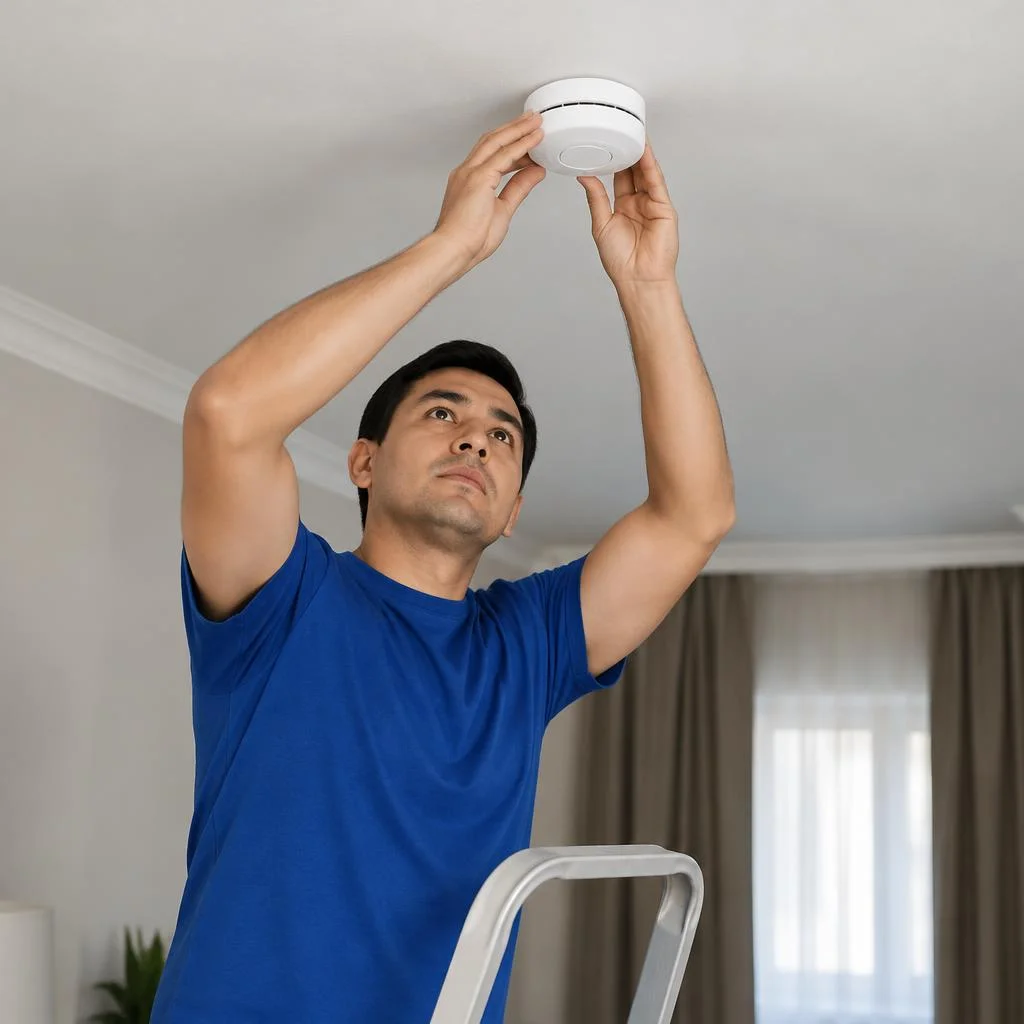
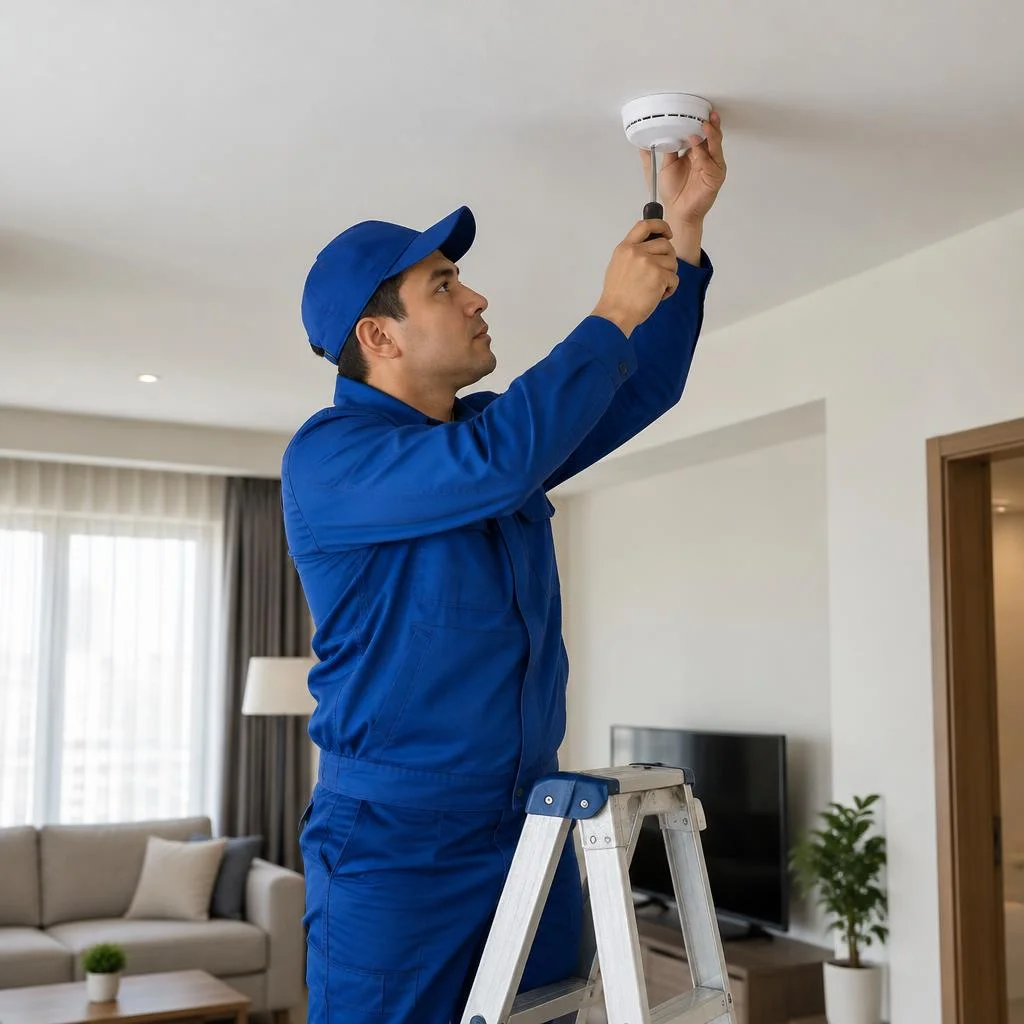
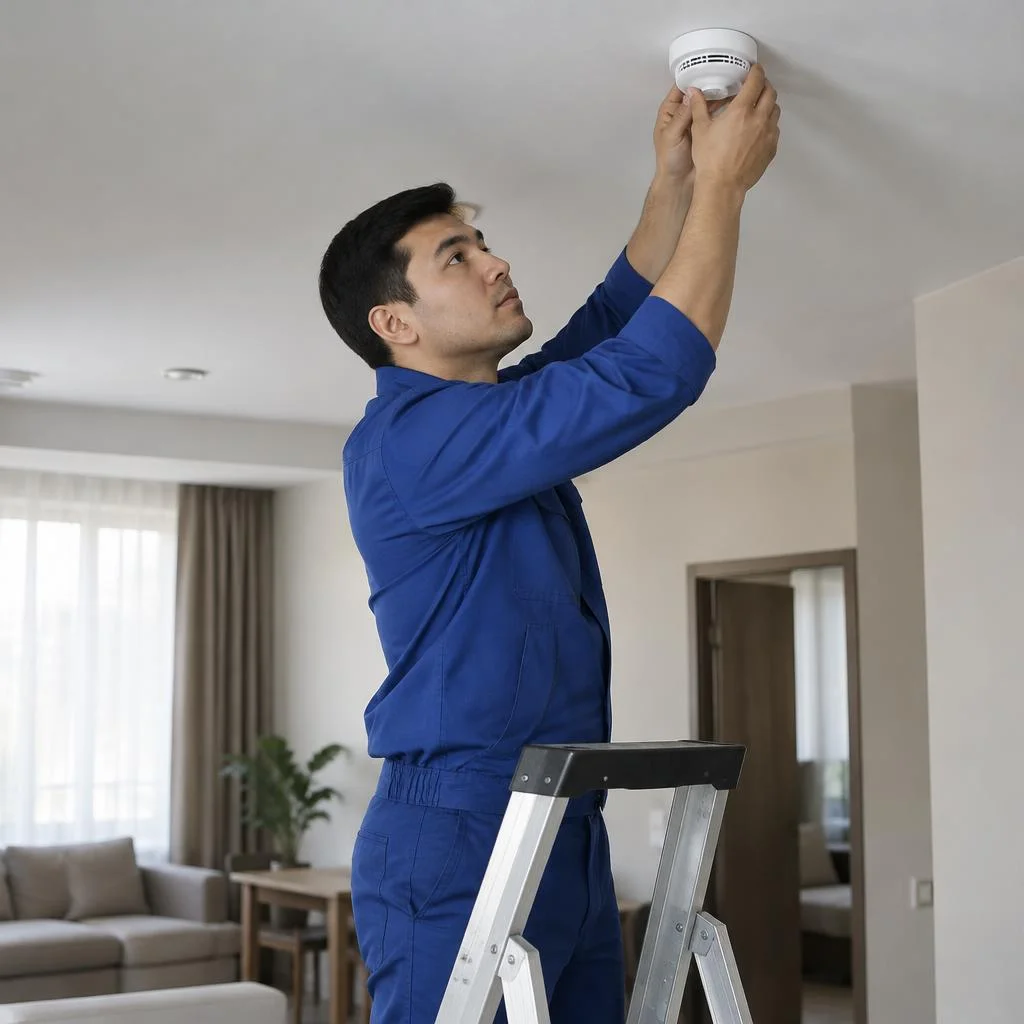
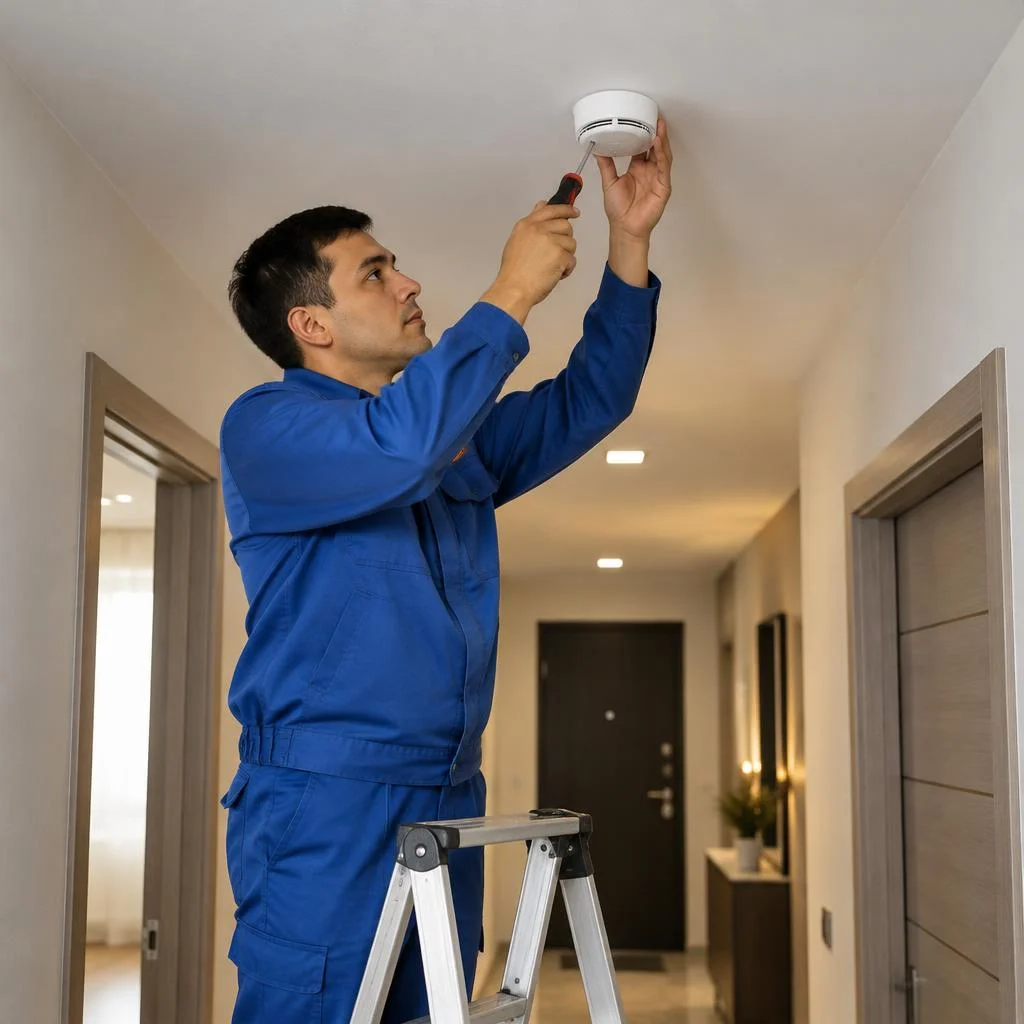








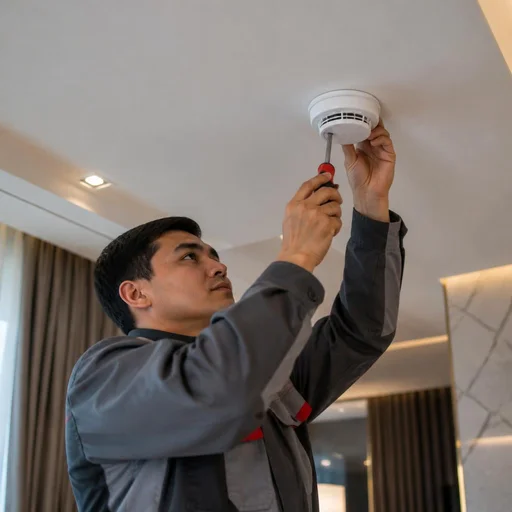
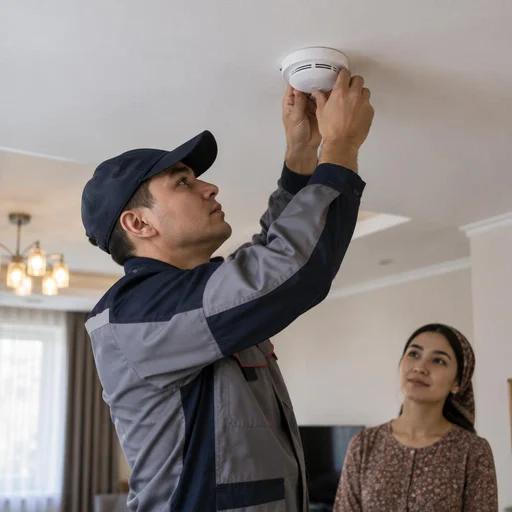
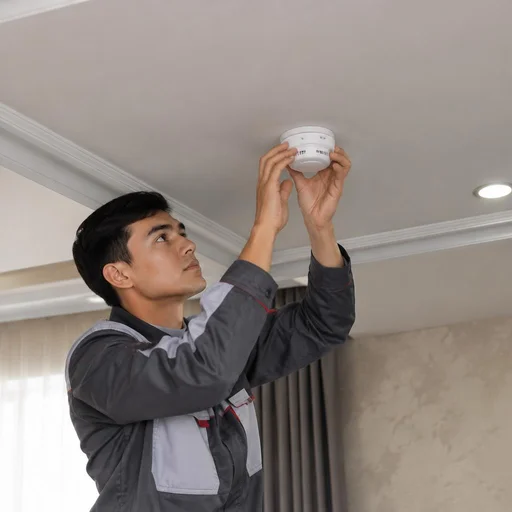
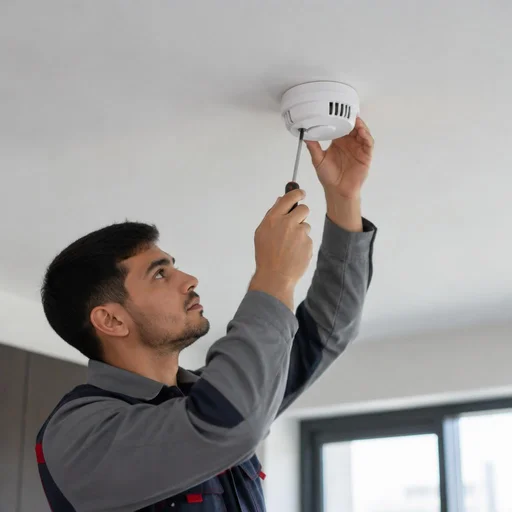
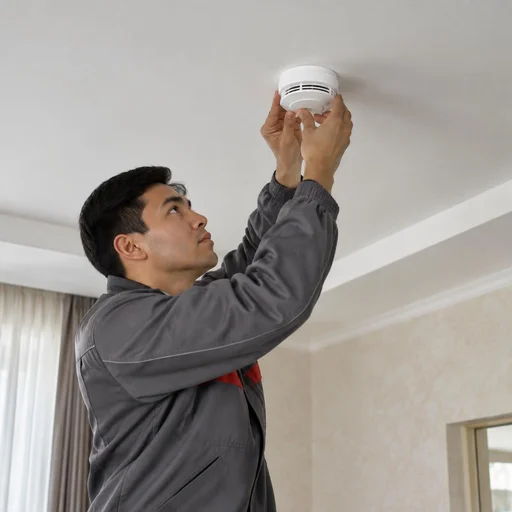
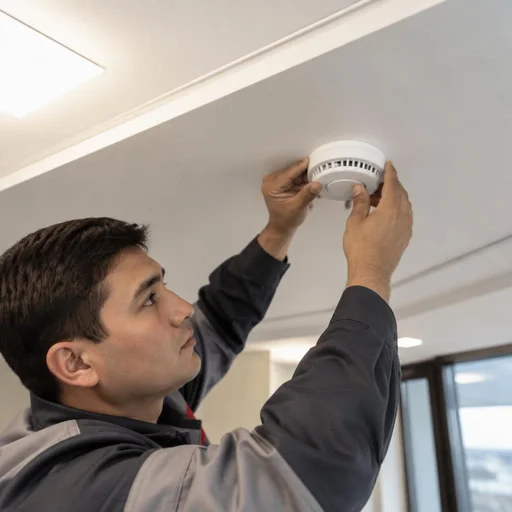
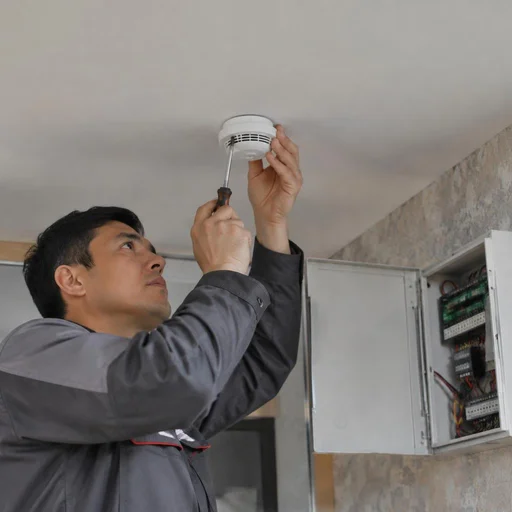
What smoke detectors are installed in apartments, houses and offices in Tashkent
A smoke sensor and a smoke detector are one device with two names, but behind the everyday word hide different types of devices. Let's look at how they differ in operating principle, power supply and purpose — and what suits an apartment, a house or an office.
How a smoke sensor differs from a smoke detector
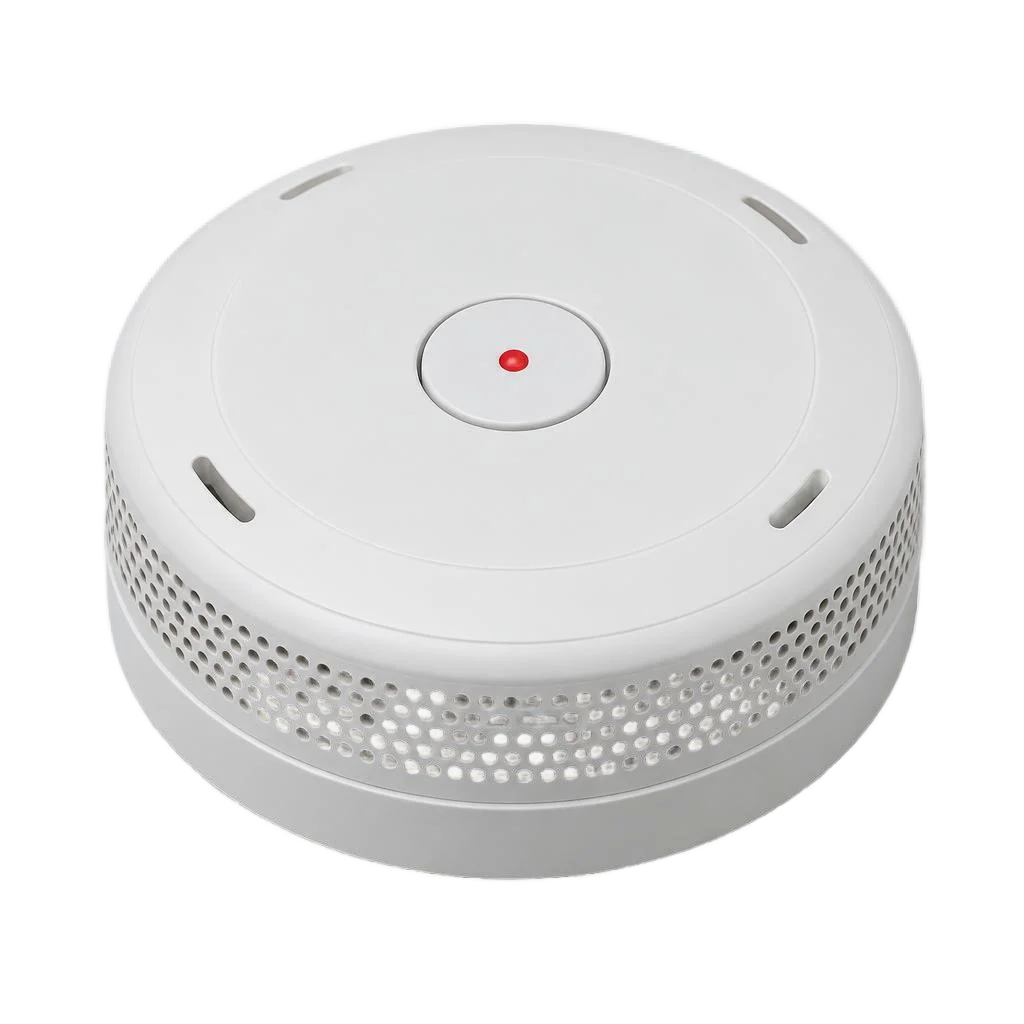
A smoke sensor and a smoke detector are the same device: the detector is the official term from fire safety regulations, while sensor is the everyday name that people enter in searches and use when talking to a technician. By design, the devices are divided into standalone ones, powered by a battery, and addressable ones, which are connected by a loop to a fire alarm controller. The former are installed in apartments and private houses, the latter — at facilities with duty personnel, where it is important to see the specific point of activation on the panel. The difference shows up already when placing an order: a technician will mount a standalone device in a single visit, while an addressable one will require laying a line and configuring the receiving station. When ordering the service, check with the technician whether the device is standalone or addressable — this determines whether a loop will need to be laid to the controller or the device runs on a battery.
Types of detectors: smoke, heat, gas, combined, manual
| Detector type | What it detects | Where to install | Feature |
|---|---|---|---|
| Smoke | Smoke particles in the air | Bedroom, hallway, living room | Responds to smoldering wiring and furniture |
| Heat | A sharp rise in temperature | Kitchen, boiler room, garage | Does not trigger on steam and fumes |
| Gas | Leaks of methane and propane | Kitchen near the stove and water heater | Separate gas activation threshold |
| Combined | Smoke and heat simultaneously | Studio kitchen, utility room | Reduces false alarms |
| Manual | A person pressing a button | Exits, stairwells | Part of the warning system |
In the kitchen, a smoke detector often gives false alarms due to steam and fumes — there it is wiser to install a heat or combined one, and a gas detector is added separately near the stove. In Tashkent, the installation of such devices is carried out by the Eco-Service company.
Standalone or addressable: what to choose for an apartment and for an office
For an apartment and a private house, Eco-Service more often installs standalone battery-powered detectors; for an office, warehouse and commercial facility — addressable ones connected to the fire alarm system. A standalone device is mounted on the ceiling without a loop: in Tashkent's new buildings in Yunusabad and Mirzo-Ulugbek district, such models are installed in every bedroom and hallway, while in private houses in Chilanzar they are also added in the entrance hall by the exit. The addressable option requires laying a line to the controller and configuring addresses on the receiving station — but on the panel you can see whether the device was triggered in the meeting room on the third floor or in the warehouse in the basement. A standalone device does not require a loop and runs for years on a single battery, but it only signals inside the room; an addressable one transmits a signal to the panel and indicates the specific point — this is critical where the facility has no permanent duty staff.
Optical-electronic and ionization: operating principle
An optoelectronic detector responds to the scattering of an infrared beam by smoke particles, while an ionization one responds to changes in air conductivity during combustion with an open flame. An optical chamber contains an LED and a photodetector: while the air is clean, the beam passes by the sensor, but smoke particles reflect the light, and the device sends a signal. The ionization chamber contains a low-activity radioactive source — when paper or gasoline burns, ions bind, the current drops, and the alarm is triggered. The installation of such devices in residential rooms more often involves optoelectronic models, because they are the ones that catch the slow smoldering of insulation and upholstered furniture. An optical one better detects smoldering smoke from wiring and furniture, an ionization one detects fast fire; in residential rooms an optical one is more often installed, while a combined one unites both principles in a single housing.
How smoke detector installation proceeds: three scenarios by facility
- Apartment: a standalone optoelectronic device in the bedroom, hallway, and living room; installation takes one visit, and no loop is laid.
- Private house: the same standalone models plus a heat detector in the boiler room and a gas detector near the gas water heater or stove.
- Office and commercial facility: addressable detectors combined into a fire alarm loop with output to the duty officer's console and indication of the specific triggering address.
- Warehouse and technical room: combined devices that respond to both smoke and a sharp rise in temperature, in order to avoid false alarms from dust and heated equipment.
Installing smoke detectors in an apartment: where to place them and how the installation is carried out
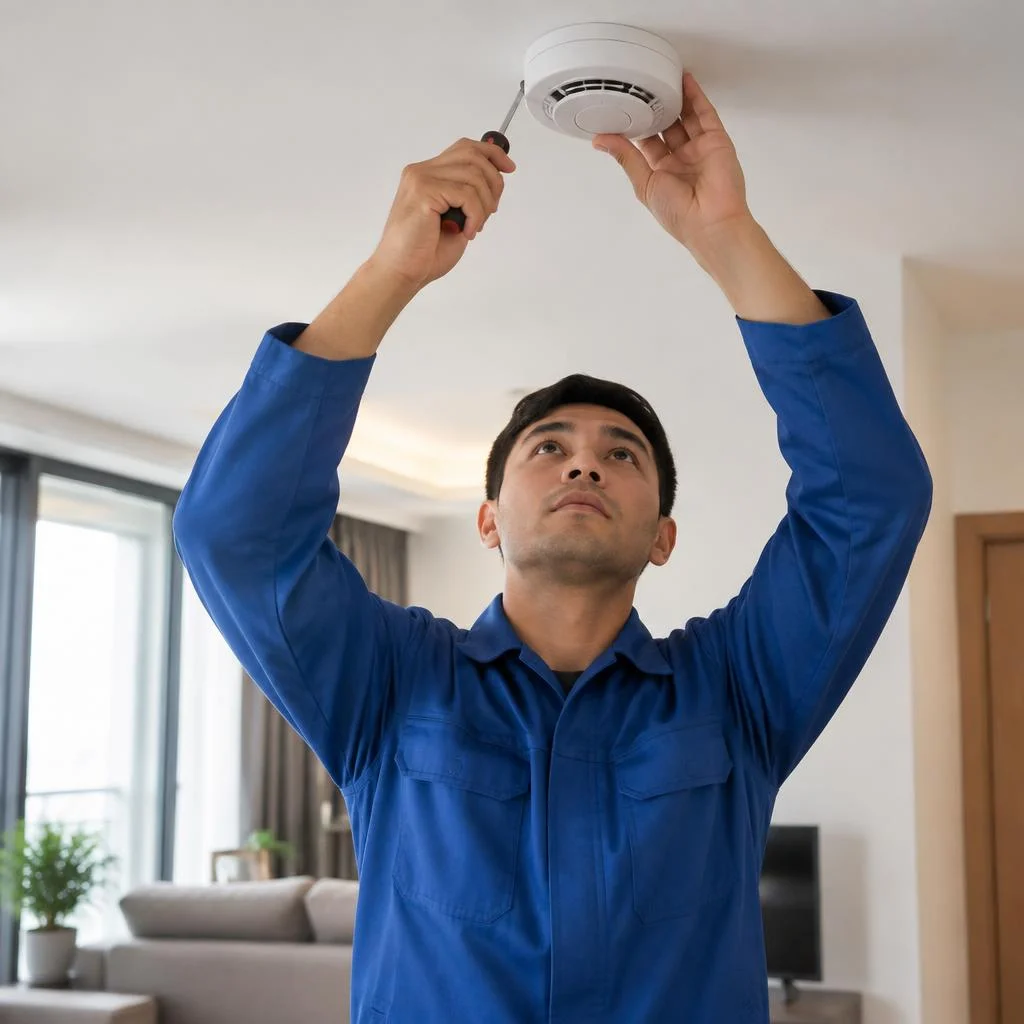
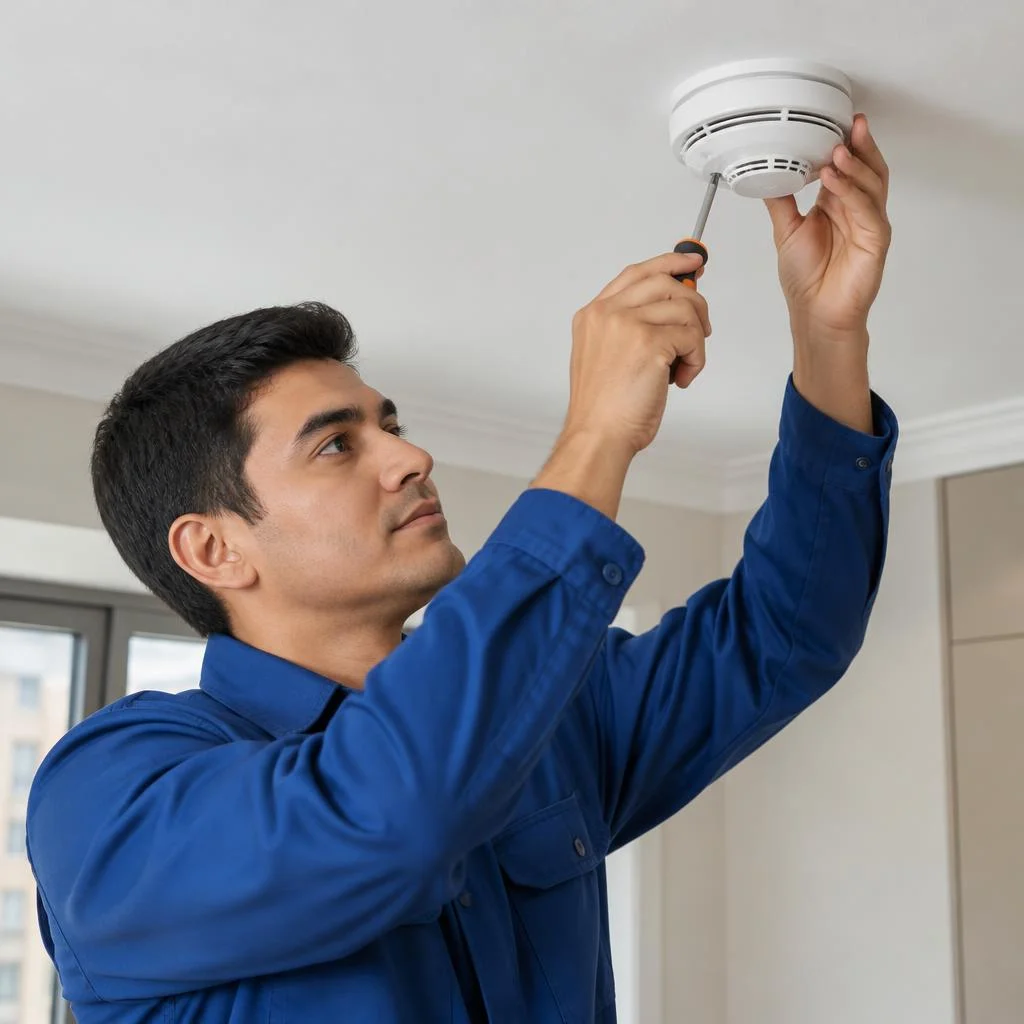
Installing detectors in an apartment is a journey from the request to testing the device with the test button. And the placement location here matters more than the model: even a certified device in the wrong spot will trigger late.
Where to place the detector: ceiling, walls, bedroom, hallway
- Ceiling in the center: mounting in the center of the room, where smoke accumulates first, is the base point for a bedroom and living room.
- Wall near the ceiling: installation 10–30 cm below the slab if there is a beam, molding or stretch ceiling on the ceiling.
- Bedroom: the device is placed near the head of the bed so that a closed door does not cut off the signal from a sleeping person.
- Hallway and escape route: a detector on the route to the exit, and in a long hallway a second one at the opposite end.
- What to exclude: corners, areas near windows, air conditioners and vent grilles, as well as closed niches behind a wardrobe where air stagnates and triggering is delayed.
Installation on a stretch ceiling and other non-standard cases
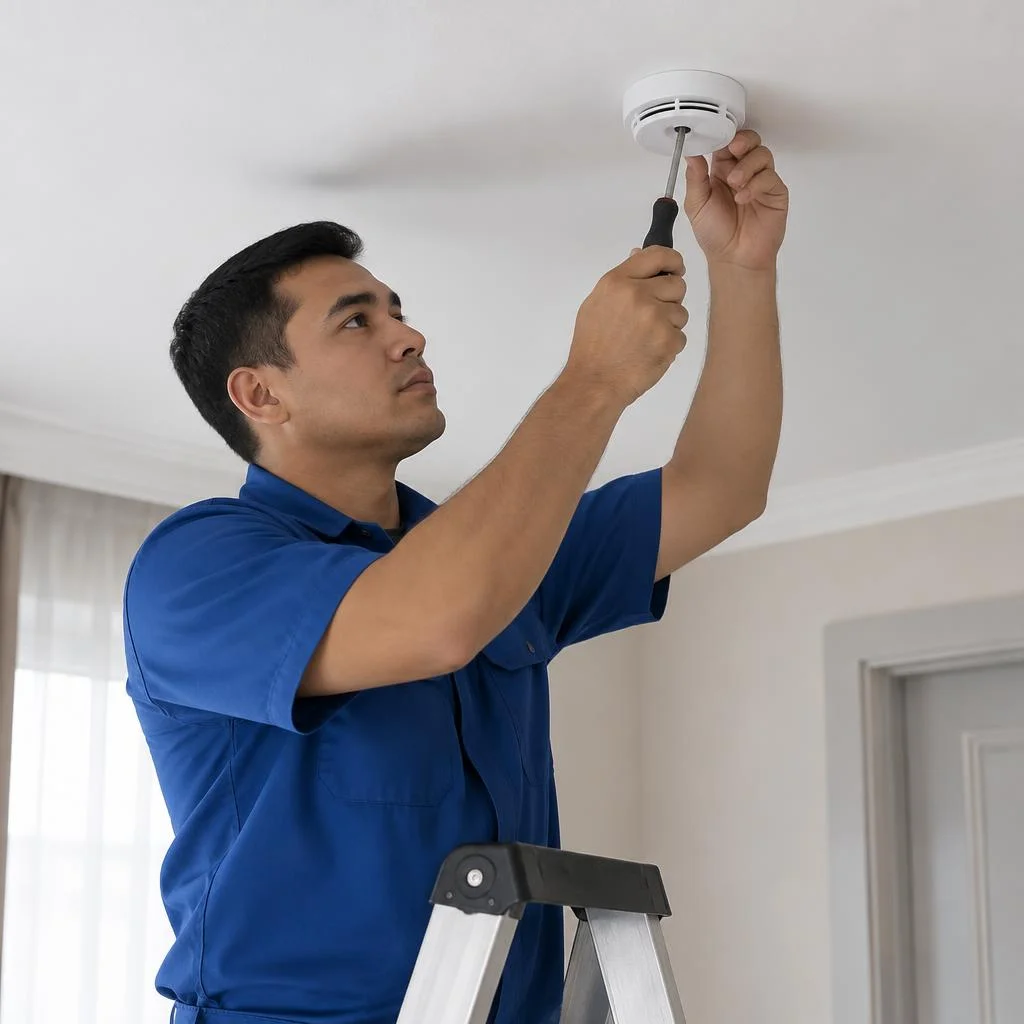
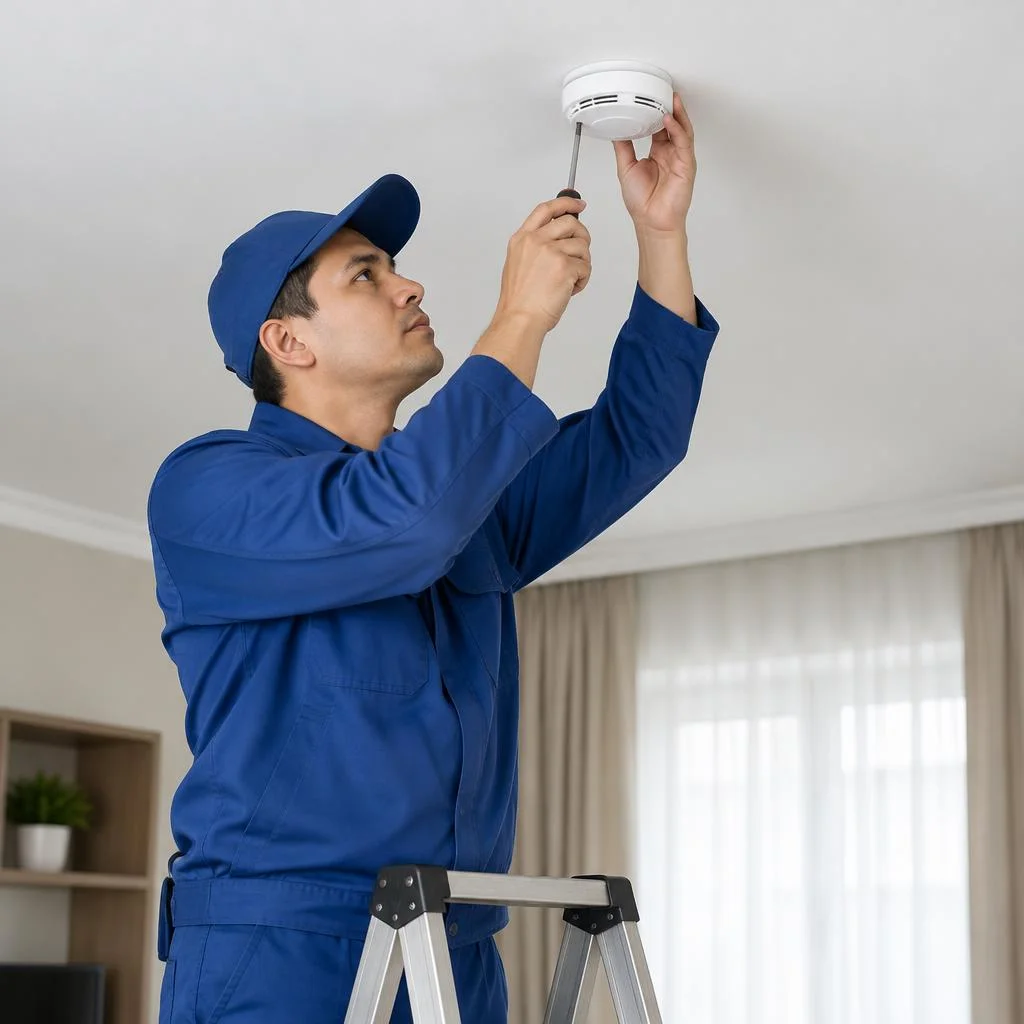
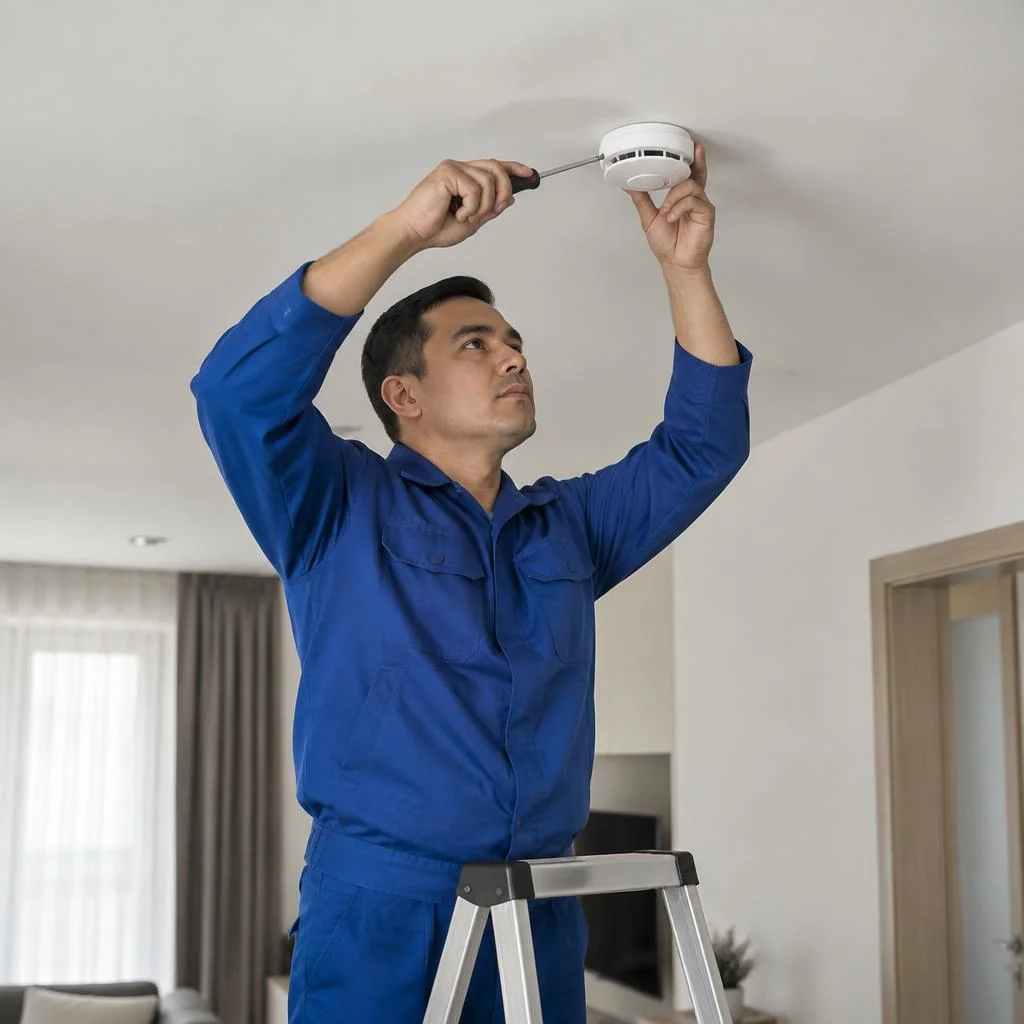
On a stretch ceiling, Eco-Service mounts the detector via a mounting platform or a thermal ring so that the fastener does not damage the fabric and the device does not "float" during temperature changes. It is better to install the mounting base for the sensor before the fabric is stretched — then installation takes minutes. If the ceiling is already stretched, the technician works through a neat opening with a thermal ring, without removing the fabric. On drywall and slatted ceilings the same mounting bases are used, while on concrete a dowel and screw are sufficient. In lined structures with insulation, the point is chosen so that the mineral wool layer does not block the smoke intake slots of the housing. Installing a smoke detector on curved and multi-level ceilings requires a separate calculation: on each level smoke accumulates differently, and one point does not cover the entire room. When installing above three meters, the technician uses a stepladder and fasteners suited to the specific slab material: a universal dowel in a hollow-core slab will not hold the weight of the device.
How smoke detector installation is carried out: stages of work
- Request and consultation: the technician clarifies the type of property, the number of rooms and whether an addressable loop is needed or autonomous devices will suffice.
- Site visit and inspection: on site the slabs, height, presence of ventilation are checked and the installation points are marked out.
- Selecting the detector: for an apartment or office, a smoke, heat or combined device with the required protocol is chosen.
- Installation and connection: mounting the housing, running the loop, interfacing with the controller or siren.
- Testing and instruction: test button, smoke simulation, explaining to the owner how to read the signal and replace the battery.
Connection to the mains, siren and smart home
Eco-Service connects the detector to a siren, controller or smart home hub, sets up scenarios and push notifications in Telegram so that the signal reaches the phone even when no one is home. Installation with integration requires protocol compatibility: wired devices interface with an addressable panel, wireless ones connect via radio channel to a hub, while autonomous models work only with their own siren and do not send a signal outside. An 85–95 dB siren is placed in the hallway or by the entrance door so that neighbors can hear it with the windows closed. Check the compatibility of the device and hub protocol before purchasing: incompatible devices will not see each other, and the detector will remain autonomous — the list of supported protocols is in the datasheet and in the hub description.
Fire Safety Standards and Requirements in Uzbekistan
We explain which fire safety requirements apply to residential and commercial properties in Uzbekistan and why certifying the device matters more than its price when choosing a detector.
Fire Safety Requirements for Residential and Commercial Properties
Eco-Service installs detectors in compliance with the fire safety standards in force in Uzbekistan: for commercial properties, the devices are part of an automatic fire alarm system (AFAS), while for apartments and houses, autonomous certified detectors are sufficient. The standards differ by property type: in offices, shops, cafes, and warehouses, the design documentation relies on the requirements for automatic fire alarms, where the number of points, loops, and connection to a monitoring station are calculated based on the area and category of the premises. In the residential sector — apartments, private houses, townhouses — an autonomous device with a certificate of conformity is sufficient, but when several detectors are combined into a single network, the installation requirements become stricter. For an office, shop, or warehouse, a single sensor is not enough — a design and calculation of the number of points by area are required; for housing, the standard is more lenient, but the certificate for the device should still be verified.
How to Distinguish a Certified Detector from a Counterfeit
- Marking on the housing: the manufacturer's mark, model, and batch number — on a certified device, these are stamped or applied with indelible paint, not on a sticker.
- Certificate of conformity: a certificate with a number and validity period that can be verified against the manufacturer's or supplier's data.
- Test button and indication: a working device responds to testing with sound and an LED, while a sluggish or absent response is a sign of a cheap imitation.
- Battery and manufacturing date: the package includes a power cell with reserve capacity, and the date on the housing is no older than two years — otherwise the sensor is already losing sensitivity.
Maintenance, replacement and relocation of the smoke detector
After installation, the detector lives its own life: it uses up the battery, accumulates dust in the chamber, requires testing and sooner or later replacement. Below is what to do with the device in the first years of operation.
Replacing the battery and testing with the test button
Eco-Service recommends testing a standalone detector with the test button once a month and changing the battery once a year or when the low-battery sound signal sounds. The button on the housing triggers a simulated smoke condition: the siren should go off within 1-2 seconds, and the LED should flash red. For models with CR123A and CR2 lithium cells, the life reaches 3-5 years, but in the Tashkent climate with dusty winds and temperature swings in summer, the cell drains faster than stated. Many devices emit a short beep once a minute when the charge is low — do not ignore it and do not remove the battery "until the weekend": it is precisely during this period that the detector is not protecting.
When replacement or relocation of the detector is needed
Eco-Service performs detector replacement once the sensor's service life has expired or after false alarms, and relocation — during redevelopment, renovation or a change in the purpose of the room. The average service life of an optical-electronic chamber is 8-10 years for household models and 10-12 years for addressable series; heat sensors last longer, gas sensors require calibration every 1-2 years. Frequent false alarms from steam or cooking are a signal that the chamber is clogged with dust or soot: blowing it out helps for 2-3 months, after which the problem returns. The sensor of a smoke detector degrades from dust and soot even with functioning electronics — if the device is older than its service life, replacement is more reliable than repeated cleaning.
Setting up notifications and scenarios
Eco-Service sets up a smoke detector whose installation has already been completed: it links the device to an app or hub, defines "siren + push" scenarios, and selects notification recipients. In addressable systems via a Tuya, Aqara or Yandex hub, a chain is configured: the detector triggered — the siren turned on, a push notification arrived on the phone, an electromagnetic valve on the gas pipe opened. It is convenient to duplicate notifications in Telegram to 2-3 recipients — the owner, a family member, the concierge — via a bot, so that the message is not lost in night mode. In search, clients often type it briefly: smoke detector installation — and land on our page, although what is meant is already the setup of a ready device. Do not leave the phone as the only notification channel — in a fire at night, the sound siren inside the apartment wakes you faster than vibration; a Telegram notification is worth duplicating.
Eco-Service Warranty, Timelines and Support
After the detector is installed, the client is not left alone: the work is covered by a warranty, support is provided by a service center, and the history of requests is stored at the address. Let's break down what the obligations include and where to turn in case of a failure.
2-Year Warranty on Installation and Connection
Eco-Service provides a 2-year warranty on the installation, connection and configuration of detectors — if the device or mounting fails due to the work performed, the technician makes a repeat visit free of charge. The warranty period covers fasteners, terminal connections, loop wiring and correct addressing in the system: if after six months the detector is removed from the base or the loop short-circuits at a twist joint, this is a warranty case. The device itself, purchased separately at Uzum Market or Texnomart, is covered by the manufacturer's warranty, not the installation company's — therefore, when making a claim, it is distinguished what exactly failed: the sensor or the work. Keep the installation document with the date and list of operations: it makes it easier to confirm the scope of work and the timeframe, and in a disputed situation — to prove that the connection was performed by our crew and not by an outside electrician.
Own Service Center in Tashkent
Eco-Service has its own service center in Tashkent: you can bring the device here for diagnostics or call a technician for a repeat visit without searching for the contractor through classified ads. The center keeps a history of work by address: on a repeat request, the technician sees which detectors are installed, which loop they are connected to, and when the last test-button check was performed. This saves time — there is no need to re-explain the configuration of the site and search for the connection diagram. A private technician is often unavailable after payment: the number changes, warranty obligations remain only verbal, and if you move or change apartments, it is impossible to find him. For commercial sites in the capital, the service center additionally issues a certificate of completed work — it is needed during a fire inspection and when leasing out premises.
Customer Reviews and Typical Sites
Eco-Service installs detectors in apartments, private houses and commercial sites in Tashkent; customer reviews are available on Google Maps and Yandex.Maps. Typical sites include two- and three-room apartments in new buildings, private houses with gas equipment, small offices and food service outlets where detectors are connected to a common siren and loop. When choosing a contractor, look not at the average rating, but at reviews with photos and a description of the site — they show whether the technician has worked with your type of premises: installation on a stretch ceiling and connection to an addressable system require different tools and experience. A review without details is just a rating; a review with a photo of the panel and a description of the diagram is confirmation of real practice.
How to Order Smoke Detector Installation at Eco-Service
Requests are accepted remotely, the technician arrives at the site at the agreed time, and payment is settled after the installed detector is checked. Below is the path from the first message to payment.
Request, Technician Visit and Payment
- How to submit a request: a call, a message in Telegram or a form on the website — we record the address, floor and a convenient time slot, and a response comes within 15 minutes.
- Time coordination: visits in Tashkent are scheduled in a two-hour window; the technician confirms the exact arrival by message one hour before the start.
- What to clarify in advance: the type of ceiling — stretch, drywall, concrete — and the number of rooms; this determines the fasteners and anchors.
- Work procedure: demonstrating the installation location, installing the detector, checking with the test button and running the siren signal take 40-60 minutes. Smoke detector installation begins with marking the point on the ceiling and verifying it against the evacuation plan.
- Payment: in cash to the technician or by card via Click, Payme, Uzcard; the receipt and warranty card are handed over immediately after the check.
- Consumables: the detector and fasteners can be ordered in advance via Express24 or Yandex Go if the required model is not in stock.
Conclusion
Installing a smoke detector comes down to three decisions: choosing the right type of device, accurately calculating the installation location, and not skimping on testing after the work. Below is a short summary worth keeping on hand before calling a technician.
Key takeaways
- Detector type: selected to suit the facility — a standalone one is installed in an apartment, an addressable one in an office or warehouse.
- Installation location: more important than the model — the ceiling or 10–30 cm from it, away from windows, ventilation, and corners.
- Kitchen: a smoke detector is replaced with a heat or combination detector to avoid false alarms from steam.
- Testing: pressing the test button once a month and replacing the battery once a year extends the device's service life.
- Documents: a certificate and warranty on the work are more important than the low price of a one-time technician with no obligations.